

-
-
Concrete
-
-
Concreting
-
Concrete Vibrators
- Complete 230 V Mechanical Vibrators
- Vibrator Heads
- Vibrator Shafts
- Vibrator Motors
- Concrete Vibrators 42 V | 200 Hz
- Mechanical Vibrators 230 V
- 42 V | 200 Hz Head and Shaft
- 230 V Concrete Vibrators
- Vibrators With Built-In 230 V | 200 Hz Converter
- 42 V | 200 Hz Converters
- Combustion Vibrators
- Pneumatic Vibrators
- External Vibrators
- Power Trowels
- Vibratory Screeds
- Concrete Hand Tools
-
Concrete Vibrators
-
-
-
-
-
-
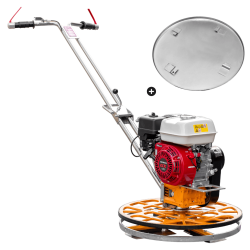
Walk-Behind Combustion Power Trowels
-
-
-
Heating and cooling
-
Generators
-
Earthworks
-
Industrial vacuums
-
Finishing
-
Pumps
-
Measurement
-
BLOG & Tips
-
Promotions
Laser Levels

-
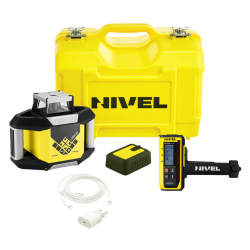
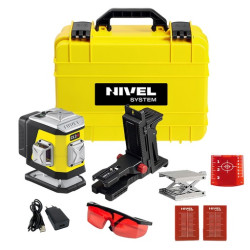
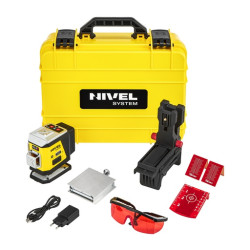
Laser Level Nivel System NL740R DIGITAL
NL740R DIGITALzł6,457.00 tax incl. 5 249,59 zł tax excl.View technical data Zobacz szczegóły
- Weight: 2,89 kg
- Dimensions: 274 x 173 x 232 mm
- Brand: Nivel System
- Power supply: Akumulator Li-ion 7,4 V 5000 mAh
- Operating temperature range: -10 °C do +50 °C
-
Nivel System CL2R Red Crossline Laser
CL2Rzł1,109.00 tax incl. 901,63 zł tax excl.View technical data Zobacz szczegóły
- Weight: 860 g
- Dimensions: 130 x 90 x 133 mm
- Bluetooth receiver: Tak
- Brand: Nivel System
- Power supply: Li-ion 3,7 V (4000 mAh)
-
Nivel System CL3R Red Crossline Laser
CL3Rzł1,293.00 tax incl. 1 051,22 zł tax excl.View technical data Zobacz szczegóły
- Weight: 890 g
- Dimensions: 148 x 90 x 133 mm
- Bluetooth receiver: Tak
- Brand: Nivel System
- Power supply: Li-ion 3,7 V (4000 mAh)
-
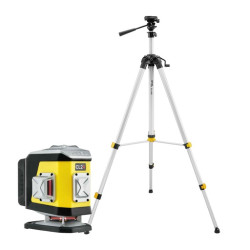
KIT Nivel System CL2R Red Crossline Laser + Sjjm1ex TRIPOD
CL2R-zestaw2zł1,279.00 tax incl. 1 039,84 zł tax excl.View technical data Zobacz szczegóły
- Weight: 860 g
- Dimensions: 130 x 90 x 133 mm
- Bluetooth receiver: Tak
- Brand: Nivel System
- Power supply: Li-ion 3,7 V (4000 mAh)
-
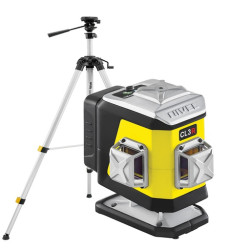
KIT Nivel System CL3R Red Crossline Laser + Sjjm1ex TRIPOD
CL3R-zestaw 2zł1,514.00 tax incl. 1 230,89 zł tax excl.View technical data Zobacz szczegóły
- Weight: 890 g
- Dimensions: 148 x 90 x 133 mm
- Bluetooth receiver: Tak
- Brand: Nivel System
- Power supply: Li-ion 3,7 V (4000 mAh)
-
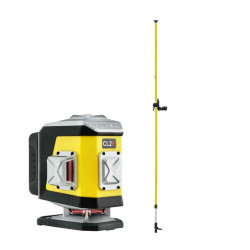
KIT Nivel System CL2R Red Crossline Laser + Lp36 POLE
CL2R-zestaw1zł1,279.00 tax incl. 1 039,84 zł tax excl.View technical data Zobacz szczegóły
- Weight: 860 g
- Dimensions: 130 x 90 x 133 mm
- Bluetooth receiver: Tak
- Brand: Nivel System
- Power supply: Li-ion 3,7 V (4000 mAh)
-
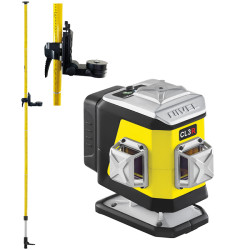
KIT Nivel System CL3R Red Crossline Laser + Lp36 POLE
CL3R-zestaw 1zł1,478.00 tax incl. 1 201,63 zł tax excl.View technical data Zobacz szczegóły
- Weight: 890 g
- Dimensions: 148 x 90 x 133 mm
- Bluetooth receiver: Tak
- Brand: Nivel System
- Power supply: Li-ion 3,7 V (4000 mAh)
-
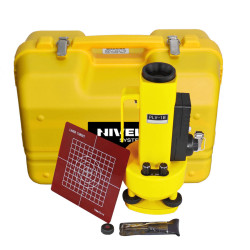
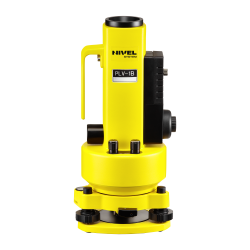
Nivel System PLV-1B Laser Plummet
PLV-1Bzł3,711.00 tax incl. 3 017,07 zł tax excl.View technical data Zobacz szczegóły
- Weight: 2,8 kg
- Dimensions: 120 x 290 mm
- Roll diameter: 36 mm
- Brand: Nivel System
- Mounting: Śruba 5/8"
-
Nivel System PLV-1B Laser Plummet KIT SJJ1 Tripod
PLV-1B-zestaw1zł4,106.97 tax incl. 3 339,00 zł tax excl.View technical data Zobacz szczegóły
- Weight: 2,8 kg
- Dimensions: 120 x 290 mm
- Roll diameter: 36 mm
- Brand: Nivel System
- Mounting: Śruba 5/8"
-
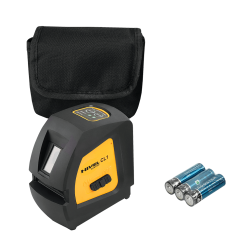
Nivel System CL1 Construction Laser
CL1zł601.47 tax incl. 489,00 zł tax excl.View technical data Zobacz szczegóły
- Weight: 0,419 kg
- Dimensions: 105 x 55 x 104 mm
- Brand: Nivel System
- Power supply: 3×1,5 V (AA)
- Operating temperature range: -15 °C do +45 °C
-
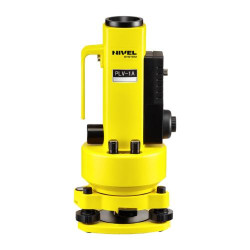
Nivel System PLV-1A Laser Plummet KIT SJJ1 Tripod
PLV-1A-zestaw1zł3,915.00 tax incl. 3 182,93 zł tax excl.View technical data Zobacz szczegóły
- Weight: 2,8 kg
- Dimensions: 120 x 290 mm
- Roll diameter: 36 mm
- Brand: Nivel System
- Mounting: Śruba 5/8"
-
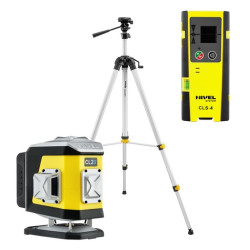
KIT Nivel System CL2R Red Crossline Laser + Sjjm1ex TRIPOD + Cls4 SENSOR
CL2R-zestaw3zł1,562.10 tax incl. 1 270,00 zł tax excl.View technical data Zobacz szczegóły
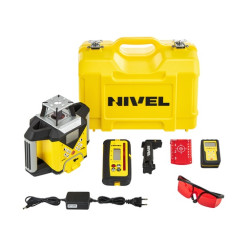
- Weight: 860 g
- Dimensions: 130 x 90 x 133 mm
- Bluetooth receiver: Tak
- Brand: Nivel System
- Power supply: Li-ion 3,7 V (4000 mAh)
A laser level is a measuring instrument that projects a beam or plane of laser light as a level, plumb and reference line — it replaces the traditional spirit level and water hose level, letting one person set out a true plane over a radius from a dozen to several hundred metres. Laser levels split into cross-line (line), rotary (spinning) and pipe types, work with a red beam or the more visible green beam, and most are self-leveling: a compensator automatically holds the beam level within a range of about ±3° with an accuracy on the order of ±1–3 mm/10 m. With a detector (beam receiver) the laser catches a line invisible in full sun and works on an open site too.
At NORWIT.PL we focus primarily on professional laser levels by Nivel System — from self-leveling 3×360° cross-line lasers in the NL720 and NL740 series (green "G" and red "R" versions), through NL500 rotary lasers, to pipe lasers for sewer lines. We split the range into cross-line lasers, rotary laser levels and pipe lasers (also Topcon and Geo Fennel). Below we explain how to match the laser type, beam colour, range and detector to the kind of work.
Laser level — how it works and what it is for
A laser level (laser line level) projects a beam of laser light that a compensator — magnetic or pendulum — automatically holds level when the base is tilted within a range of about ±3°. Once that range is exceeded the tool flags the error by blinking or a beep, which guards against measuring off a crooked plane. Self-leveling accuracy is typically ±1–3 mm over 10 m, enough for most general building and finishing work. Thanks to this one person sets out a true level, plumb and reference line without a helper and without a water hose level.
The uses are many: screeds and floors, tiling and panels, suspended ceilings and drywall, partition walls, and in rotary models — ground leveling, foundations and excavations. To the naked eye the line is readable up to about 20–50 m; for outdoor work and in sunshine you add receivers and detectors that catch a beam invisible in daylight, while a base and reading scale come from tripods and staffs.
Types of laser levels — cross-line, rotary, pipe
The choice of tool is driven above all by the laser type and the way it builds the reference plane. Cross-line lasers cast fixed lines and planes (e.g. 3×360°) and work best indoors. Rotary laser levels spin a point at several hundred revolutions per minute, creating a full plane over open ground. Pipe lasers are point lasers for laying sewers to a set gradient. The whole category belongs to the levels and measurement department.
| Laser type | Working principle | Typical range | Use and examples |
|---|---|---|---|
| Cross-line (line) | fixed 360° lines and planes, one horizontal and vertical ones | about 20–50 m by eye, up to about 70–100 m with a detector | interiors, tiling, ceilings, drywall — Nivel System NL720, NL740 |
| Rotary (spinning) | a spinning point builds a full horizontal plane (rarely vertical) | a radius on the order of several hundred metres with a detector | ground leveling, foundations, excavations — Nivel System NL500 |
| Pipe | a point beam along the pipe axis at a set gradient | a few dozen up to about 150 m inside the pipe | sewers, drainage, pipelines — Topcon, Geo Fennel |
A cross-line laser is cheaper and handier inside a building, a rotary one more productive over open surfaces, and a pipe laser irreplaceable on underground networks. Gear by Nivel System and Geo Fennel is available on the dedicated manufacturer pages.
Popular laser level models at NORWIT.PL
Below is a cross-section of the Nivel System range — from cross-line lasers for finishing to self-leveling rotary lasers for the site. Exact parameters (accuracy, range with a given detector, IP class) are on the product pages.
| Model | Type | Beam colour | Typical use |
|---|---|---|---|
| Nivel System NL720G DIGITAL | cross-line 3×360° | green | interior finishing, high line visibility |
| Nivel System NL720R DIGITAL | cross-line 3×360° | red | indoor work, budget alternative |
| Nivel System NL740G DIGITAL | cross-line 3×360° | green | extensive setting out, more planes |
| Nivel System NL740R DIGITAL | cross-line 3×360° | red | setting out walls and plumbs in a building |
| Nivel System NL500G DIGITAL | rotary | green | ground and floor leveling, work in sunlight |
| Nivel System NL500R DIGITAL | rotary | red | foundations, excavations, large surfaces |
You will find the cross-line models in the cross-line lasers category, the spinning versions in rotary laser levels, and for underground networks there are pipe lasers.
Green or red laser — beam colour and visibility
Beam colour decides line visibility, power draw and price. A green beam (about 515–532 nm) is up to several times brighter to the human eye than a red one (about 635–650 nm) and usually costs 20–40% more; red is cheaper and more economical, and enough in shade and over runs up to about 20–30 m. In Nivel System codes "G" is the green version and "R" the red.
| Feature | Green beam "G" | Red beam "R" |
|---|---|---|
| Wavelength | about 515–532 nm | about 635–650 nm |
| Line visibility | up to several times brighter to the eye | good in shade and over short distances |
| Power draw | higher, shorter runtime per charge | lower, longer runtime on a battery |
| Price | usually 20–40% higher | lower at the same parameters |
Working range, detector and ingress protection class
Range depends on the laser type and the detector (beam receiver). Cross-line laser lines are readable by eye up to about 20–50 m, and with a detector they grow to about 70–100 m — a Nivel System kit with the CLS-300 receiver extends work from 30 to 70 m; rotary lasers with a detector cover a radius on the order of several hundred metres. In dust and rain the IP ingress protection class matters (the first digit is protection from dust, the second from water) — professional models usually fall between IP54 and IP66, and the operating temperature runs from -10°C to +50°C. On the product page check the range with the bundled detector and the IP class.
Frequently asked questions about laser levels
What is a laser level used for?
A laser level sets out the level, plumb and reference line on site and in finishing work — one person marks out a true plane over a radius from a dozen to several hundred metres, without a helper and without a water hose level. It suits screeds, tiling, suspended ceilings and partition walls, while rotary models handle ground leveling, foundations and excavations. The accuracy of typical tools stays within ±1–3 mm over 10 m.
How does a laser level work?
A laser level projects a laser beam that a compensator automatically holds level within a base tilt of about ±3°. Cross-line lasers build fixed 360° planes, while rotary ones spin a point at several hundred revolutions per minute. Accuracy is usually ±1–3 mm over 10 m; the line is readable by the naked eye up to about 20–50 m, and with a detector the working range grows to as much as several hundred metres.
What is the difference between a rotary and a cross-line laser level?
A cross-line laser casts fixed lines and planes (e.g. 3×360°) for indoor work — setting out walls, tiling and ceilings — with a range of 20–50 m by eye and up to about 70–100 m with a detector. A rotary laser spins a point several hundred times per minute, building a plane with a radius on the order of several hundred metres, which is why it works on open ground: leveling, foundations, floors. The cross-line type is cheaper, the rotary one more productive over large surfaces.
Which laser level should I choose for a construction site?
For finishing and indoor work a self-leveling 3×360° cross-line laser is enough, for example the Nivel System NL720 or NL740, with ±2 mm/10 m accuracy and a range of about 70–100 m with a detector. For ground leveling, foundations and floors a rotary laser is better, such as the Nivel System NL500, with a working radius on the order of several hundred metres. Outdoors, pick a green beam (about 515–532 nm) with a detector and an ingress protection class of at least IP54.
How much does a laser level cost?
The price depends on type, beam colour and accessories. Simple cross-line lasers cost from about PLN 300–500, while professional 3×360° models with a green beam and a detector usually run PLN 800–2,500. Rotary lasers are pricier: from about PLN 1,500 to PLN 6,000 and more. Green versions can be 20–40% dearer than red ones; add a tripod, staff and receiver to the cost.
What is the difference between a green and a red laser in a level?
A green beam (about 515–532 nm) is up to several times brighter to the human eye than a red one (about 635–650 nm), so green lines are clearer in a bright interior and over a greater distance. A green laser does, however, draw more power and usually costs 20–40% more. A red beam is cheaper, more economical and enough in shade and over runs up to about 20–30 m. In Nivel System codes "G" is the green version and "R" the red.
What range does a laser level reach with a detector (receiver)?
By the naked eye cross-line laser lines are readable up to about 20–50 m, and with a detector the working range grows to about 70–100 m — a Nivel System kit with the CLS-300 receiver extends work from 30 to 70 m. Rotary lasers with a detector cover a radius on the order of several hundred metres. The detector catches a beam invisible in sunlight and signals a hit with sound, which is why it is essential on an open site.
Is a laser level self-leveling and what does that mean?
Most laser levels are self-leveling — a built-in compensator (magnetic or pendulum) automatically holds the beam level when the base is tilted within a range of about ±3°. Once that range is exceeded the tool flags the error by blinking or a beep, which guards against measuring off a crooked plane. Self-leveling accuracy is usually ±1–3 mm over 10 m, and with the compensator locked the laser works at any angle, for example to set out gradients.
What is a pipe laser for and how does it differ from a rotary level?
A pipe laser is a point laser placed inside a pipe or manhole, casting a beam along the channel axis at a set gradient, usually from -10% to +40% — it is used for laying sewers and drainage over a distance of a few dozen up to about 150 m. A rotary level spins the beam to build a horizontal plane with a radius on the order of several hundred metres. Pipe lasers are represented by the Topcon and Geo Fennel brands.
Is it better to buy or rent a laser level?
Renting a laser typically costs PLN 40–120 per day, so for a one-off renovation it can be cheaper than buying. Crews that use a laser regularly are better off buying — the cost of a simple cross-line laser (from about PLN 300–800) pays back after a dozen or so working days, and your own tool is always available and calibrated. With a rotary laser worth several thousand złoty, the break-even point is a handful to a dozen larger jobs.
Why buy a laser level at NORWIT.PL
We specialise in professional measurement: our range holds primarily laser levels by Nivel System, with pipe lasers rounded out by Geo Fennel and Topcon — no DIY-store substitutes. We advise on the laser type, beam colour and range for the task: from cross-line lasers for finishing, through rotary laser levels for the site, to pipe lasers for underground networks. We supply matching receivers and detectors and tripods and staffs, and the category belongs to the levels and measurement department. Orders ship online nationwide.