


-
-
Concrete
-
- Concreting
- Concrete Vibrators
- Complete 230 V Mechanical Vibrators
- Vibrator Heads
- Vibrator Shafts
- Vibrator Motors
- Concrete Vibrators 42 V | 200 Hz
- Mechanical Vibrators 230 V
- 42 V | 200 Hz Head and Shaft
- 230 V Concrete Vibrators
- Vibrators With Built-In 230 V | 200 Hz Converter
- 42 V | 200 Hz Converters
- Combustion Vibrators
- Pneumatic Vibrators
- External Vibrators
- Power Trowels
- Vibratory Screeds
- Concrete Hand Tools
- Concrete Vibrators
-
-
-
-
-
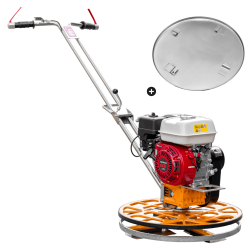
- Walk-Behind Combustion Power Trowels
-
-
-
Heating and cooling
-
Generators
-
Earthworks
-
Industrial vacuums
-
Finishing
-
Pumps
-
Measurement
-
BLOG & Tips
-
Promotions
Kategorie 16 kategorii
Kategorie
-
- Levels and Measurements
- Soil Compactors
- Tamping Rammers - Jumping Jacks
- Single Direction Vibratory Plates
- Reversible Vibratory Plates
- Rollers
- 100 kg Soil Compactors
- 200 kg Soil Compactors
- 300 kg Soil Compactors
- 400 kg Soil Compactors
- 500 kg Soil Compactors
- 600 kg Soil Compactors
- 700 kg Soil Compactors
- 800 kg Soil Compactors
- Wacker Neuson Compactors
- Accessories for Compactors
- Bomag Compactors
- Altrad Belle Compactors
- Paver Compactors
- Swepac Compactors
- Power Generators
- Concreting
- Concrete Vibrators
- Complete 230 V Mechanical Vibrators
- Vibrator Heads
- Vibrator Shafts
- Vibrator Motors
- Concrete Vibrators 42 V | 200 Hz
- Mechanical Vibrators 230 V
- 42 V | 200 Hz Head and Shaft
- 230 V Concrete Vibrators
- Vibrators With Built-In 230 V | 200 Hz Converter
- 42 V | 200 Hz Converters
- Combustion Vibrators
- Pneumatic Vibrators
- External Vibrators
- Vibratory Screeds
- Power Trowels
- Concrete Hand Tools
- Concrete Vibrators
- Pumps and Motor Pumps
- Cutting, Drilling and Grinding
- Heating and Cooling
- Wood Table Saws
- Painting and Plastering
- Combustion Engines
- Washing and Vacuuming
- Cement Mixers
- Paving Tools
- Wheelbarrows and Track Dumpers
- Demolition and Hammers
- Sales
- Levels and Measurements
Brak kategorii pasujących do wyszukiwania.
Mechanical Clamps
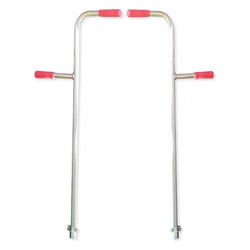
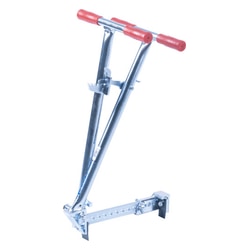
Hand Carrying Handle With Adapter For One Person PROBST FXAH SOLO
48500043zł824.10 tax incl. 670,00 zł tax excl.No technical data available Zobacz szczegóły
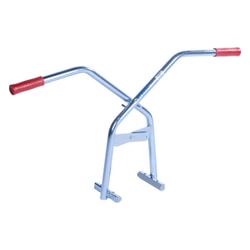
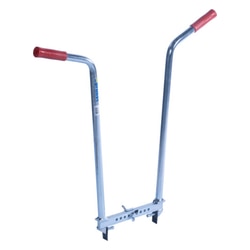
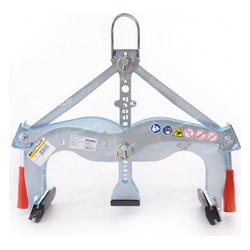
BZ Probst Curb Cross Gripper
53200084zł426.81 tax incl. 347,00 zł tax excl.View technical data Zobacz szczegóły
- Weight: 3,8 kg
- Working load limit: 150 kg
- Internal height: 200 mm
- Gripper range: 0-400 mm
- Maximum gripper length: 150 mm
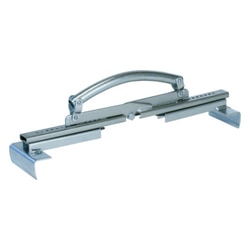
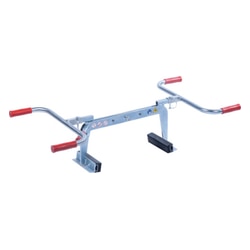
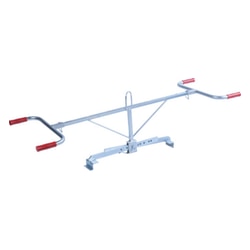
Professional Plate Gripper PPH Probst
53200054zł314.88 tax incl. 256,00 zł tax excl.View technical data Zobacz szczegóły
- Weight: 1,6 kg
- Working load limit: 60 kg
- Gripper range: 330-620 mm
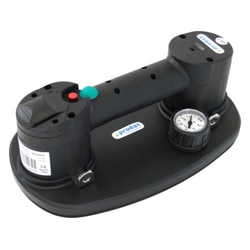
Tile Gripper FXAH-120-GRABO-EU-GREENLINE Probst
58500016zł1,387.00 tax incl. 1 127,64 zł tax excl.View technical data Zobacz szczegóły
- Weight: 1.5 kg
- Dimensions: 300 x 180 mm
- Battery capacity: 2,2 Ah
- Working load limit: 120 kg
Probst HG-TP Holders
51010005zł527.67 tax incl. 429,00 zł tax excl.View technical data Zobacz szczegóły
- Number of pieces: 2
SAH Cube Pulling Gripper, Grip Width 90-400mm Probst
51800050zł502.00 tax incl. 408,13 zł tax excl.View technical data Zobacz szczegóły
- Weight: 4,9 kg
- Working width: 90-400 mm
Universal Gripper BVZ Probst
53200020zł1,079.94 tax incl. 878,00 zł tax excl.View technical data Zobacz szczegóły
- Weight: 11,5 kg
- Working load limit: 200 kg
- Internal height: 210 mm
- Gripper range: 0-550 mm
- Maximum gripper length: 200 mm
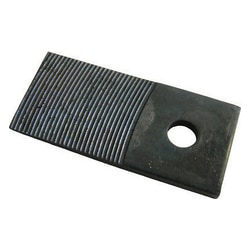
Spare Blade For SZ/SAH Short (55 Mm) 1 Pc. Spare Blade SZ, PZ, SAH And PB-15/24 Probst
41800001zł72.57 tax incl. 59,00 zł tax excl.No technical data available Zobacz szczegóły
SZ Ankle Gripper With Probst Locking Device
51800030zł661.74 tax incl. 538,00 zł tax excl.View technical data Zobacz szczegóły
- Weight: 4 kg
- Working width: 90-330 mm
EASYGRIP MAXI EXG Gripper For Concrete Elements Probst Spacing 0 - 400 Mm
53100392zł2,408.34 tax incl. 1 958,00 zł tax excl.View technical data Zobacz szczegóły
- Weight: 12,4 kg
- Working load limit: 550 kg
- Internal height: 145-195 mm
- Gripper range: 0-400 mm
- Maximum gripper length: 235 mm
VZ Probst Stacking Gripper
53100140zł1,080.00 tax incl. 878,05 zł tax excl.View technical data Zobacz szczegóły
- Weight: 11 kg
- Working load limit: 100 kg
- Internal height: 40 mm
- Gripper range: 500-1045 mm
- Maximum gripper length: 100 mm
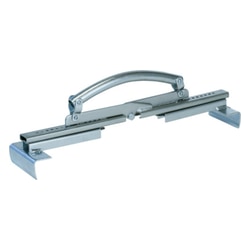
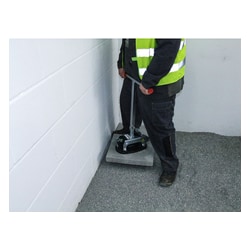
Professional Plate Gripper PPH-22/50 Probst
53200052zł314.88 tax incl. 256,00 zł tax excl.View technical data Zobacz szczegóły
- Weight: 1,6 kg
- Working load limit: 60 kg
- Gripper range: 220-505 mm
Mechanical clamps grip a concrete element with jaws from the sides and hold it by clamping force that rises with the load — the heavier the kerb, the tighter the jaws close. This is the simplest and cheapest way to move kerbs, blocks, kerbstones and pavement slabs, needing neither a power source nor a carrier machine in the lighter models.
NORWIT.PL stocks Probst clamps across the full range of work: the BZ transverse kerb clamp (150 kg capacity, 0–400 mm range, 3.8 kg), the BVZ universal clamp (200 kg, 0–550 mm), EASYGRIP MAXI EXG for concrete elements (550 kg), the SAH clamp for pulling laid blocks (grip width 90–400 mm) and the lightweight PPH slab clamp at 1.6 kg with a 330–620 mm range.
For flat and large-format elements that jaws cannot grip, use vacuum laying devices. Hand tools for bedding and adjusting blocks are in hammers, pullers and adjusters, and the complete range is in paving tools.
How a mechanical clamp for kerbs and blocks works
A mechanical clamp (also called paving tongs) is a tool with two arms ending in jaws, joined by a scissor pivot. Once lifted by the handle or sling, the weight of the element transfers through the arms and presses the jaws against its sides — the heavier the kerb, the greater the clamping force. There is no lock to tighten: the clamp holds more firmly the more it is loaded.
There are two requirements. The element must have sides tall enough for the jaws to bear against — in practice from 145 to 210 mm of internal height, depending on the model. There must also be clear space around the element for the jaws to slide in, which is why a mechanical clamp cannot lay slabs tight against one another. In both cases — low elements and jointless laying — the answer is a vacuum laying device gripping from above.
Types of mechanical clamp
The distinction follows from the axis in which the element is gripped and how wide the jaws open.
| Type | How it grips | Used for |
|---|---|---|
| Transverse | across the element, on the shorter side | road and pavement kerbs, edgings |
| Longitudinal | along the element, on the longer side | long kerbs, platform units |
| Universal | wide opening range, many formats | mixed range of elements on site |
| Block puller type | narrow jaws entering the joint | lifting single blocks out of the surface |
| Slab clamp | wide opening, low capacity | pavement and patio slabs |
The block-pulling clamp (SAH) is a separate design — its jaws are narrow enough to enter the joint between laid blocks and lift a single element vertically without levering against its neighbours. It is used when replacing a cracked block and when reaching services beneath the surface.
Probst mechanical clamps at NORWIT.PL
Below are the models with the parameters that drive the choice: capacity, jaw opening range and internal height, meaning the minimum height of the element's side.
| Model | Capacity | Opening range | Weight | Intended for |
|---|---|---|---|---|
| BZ transverse clamp | 150 kg | 0–400 mm | 3.8 kg | kerbs, edgings |
| BVZ universal clamp | 200 kg | 0–550 mm | 11.5 kg | mixed formats |
| EASYGRIP MAXI EXG | 550 kg | 0–400 mm | 12.4 kg | heavy concrete elements |
| SAH clamp | — | 90–400 mm (grip width) | 4.9 kg | pulling laid blocks |
| PPH slab clamp | 60 kg | 330–620 mm | 1.6 kg | pavement and patio slabs |
The difference between the BZ and the EASYGRIP MAXI EXG illustrates the logic well: both share the same 0–400 mm opening range, but the EXG carries 550 kg instead of 150 kg, because its structure is far heavier — 12.4 kg against 3.8 kg. The lighter BZ can be handled by hand all day; the heavier EXG is slung under a machine. The range also includes VZ laying clamps, SZ block clamps with a lock, FXAH-Solo handles for one-person carrying and the FXAH-120 GRABO EU for tiles.
Choosing a kerb clamp
Three parameters, in this order. Element mass — a road kerb of 100 × 30 × 15 cm weighs about 108 kg, a pavement kerb of 100 × 20 × 6 cm about 29 kg, a paving slab of 50 × 50 × 7 cm about 42 kg. Element width must fall within the jaw opening range — 0–400 mm covers most kerbs and blocks, 0–550 mm also takes wide units. Side height decides whether the jaws have anything to bear against at all.
| Element | Approx. mass | Recommended clamp |
|---|---|---|
| Concrete edging 100 × 20 × 6 cm | approx. 29 kg | BZ (150 kg) |
| Paving slab 50 × 50 × 7 cm | approx. 42 kg | PPH (60 kg) or BZ |
| Road kerb 100 × 30 × 15 cm | approx. 108 kg | BZ (150 kg) |
| Blocks and heavy units | 200–550 kg | EASYGRIP MAXI EXG (550 kg) |
Masses are indicative, based on a concrete density of about 2,400 kg/m³ — an individual product may differ by a dozen or so percent. Leave a capacity margin, especially where elements can be wet, and remember that with slung models the clamp's own weight adds to the load on the machine.
Once the surface is laid, joints and bedding are corrected with paving hammers, pry bars and pullers, and elements are cut to size with block splitters.
Frequently asked questions — mechanical clamps
Which kerb clamp should I choose?
For a typical road kerb of 100 × 30 × 15 cm weighing about 108 kg, a transverse clamp rated at 150 kg with a 0–400 mm opening range is enough — for example the Probst BZ at an own weight of 3.8 kg. For wider elements or a mixed range, a universal model opening to 550 mm serves better, and for blocks over 200 kg a reinforced EASYGRIP MAXI design rated at 550 kg. Always size to the heaviest element, not the average one. All models designed for these elements are collected in curb and edging clamps.
Which clamp for block paving?
Single blocks already set in the surface call for a clamp with narrow jaws that enter the joint, such as the Probst SAH with a grip width of 90–400 mm and a weight of 4.9 kg. For moving blocks before laying, a universal clamp or the SZ model with a lock works well. Whole courses of block paving are instead handled by multi-grip laying clamps that move dozens of elements at once.
How does a paving clamp work?
A paving clamp works on a scissor-lever principle: the weight of the lifted element transfers through the arms onto the jaws and presses them against the element's sides. Clamping force rises in proportion to the load, so the heavier the kerb, the more securely it is held — there is no screw or lock to tighten. The condition is a side height sufficient for the jaws to bear against, typically 145 to 210 mm of internal clamp height.
What is the difference between a transverse and a longitudinal clamp?
A transverse clamp grips the element across its shorter side — the standard approach for road kerbs and edgings, where controlling the element's alignment matters. A longitudinal clamp grips along the longer side, giving steadier control on long elements such as platform kerbs. With a mixed range on site, a universal model opening to 550 mm and covering both layouts is often the more practical choice.
How much does a road kerb weigh and can I lift it with a hand clamp?
A road kerb measuring 100 × 30 × 15 cm weighs around 108 kg, a pavement kerb of 100 × 20 × 6 cm around 29 kg. A 150 kg hand clamp handles both, but the weight is actually carried by two operators or a light jib crane — the clamp only holds the element, it does not reduce its mass. Elements above 200 kg call for clamps slung under an excavator or loader.
When will a mechanical clamp not work?
A mechanical clamp fails in two situations: when the element is too low for the jaws to bear against (patio slabs a few centimetres thick), and when elements are laid tight against one another with no room for the jaws. In both cases the answer is a vacuum laying device, which grips the element from above by suction and needs no access from the sides.
Does a mechanical clamp need maintenance?
A mechanical clamp has no drive and no hydraulics, so servicing comes down to three things: checking the jaws and their pads, checking for play in the scissor pivot, and cleaning off mortar and concrete dust after work. Worn jaw pads are replaced, since grip depends on them. Load-bearing parts must be taken out of service at any visible deformation or crack — the clamp works above people and falls under lifting-equipment safety rules.