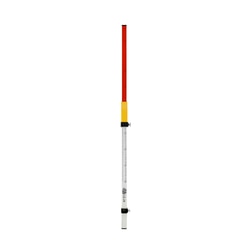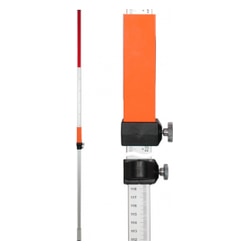



-
-
Concrete
-
- Concreting
- Concrete Vibrators
- Complete 230 V Mechanical Vibrators
- Vibrator Heads
- Vibrator Shafts
- Vibrator Motors
- Concrete Vibrators 42 V | 200 Hz
- Mechanical Vibrators 230 V
- 42 V | 200 Hz Head and Shaft
- 230 V Concrete Vibrators
- Vibrators With Built-In 230 V | 200 Hz Converter
- 42 V | 200 Hz Converters
- Combustion Vibrators
- Pneumatic Vibrators
- External Vibrators
- Power Trowels
- Vibratory Screeds
- Concrete Hand Tools
- Concrete Vibrators
-
-
-
-
-
- Walk-Behind Combustion Power Trowels
-
-
-

Heating and cooling
-
Generators
-
Earthworks
-
Industrial vacuums
-
Finishing
-
Pumps
-
Measurement
-
BLOG & Tips
-
Promotions
Kategorie 16 kategorii
Kategorie
-
- Levels and Measurements
- Soil Compactors
- Tamping Rammers - Jumping Jacks
- Single Direction Vibratory Plates
- Reversible Vibratory Plates
- Rollers
- 100 kg Soil Compactors
- 200 kg Soil Compactors
- 300 kg Soil Compactors
- 400 kg Soil Compactors
- 500 kg Soil Compactors
- 600 kg Soil Compactors
- 700 kg Soil Compactors
- 800 kg Soil Compactors
- Wacker Neuson Compactors
- Accessories for Compactors
- Bomag Compactors
- Altrad Belle Compactors
- Paver Compactors
- Swepac Compactors
- Power Generators
- Concreting
- Concrete Vibrators
- Complete 230 V Mechanical Vibrators
- Vibrator Heads
- Vibrator Shafts
- Vibrator Motors
- Concrete Vibrators 42 V | 200 Hz
- Mechanical Vibrators 230 V
- 42 V | 200 Hz Head and Shaft
- 230 V Concrete Vibrators
- Vibrators With Built-In 230 V | 200 Hz Converter
- 42 V | 200 Hz Converters
- Combustion Vibrators
- Pneumatic Vibrators
- External Vibrators
- Vibratory Screeds
- Power Trowels
- Concrete Hand Tools
- Concrete Vibrators
- Pumps and Motor Pumps
- Cutting, Drilling and Grinding
- Heating and Cooling
- Wood Table Saws
- Painting and Plastering
- Combustion Engines
- Washing and Vacuuming
- Cement Mixers
- Paving Tools
- Wheelbarrows and Track Dumpers
- Demolition and Hammers
- Sales
- Levels and Measurements
Brak kategorii pasujących do wyszukiwania.
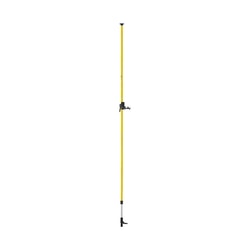
Laser Level Extension Poles
Telescopic Staff Nivel System LS-24
LS-24zł212.00 tax incl. 172,36 zł tax excl.View technical data Zobacz szczegóły
- Brand: Nivel System
- Working height [ m ]: 2,4 m
Nivel System LP36 Strut Pole
LP-36zł356.70 tax incl. 290,00 zł tax excl.View technical data Zobacz szczegóły
- Brand: Nivel System
- Material_: Aluminium
- Length: 3,6 m
Telescopic Staff (3.5 M) Nivel System LS-35
LS-35zł323.99 tax incl. 263,41 zł tax excl.View technical data Zobacz szczegóły
- Brand: Nivel System
- Working height [ m ]: 2024-03-05
Telescopic Staff TN 20 - Geo-Fennel
433zł238.62 tax incl. 194,00 zł tax excl.View technical data Zobacz szczegóły
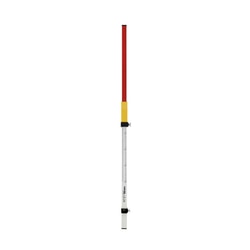
- Length: 2,4 m
A laser levelling staff is a telescopic aluminium pole with a millimetre scale that carries the receiver of a rotating laser. It transfers a reference plane, checks levels and measures height differences without a second person standing at the instrument. Nothing is read through a telescope: the sensor slides along the profile until it signals that it has caught the beam, and the figure is taken from the scale at the point where it stops. Poles of this type typically extend to about 3–5 m and collapse to around 1.1–1.3 m, so they travel in a car boot or a crew toolbox.
NORWIT.PL supplies laser staffs mainly from Nivel System and Geo Fennel, normally fitted with a receiver bracket, a bull's eye vial and quick clamps on each section. The category sits inside the wider range of surveying staffs, while versions read through a telescope belong to optical level staffs. Below we explain how to match length, scale and sensor mounting to the laser you already own.
How a laser staff works with a receiver
Measurement starts from the reference plane swept by a rotating laser, whose head spins at roughly 300–600 rpm. The staff finds that plane at a given point: the receiver clamped to the profile travels up and down until the tone and arrows confirm it sits on the beam axis, and the figure is read off the millimetre scale. One person handles the whole set, because nobody has to stay at the instrument.
Typical jobs are levelling floor slabs, checking falls, setting formwork and grading ground, together with surveying tripods and rotating laser levels.
Laser staff versus optical level staff
The two poles look alike, yet they serve different measuring techniques. A laser staff carries the receiver, so its profile has to suit the sensor bracket. An optical level staff is a target observed through a telescope, so what counts there is a high-contrast E-pattern scale.
| Feature | Laser staff | Optical level staff |
|---|---|---|
| How the reading is taken | sensor catches the beam, the operator reads at the pole | an observer reads the graduation through a telescope |
| Crew | one person | usually two people |
| Typical range | approx. 3–5 m | approx. 3–7 m |
For work with a rotating instrument or a crossline laser, choose a pole whose profile accepts the sensor bracket; telescope-read versions are gathered under optical level staffs.
Choosing length and mounting
Length follows the largest height difference measured from a single set-up, plus a margin for placing the laser above the working level. Interiors and screeds are covered by roughly 2–3 m, foundations and formwork by about 3.5–4 m, and ground levelling by around 5 m. Telescopic staffs usually have 4–5 sections and weigh 1–2 kg.
Small details decide how the pole behaves on site: clamp levers hold better than twist locks once dust reaches the sections, and the profile width has to match the receiver bracket. Instrument mountings are listed under laser mounts, and the remaining hardware under surveying accessories.
Frequently asked questions about laser staffs
How accurate is a measurement taken with a laser staff and a receiver?
The receiver sets the accuracy of the set, not the pole itself. Sensors offer several sensitivity bands: the fine band holds a reading window of about 1 mm, coarse modes roughly 2–10 mm, and the figure is taken off the millimetre scale on the profile. A staff leaning out of plumb also reads high, so the bull's eye vial matters as much as the class of the sensor. The rotating head sweeps its reference plane at roughly 300–600 rpm, and height differences are measured against it over a span of about 3–5 m.
What length of laser staff should be chosen for a construction site?
Length comes from the largest height difference measured from one set-up, increased by a margin for mounting the laser above the working level. Interior work and floor screeds are served by a range of roughly 2–3 m, foundations and formwork by about 3.5–4 m, while ground levelling and excavations justify around 5 m. Telescopic staffs are built from 4–5 sections, collapse to some 1.1–1.3 m and weigh about 1–2 kg.
Can a laser staff be used without a receiver?
Without a receiver the staff is only a vertical rule, useful where the beam is visible to the naked eye. Indoors, the line of a crossline laser can be read straight off the millimetre scale, usually within about 20–30 m. The beam of a rotating laser fades in daylight a few metres from the instrument, so outdoors the sensor is essential — it is what holds the reading window of about 1 mm across the full 3–5 m of the pole.
Does a laser staff fit every receiver and every instrument?
Compatibility is settled by the geometry of the bracket, not by the badge on the instrument. Receiver clamps accept profiles of differing width and thickness, so compare the cross-section of the pole with the opening of the bracket you already own before ordering. The laser itself plays no part — a staff covering about 3–5 m works with any rotating instrument running at the usual 300–600 rpm, provided the receiver can be clamped to it tightly enough not to slip. Poles from Nivel System and Geo Fennel normally use a profile sized for standard brackets and carry a vial that keeps them plumb.
Why buy a laser staff from NORWIT.PL
Laser staffs from Nivel System and Geo Fennel are selected to match the receivers and instruments we sell. Remaining variants are gathered in the surveying staffs section. Orders are placed online and shipped throughout Poland.