


-
-
Concrete
-
- Concreting
- Concrete Vibrators
- Complete 230 V Mechanical Vibrators
- Vibrator Heads
- Vibrator Shafts
- Vibrator Motors
- Concrete Vibrators 42 V | 200 Hz
- Mechanical Vibrators 230 V
- 42 V | 200 Hz Head and Shaft
- 230 V Concrete Vibrators
- Vibrators With Built-In 230 V | 200 Hz Converter
- 42 V | 200 Hz Converters
- Combustion Vibrators
- Pneumatic Vibrators
- External Vibrators
- Power Trowels
- Vibratory Screeds
- Concrete Hand Tools
- Concrete Vibrators
-
-
-
-
-
- Walk-Behind Combustion Power Trowels
-
-
-
Heating and cooling
-
Generators
-
Earthworks
-
Industrial vacuums
-
Finishing
-
Pumps
-
Measurement
-
BLOG & Tips
-
Promotions
Kategorie 16 kategorii
Kategorie
-
- Levels and Measurements
- Soil Compactors
- Tamping Rammers - Jumping Jacks
- Single Direction Vibratory Plates
- Reversible Vibratory Plates
- Rollers
- 100 kg Soil Compactors
- 200 kg Soil Compactors
- 300 kg Soil Compactors
- 400 kg Soil Compactors
- 500 kg Soil Compactors
- 600 kg Soil Compactors
- 700 kg Soil Compactors
- 800 kg Soil Compactors
- Wacker Neuson Compactors
- Accessories for Compactors
- Bomag Compactors
- Altrad Belle Compactors
- Paver Compactors
- Swepac Compactors
- Power Generators
- Concreting
- Concrete Vibrators
- Complete 230 V Mechanical Vibrators
- Vibrator Heads
- Vibrator Shafts
- Vibrator Motors
- Concrete Vibrators 42 V | 200 Hz
- Mechanical Vibrators 230 V
- 42 V | 200 Hz Head and Shaft
- 230 V Concrete Vibrators
- Vibrators With Built-In 230 V | 200 Hz Converter
- 42 V | 200 Hz Converters
- Combustion Vibrators
- Pneumatic Vibrators
- External Vibrators
- Vibratory Screeds
- Power Trowels
- Concrete Hand Tools
- Concrete Vibrators
- Pumps and Motor Pumps
- Cutting, Drilling and Grinding
- Heating and Cooling
- Wood Table Saws
- Painting and Plastering
- Combustion Engines
- Washing and Vacuuming
- Cement Mixers
- Paving Tools
- Wheelbarrows and Track Dumpers
- Demolition and Hammers
- Sales
- Levels and Measurements
Brak kategorii pasujących do wyszukiwania.
Wall Saws
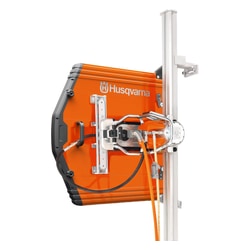
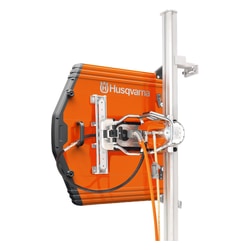
Piła ścienna Husqvarna WS 8
967971301zł128,639.56 tax incl. 104 585,01 zł tax excl.View technical data Zobacz szczegóły
- Weight: 92 kg
- Dimensions: 286 × 350 × 412 mm
- Output power: 6,5 kW
- Max. disc diameter: 900 mm
- Max. depth of cut: 395 mm
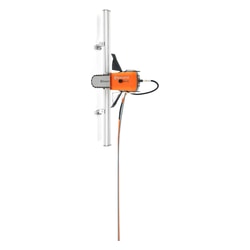
Przystawka łańcuchowa Husqvarna WSC 40
967252301zł68,695.46 tax incl. 55 849,97 zł tax excl.View technical data Zobacz szczegóły
- Number of gears: 1
- Cutting head weight: 17,5 kg
- Max. depth of cut: 400 mm
- Maks. ciśnienie wody: 7 bar
- Maks. moment obrotowy wrzeciona: 30 Nm
Piła ścienna Husqvarna WS 482 HF
967646702zł178,609.55 tax incl. 145 211,02 zł tax excl.View technical data Zobacz szczegóły
- Number of gears: 2
- Cutting head weight: 28 kg
- Max. disc diameter: 1 600 mm
- Max. depth of cut: 730 mm
- Maks. ciśnienie wody: 7 bar
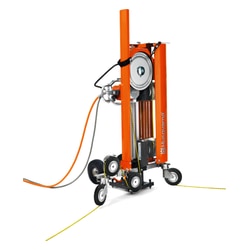
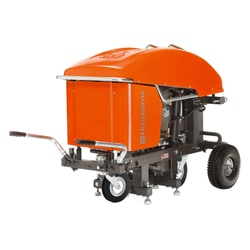
Piła linowa Husqvarna CS 10
966565701zł61,294.49 tax incl. 49 832,92 zł tax excl.View technical data Zobacz szczegóły
- Weight: 100 kg
- Dimensions: 1 200 × 800 × 5 400 mm
- Output power: 19 kW
- Direction of rotation: Oba kierunki
- Moment startowy wrzeciona: 160 Nm
Piła linowa Husqvarna WS 482 HF + CS 10
967646706zł136,270.31 tax incl. 110 788,87 zł tax excl.View technical data Zobacz szczegóły
- Dimensions: 1 200 × 800 × 5 400 mm
- Output power: 19 kW
- Direction of rotation: Oba kierunki
- Max. depth of cut: 730 mm
- Moment startowy wrzeciona: 230 Nm
Piła linowa Husqvarna CS 2512
965156201zł97,148.33 tax incl. 78 982,38 zł tax excl.View technical data Zobacz szczegóły
- Weight: 150 kg
- Dimensions: 1 200 × 800 × 1 200 mm
- Output power: 20 kW
- Direction of rotation: Jeden kierunek
- Przepływ oleju hydraulicznego: 65 l/min
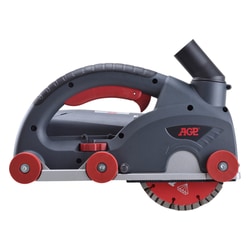
Bruzdownica ścienna AGP CG150 (2500 W)
CG150zł6,844.95 tax incl. 5 565,00 zł tax excl.View technical data Zobacz szczegóły
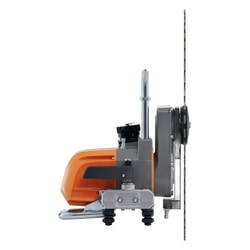
- Weight: 7,2 kg
- Dimensions: 365 x 220 x 288 mm
- Frequency: 50 Hz
- Voltage: 230 V
- Power: 2 500 W
A wall saw cuts through concrete and reinforced concrete along a track anchored to the wall or slab. The cutting head travels on that rail while the operator controls the feed remotely, so the kerf stays straight over its whole length and the blade sinks into the structure in stages. Blades of 600–1600 mm typically reach a cutting depth in the 250–700 mm range, enough to pass through the full section of a load-bearing wall. This is the standard machine for forming door and window openings, service penetrations and controlled demolition.
NORWIT.PL supplies professional Husqvarna wall saws, including the WS 8 — the full Husqvarna range sits on the Husqvarna Construction page. The category belongs to our concrete cutting and drilling section, alongside core drills, concrete chainsaws and power packs. Below we explain how to match blade diameter to wall thickness and where a wall saw beats a hand-held cutter.
How a wall saw cuts along a guide rail
A wall saw — also called a track-mounted concrete saw or wall sawing system — consists of a guide rail anchored to the wall or slab, a cutting head carrying a diamond blade, and a power unit: either a hydraulic power pack or a high-frequency converter. The head advances along the rail at a set feed rate and the operator drives it by remote control, standing clear of the blade line. That geometry gives a kerf that stays straight and square to the face, which no hand-guided cutter can match.
Cutting is done in several passes. The first score is usually 30–60 mm deep and each following pass deepens the kerf until the blade breaks through. Water at 3–8 l/min cools the segments and binds the silica dust, so the operation is effectively dust-free. Hydraulic saws run off power packs of roughly 9–20 kW at pressures up to about 230 bar — and the same pack normally drives hydraulic demolition hammers as well.
Matching blade diameter to wall thickness
Cutting depth is roughly half the blade diameter, minus a few centimetres lost to the flange and the blade guard. The working rule: the blade needs a diameter of more than twice the thickness of the element. A 240 mm wall calls for a 600–650 mm blade, a 300 mm slab for something around 800 mm, and a 500 mm section for 1200 mm. Past roughly 700 mm of thickness the job moves to two-sided cutting on a shared axis, or to a wire saw. Heavily reinforced concrete calls for concrete diamond blades with a harder segment bond, because a soft bond wears away far too quickly.
Wall saw against the other ways of making an opening
| Criterion | Wall saw | Hand-held cutter | Core drill |
|---|---|---|---|
| Cutting depth | approx. 250–700 mm | approx. 100–150 mm | hole up to approx. 1000 mm |
| Guidance | rail, remote feed | hand-held | drill stand |
| Set-up time per position | approx. 20–40 min | a few minutes | approx. 10–20 min |
In practice the three methods work together: a core drill opens the corner holes that let the blade enter the material, an electric disc cutter finishes the corners, and horizontal cuts in slabs and pavements go to floor saws. Every machine listed here is a wet-cut diamond saw for concrete, reinforced concrete and masonry.
Wall saws — frequently asked questions
What is a wall saw used for?
A wall saw cuts concrete and reinforced concrete with a diamond blade guided along a rail anchored to the wall or slab. The head is driven mechanically and controlled remotely, which keeps the kerf straight and square to the face. Blades of 600–1600 mm give cutting depths in the 250–700 mm range, so a single machine passes through the full section of a load-bearing wall. Typical work covers door and window openings, service penetrations and controlled demolition with low vibration.
Which blade diameter suits a given wall thickness?
Blade diameter should exceed twice the thickness of the element, because usable depth amounts to about half the diameter once the flange and guard are subtracted. A 240 mm wall needs a 600–650 mm blade, a 300 mm slab around 800 mm, and a 500 mm section 1200 mm — or cutting from both faces on one shared axis. Beyond roughly 700 mm the work goes to a wire saw, which has no section limit. Dense reinforcement additionally calls for a harder segment bond.
When does a wall saw beat a hand-held cutter?
A wall saw wins wherever depth and a square kerf decide the outcome. A hand-held cutter reaches some 100–150 mm and depends on the operator's force, so on a 240 mm wall it will neither break through nor hold a straight edge over a two-metre run. A rail-guided saw takes 250–700 mm from one set-up and works vertically or overhead without the operator carrying the machine. The trade-off is set-up: mounting the rail takes some 20–40 minutes and the head needs a power pack behind it.
What does a wall saw need to run on site?
Four things decide whether the saw starts: a power unit, water, anchors and slurry handling. Hydraulic saws need a power pack of roughly 9–20 kW delivering 35–65 l/min at up to about 230 bar, while high-frequency electric saws run off a 400 V three-phase supply through a converter. Cooling consumes 3–8 litres of water per minute, which comes to roughly 180–480 litres over an hour of cutting. The rail is fixed with anchors, and before the first score the crew checks for concealed services and supports the block being removed — one square metre of a 200 mm wall weighs about 480 kg. Power units are listed under power packs.