


-
-
Concrete
-
- Concreting
- Concrete Vibrators
- Complete 230 V Mechanical Vibrators
- Vibrator Heads
- Vibrator Shafts
- Vibrator Motors
- Concrete Vibrators 42 V | 200 Hz
- Mechanical Vibrators 230 V
- 42 V | 200 Hz Head and Shaft
- 230 V Concrete Vibrators
- Vibrators With Built-In 230 V | 200 Hz Converter
- 42 V | 200 Hz Converters
- Combustion Vibrators
- Pneumatic Vibrators
- External Vibrators
- Power Trowels
- Vibratory Screeds
- Concrete Hand Tools
- Concrete Vibrators
-
-
-
-
-
- Walk-Behind Combustion Power Trowels
-
-
-
Heating and cooling
-
Generators
-
Earthworks
-
Industrial vacuums
-
Finishing
-
Pumps
-
Measurement
-
BLOG & Tips
-
Promotions
Kategorie 16 kategorii
Kategorie
-
- Levels and Measurements
- Soil Compactors
- Tamping Rammers - Jumping Jacks
- Single Direction Vibratory Plates
- Reversible Vibratory Plates
- Rollers
- 100 kg Soil Compactors
- 200 kg Soil Compactors
- 300 kg Soil Compactors
- 400 kg Soil Compactors
- 500 kg Soil Compactors
- 600 kg Soil Compactors
- 700 kg Soil Compactors
- 800 kg Soil Compactors
- Wacker Neuson Compactors
- Accessories for Compactors
- Bomag Compactors
- Altrad Belle Compactors
- Paver Compactors
- Swepac Compactors
- Power Generators
- Concreting
- Concrete Vibrators
- Complete 230 V Mechanical Vibrators
- Vibrator Heads
- Vibrator Shafts
- Vibrator Motors
- Concrete Vibrators 42 V | 200 Hz
- Mechanical Vibrators 230 V
- 42 V | 200 Hz Head and Shaft
- 230 V Concrete Vibrators
- Vibrators With Built-In 230 V | 200 Hz Converter
- 42 V | 200 Hz Converters
- Combustion Vibrators
- Pneumatic Vibrators
- External Vibrators
- Vibratory Screeds
- Power Trowels
- Concrete Hand Tools
- Concrete Vibrators
- Pumps and Motor Pumps
- Cutting, Drilling and Grinding
- Heating and Cooling
- Wood Table Saws
- Painting and Plastering
- Combustion Engines
- Washing and Vacuuming
- Cement Mixers
- Paving Tools
- Wheelbarrows and Track Dumpers
- Demolition and Hammers
- Sales
- Levels and Measurements
Brak kategorii pasujących do wyszukiwania.
Electric Air Heaters
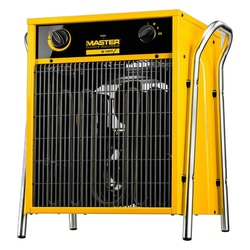
Nagrzewnica elektryczna Master B 9
4012.053zł949.99 tax incl. 772,35 zł tax excl.View technical data Zobacz szczegóły
- Weight: 9,3 kg
- Dimensions: 340 × 420 × 440 mm
- Frequency: 50 Hz
- Power supply: 400 V
- Thermostat control: W zestawie
Nagrzewnica elektryczna Master B 15
4012.054zł1,540.00 tax incl. 1 252,03 zł tax excl.View technical data Zobacz szczegóły
- Weight: 15 kg
- Dimensions: 350 × 470 × 490 mm
- Frequency: 50 Hz
- Power supply: 400 V
- Thermostat control: W zestawie
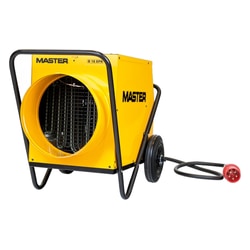
Nagrzewnica elektryczna Master B 18
4012.014zł3,097.00 tax incl. 2 517,89 zł tax excl.View technical data Zobacz szczegóły
- Weight: 27 kg
- Dimensions: 700 × 490 × 530 mm
- Frequency: 50–60 Hz
- Power supply: 400 V
- Thermostat control: Opcjonalnie TH5
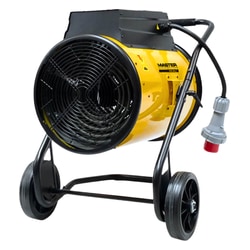
Nagrzewnica elektryczna Master RS 40
4012.012zł6,638.00 tax incl. 5 396,75 zł tax excl.View technical data Zobacz szczegóły
- Weight: 46 kg
- Dimensions: 870 × 630 × 770 mm
- Frequency: 50 Hz
- Power supply: 400 V
- Thermostat control: Wbudowany
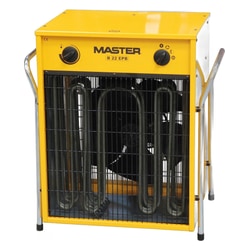
Nagrzewnica elektryczna Master B 22
4012.062zł2,517.99 tax incl. 2 047,15 zł tax excl.View technical data Zobacz szczegóły
- Weight: 20 kg
- Dimensions: 350 × 540 × 590 mm
- Frequency: 50–60 Hz
- Power supply: 400 V
- Thermostat control: W zestawie
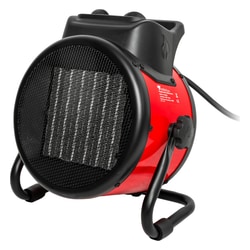
Toolsa Electric Heater TA-ER3C
TA-ER3Czł183.27 tax incl. 149,00 zł tax excl.View technical data Zobacz szczegóły
- Weight: 2.3 kg
- Dimensions: 275 x 175 x 318 mm
- Frequency: 50 Hz
- Voltage: 230 V
- Power: 23 W | 1500 W | 3000 W (adjustable)
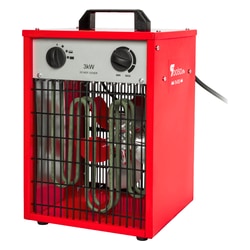
Toolsa Electric Heater TA-ES3
TA-ES3zł244.77 tax incl. 199,00 zł tax excl.View technical data Zobacz szczegóły
- Weight: 5 kg
- Dimensions: 290 x 253 x 403 mm
- Frequency: 50 Hz
- Power: 29 W | 1500 W | 3000 W (adjustable)
- Noise level: 46 dB
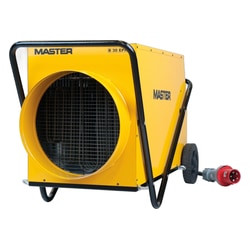
Nagrzewnica elektryczna Master B 30
4012.040zł7,068.00 tax incl. 5 746,34 zł tax excl.View technical data Zobacz szczegóły
- Weight: 53 kg
- Dimensions: 1030 × 580 × 680 mm
- Frequency: 50 Hz
- Power supply: 400 V
- Thermostat control: Opcjonalnie TH5
Nagrzewnica elektryczna Master B 5
4012.052zł728.00 tax incl. 591,87 zł tax excl.View technical data Zobacz szczegóły
- Weight: 6,4 kg
- Dimensions: 310 × 360 × 380 mm
- Frequency: 50 Hz
- Power supply: 400 V
- Thermostat control: W zestawie
AIRREX AH-720 Infrared Electric Heater
AH720zł1,966.77 tax incl. 1 599,00 zł tax excl.View technical data Zobacz szczegóły
- Recommended area for heating: 10-100 m² (wysokość
- Weight: 15 kg
- Dimensions: 54 x 29 x 80 mm
- Performance: 2
- Thermostat control: Yes
Toolsa TA-ER2C Electric Heater
TA-ER2Czł121.77 tax incl. 99,00 zł tax excl.View technical data Zobacz szczegóły
- Weight: 1.5 kg
- Dimensions: 218 × 140 × 250 mm
- Frequency: 50 Hz
- Voltage: 230 V
- Power: 20 W | 1000 W | 2000 W (adjustable)
Master TR 3D Electric Air Heater
31025000zł1,549.98 tax incl. 1 260,15 zł tax excl.View technical data Zobacz szczegóły
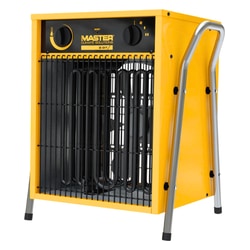
- Weight: 5,6 kg
- Dimensions: 279 x 251 x 340 mm
- Frequency: 50 Hz
- Power supply: 230 V
- Degree of protection: IPX4
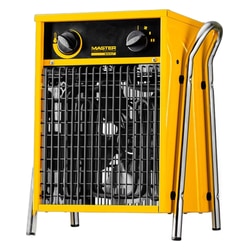
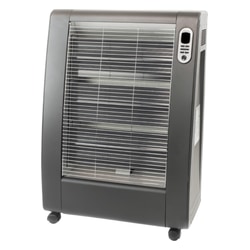
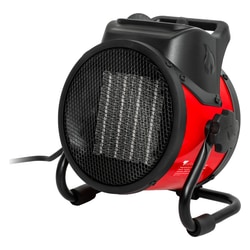
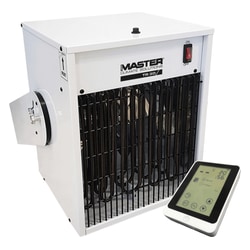
An electric heater (electric fan heater) is a heating unit in which a fan blows air across a hot heating element and pushes it into the room. Unlike fuel-fired heaters it produces no exhaust — almost 100% of the electricity it draws is turned into heat delivered straight to the workspace, so it can warm closed halls, garages and workshops with no flue. Available outputs range from about 2 kW (230 V, straight from a wall socket) to 30 kW (400 V, three-phase power supply), and a thermostat holds the set temperature while limiting energy use.
At NORWIT.PL we stock professional electric air heaters primarily from Master, Trotec and Heylo — from compact 230 V models for the garage and home workshop, through construction-grade versions, up to heavy industrial 400 V heaters for warehouses, halls, tents and building sites. The category sits within the heating and cooling department; for higher power or outdoor work good alternatives are oil air heaters and gas air heaters, while thermostats, filters and spare parts sit in heater accessories. Below we explain how to match power to floor area, how 230 V differs from 400 V and what an hour of operation really costs.
Electric heater — how it works and what it is made of
An electric heater (electric fan heater) works simply: a fan pushes air across a hot heating element and blows the warm stream into the room. The heat comes from electricity, not combustion, so the unit produces no exhaust and no carbon monoxide and releases almost 100% of the energy it draws as heat — it warms closed halls and garages with no chimney.
A typical electric heater is built from a housing, a heating element (a resistance-wire coil or a ceramic PTC element), a fan, a thermostat and a thermal cut-out that shuts off power on overheating. Models up to about 3.3 kW plug into a 230 V socket, while units from about 4 kW to 30 kW need a 400 V three-phase supply. At NORWIT.PL you will find equipment primarily from Master, Trotec and Heylo.
Types of electric heaters — from domestic 230 V to industrial 400 V
Electric heaters are grouped by power supply and intended use: single-phase 230 V versions are portable units for the home and garage, while three-phase 400 V models (construction and industrial) heat halls, warehouses and building sites. A separate segment is made up of models with a ceramic PTC element, which are safer for rooms with people inside.
| Heater type | What it is for | Example models |
|---|---|---|
| Home / workshop 230 V (up to about 3.3 kW) | garage, home workshop, small room; from a wall socket | Master B 2 PTC, Master B 1.8 ECA |
| Construction / industrial 400 V (about 15–30 kW) | halls, warehouses, tents, sites; three-phase supply | Master B 15, Master B 18, Master B 22, Master B 30 |
| Ceramic PTC | rooms with people; does not scorch dust | Master B 2 PTC |
| With thermostat | automatic temperature hold, lower consumption | Master, Trotec and Heylo models |
The category is part of the heating and cooling department. When you need more than 30 kW or you heat outdoors, consider oil air heaters or gas air heaters; thermostats and spare parts are in heater accessories.
230 V or 400 V — which electric heater to choose
The line between a domestic and a construction heater is set by the power supply. A single-phase 230 V circuit protected at 16 A carries at most about 3.3 kW (a 3 kW model draws roughly 13 A); above that you need a 400 V three-phase socket, which spreads the current draw across three phases.
| Parameter | 230 V heater (single-phase) | 400 V heater (three-phase) |
|---|---|---|
| Power range | up to about 3.3 kW | from about 4 kW up to 30 kW and more |
| Power supply | standard 230 V socket | 400 V three-phase socket (5-pin) |
| Current draw | up to 16 A on one phase | spread across three phases |
| Portability | plugs into any socket | needs a three-phase installation |
| Use case | home, garage, small workshop | hall, warehouse, site, tent |
How many kW of heater for a garage, hall, tent and building site
Power is matched to floor area, cubic volume (in m³) and the level of insulation. For insulated interiors a rough figure is 0.06–0.1 kW per m²; for poorly insulated halls and sites you size from the volume — about 0.08–0.1 kW per m³. The table below is a starting point; in hard frost and draughts add a power reserve.
| Room / floor area | Rough power | Power supply |
|---|---|---|
| Insulated garage or workshop up to 25 m² | 2–3 kW | 230 V |
| Sheet-metal garage / workshop up to 40 m² | 3–5 kW | 230 V |
| Hall or warehouse up to 100 m² | 9–22 kW | 400 V |
| Large hall / building site 100–200 m² | 22–30 kW | 400 V |
| Tent or canopy (extra heating) | 3–15 kW depending on volume | 230 / 400 V |
For example, a 100 m² hall 3 m high has 300 m³, so it needs about 24–30 kW — a 400 V model such as the Master B 30. If the calculated power exceeds 30 kW or you heat an open space, compare electric heaters with oil and gas units.
How much power an electric heater uses — cost of an hour of operation
Consumption equals the rated power: a 3 kW unit at full heating draws 3 kWh per hour, and a 15 kW unit draws 15 kWh. The hourly cost follows a simple formula: power [kW] × rate [per kWh] × hours. The table assumes an example rate of about 1.00 PLN per kWh — plug in your own tariff.
| Power | Consumption per hour | Cost/h at ~1.00 PLN/kWh | Typical use |
|---|---|---|---|
| 2 kW | 2 kWh | approx. 2 PLN | small room, spot heating |
| 3 kW | 3 kWh | approx. 3 PLN | garage, home workshop |
| 9 kW | 9 kWh | approx. 9 PLN | small hall, tent |
| 15 kW | 15 kWh | approx. 15 PLN | hall, warehouse |
| 22 kW | 22 kWh | approx. 22 PLN | large hall, site |
| 30 kW | 30 kWh | approx. 30 PLN | large-area 400 V heating |
That is the cost of uninterrupted heating at full power — in practice the thermostat switches the element off once the set temperature is reached and the unit runs in cycles (often 40–60% of the time), so the real bill is lower.
Frequently asked questions about electric heaters
How does an electric heater work and what is it made of?
An electric heater is a fan heater: a fan pushes air across a hot heating element (a resistance coil or a ceramic PTC element) and blows the warm stream into the room. It consists of a housing, a heating element rated at about 2–30 kW, a fan, a thermostat and a thermal cut-out. Models up to 3.3 kW run from a 230 V socket, while more powerful ones need a 400 V three-phase supply; the unit produces no exhaust and releases almost 100% of the energy as heat.
How much electricity does an electric heater use and what does an hour of operation cost?
Consumption equals the power rating: a 3 kW unit draws 3 kWh per hour and a 15 kW unit draws 15 kWh. At a rate of about 1.00 PLN per kWh an hour costs roughly as many currency units as the power in kW: 3 kW is about 3 PLN, 9 kW about 9 PLN, 22 kW about 22 PLN. In reality you pay less, because the thermostat switches the element off and the unit runs in cycles, often 40–60% of the time.
What is the difference between a 230 V and a 400 V (three-phase) electric heater?
A 230 V (single-phase) heater runs from a wall socket and reaches up to about 3.3 kW, because a 16 A circuit will not carry more — it suits the home, garage and a small workshop. A 400 V (three-phase) version draws power from a three-phase socket and offers from about 4 kW to 30 kW, spreading the load across three phases. Halls, warehouses and building sites need a 400 V unit, which an electrician connects.
Which electric heater for a garage — how many kW per m²?
For an insulated garage a rough figure is 0.06–0.1 kW per m², so for 20–25 m² a 2–3 kW heater from a 230 V socket is enough. A sheet-metal or poorly insulated garage sizes closer to 0.1–0.15 kW/m², so for the same 25 m² a 3–5 kW unit is a better pick. Above 40–50 m² you usually move to a 400 V supply and power from about 9 kW upwards.
How many kW of heater do I need to heat a hall, tent or building site?
For halls and building sites power is sized from the cubic volume: for poorly insulated spaces about 0.08–0.1 kW per m³. A 100 m² hall 3 m high is 300 m³, so roughly 24–30 kW — a 400 V model such as the Master B 30. A tent of 100–150 m³ is warmed by 9–15 kW. For larger areas compare electric heaters with oil and gas units rated above 30 kW.
Is an electric heater safe in closed rooms?
An electric heater produces no exhaust and no carbon monoxide, so it runs in closed halls, garages and workshops without extraction ventilation — unlike an oil or gas unit. It is protected by a thermal cut-out that shuts the element off on overheating and by a housing of a suitable IP class. A 400 V model is connected by an electrician. Do not block the air inlet or outlet and keep about 0.5–1 m of clearance from flammable materials.
What is the difference between an electric heater and a fuel-fired (oil or gas) one?
An electric heater turns almost 100% of the energy into heat and makes no exhaust, so it heats with no flue, but the cost per kWh of energy is higher and power is capped at about 30 kW. A fuel-fired heater (oil or gas) burns fuel, reaches outputs above 50–100 kW and a lower cost per unit of heat, yet it needs a chimney or heavy ventilation. Choose electric for enclosed interiors and fuel-fired for large, well-ventilated halls.
How does a resistance-coil element differ from a ceramic PTC element in a heater?
A coil element is a resistance wire that heats to a high temperature — it is cheap and delivers full power at once, but it can scorch dust. A ceramic PTC element (positive temperature coefficient) limits its own temperature: as it heats up its resistance rises and current draw falls, so it does not scorch dust and lasts longer. PTC models such as the Master B 2 PTC are safer for rooms with people; coil units are cheaper in the 15–30 kW range.
Does an electric heater have a thermostat and how do I set it?
Most electric heaters have a built-in thermostat, and industrial models let you connect an external one. You set the target temperature, for example 15–21°C: once it is reached the element switches off and starts again when the temperature drops by 1–2°C. Thanks to this the unit runs in cycles and uses less power than heating non-stop. For a hall choose an electronic thermostat accurate to ±1°C and set the lowest value you can.
Which is more energy-efficient — an electric fan heater or a convector heater?
An electric fan heater and a convector heater both turn practically 100% of the energy into heat, so at the same power and time they cost the same — 2 kW for an hour is about 2 kWh whatever the type. The difference is in heat distribution: a fan heater raises the temperature quickly and, with a thermostat, switches off sooner, so for fast warm-up it can be more economical. A convector heats more slowly and more quietly.
Why buy an electric heater at NORWIT.PL
We focus on professional heating equipment: our range covers electric heaters primarily from Master, Trotec and Heylo — from compact 230 V models for the garage to heavy 400 V units for halls and sites. We advise on matching power to floor area and volume and on the choice of element (coil or ceramic PTC), while thermostats, filters and spare parts are in heater accessories. When higher power or outdoor work is needed, oil air heaters and gas air heaters round out the offer. We ship orders online across the whole country.