


-
-
Concrete
-
- Concreting
- Concrete Vibrators
- Complete 230 V Mechanical Vibrators
- Vibrator Heads
- Vibrator Shafts
- Vibrator Motors
- Concrete Vibrators 42 V | 200 Hz
- Mechanical Vibrators 230 V
- 42 V | 200 Hz Head and Shaft
- 230 V Concrete Vibrators
- Vibrators With Built-In 230 V | 200 Hz Converter
- 42 V | 200 Hz Converters
- Combustion Vibrators
- Pneumatic Vibrators
- External Vibrators
- Power Trowels
- Vibratory Screeds
- Concrete Hand Tools
- Concrete Vibrators
-
-
-
-
-
- Walk-Behind Combustion Power Trowels
-
-
-
Heating and cooling
-
Generators
-
Earthworks
-
Industrial vacuums
-
Finishing
-
Pumps
-
Measurement
-
BLOG & Tips
-
Promotions
Kategorie 16 kategorii
Kategorie
-
- Levels and Measurements
- Soil Compactors
- Tamping Rammers - Jumping Jacks
- Single Direction Vibratory Plates
- Reversible Vibratory Plates
- Rollers
- 100 kg Soil Compactors
- 200 kg Soil Compactors
- 300 kg Soil Compactors
- 400 kg Soil Compactors
- 500 kg Soil Compactors
- 600 kg Soil Compactors
- 700 kg Soil Compactors
- 800 kg Soil Compactors
- Wacker Neuson Compactors
- Accessories for Compactors
- Bomag Compactors
- Altrad Belle Compactors
- Paver Compactors
- Swepac Compactors
- Power Generators
- Concreting
- Concrete Vibrators
- Complete 230 V Mechanical Vibrators
- Vibrator Heads
- Vibrator Shafts
- Vibrator Motors
- Concrete Vibrators 42 V | 200 Hz
- Mechanical Vibrators 230 V
- 42 V | 200 Hz Head and Shaft
- 230 V Concrete Vibrators
- Vibrators With Built-In 230 V | 200 Hz Converter
- 42 V | 200 Hz Converters
- Combustion Vibrators
- Pneumatic Vibrators
- External Vibrators
- Vibratory Screeds
- Power Trowels
- Concrete Hand Tools
- Concrete Vibrators
- Pumps and Motor Pumps
- Cutting, Drilling and Grinding
- Heating and Cooling
- Wood Table Saws
- Painting and Plastering
- Combustion Engines
- Washing and Vacuuming
- Cement Mixers
- Paving Tools
- Wheelbarrows and Track Dumpers
- Demolition and Hammers
- Sales
- Levels and Measurements
Brak kategorii pasujących do wyszukiwania.
Diamond Blades for Clinker
Zestaw 2 tarcz Cut-N-Break Husqvarna EL 10 CNB (230 mm)
597807901zł913.00 tax incl. 742,28 zł tax excl.View technical data Zobacz szczegóły
- Producent: Husqvarna
- Segment height: 11 mm
- Application: Beton utwardzany, beton zbrojony, cegła, dachówka, żeliwo sferoidalne, granit, marmur, kamień naturalny
- Disc diameter (mm): 230
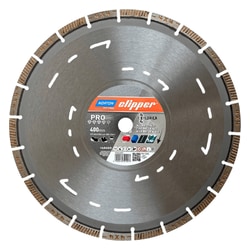
PRO 4x4 EXPLORER H12 400x25.4 Diamond Blade
70184602095zł1,134.00 tax incl. 921,95 zł tax excl.View technical data Zobacz szczegóły
- Cooling: Na sucho i na mokro
- Disc bore diameter: 25,4 mm
- Segment height: 12 mm
- Segment thickness: 3,2 mm
- Application: Asfalt / beton / granit / kostka brukowa / piaskowiec
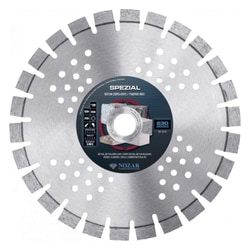
Nozar Spezial Diamond Disc (230 X 22.23 Mm)
PL6700104zł532.59 tax incl. 433,00 zł tax excl.View technical data Zobacz szczegóły
- Weight: 0,65 kg
- Speed: do 6 650 obr./min
- Segments: 20 x 2,6 x 12 mm
- Bore diameter: 22,23 mm
- Disc diameter: 230 mm
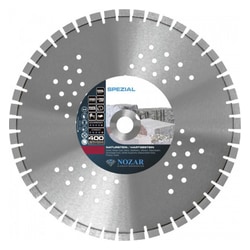
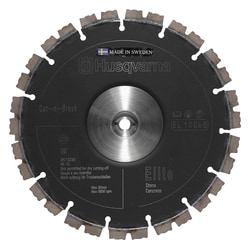
NOZAR SPEZIAL DIAMOND TARGET 400mm
6700119zł861.00 tax incl. 700,00 zł tax excl.View technical data Zobacz szczegóły
- Disc bore diameter: 25,4 mm
- Segment thickness: 10 mm
- Disc diameter: 350 mm
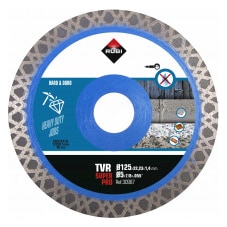
TVR 125 Mm SUPERPRO Diamond Disc
30987zł146.37 tax incl. 119,00 zł tax excl.View technical data Zobacz szczegóły
- Outer diameter: 125 mm
- Inside diameter: 22,2 mm
- Disc edge thickness: 1,4 mm
- Height of the disc rim: 10 mm
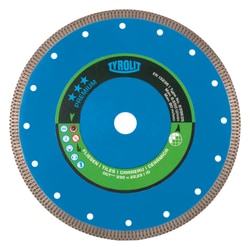
TYROLIT PREMIUM DCT 105 X 1.2 MM Diamond Disc
639558zł99.63 tax incl. 81,00 zł tax excl.View technical data Zobacz szczegóły
- Producent: Tyrolit
- Disc bore diameter: 20 mm
- Segment height: 10 mm
- Geometry: 1 A1r
- Type of cooling: Dry
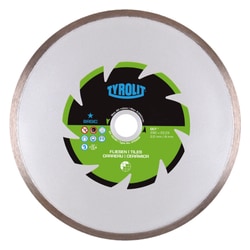
TYROLIT BASIC DCT 230 X 2 MM Diamond Blade
475986zł83.64 tax incl. 68,00 zł tax excl.View technical data Zobacz szczegóły
- Producent: Tyrolit
- Disc bore diameter: 22,23 mm
- Segment height: 9 mm
- Geometry: 1 A1r
- Type of cooling: Dry
A clinker diamond blade cuts high-fired brick and clinker paving units — a material with water absorption below 6% and compressive strength in the 40–80 MPa range, harder and far less abrasive than sand-lime block or hollow ceramic block. Because the material does not wear the bond down on its own, the segment matrix has to be soft: it erodes gradually and keeps exposing fresh diamond grit. A blade with too hard a bond glazes over after a handful of cuts and starts skating across the surface instead of cutting into it.
NORWIT.PL stocks clinker blades from Tyrolit, Nozar and Norton Clipper, among others, including 400 mm rims for table saws. The category sits within the diamond blades department, alongside blades for concrete, sand-lime block and ceramic tiles. Below we explain how to match bond hardness, rim type and cooling method to clinker.
Why clinker calls for a different blade than the rest of the masonry
Clinker is clay fired at roughly 1100–1300°C until the structure vitrifies: water absorption below 6%, density around 1900–2100 kg/m³, compressive strength usually between 40 and 80 MPa. For the blade that means a substrate which is hard but barely abrasive — it will not wear the segment bond down by itself. The rule is the opposite of the one for sand-lime block: the harder the material, the softer the bond has to be. A hard-bond blade glazes over in clinker within the first dozen or so metres of cut — feed rate collapses, temperature climbs and the steel core starts to run out of true. The second thing to plan around is the sintered, often glazed face, which chips easily as the blade exits.
Continuous, turbo or segmented rim
Rim geometry sets the trade-off between edge quality and cutting speed. Visible elements — façade brick, sills, clinker tiles — call for a continuous or turbo rim. For clinker pavers and solid brick, where throughput decides the day, a narrow-slot or segmented rim pays off.
| Rim type | Edge quality | Cutting speed | Use in clinker |
|---|---|---|---|
| Continuous | chip-free | low | tiles, window sills, facing brick cut wet |
| Turbo | high | medium | façade trimming, clinker brick |
| Narrow-slot | good | high | clinker pavers, table saw work |
| Segmented | chipping likely | highest | demolition of masonry, rough cutting |
One more figure worth checking is segment height: a soft bond wears faster than a concrete-blade matrix, so a taller rim means more units cut per blade.
Diameter, machine and brands in stock
Cutting depth is roughly half the diameter minus the flange radius. For clinker brick 65 mm high and pavers usually 52–80 mm thick, a 230 mm blade on an angle grinder covers the job; through-cuts on a bench call for 350–400 mm rims with a 25.4 mm bore. NORWIT.PL supplies blades for fired materials from brands including Tyrolit, Nozar and Norton Clipper, among them the Nozar Spezial blade in 400 mm. If the job reaches the sub-base or a footing, keep a separate blade from the concrete diamond blades category for it; a full overview of types sits in the diamond blades department.
Frequently asked questions about cutting clinker
Which diamond blade is suitable for cutting clinker?
Clinker calls for a blade with a soft segment bond and a continuous or turbo rim. Fired at roughly 1100–1300°C, the material absorbs under 6% water and reaches 40–80 MPa in compression, which makes it hard yet barely abrasive — it exposes no fresh diamond grit on its own, so the eroding soft matrix does that work. A continuous rim suits facing elements and tiles, a narrow-slot rim handles pavers and rough cutting. Common sizes are 230 mm for angle grinders and 350–400 mm with a 25.4 mm bore for table saws.
How does a clinker blade differ from one for sand-lime or hollow ceramic block?
The difference sits in bond hardness, not in the diamond itself. Clinker is hard and barely abrasive, so it needs a soft matrix. Sand-lime and hollow ceramic block are soft but heavily abrasive — sand-lime typically reaches 15–25 MPa against the 40–80 MPa of clinker — and consume the segment so fast that a hard bond is the right answer. A sand-lime blade put into clinker glazes over within the first dozen or so metres and stops biting; a clinker blade run in sand-lime loses its rim several times faster than rated.
How do you cut clinker without chipping or burn marks on the edge?
A clean edge comes from a continuous or turbo rim, water cooling and a steady, unhurried feed from the face side. The sintered face is brittle where the blade exits, so slow down over the final 10–15 mm or come in from the opposite side. Dark streaks mean overheating: cutting dry, keep a rhythm of 20–30 seconds in the cut and a few seconds running free to cool the core. Support the unit on both sides of the kerf: any play pinches the blade and snaps the corner off.
Does slurry from wet-cutting clinker stain the façade?
Slurry from clinker stains heavily, because it carries fine particles of fired clay loaded with iron oxides. Reddish-brown runs soak into fresh mortar and light materials; once set, only an acidic cleaner lifts them. Trim away from the finished face and rinse splashed surfaces within 5–10 minutes, before the slurry dries. Dry cutting swaps that problem for another: brick dust carrying respirable crystalline silica, capped at 0.1 mg/m³ in Poland, so work with dust extraction and a half mask fitted with a filter of at least P2 class, which retains around 94% of the aerosol.