


-
-
Concrete
-
- Concreting
- Concrete Vibrators
- Complete 230 V Mechanical Vibrators
- Vibrator Heads
- Vibrator Shafts
- Vibrator Motors
- Concrete Vibrators 42 V | 200 Hz
- Mechanical Vibrators 230 V
- 42 V | 200 Hz Head and Shaft
- 230 V Concrete Vibrators
- Vibrators With Built-In 230 V | 200 Hz Converter
- 42 V | 200 Hz Converters
- Combustion Vibrators
- Pneumatic Vibrators
- External Vibrators
- Power Trowels
- Vibratory Screeds
- Concrete Hand Tools
- Concrete Vibrators
-
-
-
-
-
- Walk-Behind Combustion Power Trowels
-
-
-

Heating and cooling
-
Generators
-
Earthworks
-
Industrial vacuums
-
Finishing
-
Pumps
-
Measurement
-
BLOG & Tips
-
Promotions
Kategorie 16 kategorii
Kategorie
-
- Levels and Measurements
- Soil Compactors
- Tamping Rammers - Jumping Jacks
- Single Direction Vibratory Plates
- Reversible Vibratory Plates
- Rollers
- 100 kg Soil Compactors
- 200 kg Soil Compactors
- 300 kg Soil Compactors
- 400 kg Soil Compactors
- 500 kg Soil Compactors
- 600 kg Soil Compactors
- 700 kg Soil Compactors
- 800 kg Soil Compactors
- Wacker Neuson Compactors
- Accessories for Compactors
- Bomag Compactors
- Altrad Belle Compactors
- Paver Compactors
- Swepac Compactors
- Power Generators
- Concreting
- Concrete Vibrators
- Complete 230 V Mechanical Vibrators
- Vibrator Heads
- Vibrator Shafts
- Vibrator Motors
- Concrete Vibrators 42 V | 200 Hz
- Mechanical Vibrators 230 V
- 42 V | 200 Hz Head and Shaft
- 230 V Concrete Vibrators
- Vibrators With Built-In 230 V | 200 Hz Converter
- 42 V | 200 Hz Converters
- Combustion Vibrators
- Pneumatic Vibrators
- External Vibrators
- Vibratory Screeds
- Power Trowels
- Concrete Hand Tools
- Concrete Vibrators
- Pumps and Motor Pumps
- Cutting, Drilling and Grinding
- Heating and Cooling
- Wood Table Saws
- Painting and Plastering
- Combustion Engines
- Washing and Vacuuming
- Cement Mixers
- Paving Tools
- Wheelbarrows and Track Dumpers
- Demolition and Hammers
- Sales
- Levels and Measurements
Brak kategorii pasujących do wyszukiwania.
Infrared Oil-Fired Heaters
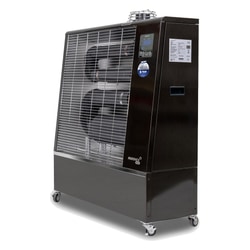
AIRREX AH-900i Infrared Oil-Fired Heater
AH900izł17,527.50 tax incl. 14 250,00 zł tax excl.View technical data Zobacz szczegóły
- Dimensions: 1300 x 350 x 1400 mm
- Voltage: 230 V
- Fuel: Olej napędowy EN 590 / HVO100 EN 15940
- Fuel consumption: 1,81 / 2,3 l/h
- Link: Wi-Fi
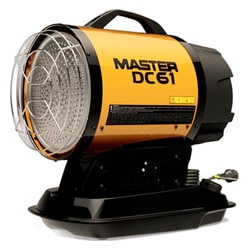
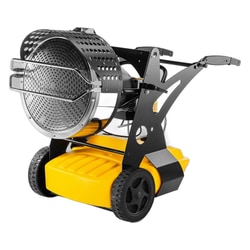
Master DC 61 Infrared Oil-Fired Heater (Hybrid)
4011.200zł5,998.00 tax incl. 4 876,42 zł tax excl.View technical data Zobacz szczegóły
- Weight: 19 kg
- Dimensions: 560 × 345 × 575 mm
- Frequency: 50 Hz
- Fuel consumption: 1,6 l/h
- Power supply: 110-240 V
Master XL 61 Infrared Oil-Fired Heater
4011.100zł3,398.99 tax incl. 2 763,41 zł tax excl.View technical data Zobacz szczegóły
- Weight: 19 kg
- Dimensions: 560 × 345 × 575 mm
- Frequency: 50 Hz
- Fuel consumption: 1,35 l/h
- Power supply: 230 V
Master XL 91 Infrared Oil-Fired Heater
4011.030zł10,158.00 tax incl. 8 258,54 zł tax excl.View technical data Zobacz szczegóły
- Weight: 69 kg
- Dimensions: 710 × 970 × 990 mm
- Frequency: 50 Hz
- Fuel consumption: 2,7 | 4,03 l/h
- Power supply: 230 V
Master XL 9 SR Infrared Oil-Fired Heater
4011.077zł11,598.00 tax incl. 9 429,27 zł tax excl.View technical data Zobacz szczegóły
- Weight: 69 kg
- Dimensions: 1070 × 700 × 980 mm
- Frequency: 50 Hz
- Fuel consumption: 2,7 | 4,03 l/h
- Power supply: 230 V
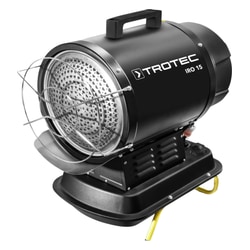
Promiennik podczerwieni olejowy Trotec IRO 15
1430000310zł3,259.50 tax incl. 2 650,00 zł tax excl.View technical data Zobacz szczegóły
- Frequency: 50 Hz
- Power supply: 230 V
- Moc grzewcza: 20 kW
AIRREX AH-500i Infrared Oil-Fired Heater
AH500izł12,484.50 tax incl. 10 150,00 zł tax excl.View technical data Zobacz szczegóły
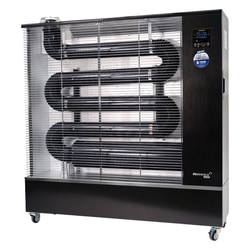
- Dimensions: 950 x 305 x 1080 mm
- Voltage: 230 V
- Fuel: Olej napędowy EN 590 / HVO100 EN 15940
- Fuel consumption: 1,05 / 1,42 l/h
- Link: Wi-Fi
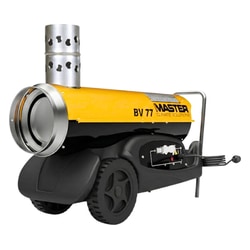
An infrared oil-fired heater burns heating oil or biodiesel inside a sealed combustion chamber and releases the energy as an infrared wave instead of a stream of hot air. The radiation lands directly on the floor slab, the walls, the machinery and the people standing within range; those surfaces then warm everything around them, so perceived temperature climbs within minutes — long before the full volume of a warehouse would heat up.
What separates this design from fan-driven heaters is that it runs without any air movement. Nothing lifts dust off the slab, nothing flaps protective sheeting or temporary partitions, and the unit stays quiet at roughly 48 dB. That makes it a natural fit for finishing trades, repair shops, warehouses and industrial buildings, construction sites and roofed outdoor bays. At NORWIT.PL the range covers mainly Rex Nordic (the AIRREX line), Master Heaters and Trotec, with heat output from 13 to 43 kW and tanks between 11 and 70 l. Mains-powered versions sit in infrared electric heaters, while fan-driven units are grouped under oil-fired air heaters.
How an infrared oil-fired heater works
Inside the unit, fuel burns in a sealed chamber whose walls emit infrared radiation. The wave crosses open air with almost no loss and turns into heat only where it meets a surface — a concrete floor, a wall, a worker's jacket. Those warmed objects become a secondary heat source, so a building with doors opening constantly keeps its warmth: heat sits in the structure, not in air that escapes.
With no fan on board, the heater runs at around 48 dB and lifts no dust. Electrical demand is negligible — controller and fuel pump draw 80–200 W at 230 V — so a single-phase socket is enough, as is a portable generator where there is no mains supply.
Infrared radiant heater or fan-driven oil heater
| Criterion | Infrared oil-fired heater | Fan-driven oil heater |
|---|---|---|
| What gets heated | objects and people (infrared) | air (convection) |
| Airflow, dust lifted off the floor | no | yes |
| Electrical demand | approx. 80–200 W (230 V) | roughly 200–1000 W |
| Runtime per fill | 11–70 l tank, approx. 7–21 h | built-in or external tank |
| Works with doors open | yes | limited |
To raise air temperature quickly in a closed, tight building, reach instead for indirect oil-fired air heaters. A radiant unit complements them where moving air causes trouble, or where one workstation needs heat rather than a whole building.
Choosing output, tank size and controls
Start from the volume of the space and how well it is sealed, then match output, tank and controls.
- Heat output — from about 13 kW to 43 kW; two-stage models step down from 43 kW to roughly 29 kW, stretching runtime from one tank.
- Fuel consumption — typically 1.0–4.0 l/h; an 11 l tank covers around 7 hours of continuous work, 60–70 l up to 14–21 hours.
- Controls — mechanical or electronic thermostat; some models add Wi-Fi for remote setpoint changes.
- Fuel — heating oil, diesel or biodiesel; the approved grades are listed on each product page.
At NORWIT.PL these heaters come mainly from Rex Nordic (AIRREX), Master Heaters and Trotec; we match output to the volume you actually heat and back it with service. Consumable parts sit in heater accessories, and the full radiant range is listed under infrared heaters.
Frequently asked questions about infrared oil-fired heaters
How does an infrared oil-fired heater work and how does it differ from a fan-driven heater?
An infrared oil-fired heater burns heating oil or biodiesel in a sealed chamber and emits the energy as an infrared wave that warms floors, walls and people rather than the air itself. A fan-driven heater does the opposite: a blower pushes air across a heat exchanger. With no blower it stays around 48 dB, lifts no dust and keeps working with the doors open, drawing only 80–200 W at 230 V — the 13–43 kW of heat comes from the fuel.
How much fuel does an infrared oil heater use and how long does one tank last?
Fuel consumption in this class usually falls between 1.0 and 4.0 l/h and rises with heat output. A unit of roughly 17 kW with an 11 l tank runs about 7 hours on one fill; a two-stage 29/43 kW model with a 60 l tank reaches roughly 21 hours on the lower stage and 14 on the higher one. The largest tanks hold 70 l — a full shift without refuelling.
When is an infrared oil heater a better choice than a warm-air heater?
Radiant heating wins where moving air is a problem, or where the space is too large or too leaky to heat as a whole. With no airflow — about 48 dB at the unit — nothing lifts dust off the slab or disturbs protective sheeting, which is why these heaters are standard on finishing and flooring jobs. They also suit repair shops, buildings with doors left open and roofed outdoor bays: warm air would be gone in minutes, whereas a slab heated by 13–43 kW holds temperature far longer, on 80–200 W of electricity.
What heat output should I pick for the volume of my building?
Output is matched to the volume of the space and to how well it is sealed. Manufacturers of the equipment we stock quote figures near 900 m³ for units around 13 kW, 1500 m³ for about 15 kW and 2000 m³ for roughly 22 kW, with two-stage models running up to 43 kW. In uninsulated buildings and outdoors, add 20–30% headroom, or place several smaller heaters across the zones where people actually work.