


-
-
Concrete
-
- Concreting
- Concrete Vibrators
- Complete 230 V Mechanical Vibrators
- Vibrator Heads
- Vibrator Shafts
- Vibrator Motors
- Concrete Vibrators 42 V | 200 Hz
- Mechanical Vibrators 230 V
- 42 V | 200 Hz Head and Shaft
- 230 V Concrete Vibrators
- Vibrators With Built-In 230 V | 200 Hz Converter
- 42 V | 200 Hz Converters
- Combustion Vibrators
- Pneumatic Vibrators
- External Vibrators
- Power Trowels
- Vibratory Screeds
- Concrete Hand Tools
- Concrete Vibrators
-
-
-
-
-
- Walk-Behind Combustion Power Trowels
-
-
-
Heating and cooling
-
Generators
-
Earthworks
-
Industrial vacuums
-
Finishing
-
Pumps
-
Measurement
-
BLOG & Tips
-
Promotions
Kategorie 16 kategorii
Kategorie
-
- Levels and Measurements
- Soil Compactors
- Tamping Rammers - Jumping Jacks
- Single Direction Vibratory Plates
- Reversible Vibratory Plates
- Rollers
- 100 kg Soil Compactors
- 200 kg Soil Compactors
- 300 kg Soil Compactors
- 400 kg Soil Compactors
- 500 kg Soil Compactors
- 600 kg Soil Compactors
- 700 kg Soil Compactors
- 800 kg Soil Compactors
- Wacker Neuson Compactors
- Accessories for Compactors
- Bomag Compactors
- Altrad Belle Compactors
- Paver Compactors
- Swepac Compactors
- Power Generators
- Concreting
- Concrete Vibrators
- Complete 230 V Mechanical Vibrators
- Vibrator Heads
- Vibrator Shafts
- Vibrator Motors
- Concrete Vibrators 42 V | 200 Hz
- Mechanical Vibrators 230 V
- 42 V | 200 Hz Head and Shaft
- 230 V Concrete Vibrators
- Vibrators With Built-In 230 V | 200 Hz Converter
- 42 V | 200 Hz Converters
- Combustion Vibrators
- Pneumatic Vibrators
- External Vibrators
- Vibratory Screeds
- Power Trowels
- Concrete Hand Tools
- Concrete Vibrators
- Pumps and Motor Pumps
- Cutting, Drilling and Grinding
- Heating and Cooling
- Wood Table Saws
- Painting and Plastering
- Combustion Engines
- Washing and Vacuuming
- Cement Mixers
- Paving Tools
- Wheelbarrows and Track Dumpers
- Demolition and Hammers
- Sales
- Levels and Measurements
Brak kategorii pasujących do wyszukiwania.
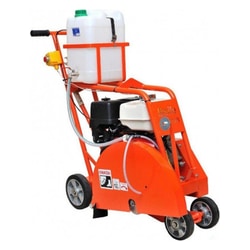
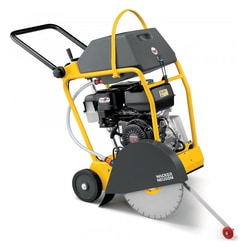
Walk-Behind Floor Saw
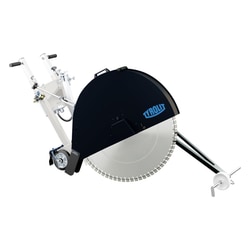
Disc Cutter Tyrolit FSG 513 Mobile Cutting Machine
10988800zł11,795.70 tax incl. 9 590,00 zł tax excl.View technical data Zobacz szczegóły
- Weight: 115 kg
- Dimensions: 1136 x 578 x 1016 mm
- Engine power: 8,7 kW
- Startup: Manual
- Engine: Honda GX 390
Disc Cutter Norton Clipper CS 401 P14 Mobile Cutting Machine
70184603124zł7,749.00 tax incl. 6 300,00 zł tax excl.View technical data Zobacz szczegóły
- Weight: 99 kg
- Engine power: 14HP
- Engine: Kohler
- Water tank: 20l
- Speed: 2600/min
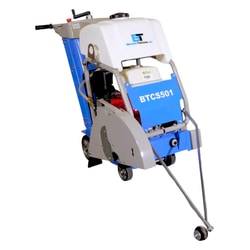
Concrete Disc Cutter Concrete And Asphalt Cutting Machine Beton Trowel BTCS501
BTCS501zł10,455.00 tax incl. 8 500,00 zł tax excl.View technical data Zobacz szczegóły
- Weight: 163 kg
- Dimensions: 1550 x 655 x 1200 mm
- Engine power: 8,7 kW
- Startup: Manual
- Engine: Honda GX 390
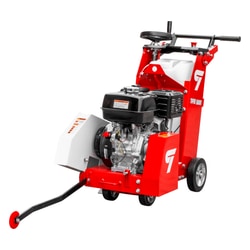
Toolsa TFS 500 Concrete And Asphalt Floor Saw (Honda GX 390)
TAGFS480zł8,608.77 tax incl. 6 999,00 zł tax excl.View technical data Zobacz szczegóły
- Weight: 98 kg
- Dimensions: 900 × 610 × 1000 mm
- Engine power: 11 KM
- Fuel: Petrol
- Maximum depth of cut: 180 mm
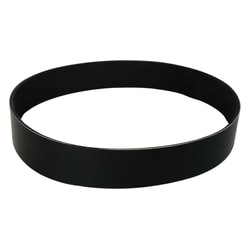
V-Belt For BTCS 501 (12PK780LE)
12PK780LEzł153.14 tax incl. 124,50 zł tax excl.No technical data available Zobacz szczegóły
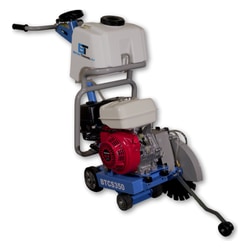
Beton Trowel BTCS 350 Honda GX 270 Asphalt Cutter
BTCS350Hzł7,132.77 tax incl. 5 799,00 zł tax excl.View technical data Zobacz szczegóły
- Weight: 69 kg
- Dimensions: 915 x 990 x 380 mm
- Engine power: 6,6 kW / 9 KM
- Startup: Manual
- Typ: Spalinowy (benzyna)
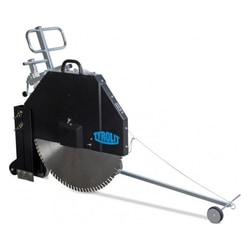
Disc Cutter Tyrolit FSE 808 400V Mobile Cutting Machine
11002800zł20,561.17 tax incl. 16 716,40 zł tax excl.View technical data Zobacz szczegóły
- Weight: 158 kg
- Dimensions: 1100 x 600 x 980 mm
- Engine power: 7,5 kW
- Frequency: 50 Hz
- Voltage: 400 V
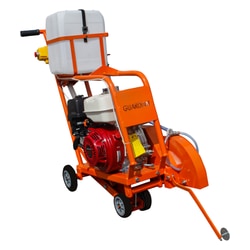
Disc Cutter Altrad Belle GUARDIAN 400 Mobile Road Cutting Machine Max Blade. 400mm Honda GX270 Engine
PA400zł6,959.33 tax incl. 5 657,99 zł tax excl.View technical data Zobacz szczegóły
- Weight: 75 kg
- Dimensions: 1050 x 480 x 1000 mm
- Engine power: 6,6 kW / 9 KM
- Startup: Manual
- Typ: Spalinowy (benzyna)
Disc Cutter DR. SCHULZE FS 350 TORNADO 2
FS350 Tornado 2zł8,392.78 tax incl. 6 823,40 zł tax excl.View technical data Zobacz szczegóły
- Weight: 75 kg
- Dimensions: 950 x 480 x 1050 mm
- Engine power: 6,6 kW / 9 KM
- Startup: Manual
- Typ: Spalinowy (benzyna)
Disc Cutter Tyrolit FSE 811 Mobile Cutting Machine
10992000zł22,518.00 tax incl. 18 307,32 zł tax excl.View technical data Zobacz szczegóły
- Weight: 158 kg
- Dimensions: 1100 x 600 x 980 mm
- Engine power: 7,5 kW
- Frequency: 50 Hz
- Voltage: 400 V
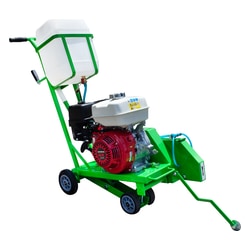
Disc Cutter Altrad Belle GUARDIAN 500 Mobile Road Cutting Machine Max Blade. 500mm Honda GX390 Engine
PA500zł8,729.99 tax incl. 7 097,55 zł tax excl.View technical data Zobacz szczegóły
- Weight: 95 kg
- Dimensions: 1070 x 520 x 1120 mm
- Engine power: 13 KM
- Engine: Honda GX 390
- Fuel: Petrol
Disc Cutter Wacker Neuson BFS 1345 Mobile Cutting Machine
5100054575zł10,947.00 tax incl. 8 900,00 zł tax excl.View technical data Zobacz szczegóły
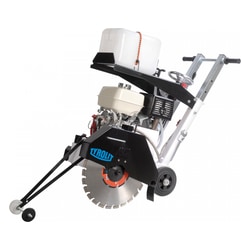
- Weight: 93 kg
- Dimensions: 860 x 575 x 1010 mm
- Engine power: 8,6 kW / 11,8 KM
- Typ: Spalinowy (benzyna)
- Engine: Honda GX 390
A walk-behind concrete saw (a floor saw guided by hand, with no self-propelled drive) is a machine with a diamond blade mounted on a spindle that the operator pushes along the cutting line, setting the pace themselves — unlike a self-propelled version, where the drive turns the wheels as well as the blade. The blade, usually 350–500 mm in diameter, cuts concrete, screed and asphalt to a depth of about 125–200 mm in a single pass, and the drive is either a petrol or diesel engine for open-air jobsites, or an electric motor (230/400 V) for indoor work in buildings and halls where exhaust fumes are not an option.
At NORWIT.PL, walk-behind concrete saws come primarily from Norton Clipper and Dr. Schulze, complemented by Wacker Neuson models. The full range of floor saws, including self-propelled machines with greater operating comfort, is in the floor saws category, and individual brands have their own pages: Norton Clipper, Dr. Schulze and Wacker Neuson. Below we explain how to match the drive, diamond blade and cutting depth to your material and the scale of the job.
Walk-behind concrete saw — how it works and how it differs from a self-propelled saw
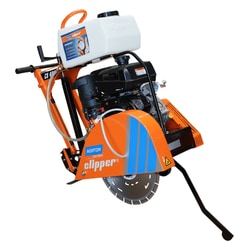
A walk-behind concrete saw is a floor saw in which a diamond blade mounted on a spindle plunges vertically into the slab, while the operator guides the whole wheeled frame by hand along a marked line. The term walk-behind means there is no travel drive — the engine powers only the blade, not the wheels, so the person pushing the machine sets the pace. It cuts concrete, screed and asphalt to a depth of typically 125–200 mm in a single pass — far deeper than a hand-held cut-off saw (a portable, hand-guided disc cutter), which is not designed for systematic floor cutting.
For work on slabs, control joints and pavements, a saw from this category is the right choice, offered under the Norton Clipper, Dr. Schulze and Wacker Neuson brands. Below we explain how to choose the drive, the blade and the cutting depth, and when buying pays off compared with renting.
Types of walk-behind concrete saws — petrol or electric
The choice of drive depends on the jobsite and access to power. A petrol saw runs on a petrol engine (most often Honda GX) or a diesel unit, needs no power socket and cuts with a blade up to about 500 mm — the right machine for open sites, roads and large surfaces. An electric saw, powered from a 230 V or 400 V mains supply, produces no exhaust and runs quieter, so it suits indoor work, halls and garages where fumes are not acceptable.
| Feature | Petrol saw | Electric saw |
|---|---|---|
| Drive | petrol engine (most often Honda GX) or diesel | electric motor, 230 V or 400 V |
| Where it's used | open sites, roads | indoors, halls, garages |
| Max. blade | up to about 500 mm | 350–450 mm |
| Cutting depth | about 165–200 mm | about 125–165 mm |
| Exhaust & noise | produces exhaust, louder | no exhaust, quieter |
| Best for | road building, continuous work | indoor renovation, floor slabs |
On electric models it is worth checking for vibration-damping technology, marketed as Low Vibration — it makes it easier to keep hand-arm exposure below the 2.5 m/s² action value set by the EU Vibration Directive. Among petrol machines, diesel versions typically hold up better under continuous work on roads and large paved areas.
Popular walk-behind concrete saw models at NORWIT.PL
Below is a cross-section of the range — from electric saws for indoor work to heavy petrol units built for road jobs. Exact specifications (power, blade diameter, cutting depth) are given on each product page.
| Model | Drive / type | Typical use |
|---|---|---|
| NORTON CLIPPER Low Vibration CS451 ET | electric | indoor work and renovation, reduced vibration |
| NORTON CLIPPER Saw CS7.5 E | electric | industrial floors, halls |
| NORTON CLIPPER C51 | petrol | cutting floor slabs and control joints on site |
| NORTON CLIPPER CS1 P13 | petrol | larger surfaces, concrete pavements |
| NORTON CLIPPER CSB1 D13 | petrol | continuous work, roads and open sites |
| Beton Trowel BTCS 350 Honda GX 270 | petrol (Honda) | cutting asphalt and road surfaces |
The range is completed by walk-behind concrete saws from Dr. Schulze and Wacker Neuson, selected by cutting depth and surface type. Matching diamond blades for concrete are in the diamond blades for concrete category, and for bituminous surfaces in diamond blades for asphalt.
Choosing a diamond blade and cutting depth
The diamond blade (a blade with segments containing synthetic diamond, sintered onto a metal bond) determines cutting speed and quality, and its diameter sets the achievable depth — usually about 35–40% of the blade's size. Bond hardness is matched inversely to material hardness: a soft-bond blade for hard, reinforced concrete, and a hard-bond blade, resistant to abrasion, for fresh concrete and asphalt.
| Blade diameter | Max. cutting depth | Typical use |
|---|---|---|
| 350 mm | about 125 mm | control joints, thin slabs, screed |
| 400 mm | about 145 mm | floor slabs, concrete pavements |
| 450 mm | about 165 mm | thicker slabs, roads |
| 500 mm | about 190–200 mm | deep cuts, reinforced concrete |
These figures are approximate — the manufacturer's data plate on the machine states the actual depth and permitted blade diameter, and exceeding them is not allowed, because the guard stops protecting the operator properly. Cutting is done wet (cooling water on the blade, typically about 3–6 l/min) or dry — in hard concrete and asphalt, wet cutting is recommended, since water extends blade life and binds respirable crystalline silica dust (RCS).
Walk-behind vs self-propelled saw — when buying pays off
The difference is about how the saw moves forward, not how deep it cuts — a walk-behind machine is pushed by hand, giving full control at control joints and curved cuts, while a self-propelled saw has a wheel drive that takes the strain off the operator on long, straight cuts across large surfaces. Both use the same 350–500 mm blade to the same depth of about 125–200 mm, so for control joints, renovations and smaller jobs a cheaper, lighter walk-behind saw from this category is enough.
Buying makes sense for contractors who cut regularly — the machine pays for itself in labour saved. A day's rental typically runs about 100–250 PLN net, so for jobs measured in a couple of weeks the rental cost approaches the price of a cheaper electric saw. For a single control-joint cut, renting is often the more sensible choice, but a professional machine backed by service and blade availability is an investment for years of use.
Frequently asked questions about walk-behind concrete saws
What is a walk-behind concrete saw and how does it differ from a self-propelled saw?
A walk-behind concrete saw is a floor saw guided by hand — the engine powers only the diamond blade, and the operator pushes the frame along the cutting line themselves. A self-propelled saw has an additional wheel drive that takes the strain off the operator on long cuts along roads or industrial floor slabs. Both cut with the same 350–500 mm blade to a depth of about 125–200 mm — the difference is in operating comfort, not cutting reach.
How do you choose a concrete saw — electric or petrol?
An electric concrete saw, powered from a 230 V or 400 V mains supply, produces no exhaust and runs quieter, which makes it suitable for indoor work, halls and garages where fumes are not acceptable. A petrol saw with a petrol engine (most often Honda GX) or diesel unit needs no power connection and cuts with a blade up to about 500 mm, which makes it the better choice for construction sites and roads. Matching the drive to the jobsite is the key decision.
What cutting depth does a walk-behind floor saw reach?
Cutting depth depends on the diameter of the diamond blade fitted and is typically about 35–40% of its size: a 350 mm blade cuts to about 125 mm, a 400 mm blade to about 145 mm, and a 500 mm blade reaches as much as about 190–200 mm in a single pass. A slab thicker than the permitted depth is cut in two passes, from both sides, so the machine is not overloaded.
How much does a professional concrete saw cost?
The price of a professional walk-behind saw depends on the drive and the maximum blade diameter — electric models start at roughly 3,000–5,000 PLN net, while powerful petrol saws run from about 8,000 PLN net upward. Daily rental typically costs about 100–250 PLN net, so for jobs measured in a couple of weeks the rental cost approaches the price of a cheaper electric model. Current price and availability are shown on each product listing.
Does a concrete saw also cut asphalt and paving blocks?
The same walk-behind saw, fitted with the right segmented blade, cuts concrete as well as asphalt or paving blocks — the difference lies in the segment bond, not the machine itself. For asphalt, manufacturers offer dedicated models such as the petrol Beton Trowel BTCS 350 with a Honda GX 270 engine. For concrete and paving blocks, a universal blade or one dedicated to reinforced concrete works better, typically cutting to about 150 mm.
Which diamond blade should you choose for reinforced concrete?
Reinforced concrete calls for a segmented blade with a higher diamond concentration and a harder bond — this wears more slowly when it hits reinforcing bars. It is matched to the diameter fitted in the saw, most often 350–500 mm, which at full depth gives a cutting depth of up to about 190–200 mm. A harder bond means a slower feed rate but longer blade life when cutting through rebar.
Does a concrete saw need water cooling?
Water cooling is not mandatory for every cut, but it clearly extends blade life and binds respirable crystalline silica dust (RCS). Water, fed from a tank at roughly 3–6 l/min, cools the segments and reduces the risk of overheating on cuts deeper than about 100 mm. Dry cutting is used for short cuts and requires dust extraction in line with the PN-EN 13862 standard.
How much engine power (hp/cc) is needed to cut a slab 15–20 cm thick?
Cutting a 15–20 cm slab in one pass calls for a blade of about 450–500 mm and a petrol engine in the region of 9–13 hp, strong enough to hold blade speed under full load. With a weaker engine, below roughly 6–7 hp, the slab has to be cut in two passes. Electric models rated up to about 3–4 kW usually cannot reach that depth in a single pass.
How do you maintain a petrol concrete saw so it lasts?
The key steps are replacing the air filter and spark plug roughly every 50–100 operating hours and checking the engine oil every 8–10 hours, following the engine maker's manual. After each use it helps to clean concrete dust off the blade guard and store blades somewhere dry, so the segment bond does not corrode. An annual service check catches worn seals and bearings before they cause a breakdown.
What is the difference between a Norton Clipper and a Dr. Schulze saw?
Norton Clipper is a brand of the Saint-Gobain group, known for a broad line-up of concrete saws — including vibration-reduced models (the Low Vibration line), which make it easier to stay under the 2.5 m/s² action value and 5 m/s² limit value set by the EU Vibration Directive. Dr. Schulze is a German manufacturer known primarily for concrete core drills, and in walk-behind saws it focuses on a rugged build for continuous work — a solid choice for firms that combine cutting with core drilling. We service both brands and supply parts for them.
Why buy a walk-behind concrete saw at NORWIT.PL
We focus on professional concrete and asphalt cutting: in the walk-behind saw category we carry primarily Norton Clipper and Dr. Schulze machines, complemented by Wacker Neuson models — no market knock-offs. We advise on matching the drive, blade and cutting depth to the specific material, and we back it up with service and parts availability. The full floor saw range, including self-propelled machines, is in floor saws, and matching blades are in concrete blades and asphalt blades. Orders are placed online, with delivery across the country.