


No products available yet
Stay tuned! More products will be shown here as they are added.
WAREHOUSE
SUPPORT
14 DAYS
ON THE MARKET
All
Construction machinery
Generators
Heating and cooling
Washing and vacuuming
Levels and measurements
BLOG & Tips
Promotions
Stay tuned! More products will be shown here as they are added.
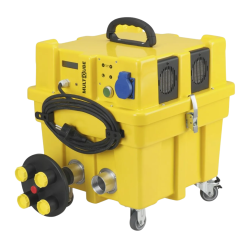
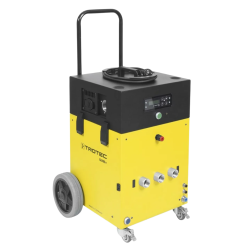
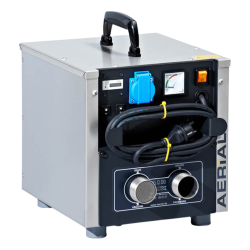
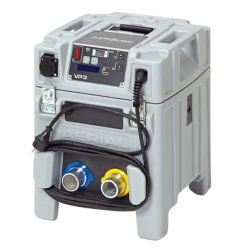
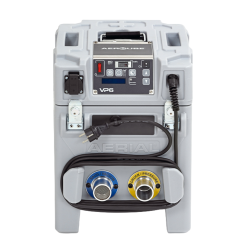
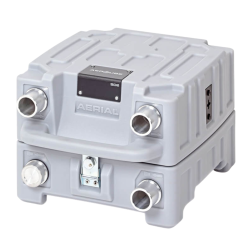
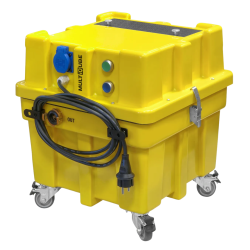
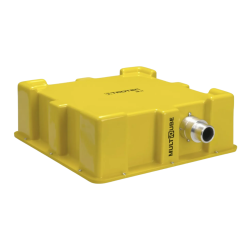
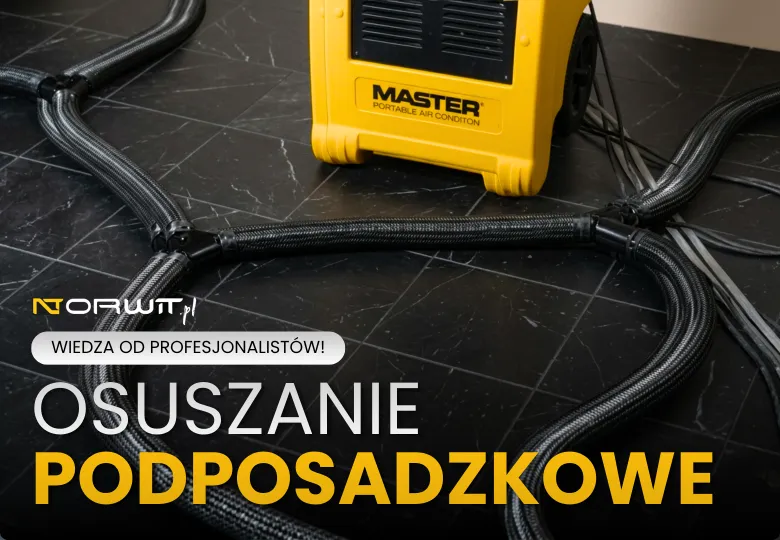
Subfloor dehumidifiers are specialised equipment for drying insulation layers beneath flooring (polystyrene, mineral wool) after flooding, plumbing failures or water damage. They use the negative pressure method (sucking moist air from under the floor) or positive pressure (blowing dry air in). At NORWIT.PL: the professional AERCUBE system (Dantherm) and MultiQube (Trotec) — side channel blowers, turbines, water separators, HEPA filters, silencers. Equipment for water damage restoration companies and renovation crews.
Subfloor dehumidifiers are specialised systems for drying insulation layers beneath the floor — polystyrene, mineral wool, PUR foam — after flooding, plumbing or sewage failure. This is not an ordinary air dehumidifier: a standard condensation or desiccant dehumidifier dries the air in a room, but water trapped in the insulation under the screed (10-20 cm deep) will only evaporate naturally after 6-18 months, causing corrosion, mould, adhesive delamination and tile cracks in the meantime. The subfloor system extracts or injects air directly through the insulation layer via drilled holes (Ø 12-20 mm) and dries it in 7-21 days.
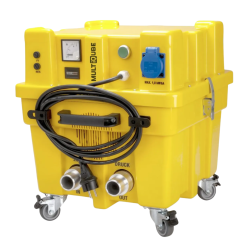
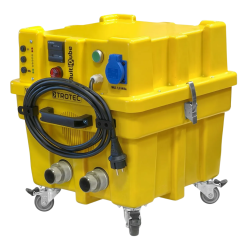
Norwit offers complete systems from two leading manufacturers: Dantherm AERCUBE (Denmark) and Trotec MultiQube / Qube+ (Germany). This is equipment designed for water damage restoration companies, renovation crews, building loss adjusters and contractors supporting insurance damage claims. Warehouse in Kraków-Niepołomice, 24 h dispatch.
| Criterion | Negative pressure (suction turbine) | Positive pressure (compressor injection) |
|---|---|---|
| Operating principle | Sucks moist air from under the floor | Blows dry air under the floor |
| Key equipment | Turbine (Trotec VX 5, Dantherm VP 6) + water separator + HEPA filter | Side channel blower (Trotec VE 4, Dantherm VP 3, AB 200) |
| Advantage | Does not spread mould spores in the room | Faster moisture evaporation from insulation |
| When to use | After clean-water flooding (plumbing, rainwater) or when mould present | After clean-water flooding, no biological risk |
| Requires HEPA filter | ✓ YES (HF 2 Dantherm or HC MultiQube) — protects exhaust air | ⚠ only G4 pre-filter on inlet |
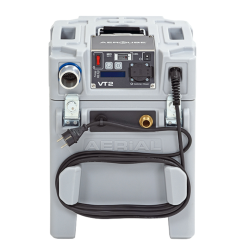
| Requires water separator | ✓ YES (VT 2 Dantherm, WA 4i MultiQube) — protects turbine from water | ✗ NO (clean dry air) |
| Typical noise | 65-75 dB (turbine) — needs silencer SD 2 / NR 19 | 55-65 dB (blower) |
Industry standard choice: after a fresh clean-water plumbing failure (last 24-48 h) — positive pressure method (faster). After a stale flood 3+ days where mould growth is a risk — negative pressure method (safer for room occupants, HEPA filter captures spores).
| Component | Model | Key parameter | Indicative net price |
|---|---|---|---|
| Side channel blower | VP 3 | Flow 150 m³/h (positive pressure) | ~€1,840 |
| Turbine | VP 6 | Flow 250 m³/h (negative pressure) | ~€2,440 |
| Water separator | VT 2 | Pump capacity 7 m³/h | ~€1,720 |
| HEPA H13 filter | HF 2 | HEPA H13 + G4 pre-filter | ~€735 |
| Silencer | SD 2 | Noise reduction 19 dB(A) | ~€550 |
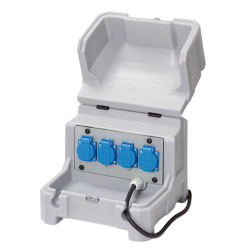
| MID power distributor | CC4 | 4 devices + energy meter | ~€495 |
| Compact blower | AB 200 | Flow 80 m³/h (smaller jobs) | ~€1,415 |
| Component | Model | Key parameter | Indicative net price |
|---|---|---|---|
| Vacuum generator (central unit) | Qube+ | Max. vacuum 220 mbar | ~€2,480 |
| Side channel blower | VE 4 / VE 4 S | Flow 150 m³/h (positive pressure) | ~€1,040-€1,080 |
| Turbine | VX 5 | Flow 250 m³/h (negative pressure) | ~€1,655 |
| Water separator | WA 4i | Tank capacity 17 L | ~€855 |
| HEPA filter | HC | HEPA H13 for MultiQube | ~€240 |
| Silencer | NR 19 | Built into MultiQube | ~€115 |
| Series Pro 4-pack splitter | Series Pro 4× | 4 connections | ~€38 |
Starter kit for subfloor drying (typical 30-50 m² damage): turbine (VP 6 or VX 5) + water separator (VT 2 or WA 4i) + HEPA filter (HF 2 or HC) + silencer (SD 2 or NR 19) + ducts (Superflextract DN 38-50 mm) + floor connectors. Kit price: ~€4,150-€5,070 net. Alternative daily rental: €90-€160/day for the full kit.
Subfloor drying is a specialised method for removing moisture from insulation layers beneath the floor (polystyrene, mineral wool, PUR foam) after a water incident. A standard floor in an apartment or office has the layout: concrete screed 5-7 cm → vapour barrier film → thermal/acoustic insulation 4-15 cm → slab. After flooding, water seeps through grout/expansion joints and stays between the screed and the slab, in the insulation layer. It will not evaporate on its own through the vapour barrier — the natural process takes 6-18 months and in the meantime causes rebar corrosion, mould growth, tile adhesive delamination. The subfloor method forces air exchange in the insulation layer through drilled holes (Ø 12-20 mm in grout lines or in the exposed expansion joint) and dries it in 7-21 days. It is used after: a burst water pipe, dishwasher/washing machine failure, neighbour flooding, river flood, firefighting.
The negative pressure method uses a suction turbine (Trotec VX 5 or Dantherm VP 6, flow 250 m³/h) which sucks moist air from under the floor. The air passes through a water separator (VT 2 or WA 4i, capacity 7-17 L) and a HEPA H13 filter (HF 2 or HC) — capturing mould spores and dust. This method is biologically safer — nothing harmful returns to the room. The positive pressure method uses a side channel blower (Trotec VE 4 or Dantherm VP 3, 150 m³/h) which blows dry air under the floor. Moist air escapes through adjacent holes. This method is 30-50% faster but spreads spores throughout the room — suitable only after a fresh clean-water flood (first 24-48 h). Standard rule: fresh clean-water flood → positive pressure; old flood / mould risk → negative pressure.
Subfloor drying typically takes 7-21 days of continuous system operation, depending on: 1) Flooded area (10-100 m²). 2) Insulation layer thickness (4-15 cm). 3) Insulation type — EPS polystyrene dries 30-40% faster than mineral wool (wool holds more water). 4) Time since flooding — a fresh flood (24-72 h) dries in 7-12 days, an old one (1-3 weeks) requires 14-21 days. Concrete figures: 30 m² × 8 cm of polystyrene one day after a pipe burst — Trotec VX 5 + WA 4i + HC: 8-10 days. 80 m² × 12 cm of wool one week after a neighbour flood — Dantherm VP 6 + VT 2 + HF 2: 16-21 days. Progress measurement: dielectric moisture meter (Trotec T660 / Dantherm) in grout lines every 24 h. End of drying: stable value of 4-6% weight moisture in 3 consecutive readings.
Service from a water damage restoration company: €9-€20 net per m² for the full drying cycle (typically 10-20 days), plus €45-€115 for diagnostics and final measurement. For a 50 m² apartment that is €455-€1,025 net. Equipment rental alone (turbine + separator + filter + silencer kit): €90-€160/day — a 10-day cycle = €900-€1,600, plus your own labour 4-6 h daily (drilling holes, monitoring, sealing, moisture measurement). Purchase of a Dantherm AERCUBE or Trotec MultiQube kit: €4,150-€6,900 net — pays back at 8-12 jobs (1-1.5 seasons of intensive work). Choice: one-off incident → hire a company (insurance usually covers it). Small renovation firm doing regular post-damage jobs → rent for the first 5-10 jobs, then buy. Water damage restoration company serving an insurer → buying a fleet of several kits is the business model.
The basic subfloor drying kit (negative pressure method, 30-50 m²) consists of 5 elements: 1) Negative pressure turbine — Trotec VX 5 (250 m³/h, ~€1,655) or Dantherm VP 6 (250 m³/h, ~€2,440). 2) Water separator — Trotec WA 4i (17 L tank, ~€855) or Dantherm VT 2 (pump 7 m³/h, ~€1,720) — protects the turbine from water ingestion. 3) HEPA H13 filter — Trotec HC (~€240) or Dantherm HF 2 (~€735) — captures mould spores and dust. 4) Silencer — Trotec NR 19 (~€115) or Dantherm SD 2 (~€550, 19 dB reduction) — reduces noise to apartment-acceptable level. 5) Superflextract ducts Ø 38-50 mm (Dantherm 2002245/2002247 ~€65-€115/piece) + floor connectors Ø 38-50 mm (~€14-€15/piece) — interface with floor holes. Optional: MID splitter CC4 (Dantherm, ~€495) or Series Pro 4× (Trotec, ~€38) when serving multiple zones simultaneously. Total kit cost: €4,150-€5,750 net (Trotec) or €5,300-€6,900 net (Dantherm — pricier but longer service life).
Standard procedure (ceramic tiles): 1) Locate grout lines between tiles in the flooded area — we drill in grout (not in tiles), to avoid damaging the finish. 2) Make a grid of holes Ø 12-20 mm every 40-60 cm — typically 8-15 holes are sufficient for 30 m². 3) Hammer drill with a masonry bit — drill through the grout, screed (5-7 cm) and vapour barrier film, ending at the contact with insulation (no deeper — to avoid damaging the slab/rebar). 4) Insert floor connectors (Dantherm 2002263/2002264 Ø 38/50 mm or Trotec 6100000130) — they seal around the bore. 5) Connect Superflextract ducts: some holes to the turbine (extraction), some as venting holes (dry air inlet from the room). 6) Start the system. For parquet/PVC flooring — drill near the wall under the skirting board or in an area where a board can be replaced after drying. After completion: plug holes with mortar or silicone and re-grout the joints (epoxy or cement grout).
You can normally live in the apartment during subfloor drying if the negative pressure method with HEPA H13 filter is used (Trotec HC, Dantherm HF 2) and a silencer (NR 19, SD 2). Noise with the silencer is 55-65 dB(A) — comparable to a vacuum cleaner on minimum settings, acceptable during the day, better to switch off at night (or move the system to another room if the flooding did not affect the bedroom). Necessary restrictions: 1) Do not walk over the drying area near the holes (risk of tripping on hoses). 2) Keep pets away from the equipment (spinning fans, hot surfaces). 3) Check the water level in the separator daily (WA 4i holds 17 L, empty every 12-24 h). For the positive pressure method (no HEPA filter, spreads spores) we do not recommend living in the room — especially for allergy sufferers, children and people with lung diseases. In case of old flooding (3+ days) and suspected mould, always use negative pressure + HEPA filter, regardless of occupancy decision.
A regular condensation or desiccant dehumidifier placed in a flooded room only dries the air and the floor surface — water trapped in the insulation layer beneath the screed is separated by a vapour barrier film (PE or PVC, 0.2 mm thick), which was laid before the screed to protect insulation from moisture from below. The vapour barrier works in both directions — it lets neither water in nor out. After flooding, water enters the insulation through grout, expansion joints or floor drains, but cannot evaporate back. A standard dehumidifier running 30 days will lower air humidity to 40% RH, slightly dry the screed surface from 95% to 70% CM moisture, but will not touch the water in the insulation (CM stays at 30-40%). After laying a new finish (panels, tiles) the moisture gradually escapes over 6-18 months causing: 1) tile adhesive delamination, 2) laminated panel warping, 3) black mould (Stachybotrys) under the floor, 4) rebar corrosion in the screed. The subfloor method forces air exchange directly in the insulation layer — the only way to truly dry a floor after flooding.
Standard residential policies (PZU, Warta, Allianz, Ergo Hestia, Compensa) with the "Property + water damage" option cover the cost of subfloor drying as part of damage liquidation, if the flooding resulted from: water pipe burst, washing machine/dishwasher failure, central heating system failure, neighbour flooding (insurer's regress), flood (if the policy includes this risk). Typical coverage limit: €4,500-€23,000 depending on the sum insured. Required documents: protocol from the water damage restoration company (moisture measurement, drying plan, time, cost), invoice, photos of damaged floor. Practically: contact the insurer's hotline immediately after the incident, they typically refer to a trusted restoration company (Belfor, PolyGon, Munters, Servpro) which invoices the insurer directly. The "drying + renovation" procedure is cheaper for the insurer than replacing the floor without drying (avoiding subsequent mould damages). Equipment purchased by your own renovation firm is not refundable under the client's policy — it is an investment in business tools.
AERCUBE (Dantherm) and MultiQube (Trotec) systems are NOT mutually compatible in terms of duct and connector standards — each manufacturer uses its own mounting system and diameters. Dantherm AERCUBE uses bayonet connectors and Superflextract ducts Ø 38/50 mm (catalogue numbers 2002245/2002247). Trotec MultiQube / Qube+ uses VQuick connectors compatible with PVC hoses Ø 38 mm (numbers 6100009047/9048/9059). Practically: 1) Pick one manufacturer for the whole kit and stick with it (if you already have Dantherm — buy further Dantherm components; same for Trotec). 2) Cross-system adapters exist only in single configurations (Dantherm Adapter 2000555 ~€105, Trotec connectors 6100009050 ~€5) — you can connect but lose tightness and reliability. 3) Universal accessories (Thermaflex ducts, Y/T reducers, Ø 38/50 mm clamps) work with both systems — these can be bought cheaper. Recommendation: beginner → MultiQube (Trotec) — cheaper starter kit (~€4,150), simpler service; professional water damage restoration company with 5+ years of experience → AERCUBE (Dantherm) — premium quality, longer service life, better technical documentation.
After a water incident — time matters. The sooner you start subfloor drying, the lower the risk of mould, corrosion and finish delamination. Order online or contact us via the form on our website — we will help you choose a kit suitable for the scale of the damage.
check_circle
check_circle
Cookies
Cookie information
This website uses its own cookies to ensure you have the best possible experience on our site. We also use third-party cookies to enhance our services, analyze usage, and display ads tailored to your preferences based on your browsing behavior.
Here you can learn more about how Google processes personal data.
For more information, please refer to our Privacy Policy.
Cookie management
Bessesary cookies for the proper functioning of the website. They allow you to remember the user settings, e.g. language, currency, cart, page layout, etc. Functional cookies do not collect any personal data or send any information to external sites.
| Cookies | Provider | Purpose | Validity term |
|---|---|---|---|
| PHPSESSID | NORWIT SP. Z O.O. | The PHPSESSID is a cookie that is used to identify a user's session on a website. A session is a mechanism for preserving state and user information between individual requests during a single connection session. The PHPSESSID cake stores a unique session ID that is required to process requests and responses between the browser and the server. These cookies only last until you close your browser. |
Session |
| PrestaShop-# | NORWIT SP. Z O.O. | The PrestaShop cookie stores data to keep the user's session open, including currency, language, customer ID, and other necessary information for the shop's proper operation. |
480 hours |
| _x13eucookie | NORWIT SP. Z O.O. | Remembers cookie preferences. |
365 days |
| _x13eucookie_consent_hash | NORWIT SP. Z O.O. | Remembers cookie preferences and latest consent date. |
365 days |
Statistical cookies collect anonymous information about users, such as the number of visitors, sources of links, etc. These information help to understand how users use the site.
Marketing cookies are used to track users through websites. The goal is to show ads that are most relevant to the user.
Personalized cookies concern adjusting the website to your requirements. For example, they can display information about products selected for you.
About Cookies
Cookies are small text files that are stored on your computer or mobile device by websites you visit. They serve various purposes, such as remembering user login information, tracking user behavior for advertising purposes, and personalizing the user's browsing experience. There are two types of cookies: session and persistent. The former are deleted after the browser session ends, while the latter remain on the device for a specified period or until manually deleted.