

-
-
Concrete
-
- Concreting
- Concrete Vibrators
- Complete 230 V Mechanical Vibrators
- Vibrator Heads
- Vibrator Shafts
- Vibrator Motors
- Concrete Vibrators 42 V | 200 Hz
- Mechanical Vibrators 230 V
- 42 V | 200 Hz Head and Shaft
- 230 V Concrete Vibrators
- Vibrators With Built-In 230 V | 200 Hz Converter
- 42 V | 200 Hz Converters
- Combustion Vibrators
- Pneumatic Vibrators
- External Vibrators
- Power Trowels
- Vibratory Screeds
- Concrete Hand Tools
- Concrete Vibrators
-
-
-
-
-
- Walk-Behind Combustion Power Trowels
-
-
-
Heating and cooling
-
Generators
-
Earthworks
-
Industrial vacuums
-
Finishing
-
Pumps
-
Measurement
-
BLOG & Tips
-
Promotions
Kategorie 16 kategorii
Kategorie
-
- Levels and Measurements
- Soil Compactors
- Tamping Rammers - Jumping Jacks
- Single Direction Vibratory Plates
- Reversible Vibratory Plates
- Rollers
- 100 kg Soil Compactors
- 200 kg Soil Compactors
- 300 kg Soil Compactors
- 400 kg Soil Compactors
- 500 kg Soil Compactors
- 600 kg Soil Compactors
- 700 kg Soil Compactors
- 800 kg Soil Compactors
- Wacker Neuson Compactors
- Accessories for Compactors
- Bomag Compactors
- Altrad Belle Compactors
- Paver Compactors
- Swepac Compactors
- Power Generators
- Concreting
- Concrete Vibrators
- Complete 230 V Mechanical Vibrators
- Vibrator Heads
- Vibrator Shafts
- Vibrator Motors
- Concrete Vibrators 42 V | 200 Hz
- Mechanical Vibrators 230 V
- 42 V | 200 Hz Head and Shaft
- 230 V Concrete Vibrators
- Vibrators With Built-In 230 V | 200 Hz Converter
- 42 V | 200 Hz Converters
- Combustion Vibrators
- Pneumatic Vibrators
- External Vibrators
- Vibratory Screeds
- Power Trowels
- Concrete Hand Tools
- Concrete Vibrators
- Pumps and Motor Pumps
- Cutting, Drilling and Grinding
- Heating and Cooling
- Wood Table Saws
- Painting and Plastering
- Combustion Engines
- Washing and Vacuuming
- Cement Mixers
- Paving Tools
- Wheelbarrows and Track Dumpers
- Demolition and Hammers
- Sales
- Levels and Measurements
Brak kategorii pasujących do wyszukiwania.
Ride-On Combustion Power Trowels

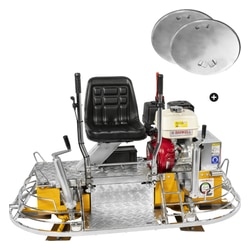
Barikell MK8-90 petrol ride-on power trowel (Kohler 23.5 HP)
3255zł52,890.00 tax incl. 43 000,00 zł tax excl.View technical data Zobacz szczegóły
- Weight: 286 kg
- Dimensions: 2050 x 1030 x 1040 mm
- Engine power: 17,5 kW | 23,5 KM
- Engine: Kohler
- Fuel: Bezołowiowa 95
Barikell MK8-90 TC Petrol Power Trowel (kohler 25 Hp)
3257G/15zł63,960.00 tax incl. 52 000,00 zł tax excl.View technical data Zobacz szczegóły
- Dimensions: 2050 x 1030 x 1040 mm
- Engine power: 18,6 kW | 25 KM
- Engine: Kohler
- Fuel: Bezołowiowa 95
- Fuel tank: 11 l
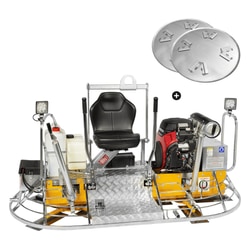
Barikell MK8-75 Petrol Power Trowel (B&S 18 Hp)
3210zł39,360.00 tax incl. 32 000,00 zł tax excl.View technical data Zobacz szczegóły
- Weight: 212 kg
- Engine power: 13,4 kW | 18 KM
- Engine: B&S Vanguard
- Fuel: Bezołowiowa 95
- Model: MK8-75
Barikell MK8-120 HAK (B&S 35 Hp) Petrol Power Trowel.
3359Gzł65,190.00 tax incl. 53 000,00 zł tax excl.View technical data Zobacz szczegóły
- Weight: 330 kg
- Dimensions: 2450 x 1205 x 1040 mm
- Engine power: 25,7 kW | 35 KM
- Engine: B&S Vanguard
- Fuel: Bezołowiowa 95
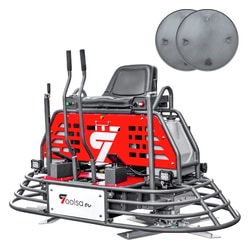
Toolsa TPT-836 Low Rider Ride-On Power Trowel (Rato R740 | 25 HP)
TPT836LR-R740zł30,750.00 tax incl. 25 000,00 zł tax excl.View technical data Zobacz szczegóły
- Weight: 350 kg
- Dimensions: 1960 x 1080 x 1290 mm
- Engine type: Two-cylinder, four-stroke
- Engine power: 18.5 kW | 25 HP
- Speed: 70-150 rpm
Toolsa TPT-836 EHG Self-Propelled Power Trowel (Rato R740 | 25 HP)
TPT836zł30,750.00 tax incl. 25 000,00 zł tax excl.View technical data Zobacz szczegóły
- Weight: 350 kg
- Dimensions: 1960 x 1080 x 1290 mm
- Engine type: Two-cylinder, four-stroke
- Engine power: 18.5 kW | 25 HP
- Speed: 70-150 rpm
Toolsa TPT-1046 EHG Self-Propelled Power Trowel (Rato R999 | 35 HP)
TPT846zł49,200.00 tax incl. 40 000,00 zł tax excl.View technical data Zobacz szczegóły
- Engine type: Two-cylinder, four-stroke
- Engine power: 25,7 kW | 35 KM
- Speed: 0–180 obr./min
- Troweling diameter: 2 x 1200 mm
- Engine model: Rato R999
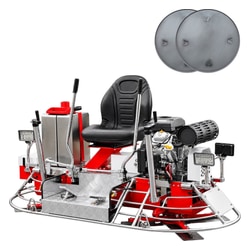
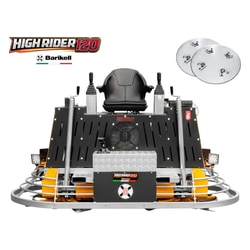
Barikell MK10-120 HIGH RIDER 120 Petrol Power Trowel (Kubota 57 HP)
38000zł147,600.00 tax incl. 120 000,00 zł tax excl.View technical data Zobacz szczegóły
- Weight: 880 kg
- Motor manufacturer: Kubota
- Engine power: 42 kW | 57 KM
- Startup: Electric
- Fuel: Bezołowiowa 95
Barikell MK8-120 TC HAK (B&S 35 Hp) Petrol Power Trowel.
3359G/15zł76,260.00 tax incl. 62 000,00 zł tax excl.View technical data Zobacz szczegóły
- Weight: 353 kg
- Dimensions: 2450 x 1205 x 1040 mm
- Engine power: 25,7 kW | 35 KM
- Engine: B&S Vanguard
- Fuel: Bezołowiowa 95
Petrol Barikell Floating Monster MK10-120 TC HCS (B&S 37 Hp) Power Trowel.
3314/15/23zł86,100.00 tax incl. 70 000,00 zł tax excl.View technical data Zobacz szczegóły
- Weight: 460 kg
- Dimensions: 2450 x 1205 x 1040 mm
- Engine power: 27,2 kW | 37 KM
- Engine: B&S Vanguard
- Fuel: Bezołowiowa 95
Barikell MK8-90 petrol ride-on power trowel (Kohler 25 HP)
3257zł52,890.00 tax incl. 43 000,00 zł tax excl.View technical data Zobacz szczegóły
- Weight: 293 kg
- Dimensions: 2050 × 1030 × 1040 mm
- Engine power: 18,4 kW | 25 KM
- Engine: Kohler
- Fuel: Bezołowiowa 95
Barikell MK8-120 HCS Petrol Power Trowel (B&S 35 Hp)
3353zł76,260.00 tax incl. 62 000,00 zł tax excl.View technical data Zobacz szczegóły
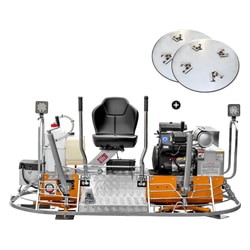
- Weight: 400 kg
- Dimensions: 2450 x 1205 x 1040 mm
- Engine power: 25,7 kW | 35 KM
- Engine: B&S Vanguard
- Fuel: Bezołowiowa 95
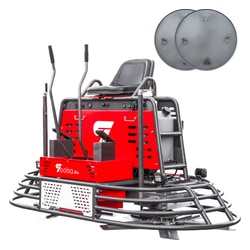
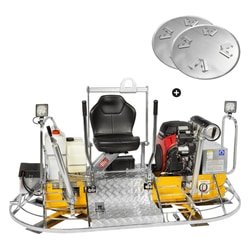
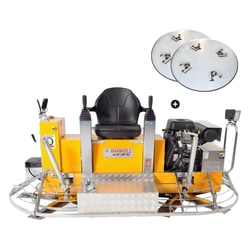
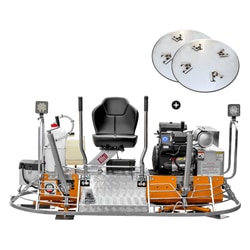
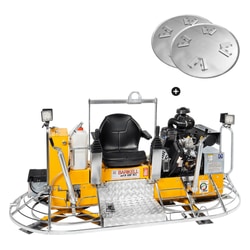
A ride-on power trowel is a machine that finishes fresh concrete mechanically while the operator rides it, steering from a seat — unlike a walk-behind trowel, which the operator guides on foot from a handle. Power normally comes from a combustion engine of roughly 20–35 HP driving two blade assemblies (rotors), each most often 900–1200 mm in diameter, for a combined working width of up to 2.4–3 m. One machine therefore smooths as much as 2000–4000 m² of concrete slab per shift — several times what a walk-behind unit achieves.
At NORWIT.PL, ride-on trowels come primarily from Barikell, Conmec Europe and Toolsa — single- and twin-rotor machines built for large concrete slabs in halls, warehouses and car parks. The category sits within the wider range of combustion power trowels, and Barikell models also appear on the manufacturer page. Below we explain when a ride-on trowel pays off against a walk-behind one, and how to match engine power to the size of the site.
Barikell, Toolsa and Conmec Europe ride-on trowels — how mechanical trowelling works
Mechanical trowelling means smoothing and densifying the surface of freshly poured concrete with rotating blades, which close the pores and draw cement laitance upwards, forming a hard, smooth, dust-proof top layer of the floor. On a ride-on power trowel the operator works from a seat, steering with a joystick above two sets of rotors — unlike a walk-behind trowel, where the operator follows the machine on foot and holds a single blade assembly by a handle. The drive is normally a combustion engine in the 20–35 HP range, and rotors most often measure 900–1200 mm in diameter each, giving a combined working width of up to 2.4–3 m.
The NORWIT.PL range covers ride-on trowels primarily from Barikell, Conmec Europe and Toolsa — manufacturers that specialise in equipment for finishing industrial floors. Barikell models are also listed on the manufacturer page. Below we set out the difference between single- and twin-rotor designs, how to size the engine, and when buying beats renting.
Types of ride-on power trowels — single-rotor and twin-rotor
Ride-on trowels differ above all in the number of rotors, that is rotating blade assemblies. A single-rotor version carries one assembly and suits small and medium-sized concrete slabs. A twin-rotor version runs two assemblies side by side, which widens the working pass and raises output on large, open surfaces. Drive type matters as well — on a site without mains power, only a combustion engine is an option.
| Type | Intended use | Example brands |
|---|---|---|
| Single-rotor ride-on power trowel | small and medium-sized concrete slabs, garages, car parks, halls up to approx. 1500 m² | Toolsa, Conmec Europe |
| Twin-rotor ride-on power trowel | large industrial slabs, warehouses and production halls above 2000 m² | Barikell, Toolsa |
| Combustion-engine ride-on power trowel | outdoor work and ventilated halls without mains power | Barikell, Conmec Europe, Toolsa |
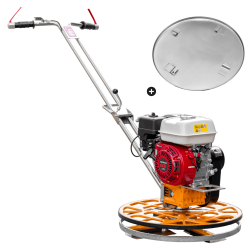
Ride-on trowels belong to the broader family of combustion power trowels, which also includes smaller walk-behind machines — check the full range if you need equipment for smaller areas, edges or tight rooms where a ride-on machine simply will not fit.
Matching engine power and machine size to the site
Engine power and rotor configuration follow from the area of the concrete slab and from access conditions on site. A smaller single-rotor machine with a lower-output engine copes with a site of up to approx. 500 m², whereas large twin-rotor trowels rated at up to 35 HP only reach their full output on areas measured in thousands of square metres.
| Site size | Trowel type | Indicative engine power |
|---|---|---|
| up to approx. 500 m² | single-rotor | approx. 13–18 HP |
| 500–1500 m² | single-rotor or light twin-rotor | approx. 20–24 HP |
| above 1500–2000 m² | twin-rotor | approx. 25–35 HP |
Gate and entrance widths deserve a look too — a twin-rotor machine with a rotor span of up to 2.4–3 m needs more room to manoeuvre than a single-rotor unit.
Ride-on versus walk-behind and rental — output and cost-effectiveness
A ride-on power trowel typically finishes 300–600 m² of concrete per hour of continuous work, which over a full eight-hour shift comes to as much as 2000–4000 m² on large twin-rotor models. A walk-behind trowel smooths anywhere from a few dozen square metres to approx. 150 m² per hour in the same time — and the gap widens as the slab grows, which is why a ride-on machine cuts work on large halls and car parks from several days to a single shift.
Buying a ride-on trowel pays off for contractors who handle anywhere from a handful to a dozen large-slab jobs a year — the machine pays for itself through savings on hire and labour after just a few such projects. For a one-off, modest job of a few hundred square metres, hiring equipment can be the better route, yet a professional Barikell, Conmec Europe or Toolsa machine with service support and wear parts available is an investment that keeps working across many sites for years.
Frequently asked questions about ride-on power trowels
How does a ride-on power trowel differ from a walk-behind trowel?
A ride-on power trowel is a machine with an operator seat that travels over fresh concrete on two sets of spinning blades (rotors), usually 900–1200 mm in diameter each — the operator steers it with a joystick while seated and covers several thousand square metres within a shift. A walk-behind trowel carries one smaller rotor, most often up to 900 mm in diameter, and is guided on foot by a handle, which limits its output to a few hundred square metres per shift. The ride-on type belongs on large, open concrete slabs; the walk-behind type belongs in smaller and confined rooms.
How much concrete can a ride-on power trowel finish in one hour?
A ride-on power trowel usually finishes 300–600 m² of concrete per hour when working continuously on a single slab, which translates into as much as 2000–4000 m² over an eight-hour shift with large twin-rotor models. A walk-behind trowel, by comparison, smooths from a few dozen square metres up to approx. 150 m² per hour in that same time. Real output depends on the concrete mix design, air temperature and humidity, and operator experience, which is why manufacturers quote it as a range rather than a fixed figure.
When is buying a ride-on power trowel better than renting equipment for a job?
Buying a ride-on power trowel pays off for contractors with at least a handful of large-slab jobs a year — warehouses, production halls or car parks above 1000–2000 m². The machine pays for itself through savings on hire and labour after just a few such projects, and a combustion engine allows work without mains power. For a one-off, modest job of a few hundred square metres, hiring equipment or using a walk-behind trowel tends to be the cheaper answer.
How do I match the engine power of a ride-on trowel to the size of the site?
Engine power for a ride-on power trowel follows the size of the slab and the thickness of the layer being finished — for sites up to approx. 1000–1500 m² a unit with an engine around 20–24 HP is enough, while large halls and car parks above 2000–3000 m² call for machines with a 30–35 HP engine and a wider rotor pass. More power also means the ability to work on thicker, more demanding concrete mixes without the blades losing revs. Entrance and gate widths on the site are worth factoring into the choice as well.
Is a ride-on power trowel suitable for work in tight, small rooms?
A ride-on power trowel needs room to manoeuvre and clear access, so in tight rooms, around columns and walls or in corners a walk-behind trowel works better, with its single rotor of up to approx. 900 mm in diameter reaching to within 20–30 cm of a wall. Ride-on machines, whose rotor working width reaches 2.4–3 m, need open surfaces measured in hundreds or thousands of square metres to exploit their output. In practice a single site often combines both types: the ride-on machine finishes the middle of the slab, the walk-behind one reaches edges and detail areas.
What is the difference between a single-rotor and a twin-rotor ride-on trowel?
A single-rotor ride-on power trowel carries one set of rotating blades, usually 900–1200 mm in diameter, and suits small and medium-sized slabs such as garages, car parks or halls up to approx. 1500 m². The twin-rotor version carries two such sets working side by side, giving a working pass of up to 2.4–3 m and finishing a far wider strip of floor in a single run — hence its place on large industrial and warehouse projects above 2000 m². Twin-rotor machines also tend to carry a stronger engine, in the region of 30 HP and above.
What service and routine maintenance does a combustion-engine ride-on trowel need?
Routine maintenance of a combustion-engine ride-on power trowel covers a daily check of engine and hydraulic oil levels, cleaning mortar residue off the blades and discs after every shift, and greasing the arm pivot points roughly every 8–10 hours of work. The engine normally needs an oil change every 100–150 running hours in line with the manufacturer's schedule, and the air filter calls for more frequent checks when working in dusty site conditions. Regular servicing extends the life of the rotor gearbox bearings, which take the heaviest loads during trowelling.
Which brands of ride-on power trowels are available at NORWIT.PL?
At NORWIT.PL, ride-on power trowels come primarily from Barikell, Conmec Europe and Toolsa — manufacturers specialising in equipment for finishing concrete floors, complemented by other established European brands. The machines differ in rotor count (single- or twin-rotor), combustion engine output and working width, so we match them individually to the size and nature of the site. A full overview of models and current specifications is available on the product pages within the ride-on power trowel category.
Why buy a ride-on power trowel at NORWIT.PL
We concentrate on professional equipment for finishing concrete floors: our range covers ride-on power trowels primarily from Barikell, Conmec Europe and Toolsa — single- and twin-rotor machines matched to the size of a specific site. We advise on engine power and rotor configuration for your floor area and working conditions, and the category sits within the wider range of combustion power trowels, where you will also find smaller walk-behind machines for detail work and edges. Orders are handled online, with delivery across the country.