


-
-
Concrete
-
- Concreting
- Concrete Vibrators
- Complete 230 V Mechanical Vibrators
- Vibrator Heads
- Vibrator Shafts
- Vibrator Motors
- Concrete Vibrators 42 V | 200 Hz
- Mechanical Vibrators 230 V
- 42 V | 200 Hz Head and Shaft
- 230 V Concrete Vibrators
- Vibrators With Built-In 230 V | 200 Hz Converter
- 42 V | 200 Hz Converters
- Combustion Vibrators
- Pneumatic Vibrators
- External Vibrators
- Power Trowels
- Vibratory Screeds
- Concrete Hand Tools
- Concrete Vibrators
-
-
-
-
-
- Walk-Behind Combustion Power Trowels
-
-
-
Heating and cooling
-
Generators
-
Earthworks
-
Industrial vacuums
-
Finishing
-
Pumps
-
Measurement
-
BLOG & Tips
-
Promotions
Kategorie 16 kategorii
Kategorie
-
- Levels and Measurements
- Soil Compactors
- Tamping Rammers - Jumping Jacks
- Single Direction Vibratory Plates
- Reversible Vibratory Plates
- Rollers
- 100 kg Soil Compactors
- 200 kg Soil Compactors
- 300 kg Soil Compactors
- 400 kg Soil Compactors
- 500 kg Soil Compactors
- 600 kg Soil Compactors
- 700 kg Soil Compactors
- 800 kg Soil Compactors
- Wacker Neuson Compactors
- Accessories for Compactors
- Bomag Compactors
- Altrad Belle Compactors
- Paver Compactors
- Swepac Compactors
- Power Generators
- Concreting
- Concrete Vibrators
- Complete 230 V Mechanical Vibrators
- Vibrator Heads
- Vibrator Shafts
- Vibrator Motors
- Concrete Vibrators 42 V | 200 Hz
- Mechanical Vibrators 230 V
- 42 V | 200 Hz Head and Shaft
- 230 V Concrete Vibrators
- Vibrators With Built-In 230 V | 200 Hz Converter
- 42 V | 200 Hz Converters
- Combustion Vibrators
- Pneumatic Vibrators
- External Vibrators
- Vibratory Screeds
- Power Trowels
- Concrete Hand Tools
- Concrete Vibrators
- Pumps and Motor Pumps
- Cutting, Drilling and Grinding
- Heating and Cooling
- Wood Table Saws
- Painting and Plastering
- Combustion Engines
- Washing and Vacuuming
- Cement Mixers
- Paving Tools
- Wheelbarrows and Track Dumpers
- Demolition and Hammers
- Sales
- Levels and Measurements
Brak kategorii pasujących do wyszukiwania.
Indirect Oil Fired Air Heaters
Nagrzewnica olejowa z odprowadzaniem spalin Master BV 110
4013.217zł7,588.01 tax incl. 6 169,11 zł tax excl.View technical data Zobacz szczegóły
- Weight: 61 kg
- Dimensions: 1235 × 575 × 1000 mm
- Frequency: 50 Hz
- Fuel: Olej napędowy | nafta | HVO 100
- Fuel consumption: 3,2 l/h
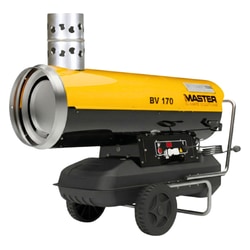
Nagrzewnica olejowa z odprowadzaniem spalin Master BV 170
4013.216zł8,651.99 tax incl. 7 034,14 zł tax excl.View technical data Zobacz szczegóły
- Weight: 67 kg
- Dimensions: 1350 × 575 × 1000 mm
- Frequency: 50 Hz
- Fuel: Olej napędowy | nafta | HVO 100
- Fuel consumption: 4,7 l/h
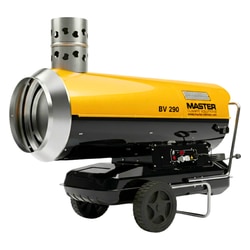
Nagrzewnica olejowa z odprowadzaniem spalin Master BV 290
4013.215zł10,499.99 tax incl. 8 536,58 zł tax excl.View technical data Zobacz szczegóły
- Weight: 101 kg
- Dimensions: 1600 × 700 × 1150 mm
- Frequency: 50–60 Hz
- Fuel: Olej napędowy | nafta | HVO 100
- Fuel consumption: 8,1 l/h
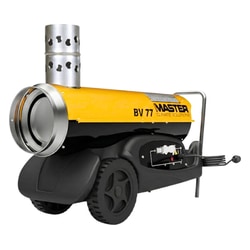
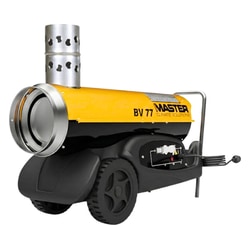
Master BV 77 Indirect Oil Heater
4013.319zł5,401.00 tax incl. 4 391,06 zł tax excl.View technical data Zobacz szczegóły
- Weight: 33 kg
- Dimensions: 1130 × 380 × 660 mm
- Frequency: 50 Hz
- Fuel: Olej napędowy | nafta | HVO 100
- Fuel consumption: 2,0 l/h
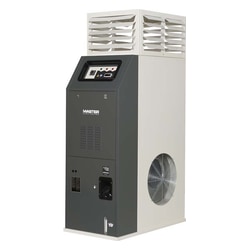
MASTER F 30 Stationary Oil-Fired Heater
F 30zł16,922.00 tax incl. 13 757,72 zł tax excl.View technical data Zobacz szczegóły
- Fuel consumption: 2.18 kg/h
- Tank capacity: 80 l
- Moc grzewcza: 27.55 kW
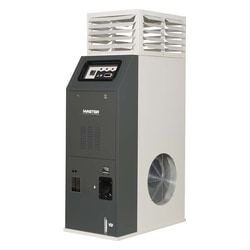
MASTER F 60 Stationary Oil-Fired Heater
F 60zł20,634.00 tax incl. 16 775,61 zł tax excl.View technical data Zobacz szczegóły
- Fuel: Olej napędowy
- Airflow [ m³/h ]: 6000
- Tank capacity: 110 l
- Power supply [ v / hz ].: 230/1 faz./50
- Dimensions of the device (l x w x h) [ mm ].: 1920 x 1040 x 600
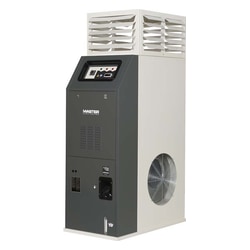
MASTER F 80 Stationary Oil-Fired Heater
F 80zł26,007.12 tax incl. 21 144,00 zł tax excl.View technical data Zobacz szczegóły
- Fuel: Olej napędowy
- Airflow [ m³/h ]: 7800
- Tank capacity: 110 l
- Power supply [ v / hz ].: 230/1 faz./50
- Dimensions of the device (l x w x h) [ mm ].: 1400 x 640 x 2090
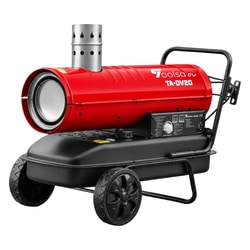
Toolsa TA-DV20 Indirect Diesel Heater (20 kW)
TA-DV20zł2,212.77 tax incl. 1 799,00 zł tax excl.View technical data Zobacz szczegóły
- Weight: 24 kg
- Dimensions: 950 x 500 x 600 mm
- Frequency: 50 Hz
- Power: 20 kW
- Fuel tank: 38 l
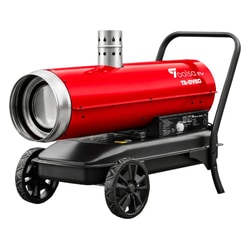
Toolsa TA-DV50 Indirect Diesel Heater (50 kW)
TA-DV50zł3,690.00 tax incl. 3 000,00 zł tax excl.View technical data Zobacz szczegóły
- Weight: 38,2 kg
- Dimensions: 1230 x 600 x 710 mm
- Frequency: 50 Hz
- Power: 50 kW
- Fuel tank: 50 l
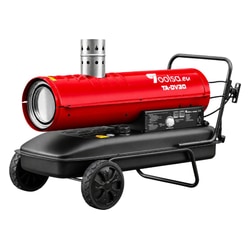
Toolsa TA-DV30 Indirect Diesel Heater (30 kW)
TA-DV30zł2,706.00 tax incl. 2 200,00 zł tax excl.View technical data Zobacz szczegóły
- Weight: 30.5 kg
- Dimensions: 1100 x 550 x 600 mm
- Frequency: 50 Hz
- Voltage: 230 V
- Power: 30 kW
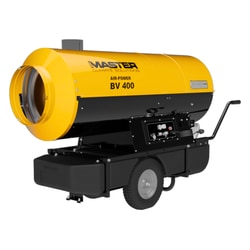
Nagrzewnica olejowa z odprowadzaniem spalin Master BV 400
4010.016zł21,524.00 tax incl. 17 499,19 zł tax excl.View technical data Zobacz szczegóły
- Weight: 200 kg
- Dimensions: 2086 × 717 × 1233 mm
- Frequency: 50 Hz
- Fuel: Olej napędowy | nafta | HVO 100
- Fuel consumption: 10,2 | 7,7 l/h
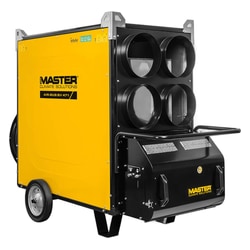
Nagrzewnica olejowa z odprowadzaniem spalin Master BV 471 S 4-drożny
4013.031zł23,357.70 tax incl. 18 990,00 zł tax excl.View technical data Zobacz szczegóły
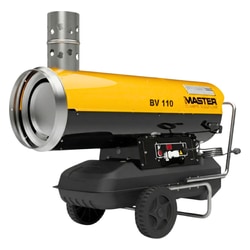
- Weight: 270 kg
- Dimensions: 1790 × 880 × 1360 mm
- Frequency: 50 Hz
- Fuel: Olej napędowy | nafta | HVO 100
- Fuel consumption: 12,93 l/h
An oil heater with flue gas exhaust (also called an indirect oil heater or an oil heater with a chimney) burns oil in a sealed combustion chamber with a heat exchanger and vents the resulting flue gases through a flue outlet and chimney to the outside of the building. Only clean, dry and odour-free air enters the heated room, so the unit can be used safely in enclosed, ventilated halls, workshops, warehouses and livestock buildings. Models in this category cover a wide power range — from units for workshops to large hall heaters (roughly from a dozen or so up to over 100 kW, depending on the model); the exact power of each unit is given on the product page.
At NORWIT.PL we stock oil heaters with flue gas exhaust from Master Heaters, Heylo and Sovelor — with the Master BV series (BV 110, BV 170, BV 290, BV 400, BV 471 S and BV 471 SR) as the core of the range. The category belongs to the oil-fired air heaters section, and its flueless counterparts are gas air heaters and electric air heaters. Master equipment is complemented by flue pipes, reducers and thermostats from heater accessories. Below we explain how flue gas exhaust works, how it differs from the flueless version and how to match the power to the area.
How an oil heater with flue gas exhaust works
An oil heater with flue gas exhaust is an indirect heater — the oil burns in a sealed chamber connected to a heat exchanger, and the combustion products (carbon dioxide and carbon monoxide, water vapour) pass into the flue outlet and escape through a chimney to the outside of the building. A fan pushes the air from the hall across the outer surface of the hot heat exchanger, so it returns heated but separated from the flue gases — dry and odour-free.
This is what sets it apart from a direct heater, in which the flame heats the air directly and the flue gases and water vapour return to the room. Thanks to the flue, the exhaust version can be used inside enclosed, ventilated buildings — which variant to choose is explained in the guide on whether to buy an oil heater with or without flue gas exhaust. Units of the Master BV series and other Master heaters come in various power ranges — from workshop models to large hall units; the exact power is given on the product page.
Types of oil heaters with flue gas exhaust
All units in this category are indirect heaters with a chimney, but they differ in mobility (mobile models on wheels) and in the way warm air is distributed (single- and four-way outlets). The category belongs to the oil-fired air heaters section; flueless alternatives are gas air heaters and electric air heaters.
| Type | Characteristics | Examples |
|---|---|---|
| Mobile on wheels | mobile, easy to move between halls and construction sites | Master BV series |
| With ducted distribution | supply outlets distribute heat through ducts to several zones | Master BV 471, Heylo units |
| Single-way (1-way) | one direction of warm-air discharge | Master BV 471 SR (1-way mode) |
| Four-way (4-way) | discharge in several directions, even heating of the hall | Master BV 471 S, BV 471 SR |
Chimneys, flue pipes and thermostats for these variants can be found in heater accessories.
With flue gas exhaust vs without flue gas exhaust
The choice between an indirect heater (with a chimney) and a direct one (without a chimney) determines where you can heat and what the air in the room will be like.
| Feature | With flue gas exhaust (indirect) | Without flue gas exhaust (direct) |
|---|---|---|
| Flue gases | vented outside through a chimney | released into the heated room |
| Air | clean, dry, free of odour and soot | with combustion products and moisture |
| Humidity | does not raise humidity | about 1.2 l of water per 1 l of fuel burned |
| Thermal efficiency | some heat escapes through the chimney (about 80–90%) | almost 100% of the heat goes into the room |
| Application | enclosed, ventilated halls, workshops, livestock buildings | open or heavily ventilated yards and construction sites |
| Examples | Master BV 110, BV 290, BV 400 | Master B-series models |
For rooms where people work or moisture-sensitive materials are stored, choose a model with flue gas exhaust. The rules for its safe operation are collected in the guide on whether an oil heater is safe and how to use it.
What power to choose — matching to area and volume
Power is matched to the volume and insulation of the room, not just to the floor area. For a well-insulated hall about 2.5–3 m high, a rough figure of 0.1 kW per 1 m² is used, and in poorly insulated buildings the demand can rise up to twofold. The table below shows an example of matching power to area using this rule — treat it as a starting point and check the exact power of a given unit on the product page.
| Power | Area (good insulation) | Volume | Approx. oil consumption |
|---|---|---|---|
| 10 kW | up to approx. 100 m² | approx. 250 m³ | approx. 1.0 l/h |
| 15 kW | up to approx. 150 m² | approx. 380 m³ | approx. 1.5 l/h |
| 20 kW | up to approx. 200 m² | approx. 500 m³ | approx. 2.0 l/h |
| 30 kW | up to approx. 300 m² | approx. 750 m³ | approx. 2.9 l/h |
| 40 kW | up to approx. 400 m² | approx. 1000 m³ | approx. 3.8 l/h |
| 50 kW | up to approx. 500 m² | approx. 1250 m³ | approx. 4.7 l/h |
For a workshop or smaller hall, a dozen to a few dozen kW is usually enough, for medium production buildings correspondingly more, and large halls and construction sites need the biggest models in the category (even over 100 kW for large volumes or poor insulation). At low outdoor temperatures it is worth choosing a model one power range higher and confirming the exact power on the product page.
Master, Heylo and Sovelor heaters at NORWIT.PL
The core of the range is the Master BV series, supplemented by Heylo and Sovelor units. The exact parameters (power, air flow, tank capacity, chimney diameter) are given on the product pages.
| Model / series | Brand | Typical application |
|---|---|---|
| Master BV 110 / BV 170 | Master Heaters | workshops, garages and smaller halls, mobile heating |
| Master BV 290 | Master Heaters | medium production halls and warehouses |
| Master BV 400 | Master Heaters | large halls, construction sites, continuous operation |
| Master BV 471 S (4-way) / BV 471 SR | Master Heaters | large buildings, heat distribution in several directions |
| Heylo indirect heaters | Heylo | industrial halls, process heating and drying |
| Sovelor indirect heaters | Sovelor | workshops and halls, heating with flue gas exhaust |
Master brand equipment can be bought online. Chimney pipe (usually 120–150 mm) and other fittings can be found in heater accessories.
Frequently asked questions about oil heaters with flue gas exhaust
How does an oil heater with flue gas exhaust work?
An oil heater with flue gas exhaust is an indirect unit: the oil burns in a sealed chamber with a heat exchanger, and the flue gases escape through the flue outlet and chimney to the outside. A fan pushes air across the outer surface of the hot exchanger, so the air returning to the hall is heated but separated from the combustion products. Master BV series models come in various power ranges — from workshop units to large hall heaters; the exact power and oil consumption are given on the product page.
How does a heater with flue gas exhaust differ from one without flue gas exhaust?
A model with flue gas exhaust (indirect) vents the combustion products outside through a chimney, so you can heat in enclosed, ventilated halls and the air stays dry and clean. The version without exhaust (direct) gives all the heat to the room, but together with flue gases and water vapour, adding about 1.2 l of water per 1 l of fuel. The efficiency of the indirect type is about 80–90%, of the direct type almost 100%.
What power of oil heater with flue gas exhaust should I choose for a workshop or hall?
Power is matched to volume and insulation — for a well-insulated building about 2.5–3 m high, a rough figure of 0.1 kW per 1 m² is used. For a workshop or smaller hall, 10–20 kW is usually enough, for a medium production building 30 kW, and for large halls and construction sites 40–50 kW. In poorly insulated buildings the demand can rise up to twofold.
How much area will a 20 kW oil heater heat, and how much a 30 kW one?
A 20 kW heater will heat a well-insulated room up to about 200 m² (volume about 500 m³), and a 30 kW model up to about 300 m² (about 750 m³) at a height of about 2.5–3 m. These are figures for insulated buildings — in a poorly insulated hall the real range drops by as much as half, which is why power is chosen with a 10–20% reserve.
How much fuel does an oil heater with flue gas exhaust use per hour?
Oil consumption rises in proportion to power and is roughly about 0.1 l per hour for every 1 kW. A 10 kW model burns about 1.0 l/h, a 20 kW one about 2.0 l/h, a 30 kW one about 2.9 l/h, and a 50 kW one about 4.7 l/h. With a tank of several dozen litres this gives from a few to a dozen hours of operation per fill.
Is an oil heater with flue gas exhaust safe in an enclosed room?
An indirect heater is designed to work in enclosed, ventilated rooms, because it vents the flue gases outside through a chimney and only clean air enters the hall. The condition is a correctly connected chimney with a diameter of 120–150 mm and a vertical section, plus a supply of fresh air for combustion. It is also worth using a carbon monoxide detector and servicing the burner regularly.
How do I connect the flue gas exhaust (chimney) to an oil heater?
The chimney pipe is connected to the flue outlet on the heater casing and led outside — vertically above the roof or through a wall using elbows and a roof penetration. The pipe diameter (usually 120–150 mm) must match the outlet of the given model. The vertical section is crucial, as it creates the draught; long horizontal runs weaken the draught and encourage condensation.
What fuel should I use to power an oil heater with flue gas exhaust?
Oil heaters with flue gas exhaust are most often powered by diesel or heating oil, and some models also allow kerosene. Heating oil can be cheaper, but its use depends on regulations and the intended purpose of the building. Do not use petrol or solvents. Always check the manual to see which fuel a given model allows, and use clean fuel free of contaminants.
How much does an oil heater with flue gas exhaust cost?
The price depends primarily on power and equipment. Smaller indirect models for workshops start at roughly a few thousand zloty, medium-power units fall in the range of several to a dozen or so thousand, and large multi-duct heaters of the Master BV 400 or BV 471 class cost from a few to a dozen or so thousand zloty. Current prices are given on the product pages.
Which oil heater with flue gas exhaust is best — Master, Heylo or Sovelor?
The best model is the one matched to the volume and way of working. Master Heaters (the BV 110–471 series) is the widest range, with mobile and multi-duct 4-way models, covering a wide power range. Heylo works well in industrial applications, and Sovelor in workshops and halls. For most workshops and halls the starting point is the smaller models of the Master BV series; for large buildings you choose the BV 400 or BV 471. The exact power of each model is given on the product page.
Why buy a heater with flue gas exhaust at NORWIT.PL
We focus on professional indirect heating: our range includes oil heaters with flue gas exhaust from Master, Heylo and Sovelor — with the full Master BV series, from workshop units to large 4-way models. We advise on matching power to volume and insulation, provide service and heater accessories: flue pipes, elbows and thermostats. The category is part of the oil-fired air heaters section, and if you are looking for a flueless solution, check gas air heaters or electric air heaters. We handle orders online, with nationwide delivery.