


-
-
Concrete
-
- Concreting
- Concrete Vibrators
- Complete 230 V Mechanical Vibrators
- Vibrator Heads
- Vibrator Shafts
- Vibrator Motors
- Concrete Vibrators 42 V | 200 Hz
- Mechanical Vibrators 230 V
- 42 V | 200 Hz Head and Shaft
- 230 V Concrete Vibrators
- Vibrators With Built-In 230 V | 200 Hz Converter
- 42 V | 200 Hz Converters
- Combustion Vibrators
- Pneumatic Vibrators
- External Vibrators
- Power Trowels
- Vibratory Screeds
- Concrete Hand Tools
- Concrete Vibrators
-
-
-
-
-
- Walk-Behind Combustion Power Trowels
-
-
-

Heating and cooling
-
Generators
-
Earthworks
-
Industrial vacuums
-
Finishing
-
Pumps
-
Measurement
-
BLOG & Tips
-
Promotions
Kategorie 16 kategorii
Kategorie
-
- Levels and Measurements
- Soil Compactors
- Tamping Rammers - Jumping Jacks
- Single Direction Vibratory Plates
- Reversible Vibratory Plates
- Rollers
- 100 kg Soil Compactors
- 200 kg Soil Compactors
- 300 kg Soil Compactors
- 400 kg Soil Compactors
- 500 kg Soil Compactors
- 600 kg Soil Compactors
- 700 kg Soil Compactors
- 800 kg Soil Compactors
- Wacker Neuson Compactors
- Accessories for Compactors
- Bomag Compactors
- Altrad Belle Compactors
- Paver Compactors
- Swepac Compactors
- Power Generators
- Concreting
- Concrete Vibrators
- Complete 230 V Mechanical Vibrators
- Vibrator Heads
- Vibrator Shafts
- Vibrator Motors
- Concrete Vibrators 42 V | 200 Hz
- Mechanical Vibrators 230 V
- 42 V | 200 Hz Head and Shaft
- 230 V Concrete Vibrators
- Vibrators With Built-In 230 V | 200 Hz Converter
- 42 V | 200 Hz Converters
- Combustion Vibrators
- Pneumatic Vibrators
- External Vibrators
- Vibratory Screeds
- Power Trowels
- Concrete Hand Tools
- Concrete Vibrators
- Pumps and Motor Pumps
- Cutting, Drilling and Grinding
- Heating and Cooling
- Wood Table Saws
- Painting and Plastering
- Combustion Engines
- Washing and Vacuuming
- Cement Mixers
- Paving Tools
- Wheelbarrows and Track Dumpers
- Demolition and Hammers
- Sales
- Levels and Measurements
Brak kategorii pasujących do wyszukiwania.
Combustion Pressure Washers
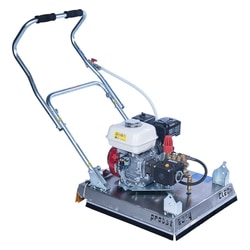
Probst EASYCLEAN EC-60 Pavement Washer
51700004zł23,244.54 tax incl. 18 898,00 zł tax excl.View technical data Zobacz szczegóły
- Weight: 53 kg
- Working width: 600 mm
- Engine power: 4 kW
- Drive type: Silnik benzynowy (4 kW)
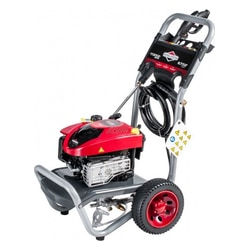
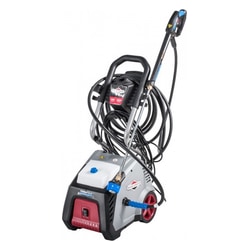
B&S Elite 2500 Pressure Washer
020633zł2,489.52 tax incl. 2 024,00 zł tax excl.No technical data available Zobacz szczegóły
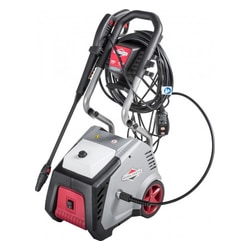
B&S Sprint 2000E Pressure Washer
020628Ask for price and availabilityNo technical data available Zobacz szczegóły
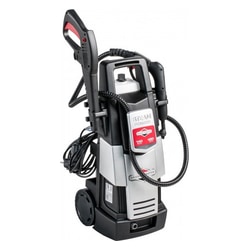
B&S Sprint 2300E Pressure Washer
020622zł949.56 tax incl. 772,00 zł tax excl.No technical data available Zobacz szczegóły
B&S Sprint 2300EPF Pressure Washer
020619zł1,249.68 tax incl. 1 016,00 zł tax excl.No technical data available Zobacz szczegóły
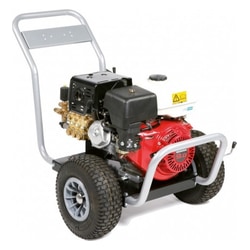
PORTOTECHNICA BENZ-C H2515pi P Cold Water Pressure Washer
IDAF40354zł22,133.85 tax incl. 17 995,00 zł tax excl.View technical data Zobacz szczegóły
- Weight: 75 kg
- Dimensions: 105 x 66 x 75cm
- Engine: Honda
- Turnover: 3600 obr/min
- I know too much.: 13 KM
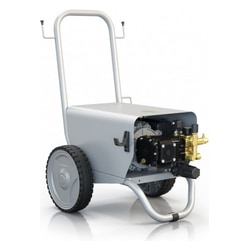
PORTOTECHNICA PW-C85 D3515P T Cold Water Pressure Washer
IDAF40827zł25,661.49 tax incl. 20 863,00 zł tax excl.View technical data Zobacz szczegóły
- Weight: 115 kg
- Dimensions: 78 x 59 x 90 cm
- Voltage: 400 V
- Turnover: 4-1400 obr/min
- I know too much.: 12,3 kW
A petrol pressure washer is a high-pressure cleaner whose pump is driven by a combustion engine instead of an electric motor. That single difference makes it usable wherever mains power is missing: on a construction site before the supply is connected, along roads, on farms, in car parks and when washing machinery in the field. Professional units typically deliver 150–275 bar at a flow of roughly 600–1200 l/h, run on engines of about 5–15 hp and hold enough fuel for some 1.5–3 hours of work. A combustion engine also supplies steady, high torque, so the pump holds its pressure instead of sagging the way it does on an overloaded 230 V circuit.
At NORWIT.PL our professional petrol washers come mainly from IPC and Briggs & Stratton. The category sits within pressure washers — where mains power is permanently available, look at cold-water washers or at hot-water washers for grease and oil. Below we explain how to match engine power to water flow and how to work safely with a petrol-driven machine.
Why a petrol washer — cleaning where there is no power supply
A combustion drive solves one specific problem: no electricity at the work site. A professional 400 V washer needs a 16 A connection, and 230 V versions with larger pumps trip breakers at around 3.5 kW. A petrol engine ignores that — the machine stands on the ground and starts in seconds. This is the standard on sites waiting for a connection, in equipment yards, on facades and in road works.
The second advantage is pressure stability. An engine of 5–15 hp holds pump speed with the lance fully open, while an electric washer on a 50 m extension of 1.5 mm² loses output to voltage drop.
Engine, pressure, water flow — how to size a petrol washer
Pressure (bar) breaks the dirt loose, water flow (l/h) rinses it away and sets your working pace, and engine power (hp) has to cover both at once. The figures below are ranges for the type.
| Application | Pressure (bar) | Flow (l/h) | Engine power (hp) |
|---|---|---|---|
| Machinery and vehicles in the field | approx. 150–200 | approx. 600–750 | approx. 5–8 |
| Block paving, terraces, paths | approx. 180–220 | approx. 700–900 | approx. 7–11 |
| Facades, concrete, post-build clean-up | approx. 200–275 | approx. 900–1200 | approx. 11–15 |
Water matters just as much off-grid: 900 l/h means 15 litres a minute, so without a hydrant you need a buffer tank — 1000 l covers a little over an hour. Check that the machine can draw from a tank.
Petrol, 230 V or 400 V — drive types compared
| Feature | Petrol | Electric 230 V | Electric 400 V |
|---|---|---|---|
| Works without a power connection | yes | no | no |
| Typical working pressure | approx. 150–275 bar | approx. 110–200 bar | approx. 180–250 bar |
| Use inside enclosed buildings | no (exhaust fumes) | yes | yes |
Frequently asked questions about petrol pressure washers
Is a petrol pressure washer suitable for daily use on a construction site?
Professional petrol washers are built for continuous duty and take site conditions better than hobby equipment. The difference is the pump: industrial versions use a brass head with ceramic pistons and a reduction gearbox, running at around 1450 rpm instead of the 3400 rpm typical of pumps driven off the engine shaft. Lower speed means longer seal life — at roughly 200 bar and 900 l/h such a machine will handle many hours of work a day. Servicing means an oil change every 50–100 hours and a check of the water filter.
How much fuel does a petrol pressure washer burn per hour?
Petrol consumption follows engine power and pump load. A machine of around 7 hp burns roughly 1.5–2 l/h under load, a stronger unit of about 13 hp some 2.5–3.5 l/h. Tanks usually hold 3–6 litres, giving some 1.5–3 hours between refuelling stops. When planning a shift, count the actual cleaning time — an idling engine burns fuel too.
Can a petrol washer be operated inside a warehouse or a garage?
Running a petrol washer in an enclosed space is unacceptable because of carbon monoxide, which is odourless and lethal at concentrations as low as roughly 0.1% in the air. An open garage door comes nowhere near the air exchange a 5–15 hp engine needs, and the hazard builds up within minutes. In warehouses and workshops the standard choice is a cold-water electric washer. Where work is split between indoors and outdoors, two machines are the practical answer.
Does an electric washer plus a generator make more sense than a petrol machine?
Pairing an electric washer with a generator pays off only when it also powers other tools. A three-phase washer of about 7.5 kW needs a set of at least 10–12 kVA, since inrush current runs several times higher than the rated value. Such a set weighs a few hundred kilograms and costs many times the gap between the washers. For field cleaning alone, a petrol drive is cheaper and quicker to set up.
Petrol pressure washers at NORWIT.PL
We match petrol washers to the conditions they will face. Our professional range covers IPC and Briggs & Stratton machines, and we advise on the right balance of pressure and flow. The full offer is in washing and vacuuming.