

-

Concrete
-
- Concreting
- Concrete Vibrators
- Complete 230 V Mechanical Vibrators
- Vibrator Heads
- Vibrator Shafts
- Vibrator Motors
- Concrete Vibrators 42 V | 200 Hz
- Mechanical Vibrators 230 V
- 42 V | 200 Hz Head and Shaft
- 230 V Concrete Vibrators
- Vibrators With Built-In 230 V | 200 Hz Converter
- 42 V | 200 Hz Converters
- Combustion Vibrators
- Pneumatic Vibrators
- External Vibrators
- Power Trowels
- Vibratory Screeds
- Concrete Hand Tools
- Concrete Vibrators
-
-
-
-
-
- Walk-Behind Combustion Power Trowels
-
-
-

Heating and cooling
-
-
-
- Cooling and ventilation
-
-
- cooling
-
-
-

Generators
-
-
-
-
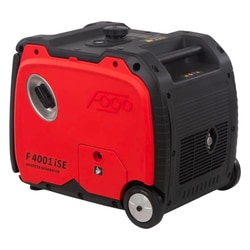
- Inverter Generators
-
-
-

Earthworks
-
-
-
-
-
- Tamping rammers – jumping jacks
-
-
-

Industrial vacuums
-
-
- Cleaning and accessories
-
-
- Industrial vacuum cleaners
-
-
-

Finishing
-
-
-
- Bestseller
-
-
-

Pumps
-
-
-
-
- Bestseller
-
-
-

Measurement
-
-
-
-
-
-
-
- Bestseller
-
-
-

BLOG & Tips
-

Promotions
Toolsa · Cat. no. TA-GK4500ISPRO
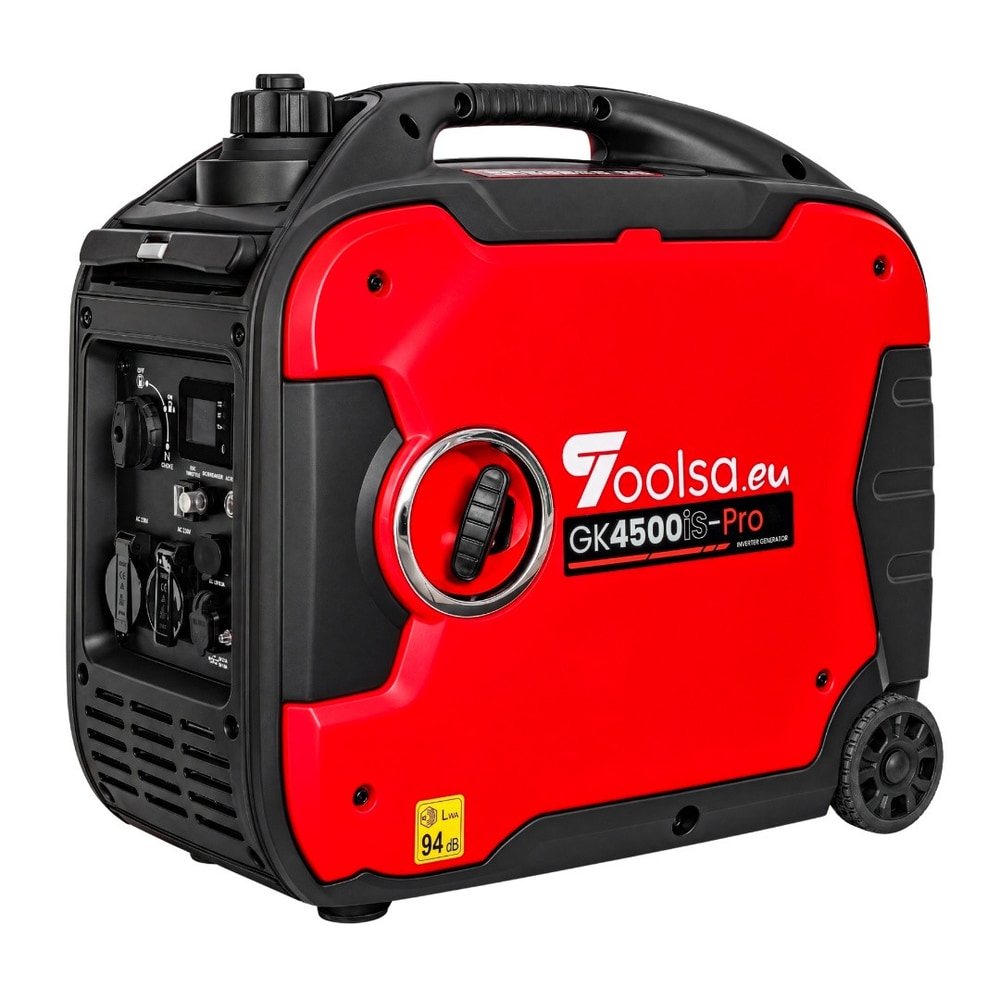
Toolsa GK4500iS-Pro Inverter Generator

- 28.5 kg
- 4.7 kW / 6.3 hp at 4500 rpm
- Manual
- 50 Hz
zł2,490.00 net
zł3,062.70 gross
Leasing for businesses
from zł83.16 net / month
Indicative calculation · you set the terms

ING leasing is not available for this amount — call us and we will arrange financing +48 732 081 091
In stock
20 pcs in stock
Same-day dispatch
order by 13:00
Arrives next day
on working days
Prefer to talk? +48 732 081 091

- 25 years on the market
- Own warehouse 1200 m²
- Returns up to 14 days
- Free delivery over PLN 3,000
Description
Toolsa GK4500iS-Pro inverter generator – 3.8 kW rated, 4.2 kW peak
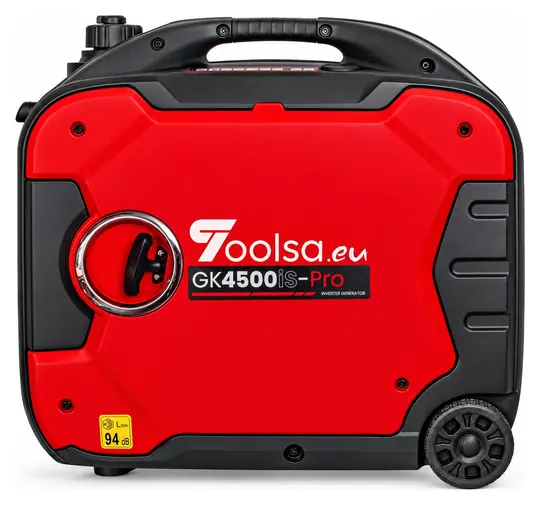
The Toolsa GK4500iS-Pro is a petrol inverter generator with 4.2 kW of peak output and 3.8 kW of rated output, made to power laptops, phones, heating controllers and other sensitive electronics. It weighs 28.5 kg. It has transport wheels and a pull-out handle for moving it around.
Toolsa GK generator close up
More power, still portable
3.8 kW rated output with wheels and a pull-out handle.
- Rated power (1~)
- 3.8 kW
- Power max.
- 4.2 kW
- Continuous running time
- 6.5 h (at 50% load)
Power reserve for start-up
4.2kW
3.8 kW rated is continuous running, 4.2 kW peak is the reserve for starting equipment.
Choose within the GK family
- 0.8 kW more peak power
- 1.5 l bigger fuel tank
- 390 zł more (net)
- 200 zł less (net)
- the same peak power, 4.2 kW
- the same tank, 7 l
- 0.8 kW more peak power
- 1.5 l bigger fuel tank
- 690 zł more (net)
- 4,900 zł less (net)
- 6.8 kW less peak power
- 25 l smaller fuel tank
GK4500iS-Pro advantagewhat you pay for it
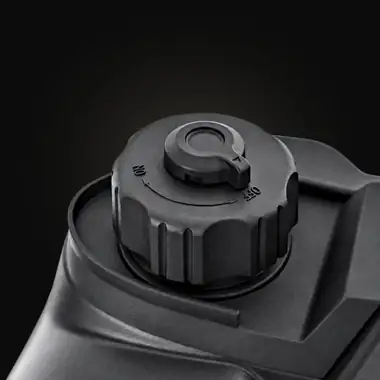
Vent control in the fuel cap
Set the knob to ON while the engine runs and to OFF when the generator is idle or being transported.
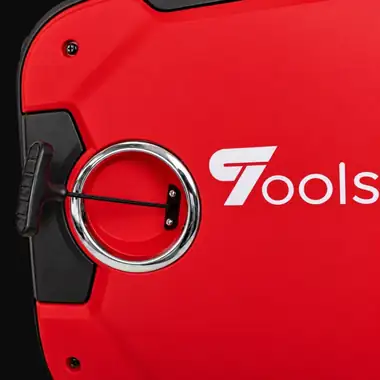
Recoil starter in a chrome ring
Pull the recoil starter handle to start the engine; the cord leaves the housing through a chrome ring.
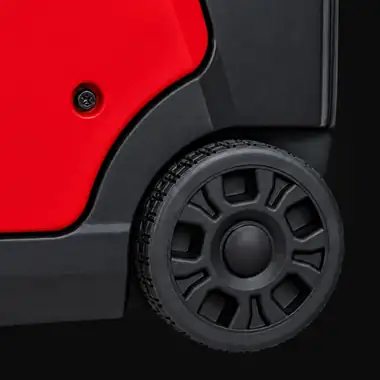
Wheel with a tread
The wheel with a tread sits low in the housing; roll the generator by pulling the pull-out handle.
A clean sine wave for electronics
THD no more than
2 %
voltage regulation: automaticThe inverter keeps THD ≤ 2 % and voltage regulation is automatic.
On a single tank
6.5 h
at 50 % loadA 7 l tank gives up to 6.5 h of running at 50 % load.
Engine speed follows the load
loadengine speedtime
The ESC switch matches engine speed to the load, which lowers fuel use and noise.
Simple recoil start

The recoil starter runs the engine and needs no battery.
The panel within reach
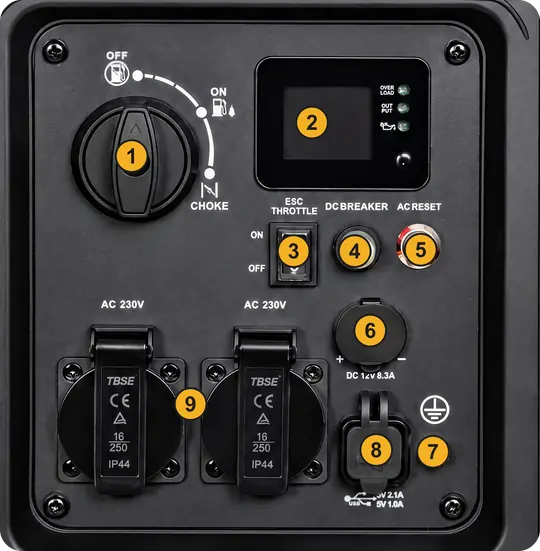
Every control on the panel labelled on one plate.
Protection at a glance
indicators: output and overloadDC circuit protectorearth terminal on the panel
Indicators and protections show the generator state and protect connected equipment.
Wheels and a pull-out handle
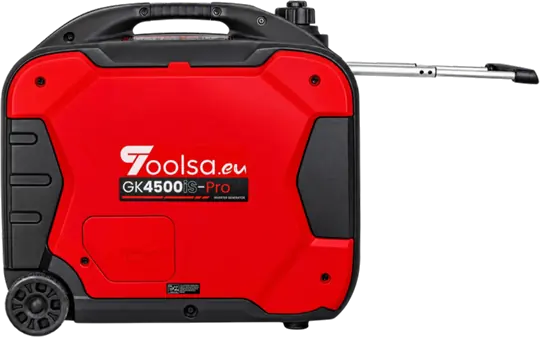
28.5 kg
net weightTransport wheels and a pull-out handle make it easier to move a 28.5 kg generator.
175cm³
Engine displacement
The GK175-Vi engine, with fuel consumption of ≤ 395 g/kWh, drives the inverter alternator.
Technical data
- Cat. no.
- TA-GK4500ISPRO
- Weight
- 28.5 kg
- Engine power
- 4.7 kW / 6.3 hp at 4500 rpm
- Startup
- Manual
- Frequency
- 50 Hz
- Voltage
- 230 V
- Fuel
- Petrol
- Transport wheels
- Yes
- Displacement capacity
- 175 cm³
- Fuel consumption
- ≤ 395 g/kWh
- Engine model
- GK175-Vi
- Power supply
- 230 V
- Fuel tank capacity
- 7 l
- Power max.
- 4.2 kW
- Display
- LCD
- Degree of protection
- IP23M
- Noise level
- 94 dB
- Class of insulation
- F
- Package dimensions
- 595 × 360 × 560 mm
- Engine oil capacity
- 0.45 l
- Rated power (1~)
- 3.8 kW
- Phases
- 1
- Voltage regulation
- Automatic
- Continuous running time
- 6.5 h (at 50% load)
- THD
- ≤ 2 %
Documents
Videos
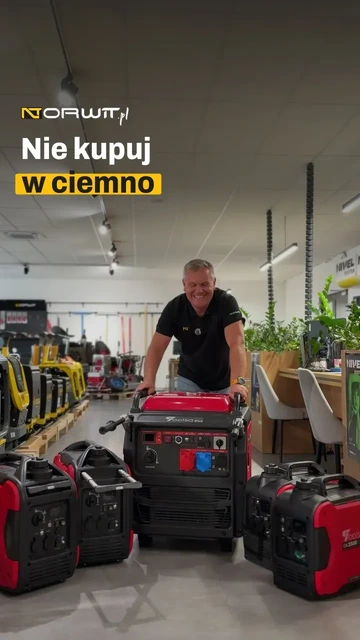
Not sure if it’s the right model for you? Watch the video and find out before you buy.
Questions and answers
How does the Toolsa GK4500iS-Pro inverter generator differ from a standard AVR generator?
An inverter generator converts the alternator output electronically into a clean 230 V, 50 Hz sine wave and adjusts engine speed to the load. The GK4500iS-Pro keeps total harmonic distortion at THD ≤ 2 % and regulates voltage automatically, so it can safely power computers, routers, boiler controllers and chargers. In a generator with AVR only, the engine runs at high speed all the time, which raises fuel consumption and noise, and the voltage waveform is less clean. For electronics an inverter generator is the right choice, while AVR suits mainly simple motor-driven tools.
What can the Toolsa GK4500iS-Pro power and is 3.8 kW enough for a house?
The GK4500iS-Pro delivers 3.8 kW of rated power (continuous operation) and 4.2 kW of maximum power (briefly, for example when a compressor starts). That is enough for lighting, a fridge-freezer, a router, a TV, computers and a boiler controller and circulation pump, as long as the combined load stays within 3.8 kW. Motor-driven appliances draw several times more current at start-up than in steady operation, so they should not be started at the same time. In a detached house the generator covers the essential circuits; an electric cooker, an oven and a water heater running together exceed this power.
How much fuel does the Toolsa GK4500iS-Pro use and how long does it run on one tank?
The GK4500iS-Pro fuel tank holds 7 l of petrol and gives up to 6.5 h of continuous running at 50 % load, which is about 1.1 l/h on average. The GK175-Vi engine, 175 cm³ and 4.7 kW (6.3 hp), uses up to 395 g of fuel per kWh. The ESC switch matches engine speed to the load, so fuel use drops and running time grows at lighter loads; at full load the tank empties faster. Refuel only with the engine stopped and cooled down.
How loud is the Toolsa GK4500iS-Pro?
The sound power level of the GK4500iS-Pro is LWA 94 dB according to the rating plate. This is the sound power of the unit, not the sound pressure measured at a given distance, so the noise you hear at a few metres is lower. Running with the ESC switch on reduces noise, because at low load the engine does not run at maximum speed. Place the generator away from windows and resting areas, and use ear protection near people working.
How do you start the Toolsa GK4500iS-Pro and does it need a battery?
The GK4500iS-Pro has a manual start: pull the starter handle as described in the manual. The generator needs no battery, so it starts even after a long idle period and there is no charge level to monitor. Check the oil level daily or every 8 hours of operation; the low-oil alarm stops the engine but does not replace this check. The version with electric start is the GK4500iSE-Pro.
Can the Toolsa GK4500iS-Pro be used outdoors and indoors?
The GK4500iS-Pro has ingress protection IP23M and insulation class F (winding temperature up to 155 °C). IP23 means protection against solid objects larger than 12.5 mm and against water spray at up to 60° from vertical, and the letter M means the test was done with the engine running. It protects against splashes and is not approval for use in heavy rain, so in rain the generator should stand under a canopy. Exhaust gas contains odourless, toxic carbon monoxide, so run the generator only outdoors or in a well-ventilated place, never in a garage with the doors closed or in a cellar.
How does the Toolsa GK4500iS-Pro differ from the other GK series models?
The GK series from Toolsa also includes: GK3500iS-Pro (manual start, 3.2 kW, 5.5 l tank, 21 kg, no wheels); GK3500iSE-Pro (electric start, 3.2 kW, 5.5 l tank, 22 kg, no wheels); GK4500iSE-Pro (electric start, 3.8 kW, 7 l tank, 30 kg, wheels and pull-out handle); GK12000iSE (electric start, 10 kW, 32 l tank, 110 kg, wheels and pull-out handles). For comparison, the GK4500iS-Pro: manual start, 3.8 kW, 7 l tank, 28.5 kg, wheels and pull-out handle. All models have an LCD display, insulation class F and THD ≤ 2 %. The full range is in the inverter generators category.
Can the Toolsa GK4500iS-Pro be connected to a home installation?
Only a qualified electrician may connect a generator to a building installation, through a changeover switch (SZR) that rules out simultaneous operation of the grid and the generator and back-feeding into the grid. Without such a switch the connection can damage equipment and endanger utility workers. The 3.8 kW rated power and the clean sine wave (THD ≤ 2 %) are enough to supply selected circuits, for example lighting, a fridge, a controller and the circulation pump of a boiler. Other appliances can be plugged directly into the 230 V sockets of the generator.