Concrete screed board: how to strike off and float fresh concrete

Remigiusz Prędki 4 min czytania Aktualizacja 22.07.2026
Remigiusz Prędki Remigiusz PrędkiPresident of the Board 4 min 22.07.2026
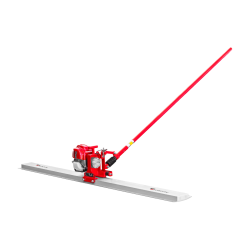
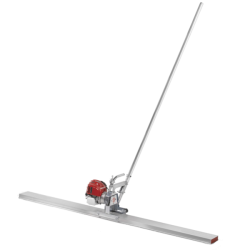
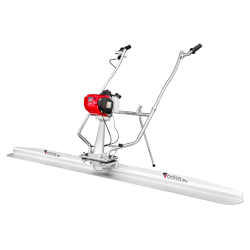
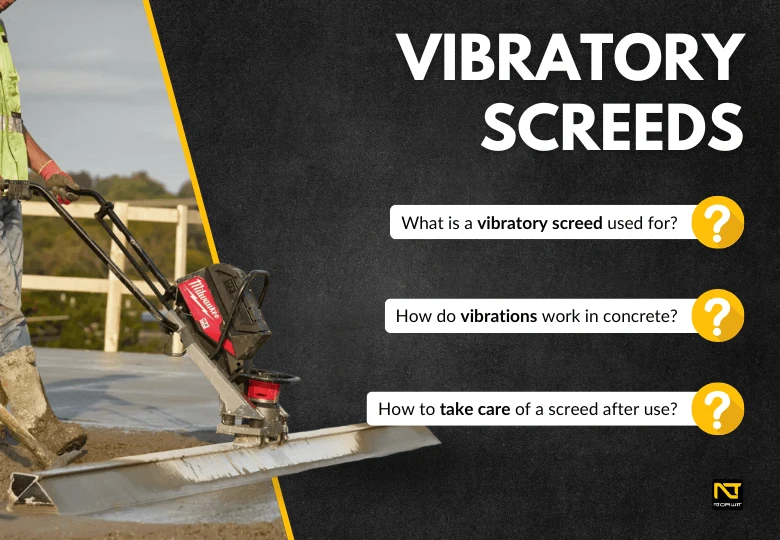
W skrócie: A vibrating screed (screed board) strikes off excess fresh concrete and floats the surface within 10–20 minutes of pouring, before troweling. Profiles run 1.5–5.4 m: a float screed (up to 3 m) smooths floors, a truss screed (4–6 m) strikes off long runs. Small pours need only a hand straightedge; floors need a powered screed.

Najczęstsze pytania

How do you level uneven fresh concrete?

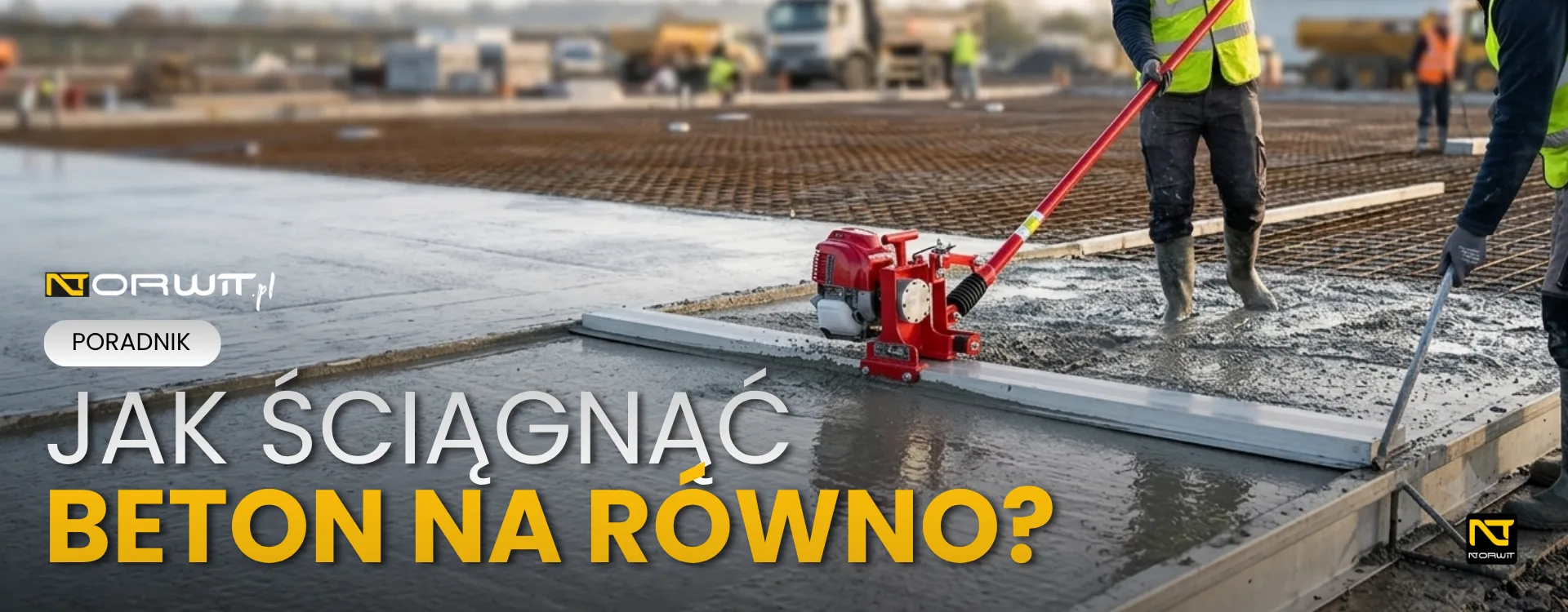
Fresh concrete is levelled with a vibrating screed that strikes off the excess mix along guide rails or form edges. The profile's vibration (1.5–5.4 m long) consolidates the top layer and draws up the paste, closing any hollows. The work is done within a 10–20 minute window after pouring, before the concrete begins to set.

How do you hand-float and finish concrete smooth?

Hand finishing is done with a bull float on a telescopic pole, run over the surface only after the bleed water has evaporated. An arcing motion closes the surface and lifts the cement paste. For a smooth, dust-free finish, the final stage is done with a power trowel once a boot leaves a 2–3 mm imprint.

Float screed or truss screed — which to choose?

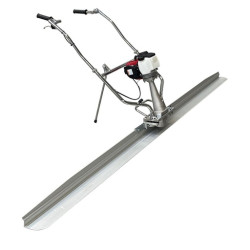
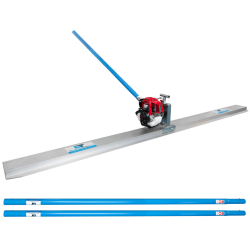
A float screed is used to smooth floors and screeds over areas up to a few hundred square metres, with a 1.5–3 m profile. A truss (beam) screed strikes off concrete over long, straight runs such as roads and yards, working a 3–6 m profile on guide rails. A double-beam screed combines both tasks in one pass.

What length of screed for concrete — 3 m or 5 m?

Length is matched to the width of the work area and the available drive power. A 3 m profile suits garage floors and smaller pours, while 5–6 m fits large yards where the number of passes counts. A longer profile needs a stronger drive so the vibration reaches the full width — otherwise the middle of the board works weaker.

Manual or powered screed?

A hand screed is enough for small pours up to a dozen or so square metres and for floating alone, as it does not consolidate deeply. A vibrating screed is essential on larger floors: the vibration pulls out air and paste, giving a repeatable level and a stronger surface. Industrial floors, garages and driveways call for a powered version.

How is a screed board different from a bull float?

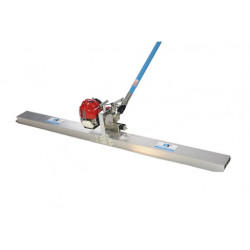
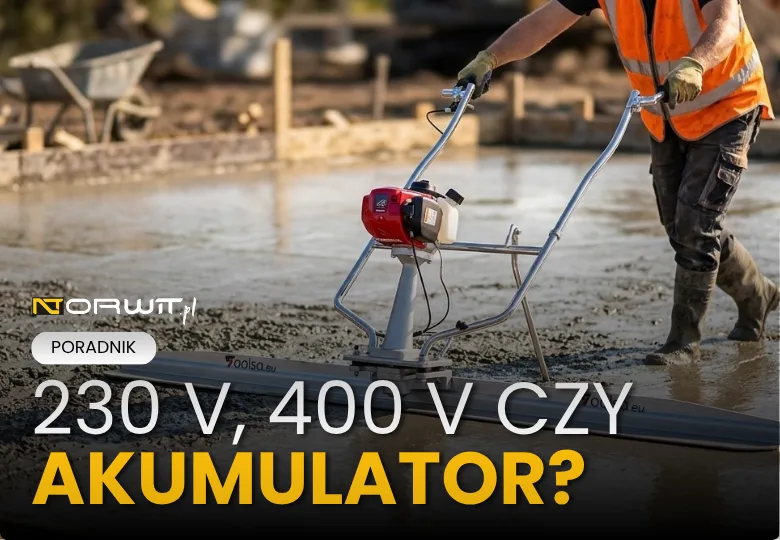
A bull float is a hand finishing tool on a pole, with no drive — it only closes the surface after striking off. A vibrating screed has a petrol, 230 V or 400 V motor that vibrates the profile and strikes off and consolidates the concrete at once. A bull float floats; a vibrating screed strikes off, consolidates and levels.

When do you strike off concrete after pouring?

Concrete is struck off right after it is placed and roughly consolidated, within a 10–20 minute window while the mix is still plastic. Do not strike off while bleed water stands on the surface — wait for it to evaporate, or the top layer is weakened. Striking off too late tears out aggregate instead of smoothing.
Blog navigation

O autorze

Remigiusz Prędki
Remigiusz Prędki
President of the Board
Remigiusz Prędki has spent over 25 years in concrete technology. Power trowels, vibrating screeds, grinders and milling machines are his home turf — that is where his know-how runs deepest. As President of the Board at NORWIT.PL, he advises contractors daily and shares hands-on, job-site knowledge.

Cookies

Cookie information

This website uses its own cookies to ensure you have the best possible experience on our site. We also use third-party cookies to enhance our services, analyze usage, and display ads tailored to your preferences based on your browsing behavior. 

Here you can learn more about how Google processes personal data.


For more information, please refer to our Privacy Policy.

Cookie management

About Cookies

Cookies are small text files that are stored on your computer or mobile device by websites you visit. They serve various purposes, such as remembering user login information, tracking user behavior for advertising purposes, and personalizing the user's browsing experience. There are two types of cookies: session and persistent. The former are deleted after the browser session ends, while the latter remain on the device for a specified period or until manually deleted.