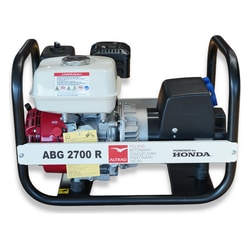



-
-
Concrete
-
- Concreting
- Concrete Vibrators
- Complete 230 V Mechanical Vibrators
- Vibrator Heads
- Vibrator Shafts
- Vibrator Motors
- Concrete Vibrators 42 V | 200 Hz
- Mechanical Vibrators 230 V
- 42 V | 200 Hz Head and Shaft
- 230 V Concrete Vibrators
- Vibrators With Built-In 230 V | 200 Hz Converter
- 42 V | 200 Hz Converters
- Combustion Vibrators
- Pneumatic Vibrators
- External Vibrators
- Power Trowels
- Vibratory Screeds
- Concrete Hand Tools
- Concrete Vibrators
-
-
-
-
-
- Walk-Behind Combustion Power Trowels
-
-
-

Heating and cooling
-
Generators
-
Earthworks
-
Industrial vacuums
-
Finishing
-
Pumps
-
Measurement
-
BLOG & Tips
-
Promotions
Kategorie 16 kategorii
Kategorie
-
- Levels and Measurements
- Soil Compactors
- Tamping Rammers - Jumping Jacks
- Single Direction Vibratory Plates
- Reversible Vibratory Plates
- Rollers
- 100 kg Soil Compactors
- 200 kg Soil Compactors
- 300 kg Soil Compactors
- 400 kg Soil Compactors
- 500 kg Soil Compactors
- 600 kg Soil Compactors
- 700 kg Soil Compactors
- 800 kg Soil Compactors
- Wacker Neuson Compactors
- Accessories for Compactors
- Bomag Compactors
- Altrad Belle Compactors
- Paver Compactors
- Swepac Compactors
- Power Generators
- Concreting
- Concrete Vibrators
- Complete 230 V Mechanical Vibrators
- Vibrator Heads
- Vibrator Shafts
- Vibrator Motors
- Concrete Vibrators 42 V | 200 Hz
- Mechanical Vibrators 230 V
- 42 V | 200 Hz Head and Shaft
- 230 V Concrete Vibrators
- Vibrators With Built-In 230 V | 200 Hz Converter
- 42 V | 200 Hz Converters
- Combustion Vibrators
- Pneumatic Vibrators
- External Vibrators
- Vibratory Screeds
- Power Trowels
- Concrete Hand Tools
- Concrete Vibrators
- Pumps and Motor Pumps
- Cutting, Drilling and Grinding
- Heating and Cooling
- Wood Table Saws
- Painting and Plastering
- Combustion Engines
- Washing and Vacuuming
- Cement Mixers
- Paving Tools
- Wheelbarrows and Track Dumpers
- Demolition and Hammers
- Sales
- Levels and Measurements
Brak kategorii pasujących do wyszukiwania.
230 V Generator with AVR Stabilization

FOGO F 3001 R Single-Phase Generator Set
28804zł2,526.99 tax incl. 2 054,46 zł tax excl.View technical data Zobacz szczegóły
- Weight: 38 kg
- Dimensions: 580 x 395 x 405 mm
- Voltage: 230 V
- Engine: Rato R210
- Fuel: Petrol
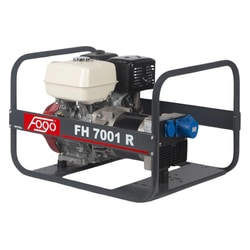
FOGO FH 7001 R Single-Phase Generator Set
36755zł6,628.00 tax incl. 5 388,62 zł tax excl.View technical data Zobacz szczegóły
- Weight: 68 kg
- Dimensions: 790 x 580 x 505
- Voltage: 230 V
- Engine: Honda GX 390
- Fuel: Petrol
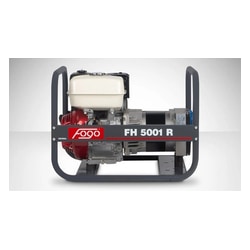
FOGO FH 5001R Single-Phase Generator Set
37038zł5,502.00 tax incl. 4 473,17 zł tax excl.View technical data Zobacz szczegóły
- Weight: 53 kg
- Dimensions: 650 x 520 x 490 mm
- Voltage: 230 V
- Engine: Honda GX 270
- Fuel: Bezołowiowa 95
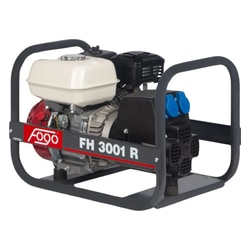
FOGO FH 3001 R Single-Phase Generator Set
28152zł3,752.93 tax incl. 3 051,16 zł tax excl.View technical data Zobacz szczegóły
- Weight: 38 kg
- Dimensions: 580 x 395 x 405 mm
- Voltage: 230 V
- Engine: Honda GX 200
- Fuel: Petrol
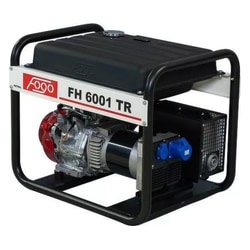
FOGO FH 6001 TR Single-Phase Generator Set
28157zł7,686.00 tax incl. 6 248,78 zł tax excl.View technical data Zobacz szczegóły
- Weight: 86 kg
- Dimensions: 790 x 580 x 650mm
- Voltage: 230 V
- Engine: Honda GX 390
- Fuel: Petrol
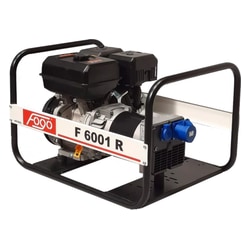
FOGO FH 6001 R Single-Phase Generator Set
28156zł5,506.71 tax incl. 4 477,00 zł tax excl.View technical data Zobacz szczegóły
- Weight: 68 kg
- Dimensions: 790 x 580 x 505
- Voltage: 230 V
- Engine: Honda GX 390
- Fuel: Petrol
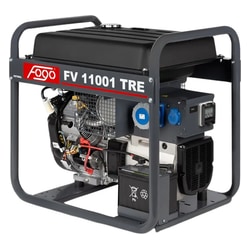
FOGO FV 11001 TRE Single-Phase Generator Set
28178zł14,629.01 tax incl. 11 893,50 zł tax excl.View technical data Zobacz szczegóły
- Weight: 131 kg
- Dimensions: 790 x 580 x 65 mm
- Voltage: 230 V
- Engine: Vanguard 21km
- Fuel: Petrol
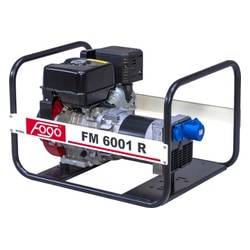
FOGO FM 6001R Single-Phase Generator Set
34433zł5,259.48 tax incl. 4 276,00 zł tax excl.View technical data Zobacz szczegóły
- Weight: 70 kg
- Dimensions: Brak danych
- Voltage: 230 V
- Engine: Mitsubishi GB40GPN
- Fuel: Petrol
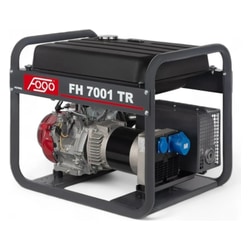
FOGO FH 7001 TR Single-Phase Generator Set
37008zł7,345.50 tax incl. 5 971,95 zł tax excl.View technical data Zobacz szczegóły
- Weight: 86 kg
- Dimensions: 790 x 580 x 650mm
- Voltage: 230 V
- Engine: Honda GX 390
- Fuel: Petrol
FOGO FM 4001R Single-Phase Generator Set
34431zł4,824.06 tax incl. 3 922,00 zł tax excl.View technical data Zobacz szczegóły
- Weight: 58 kg
- Dimensions: Brak danych
- Voltage: 230 V
- Engine: Mitsubishi GB30GPN
- Fuel: Petrol
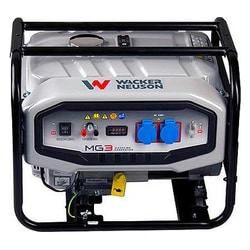
Wacker Neuson MG 3 Single-Phase Generator Set
5100055609zł2,767.50 tax incl. 2 250,00 zł tax excl.View technical data Zobacz szczegóły
- Weight: 47 kg
- Dimensions: 590 x 475 x 462 mm
- Voltage: 230 V
- Engine: Loncin G210FA
- Fuel: Petrol
Generator Single-Phase 230 V AVR / 2700W Altrad Belle ABG 2700.
ABG2700Rzł4,428.00 tax incl. 3 600,00 zł tax excl.View technical data Zobacz szczegóły
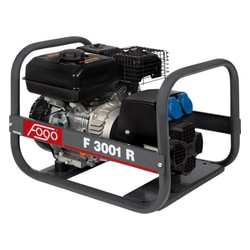
- Weight: 38 kg
- Dimensions: 770 x 560 x 590 mm
- Voltage: 230 V
- Engine: Honda GX 200
- Fuel: Petrol
An AVR (Automatic Voltage Regulator) is the electronic circuit that watches the alternator output non-stop and trims its excitation so the machine holds a steady 230 V no matter how many tools are drawing current. A generator fitted with AVR normally keeps voltage within ±3–5% of nominal, whereas an unregulated alternator hit by a sudden load can dip below 200 V one moment and overshoot 250 V the next.
That difference decides what you can safely plug in. Single-phase 230 V generators with AVR stabilisation run site equipment such as plate compactors, concrete vibrators, pumps, cement mixers, grinders and lighting, and when an induction motor starts — briefly pulling 3–7 times its rated current — they prevent the voltage sag that stalls a machine or cooks its windings. At NORWIT.PL this group is built mainly around Fogo, Wacker Neuson and Altrad Belle. Below we set out how AVR compares with inverter technology and with unstabilised generators, and how to size a unit against your actual load list.
Generators with AVR — what voltage stabilisation actually does
An AVR (Automatic Voltage Regulator) sits in the excitation circuit of the alternator. Dozens of times a second it compares the output against the 230 V set point and adjusts excitation to cancel the error. As a result the voltage stays inside a band of roughly ±3–5%, that is somewhere between 220 and 240 V, even at the instant another load is switched on. For reference, the PN-EN 50160 standard allows ±10% deviation on the public grid, and an alternator without a regulator can swing well outside that range when the load jumps.
The practical payoff shows up at start-up. The induction motor of a plate compactor, pump or cement mixer draws 3–7 times its rated current during the first few seconds. Without stabilisation the voltage collapses, starting torque falls away, and the machine either refuses to turn or overloads its windings. An AVR raises excitation at exactly that moment and restores voltage within a fraction of a second — which is why single-phase 230 V generators with stabilisation are the default choice on site and for standby duty.
AVR, no stabilisation and inverter technology compared
Three approaches to power quality appear in 230 V generators: a plain self-excited alternator, an alternator with AVR, and an inverter design in which the output is rectified and rebuilt from scratch by power electronics. The gap between AVR and inverter is not only about the voltage figure but also about waveform distortion (THD — total harmonic distortion): AVR governs the magnitude, while an inverter additionally reconstructs a clean sine wave.
| Feature | With AVR | Without stabilisation | Inverter |
|---|---|---|---|
| Voltage stability | usually ±3–5% (approx. 220–240 V) | ±10–15%, momentarily under 200 V | in the order of ±1–2% |
| Harmonic distortion (THD) | usually 5–10% | above 10% | usually below 3% |
| Starting induction motors | very good, wide current reserve | poor, risk of voltage sag | limited by the electronics rating |
| Equipment with electronics | yes, for reasonably robust loads | no | yes, including sensitive devices |
| Typical single-phase rating | approx. 2–8 kW | approx. 1–5 kW | approx. 1–4 kW |
| Main application | construction, workshop, standby supply | lighting, heaters, simple tools | quiet operation, delicate equipment |
For powering construction machinery choose a unit with AVR — it offers a bigger starting-current reserve and a lower cost per kilowatt than an inverter build. Where quiet running and sensitive electronics matter, look at inverter generators; for undemanding loads, 230 V generators without AVR stabilisation will do the job.
Sizing a 230 V generator with AVR
Rating follows the combined draw of everything running at once, plus a 20–30% margin, and with induction motors an extra allowance for inrush current. One 230 V/16 A socket carries roughly 3.5 kW, so larger set-ups have to be split across several circuits.
| Load set | Suggested continuous output | Notes |
|---|---|---|
| Lighting, chargers, hand power tools | approx. 2–3 kW | small inrush, AVR protects controllers |
| Concrete vibrator or single-phase pump | approx. 3–5 kW | headroom for induction motor start-up |
| Electric plate compactor, cement mixer, grinder | approx. 4–6 kW | one machine per 16 A circuit |
| Standby supply for a building | approx. 5–8 kW | requires a mains–generator changeover switch and earthing |
If your machines run three-phase motors, move on to 400 V generators, including the three-phase versions with AVR stabilisation. A separate group covers emergency power generators, while cables, jerrycans and service kits sit in power generator accessories.
Brands available in this category
We stock machines built for site conditions — depending on the model that means a protective frame, four-stroke engine, residual-current protection and industrial sockets. The line-up is led by Fogo generators — a Polish manufacturer of construction and standby units — alongside Wacker Neuson machines engineered for heavy continuous duty and compact Altrad Belle units for tools and smaller equipment. Continuous and maximum output, engine type, tank capacity and socket configuration are listed on each product page.
Frequently asked questions about generators with AVR
What is AVR in a generator?
AVR stands for Automatic Voltage Regulator, an electronic circuit controlling the excitation of the alternator. Dozens of times a second it measures the output and corrects it to hold the nominal 230 V, normally within a ±3–5% band, that is roughly 220 to 240 V. With no regulator the voltage follows the load and during machine start-up can drop under 200 V or climb over 250 V. Steady voltage protects motors, chargers and control electronics from overheating and damage.
How does an inverter generator differ from a generator with AVR?
A generator with AVR regulates the voltage magnitude — it holds about 230 V within roughly ±3–5%, with waveform distortion in the region of 5–10%. An inverter generator rebuilds the sine wave in power electronics, so it reaches distortion usually below 3% and stability of about ±1–2%, but it has a smaller starting-current reserve and costs more per kilowatt. For construction machinery driven by induction motors, which pull 3–7 times rated current at start-up, AVR is the better fit; for delicate electronics and quiet running, choose an inverter.
Which generator with AVR should I choose for a construction site?
Start from the combined rating of everything running at the same time and add a 20–30% margin. Lighting and hand power tools are covered by a unit of about 2–3 kW, a concrete vibrator or single-phase pump calls for roughly 3–5 kW, and an electric plate compactor or cement mixer for about 4–6 kW. Check the motor inrush as well, since it reaches 3–7 times the rated figure over the first few seconds. A single 230 V/16 A socket carries around 3.5 kW, so split bigger set-ups across several circuits.
What are the drawbacks of AVR stabilisation?
An AVR governs the voltage level but does not clean up the waveform — harmonic distortion stays at a typical 5–10%, whereas an inverter design goes below 3%. For the most sensitive equipment, measuring instruments for instance, that may not be good enough. The regulator is itself an electronic component that can fail and needs replacing, and machines with AVR normally cost more than plain alternators of comparable output. AVR also does nothing for noise or fuel consumption, because the engine runs at constant speed.
How can I check whether a generator has AVR?
The rating plate and the data sheet are the most reliable sources — the manufacturer states the AVR marking together with the voltage tolerance, usually ±3–5% instead of ±10% or worse. Physically the regulator is a small electronic board next to the alternator or under the terminal box cover. A field test is to measure voltage with a meter off load and again after switching on a 1–2 kW appliance: a unit with AVR returns to around 230 V within a fraction of a second, while an unregulated one sags by tens of volts and stays down.
Can a generator with AVR power electronics and a building installation?
A generator with AVR runs chargers, machine controllers, pumps with automation, LED lighting and ordinary household equipment, because it holds the voltage in a band of roughly 220–240 V. For devices especially sensitive to waveform shape an inverter generator with distortion below 3% is the safer option. Powering a building's electrical installation always requires a mains–generator changeover switch and correct earthing — wiring the machine straight into a socket outlet is not permissible and can electrocute crews working on the network.
Why buy a 230 V generator with AVR at NORWIT.PL
We match generators to real construction loads rather than to the peak figure on a leaflet — we ask about your machine list, starting currents and planned running time, then point to a unit with the right continuous-power reserve. The range is professional, including Fogo and Wacker Neuson, with service support and wear parts kept available. If you need a different configuration, browse the remaining single-phase 230 V generators or the full range of power generators. Orders are placed online and shipped throughout Poland.