


-
-
Concrete
-
- Concreting
- Concrete Vibrators
- Complete 230 V Mechanical Vibrators
- Vibrator Heads
- Vibrator Shafts
- Vibrator Motors
- Concrete Vibrators 42 V | 200 Hz
- Mechanical Vibrators 230 V
- 42 V | 200 Hz Head and Shaft
- 230 V Concrete Vibrators
- Vibrators With Built-In 230 V | 200 Hz Converter
- 42 V | 200 Hz Converters
- Combustion Vibrators
- Pneumatic Vibrators
- External Vibrators
- Power Trowels
- Vibratory Screeds
- Concrete Hand Tools
- Concrete Vibrators
-
-
-
-
-
- Walk-Behind Combustion Power Trowels
-
-
-
Heating and cooling
-
Generators
-
Earthworks
-
Industrial vacuums
-
Finishing
-
Pumps
-
Measurement
-
BLOG & Tips
-
Promotions
Kategorie 16 kategorii
Kategorie
-
- Levels and Measurements
- Soil Compactors
- Tamping Rammers - Jumping Jacks
- Single Direction Vibratory Plates
- Reversible Vibratory Plates
- Rollers
- 100 kg Soil Compactors
- 200 kg Soil Compactors
- 300 kg Soil Compactors
- 400 kg Soil Compactors
- 500 kg Soil Compactors
- 600 kg Soil Compactors
- 700 kg Soil Compactors
- 800 kg Soil Compactors
- Wacker Neuson Compactors
- Accessories for Compactors
- Bomag Compactors
- Altrad Belle Compactors
- Paver Compactors
- Swepac Compactors
- Power Generators
- Concreting
- Concrete Vibrators
- Complete 230 V Mechanical Vibrators
- Vibrator Heads
- Vibrator Shafts
- Vibrator Motors
- Concrete Vibrators 42 V | 200 Hz
- Mechanical Vibrators 230 V
- 42 V | 200 Hz Head and Shaft
- 230 V Concrete Vibrators
- Vibrators With Built-In 230 V | 200 Hz Converter
- 42 V | 200 Hz Converters
- Combustion Vibrators
- Pneumatic Vibrators
- External Vibrators
- Vibratory Screeds
- Power Trowels
- Concrete Hand Tools
- Concrete Vibrators
- Pumps and Motor Pumps
- Cutting, Drilling and Grinding
- Heating and Cooling
- Wood Table Saws
- Painting and Plastering
- Combustion Engines
- Washing and Vacuuming
- Cement Mixers
- Paving Tools
- Wheelbarrows and Track Dumpers
- Demolition and Hammers
- Sales
- Levels and Measurements
Brak kategorii pasujących do wyszukiwania.
Altrad Belle Compactors
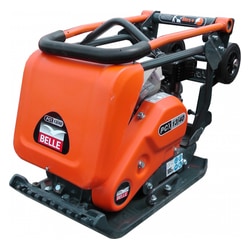
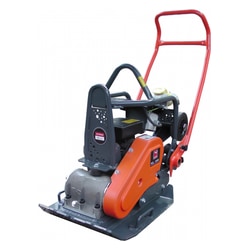
Altrad Belle PCX 20/50 Honda GX160 Unidirectional Compactor
FC5000Ezł6,196.11 tax incl. 5 037,49 zł tax excl.View technical data Zobacz szczegóły
- Centrifugal force: 20,0 kN
- Weight: 97 kg
- Working width: 500 mm
- Motor manufacturer: Honda
- Startup: Manual
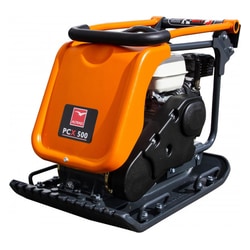
Altrad Belle PCX 500 Honda GX160 Unidirectional Compactor
PC5000Ezł5,837.32 tax incl. 4 745,79 zł tax excl.View technical data Zobacz szczegóły
- Centrifugal force: 16,5 kN
- Weight: 88 kg
- Working width: 500 mm
- Motor manufacturer: Honda
- Startup: Manual
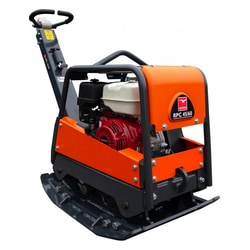
Altrad Belle RPC 45/60 Honda Reversible Compactor
161.9.005zł20,425.37 tax incl. 16 605,99 zł tax excl.View technical data Zobacz szczegóły
- Centrifugal force: 45 kN
- Weight: 275 kg
- Working width: 600 mm
- Motor manufacturer: Honda
- Startup: Manual
Altrad Belle RPC 60/80 DE Reversible Compactor
161.9.065zł38,031.60 tax incl. 30 920,00 zł tax excl.View technical data Zobacz szczegóły
- Centrifugal force: 60 kN
- Weight: 505 kg
- Working width: 700 mm
- Motor manufacturer: Hatz
- Startup: Electric
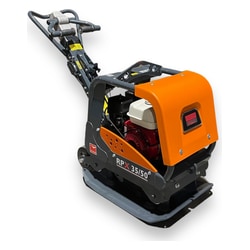
Altrad Belle RPX 35/50 Honda Reversible Compactor
161.9.205zł15,424.19 tax incl. 12 539,99 zł tax excl.View technical data Zobacz szczegóły
- Centrifugal force: 35 kN
- Weight: 180 kg
- Working width: 500 mm
- Motor manufacturer: Honda
- Startup: Manual
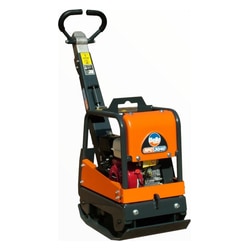
Altrad Belle RPC 30/50 Honda Reversible Compactor
161.9.067zł13,331.99 tax incl. 10 839,02 zł tax excl.View technical data Zobacz szczegóły
- Centrifugal force: 30 kN
- Weight: 161 kg
- Working width: 500 mm
- Motor manufacturer: Honda
- Startup: Manual
Altrad Belle PCX 13/40 Unidirectional Compactor
FC4020Ezł5,966.59 tax incl. 4 850,89 zł tax excl.View technical data Zobacz szczegóły
- Centrifugal force: 13 kN
- Weight: 85,5 kg
- Working width: 400 mm
- Motor manufacturer: Honda
- Startup: Manual
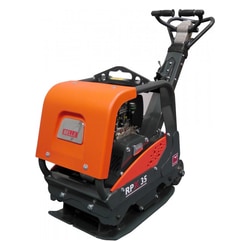
Altrad Belle RPX 35/60 Reversible Compactor
161.9.208zł15,899.00 tax incl. 12 926,02 zł tax excl.View technical data Zobacz szczegóły
- Centrifugal force: 35 kN
- Weight: 193 kg
- Working width: 500 mm
- Motor manufacturer: Honda
- Startup: Manual
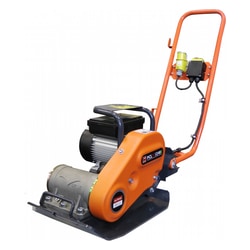
Altrad Belle PCLX 12/40 E Electric Unidirectional Compactor
LCE4009zł5,137.93 tax incl. 4 177,18 zł tax excl.View technical data Zobacz szczegóły
- Centrifugal force: 12 kN
- Weight: 50 kg
- Working width: 380 mm
- Motor manufacturer: Brak danych
- Startup: Manual
Altrad Belle PCLX 16/45 E Electric Unidirectional Compactor
MCE4510zł8,878.14 tax incl. 7 218,00 zł tax excl.View technical data Zobacz szczegóły
- Centrifugal force: 16 kN
- Weight: 97 kg
- Working width: 450 mm
- Motor manufacturer: Brak danych
- Startup: Manual
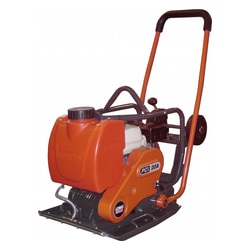
Altrad Belle PCX 20 A Unidirectional Compactor
PCD10zł6,336.98 tax incl. 5 152,02 zł tax excl.View technical data Zobacz szczegóły
- Centrifugal force: 11 kN
- Weight: 75 kg
- Working width: 500 mm
- Motor manufacturer: Honda
- Startup: Manual
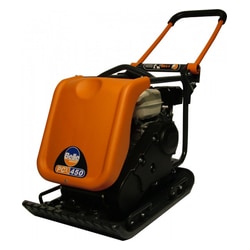
Altrad Belle PCX 450 Unidirectional Compactor
PC4513zł6,018.57 tax incl. 4 893,15 zł tax excl.View technical data Zobacz szczegóły
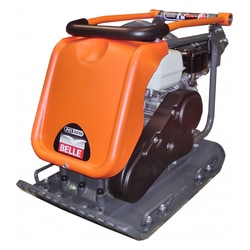
- Centrifugal force: 16,5 kN
- Weight: 86 kg
- Working width: 450 mm
- Motor manufacturer: Honda
- Startup: Manual
A plate compactor, also known as a vibrating plate, compacts soil, aggregates and sub-bases by mechanical vibration: the engine drives an eccentric shaft that makes the steel base plate vibrate at roughly 75–100 Hz, packing loose material into a dense, load-bearing layer. Machines are classified by travel direction — forward plate compactors move in one direction only, while reversible units change direction without turning the machine around — and by drive type, which is either petrol or electric.
In this category NORWIT.PL supplies plate compactors made by Altrad Belle, a British manufacturer of compaction and construction equipment that now operates within the Altrad group. The range covers petrol-driven models as well as an electric plate compactor, intended for compacting soil under foundations, road sub-bases and block paving. The manufacturer's complete range is listed on the Altrad Belle page, and other types of compaction equipment sit in the parent category soil compactors. Below we explain how to match machine weight to the ground being compacted and how a plate compactor differs from a road roller.
Altrad Belle plate compactors — what they are and how they work
A plate compactor, also called a vibrating plate, compacts soil, aggregates and sub-bases through mechanical vibration. The engine drives an eccentric shaft (a component mounted off-centre relative to the axis of rotation), which makes the steel base plate vibrate at roughly 75–100 Hz. The plate's repeated impacts pack loose material into a dense, load-bearing layer and drive out the air voids trapped between soil or aggregate particles. By travel direction, machines split into forward plate compactors, which move in one direction only, and reversible units, which change direction without turning the whole machine around.
Plate compactors in this NORWIT.PL category come primarily from Altrad Belle, a British manufacturer of compaction and construction equipment operating today within the Altrad group. Both petrol-driven and electric models are available, intended for compacting soil under foundations, road sub-bases and block paving, among other jobs. The manufacturer's complete range is listed on the Altrad Belle page, and further types of compaction equipment sit in the parent category soil compactors. Below we explain the difference between travel type and drive type, how to match machine weight to the ground being compacted, and how a plate compactor differs from a road roller.
Types of plate compactor — forward, reversible and electric
Two design parameters govern the choice of machine: travel direction and drive type. A forward plate compactor moves only ahead — the operator guides it by the handle and reversing means turning the machine by hand — which suits large, open areas: compacting soil under foundations, aggregate layers and road sub-bases. A reversible plate compactor switches travel direction with a lever or joystick, without turning the whole machine, so it performs better in trenches, along retaining walls and in tight corners.
| Type | Intended use | Example brands |
|---|---|---|
| Forward plate compactor, petrol | soil under foundations, sub-bases, large open areas | Altrad Belle |
| Forward plate compactor, electric | interiors, cellars, halls — no exhaust fumes and lower noise | Altrad Belle |
| Reversible plate compactor | trenches, tight corners, retaining walls, work in both directions | Altrad Belle |
| Plate compactor with rubber mat on the base plate | block paving, finished surfaces | Altrad Belle |
Matching a plate compactor to the ground — weight and centrifugal force
Compaction performance depends on machine weight and the centrifugal force generated, meaning the force with which the plate strikes the ground on each vibration cycle — the denser and thicker the material being compacted, the more weight and force are needed to reach the required degree of compaction. Light forward plate compactors usually weigh 60–100 kg and deliver a centrifugal force of around 10–20 kN, which is enough for pavements, footpaths and thin bedding layers. Heavier machines, reversible units among them, reach 100–300 kg and 20–60 kN, so they compact thicker sub-base layers and cohesive soils to a depth of tens of centimetres.
| Ground / application | Recommended weight | Centrifugal force |
|---|---|---|
| Block paving, pavements, footpaths | approx. 60–90 kg | approx. 10–15 kN |
| Sand bedding, thin layers | approx. 70–120 kg | approx. 12–20 kN |
| Road sub-base, non-cohesive soil | approx. 100–200 kg | approx. 20–40 kN |
| Cohesive soil, deep layers | approx. 150–300 kg | approx. 30–60 kN |
Petrol or electric — choosing the drive of an Altrad Belle plate compactor
Most plate compactors run on a petrol engine, which gives full mobility on site with no mains supply and continuous operation limited only by fuel tank capacity. The Altrad Belle range also includes an electric version — a forward plate compactor powered from a 230 V supply, producing no exhaust fumes and running at a lower noise level. That matters indoors, in cellars and in halls, where venting the exhaust of a petrol engine is difficult or ruled out by health and safety regulations. Running costs of the electric drive are lower, since there is no fuel to buy and fewer moving parts to service, but it does require a socket within reach and an extension lead of adequate conductor cross-section.
Plate compactor versus road roller — the differences
A plate compactor and a road roller (a machine with one or two vibrating steel drums) compact material on a different principle and at a different scale of works. The plate compactor strikes the ground at a single point and suits areas up to a few hundred square metres — foundations, pavements, trenches and driveways. A road roller compacts by continuously rolling a drum typically 60–130 cm wide, with a machine weight from around 300 kg up to several tonnes, which is why it is used for building roads, car parks and large yards, where output over tens or hundreds of running metres of surface is what counts. For domestic and finishing works, a plate compactor is the cheaper and more versatile choice.
Frequently asked questions about Altrad Belle plate compactors
What is the difference between a forward and a reversible plate compactor, and which one suits block paving work?
A forward plate compactor travels in one direction only and reversing means turning the machine by hand, which makes it a good fit for large, open areas when compacting soil and sub-base layers. A reversible plate compactor switches travel direction with a lever, without turning the whole machine, so it is easier to work with in trenches and tight corners. For block paving the usual choice is a light forward model weighing 60–90 kg fitted with a rubber mat on the base plate, which protects the edges of the blocks from chipping; on larger paved areas reversible machines of up to roughly 150 kg also work well.
Which Altrad Belle plate compactor suits compacting soil and sub-base under a foundation, and which one suits paved surfaces?
Compacting soil and sub-base under a foundation calls for heavier forward or reversible plate compactors weighing 100–300 kg with a centrifugal force of 20–60 kN, which pack thicker aggregate layers and non-cohesive soils to a depth of tens of centimetres. Paved surfaces call for lighter machines of 60–100 kg fitted with a rubber mat on the base plate, which removes the risk of damaging or discolouring the block surface as the machine passes over it. The final choice also depends on the thickness of the bedding layer and on the type of soil beneath the surface.
Does NORWIT.PL stock electric Altrad Belle plate compactors, and how do they differ from petrol models?
The NORWIT.PL range includes a forward Altrad Belle plate compactor with an electric drive, powered from a 230 V supply through an extension lead of at least 1.5 mm² conductor cross-section, with no exhaust emissions and a lower noise level than petrol units. That drive suits work indoors, in cellars and in halls, where venting the exhaust of a petrol engine is difficult or ruled out by health and safety regulations. The petrol model keeps full mobility independent of any socket and runs continuously for as long as the fuel tank allows, typically 3–4 litres, which makes it the better choice on an open site over longer shifts.
How much does a typical plate compactor weigh and how should the weight be matched to the ground being compacted?
A typical plate compactor weighs from about 60 kg in light forward models up to 300 kg and more in heavier reversible units, with centrifugal force rising accordingly from roughly 10 kN to 60 kN. Non-cohesive soils, sand and bedding layers under paving need no more than a 60–100 kg machine, whereas cohesive soils such as loams and clays, along with thick sub-base layers, call for 150–300 kg and a higher centrifugal force to reach the required degree of compaction at a depth of several tens of centimetres. A machine too light for dense ground adds to the working time and never delivers a durable result.
How does a plate compactor (vibrating plate) differ from a road roller and what jobs is each machine used for?
A plate compactor, commonly called a vibrating plate, compacts material through the point impact of a steel plate driven by an eccentric shaft, and suits areas up to a few hundred square metres — foundations, pavements, trenches and driveways. A road roller compacts by continuously rolling a vibrating drum typically 60–130 cm wide, with a machine weight from around 300 kg up to several tonnes, which is why it is used for building roads, car parks and large yards covering thousands of square metres. For domestic and finishing works, a plate compactor is the cheaper and more versatile choice.
Which accessories, such as a rubber mat for the base plate, are worth using with an Altrad Belle plate compactor on block paving?
On block paving the basic accessory is a rubber mat fixed under the base plate — it cushions the impacts and protects the edges and surface of the blocks against chipping, cracking and the discolouration that bare metal transfers. Mat thickness is usually 15–25 mm, which is enough for concrete and clay pavers without losing compaction performance. It is also worth keeping a spare air filter and spark plug for petrol models, plus a set of transport wheels that make it easier to move a machine of 60–150 kg between working points on site without damaging the finished surface.
Is Altrad Belle the same manufacturer as the former Belle Group, and what does that mean for spare parts availability?
Altrad Belle is a brand of compactors and construction equipment belonging to the French Altrad group, which in 2009 acquired the British manufacturer Belle Group, ending more than 50 years of independent trading for a company founded in the United Kingdom in the 1950s. The takeover meant design continuity: the production plants and the product line of plate compactors, rollers and mixers were kept on under the new Altrad Belle name. For the user this means that consumables and service remain available both for older machines badged Belle Group and for newer Altrad Belle models.
How often should an Altrad Belle plate compactor be serviced and what needs checking in daily site use?
An Altrad Belle plate compactor should be serviced to the periodic inspection schedule: check the air filter and oil level daily or every 8–10 operating hours, change the engine oil usually every 50–100 hours, and replace the spark plug and fuel filter roughly every 100–200 hours, depending on the model and working conditions. In daily site use also keep an eye on drive belt tension and the condition of the eccentric, and after working on block paving clean the base plate and rubber mat of dust and small stones, which accelerate wear of the rubber.
Why buy an Altrad Belle plate compactor from NORWIT.PL
NORWIT.PL imports Altrad Belle plate compactors with full documentation and with warranty and post-warranty service available. We advise on machine type (forward or reversible), drive type (petrol or electric) and weight matched to the ground being compacted — from bedding under block paving to soil under a foundation. Other types of compaction equipment sit in the parent category soil compactors. We take orders online and deliver throughout Poland.