


-
-
Concrete
-
- Concreting
- Concrete Vibrators
- Complete 230 V Mechanical Vibrators
- Vibrator Heads
- Vibrator Shafts
- Vibrator Motors
- Concrete Vibrators 42 V | 200 Hz
- Mechanical Vibrators 230 V
- 42 V | 200 Hz Head and Shaft
- 230 V Concrete Vibrators
- Vibrators With Built-In 230 V | 200 Hz Converter
- 42 V | 200 Hz Converters
- Combustion Vibrators
- Pneumatic Vibrators
- External Vibrators
- Power Trowels
- Vibratory Screeds
- Concrete Hand Tools
- Concrete Vibrators
-
-
-
-
-
- Walk-Behind Combustion Power Trowels
-
-
-
Heating and cooling
-
Generators
-
Earthworks
-
Industrial vacuums
-
Finishing
-
Pumps
-
Measurement
-
BLOG & Tips
-
Promotions
Kategorie 16 kategorii
Kategorie
-
- Levels and Measurements
- Soil Compactors
- Tamping Rammers - Jumping Jacks
- Single Direction Vibratory Plates
- Reversible Vibratory Plates
- Rollers
- 100 kg Soil Compactors
- 200 kg Soil Compactors
- 300 kg Soil Compactors
- 400 kg Soil Compactors
- 500 kg Soil Compactors
- 600 kg Soil Compactors
- 700 kg Soil Compactors
- 800 kg Soil Compactors
- Wacker Neuson Compactors
- Accessories for Compactors
- Bomag Compactors
- Altrad Belle Compactors
- Paver Compactors
- Swepac Compactors
- Power Generators
- Concreting
- Concrete Vibrators
- Complete 230 V Mechanical Vibrators
- Vibrator Heads
- Vibrator Shafts
- Vibrator Motors
- Concrete Vibrators 42 V | 200 Hz
- Mechanical Vibrators 230 V
- 42 V | 200 Hz Head and Shaft
- 230 V Concrete Vibrators
- Vibrators With Built-In 230 V | 200 Hz Converter
- 42 V | 200 Hz Converters
- Combustion Vibrators
- Pneumatic Vibrators
- External Vibrators
- Vibratory Screeds
- Power Trowels
- Concrete Hand Tools
- Concrete Vibrators
- Pumps and Motor Pumps
- Cutting, Drilling and Grinding
- Heating and Cooling
- Wood Table Saws
- Painting and Plastering
- Combustion Engines
- Washing and Vacuuming
- Cement Mixers
- Paving Tools
- Wheelbarrows and Track Dumpers
- Demolition and Hammers
- Sales
- Levels and Measurements
Brak kategorii pasujących do wyszukiwania.
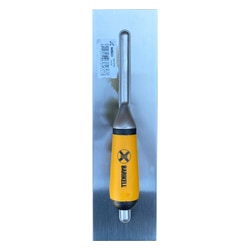
Hand Trowels
Barikell Plastic Package 300x100
5704zł142.68 tax incl. 116,00 zł tax excl.View technical data Zobacz szczegóły
- Dimensions: 300 x 100 mm
Barikell Plastic 360x100 Package
5705zł156.21 tax incl. 127,00 zł tax excl.View technical data Zobacz szczegóły
- Dimensions: 360 x 100 mm
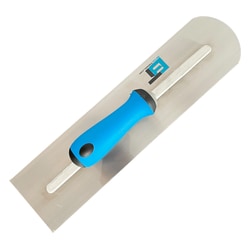
Packet 406x102mm Semicircular - Rounded Front
BT406RFzł135.30 tax incl. 110,00 zł tax excl.View technical data Zobacz szczegóły
- Dimensions: 406 x 102 mm
Barikell Plastic Package 280x120
5703zł130.38 tax incl. 106,00 zł tax excl.View technical data Zobacz szczegóły
- Dimensions: 280 x 120 mm
Packet 356x100mm Semicircular - Rounded Front
BT351RFzł121.77 tax incl. 99,00 zł tax excl.View technical data Zobacz szczegóły
- Dimensions: 356 x 100 mm
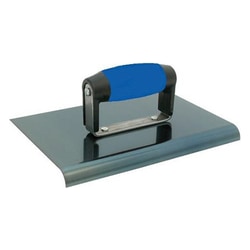
Beton Trowel Edge Rounding Pack 152x152mm
BT6613HEzł134.07 tax incl. 109,00 zł tax excl.View technical data Zobacz szczegóły
- Dimensions: 152 x 152 mm
- Radius: 13 mm
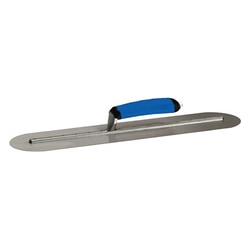
Pack 457x127mm Round - FULLY ROUNDED
BT457FRzł147.60 tax incl. 120,00 zł tax excl.View technical data Zobacz szczegóły
- Dimensions: 457 x 127 mm
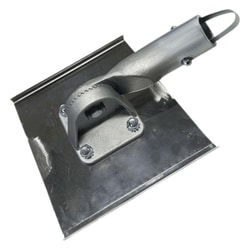
Concrete Expansion Trowel With Bracket Beton Trowel 19 Mm
BT203WSGCzł484.62 tax incl. 394,00 zł tax excl.No technical data available Zobacz szczegóły
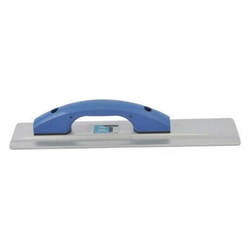
Package Magnesium BTMF 16 - 406 X 80mm
BTMF16zł146.37 tax incl. 119,00 zł tax excl.View technical data Zobacz szczegóły
- Dimensions: 406 x 80 mm
Beton Trowel Edge Rounding Pack 152 X 76 Mm
BT6313HEzł71.34 tax incl. 58,00 zł tax excl.No technical data available Zobacz szczegóły
Packet 356x100mm Round - FULLY ROUNDED
BT351FRzł147.60 tax incl. 120,00 zł tax excl.View technical data Zobacz szczegóły
- Dimensions: 356 x 100 mm
Betontrowel Edge Rounding Pack 152x104mm
BT6413HEzł134.07 tax incl. 109,00 zł tax excl.No technical data available Zobacz szczegóły
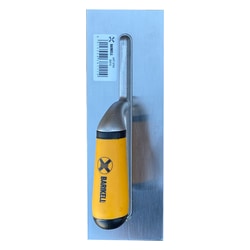
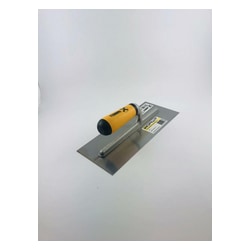
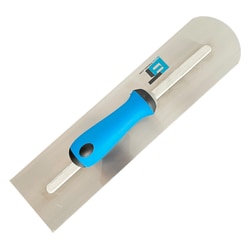
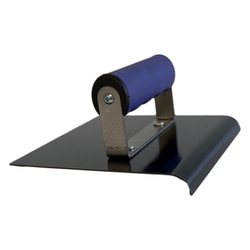
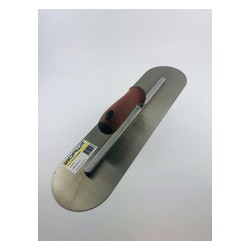
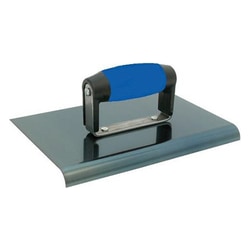
A concrete edging trowel (also called a control-joint trowel or edging tool) is a hand-held finishing tool used to shape and round the edges of a freshly poured concrete slab, as well as its control joints, before the mix hardens. Its metal head, typically 40–80 cm wide, has one straight edge and one rounded edge — it is run along the slab edge or joint line, smoothing the surface and preventing corners from chipping under load. This is a different tool from a plaster or skim-coat edging trowel, which has a much smaller, thinner head used for finishing interior walls and ceilings.
At NORWIT.PL, concrete edging trowels come primarily from Toolsa, Beton Trowel and Enar — in rounded and straight profiles, with a pole for standing operation or without one for precise work on edges and formwork. This category is part of NORWIT.PL's concrete finishing tools, alongside floats, straightedges and rakes for finishing floor slabs. Below, we explain how the different trowel types differ and when to use each.
Concrete Edging Trowel — What It Is and How It Works
A concrete edging trowel is a metal hand tool with a long, flat head that has one straight edge and one rounded edge, used to finish the edges of a concrete slab and its control (expansion) joints — gaps that separate sections of a floor so the concrete can move with temperature changes without cracking. The head is typically 40–80 cm wide, and the radius of its rounded side is usually 6–13 mm — enough to keep the edge from chipping under forklift wheels or point loads.
In the typical floor-finishing sequence, the edging trowel comes into play right after the excess mix has been struck off with a screeding straightedge, once the concrete surface has lost its water sheen but hasn't set yet — usually within 1–3 hours of pouring, depending on temperature and humidity. The tool is run along the edge of the formwork or the joint line before the whole surface is troweled to its final finish.
Types of Concrete Edging Trowels — Rounded, Straight and Pole-Mounted
Edging trowels differ mainly in the shape of the working edge and the way the tool is handled. A rounded profile is used on the outer edges of slabs, steps and plinths, where protecting the corner from chipping matters most. A straight (angled) profile works well for forming straight control joints inside large surfaces. A separate distinction is whether the trowel has a pole — a telescopic handle typically 1.2–1.8 m long that lets the operator work standing up on large floors — as opposed to a hand-held model, guided directly at the head over shorter, more precise sections.
| Trowel type | What it's for | Example brands |
|---|---|---|
| Rounded | outer edges of slabs, steps and plinths — protecting corners from chipping | Toolsa, Enar |
| Straight / angled | straight control joints inside large concrete surfaces | Beton Trowel, Toolsa |
| Pole-mounted | large industrial floors, standing operation with a telescopic pole | Enar, Toolsa |
| Hand-held (no pole) | shorter sections, formwork, columns, edges by walls — precise guiding | Beton Trowel, Toolsa |
For a full overview of concrete floor-finishing equipment — bull floats, screeding straightedges, texture brooms and concrete rakes — see our concrete finishing tools category.
Brands of Concrete Edging Trowels at NORWIT.PL
We carry concrete edging trowels primarily from Toolsa, Beton Trowel and Enar — manufacturers specialising in equipment for hand and machine finishing of concrete floors, alongside bull floats, hand screeds and concrete rakes. Each of these brands offers rounded and straight variants, in head widths typically 40–80 cm, both with a telescopic pole for standing operation and without one for hand-held work on edges and formwork. The right model depends on the scale of the surface and the type of edge being finished — see the individual product pages for the full lineup.
When and How to Use an Edging Trowel During a Concrete Pour
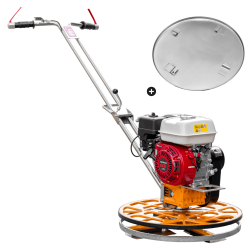
An edging trowel comes into play at the surface-finishing stage, once the mix has been placed and compacted and the excess struck off with a screeding straightedge, but before the final troweling pass. On outer edges, at control joints and around protruding elements (columns, drains, kerbs), the tool replaces a machine, because a power trowel typically can't get closer than 20–30 cm to an obstacle. Large, open industrial floor surfaces, by contrast, are finished with the pan or blades of a power trowel, with a working width of roughly 90–120 cm per pass.
Timing is critical — using an edging trowel too early on wet concrete leaves too deep a mark, while using it too late, once the mix starts to set, makes shaping the rounded edge harder and increases the risk of chipping. For machine-based surface finishing that complements edging work, see our concrete troweling category.
Frequently Asked Questions About Concrete Edging Trowels
What is a concrete edging trowel and what is it used for?
A concrete edging trowel — also called a control-joint trowel or edging tool — is a hand-held finishing tool used to shape and round the edges of a freshly poured concrete slab, as well as its control joints, before the mix hardens. Its metal head, typically 40–80 cm wide, has one straight edge and one rounded edge with a radius of around 6–13 mm, which is run along the slab edge or joint line. The tool is used after the excess concrete has been struck off with a screeding straightedge, and before final troweling, while the surface hasn't hardened yet.
How do you choose a control-joint edging trowel for concrete floors?
Choosing a control-joint edging trowel depends mainly on the size of the surface and the way you plan to work: for large floors and yards, a pole-mounted model works best — a telescopic handle typically 1.2–1.8 m long that lets you work standing up without bending over fresh concrete. On smaller surfaces, formwork, columns and stair edges, a hand-held model without a pole gives more precise control. Head width is matched to the width of the joint — usually 40–80 cm — while control joints themselves are typically spaced every 3–6 m in a concrete slab.
What is the difference between a concrete edging trowel and a plaster or skim-coat edging trowel?
A concrete edging trowel has a much larger, sturdier head — typically 40–80 cm wide — built for outdoor and industrial floor work, often fitted with a long pole for standing operation. A plaster or skim-coat edging trowel is noticeably smaller, around 10–20 cm wide, and is used to finish plaster skim coats and drywall joints on interior walls and ceilings. The two tools aren't interchangeable — they differ in material thickness, working angle and the hardness of the surface they're designed for.
What's the difference between a pole-mounted edging trowel and a hand-held model?
A pole-mounted edging trowel has a telescopic handle typically 1.2–1.8 m long, letting the operator guide the tool while standing, without kneeling over fresh concrete — a practical setup for finishing industrial floors measured in hundreds of square metres. A hand-held model, guided directly at the head, gives more control over shorter sections, usually up to 2–3 m — for example on formwork, columns, kerbs and steps, where accuracy of movement matters more than covering a large area quickly.
Which concrete edging trowel brands does NORWIT.PL carry?
At NORWIT.PL, concrete edging trowels come primarily from Toolsa, Beton Trowel and Enar — manufacturers specialising in equipment for finishing concrete floors, alongside bull floats, screeding straightedges and concrete rakes. The range includes rounded and straight profiles, in head widths typically 40–80 cm, both with a pole (1.2–1.8 m long) for standing work and hand-held without a pole for precise edge work. You'll find the full lineup on the individual product pages.
When is a rounded-edge trowel used on control joints?
A rounded-edge trowel is used right after the excess mix has been struck off with a screeding straightedge, once the concrete surface has lost its water sheen but hasn't set yet — usually within 1–3 hours of pouring, depending on temperature and humidity. Rounding the edge with a radius of around 6–13 mm prevents chipping and cracking at joint corners under load, for example from forklift wheels in warehouse floors. Using the tool too late, once the concrete starts to set, makes it harder to form the rounded edge and increases the risk of damaging the surface.
Can a concrete edging trowel also be used to trowel industrial floors?
An edging trowel doesn't replace machine troweling of large surfaces — that job belongs to power trowels, which finish a swath typically 90–120 cm wide in a single pass. Edging trowels are used as a complement, along edges, columns, joints and walls — the roughly 20–30 cm strip a power trowel's pan can't reach. You'll find full machine-based floor finishing equipment for industrial floors in our concrete troweling category at NORWIT.PL, alongside edging trowels for finishing the edges.
How much does a professional concrete edging trowel cost?
The price of a professional concrete edging trowel depends mainly on the head type (rounded or straight), its width — typically 40 or 80 cm — and whether it has a pole: a model with a telescopic handle 1.2–1.8 m long costs more than a hand-held version without one. Brand is another factor — Toolsa, Beton Trowel and Enar differ in head finishing quality and how durable the pole attachment is. Current prices for individual models are available on the product pages at NORWIT.PL.
Why Buy a Concrete Edging Trowel at NORWIT.PL
We carry concrete edging trowels primarily from Toolsa, Beton Trowel and Enar — in rounded and straight profiles, with a pole and without. We help you choose the right head type and pole length for the scale of the job, from single control joints to industrial floors measured in thousands of square metres. This equipment is complemented by our other concrete finishing tools — bull floats, texture brooms and concrete rakes — and by power trowels for concrete troweling on large surfaces. Orders are handled online, with delivery across the whole country.