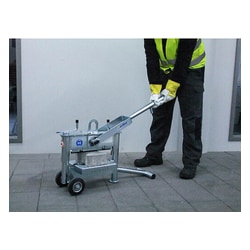



-
-
Concrete
-
- Concreting
- Concrete Vibrators
- Complete 230 V Mechanical Vibrators
- Vibrator Heads
- Vibrator Shafts
- Vibrator Motors
- Concrete Vibrators 42 V | 200 Hz
- Mechanical Vibrators 230 V
- 42 V | 200 Hz Head and Shaft
- 230 V Concrete Vibrators
- Vibrators With Built-In 230 V | 200 Hz Converter
- 42 V | 200 Hz Converters
- Combustion Vibrators
- Pneumatic Vibrators
- External Vibrators
- Power Trowels
- Vibratory Screeds
- Concrete Hand Tools
- Concrete Vibrators
-
-
-
-
-
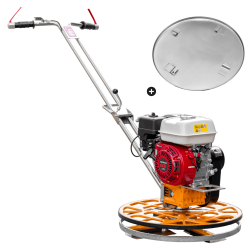
- Walk-Behind Combustion Power Trowels
-
-
-
Heating and cooling
-
Generators
-
Earthworks
-
Industrial vacuums
-
Finishing
-
Pumps
-
Measurement
-
BLOG & Tips
-
Promotions
Kategorie 16 kategorii
Kategorie
-
- Levels and Measurements
- Soil Compactors
- Tamping Rammers - Jumping Jacks
- Single Direction Vibratory Plates
- Reversible Vibratory Plates
- Rollers
- 100 kg Soil Compactors
- 200 kg Soil Compactors
- 300 kg Soil Compactors
- 400 kg Soil Compactors
- 500 kg Soil Compactors
- 600 kg Soil Compactors
- 700 kg Soil Compactors
- 800 kg Soil Compactors
- Wacker Neuson Compactors
- Accessories for Compactors
- Bomag Compactors
- Altrad Belle Compactors
- Paver Compactors
- Swepac Compactors
- Power Generators
- Concreting
- Concrete Vibrators
- Complete 230 V Mechanical Vibrators
- Vibrator Heads
- Vibrator Shafts
- Vibrator Motors
- Concrete Vibrators 42 V | 200 Hz
- Mechanical Vibrators 230 V
- 42 V | 200 Hz Head and Shaft
- 230 V Concrete Vibrators
- Vibrators With Built-In 230 V | 200 Hz Converter
- 42 V | 200 Hz Converters
- Combustion Vibrators
- Pneumatic Vibrators
- External Vibrators
- Vibratory Screeds
- Power Trowels
- Concrete Hand Tools
- Concrete Vibrators
- Pumps and Motor Pumps
- Cutting, Drilling and Grinding
- Heating and Cooling
- Wood Table Saws
- Painting and Plastering
- Combustion Engines
- Washing and Vacuuming
- Cement Mixers
- Paving Tools
- Wheelbarrows and Track Dumpers
- Demolition and Hammers
- Sales
- Levels and Measurements
Brak kategorii pasujących do wyszukiwania.
Block Splitters
PROBST RSA Curved Guillotine Cutting Adapter
41200016zł1,593.00 tax incl. 1 295,12 zł tax excl.View technical data Zobacz szczegóły
- Weight: 4,36 kg
- Width: 355 mm
- Cutting height: 50-100 mm
- Cutting width: 250 mm
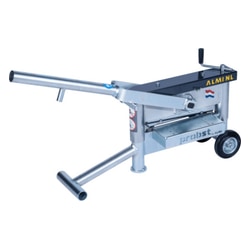
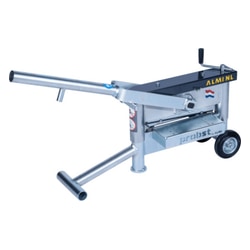
Guillotine For Slabs And Paving Stones PROBST AL-33-EASY-V
51200059zł4,558.38 tax incl. 3 706,00 zł tax excl.View technical data Zobacz szczegóły
- Weight: 42 kg
- Cutting height: 10-120 mm
- Cutting width: 330 mm
Guillotine For Slabs And Paving Stones PROBST AL-43-EASY-V
51200061zł5,661.69 tax incl. 4 603,00 zł tax excl.View technical data Zobacz szczegóły
- Weight: 60 kg
- Cutting height: 10-120 mm
- Cutting width: 430 mm
Guillotine For Slabs And Paving Stones PROBST AL-43/U-EASY-V
51200064zł6,538.68 tax incl. 5 316,00 zł tax excl.View technical data Zobacz szczegóły
- Weight: 73 kg
- Cutting height: 10-300 mm
- Cutting width: 430 mm
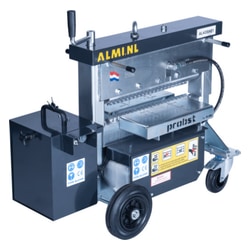
PROBST AL-43/SH-21-V Hydraulic Guillotine
51200052zł36,622.02 tax incl. 29 774,00 zł tax excl.View technical data Zobacz szczegóły
- Weight: 150 kg
- Cutting height: 20-200 mm
- Cutting width: 180-420 mm
- Separation force: 21000 kg(dan)
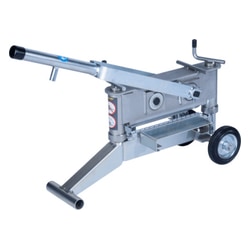
Mechanical Guillotine For Cubes And Blocks PROBST AL-33/S-V
51200044zł13,862.10 tax incl. 11 270,00 zł tax excl.View technical data Zobacz szczegóły
- Weight: 53 kg
- Cutting height: 20-140 mm
- Cutting width: 330 mm
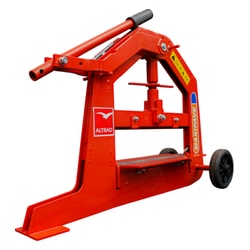
Paving Chisel (guillotine) Altrad Belle MAXIPAVE
MBS08zł1,879.00 tax incl. 1 527,64 zł tax excl.View technical data Zobacz szczegóły
- Weight: 35 kg
- Blade length: 400 mm
- Cutting depth min: 40 mm
- Cutting depth max: 120 mm
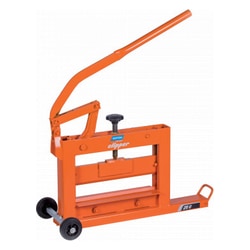
Norton Clipper CPS 41 Brick Chisel / Paving Guillotine
70184608013zł1,856.07 tax incl. 1 509,00 zł tax excl.View technical data Zobacz szczegóły
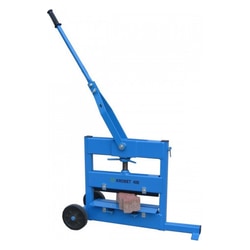
- Weight: 42 kg
- Dimensions: 580 x 120 x 820 mm
- Cutting height: 50-110 mm
- Cutting width: 30-410 mm
Krobet 400 KR400 Mechanical Chisel
KR400zł2,368.93 tax incl. 1 925,96 zł tax excl.View technical data Zobacz szczegóły
- Producent: Jazon
- Blade length: 410 mm
- Max. cutting height: 110 mm
Probst STONE SPLITTER STS-33-F
51200076zł2,728.14 tax incl. 2 218,00 zł tax excl.View technical data Zobacz szczegóły
- Weight: 41 kg
- Cutting height: 10-120 mm
- Cutting width: 330 mm
STONE SPLITTER STS-43-H Probst
51200078zł4,424.00 tax incl. 3 596,75 zł tax excl.View technical data Zobacz szczegóły
- Weight: 66 kg
- Cutting height: 10-300 mm
- Cutting width: 430 mm
Probst STONE SPLITTER STS-43
51200077zł3,545.00 tax incl. 2 882,11 zł tax excl.View technical data Zobacz szczegóły
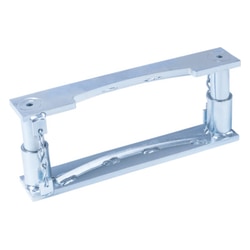
- Weight: 57 kg
- Cutting height: 10-120 mm
- Cutting width: 430 mm
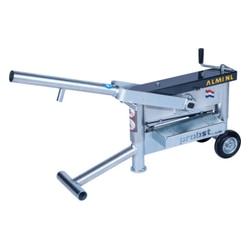
A block splitter separates paving units by pressing two blades together — an upper one and a fixed lower one — instead of cutting them with a blade. Splitting works with no dust, no water and no power supply, which makes the splitter the default tool wherever a petrol saw is not allowed or where there is no electricity on site. The split face has a natural riven texture, often a deliberate choice with decorative paving.
NORWIT.PL stocks splitters by Probst, Altrad Belle and Norton Clipper: mechanical models with a cutting width of 330 mm (AL-33, 42–53 kg) and 430 mm (AL-43, STONE SPLITTER STS-43, 57–60 kg), the hydraulic AL-43/SH-21 with a splitting force of 21,000 daN and a cutting height up to 200 mm, plus the lighter MAXIPAVE (35 kg) and Krobet 400 splitters.
An RSA adapter is available for cutting curves. Where precision cuts or reinforced materials are involved, use a saw with a diamond blade. The rest of the paving equipment is in paving tools.
How a block splitter works
A block splitter separates an element by squeezing it between two blades — an upper one lowered by a lever and a fixed lower one. The material is not sawn but riven along the line of pressure, so the process produces neither dust nor slurry and needs no power supply. In mechanical models the force comes from the operator through a long lever; in hydraulic ones from a hydraulic circuit, which allows thicker and harder elements to be split.
That difference decides the application. Cutting with a diamond blade gives a smooth face accurate to the millimetre, but calls for a saw, water or dust extraction, and power. A splitter gives a riven face, uneven by a few millimetres, but works anywhere — in residential areas, inside buildings and wherever noise and dust are a problem. With decorative paving and walling, the riven texture is often chosen deliberately, since it matches factory-split units.
A splitter also has limits: it will not handle reinforced material, large-format slabs wider than the blade, or accurate angled cuts. Those call for a saw with a diamond blade.
Mechanical or hydraulic splitter
The choice comes down to the thickness and hardness of the material and to how many cuts are made per day.
| Feature | Mechanical | Hydraulic |
|---|---|---|
| Source of force | lever, operator's effort | hydraulic circuit |
| Cutting height | 10–140 mm | 20–200 mm |
| Weight | 35–60 kg | approx. 150 kg |
| Material | concrete blocks and slabs, decorative paving | also thick units, granite, kerbstones |
| Mobility | carried by two people | stationary, moved on a trolley |
The hydraulic AL-43/SH-21 develops a splitting force of 21,000 daN and handles elements up to 200 mm high — a range covering kerbstones and thick kerbs that a mechanical model will not split. The trade-off is 150 kg of weight and work from a fixed station. For typical 6–8 cm blocks and slabs up to 12 cm, a mechanical model is sufficient and far easier to move around the site.
Block splitters available at NORWIT.PL
The key selection parameters are cutting width (the maximum element width) and cutting height (its thickness).
| Model | Cutting width | Cutting height | Weight | Type |
|---|---|---|---|---|
| Probst AL-33-EASY-V | 330 mm | 10–120 mm | 42 kg | mechanical |
| Probst AL-33/S-V | 330 mm | 20–140 mm | 53 kg | mechanical, blocks and kerbstones |
| Probst AL-43-EASY-V | 430 mm | 10–120 mm | 60 kg | mechanical |
| Probst STONE SPLITTER STS-43 | 430 mm | 10–120 mm | 57 kg | mechanical |
| Probst AL-43/SH-21-V | 180–420 mm | 20–200 mm | 150 kg | hydraulic, 21,000 daN |
| Altrad Belle MAXIPAVE | 400 mm blade | 40–120 mm | 35 kg | mechanical, lightweight |
| Krobet 400 KR400 | 410 mm blade | up to 110 mm | — | mechanical |
The 330 mm versions cover standard blocks and most pavement slabs; the 430 mm versions take wider elements, including patio slabs. For cutting curves — needed at roundabouts, driveways and lawn edgings — the RSA adapter guides the element against the blade along a set radius.
Choosing a block splitter
Start from two material dimensions. Standard paving blocks are 6 or 8 cm thick and usually up to 20 cm wide — within reach of every model in the table. Pavement slabs of 50 × 50 cm need a 430 mm cutting width or two passes. Kerbstones and kerbs over 140 mm high already belong to the hydraulic class.
The second criterion is site conditions. A mechanical splitter of 35–60 kg is carried by two people and set up right next to where the paving is laid, which shortens material handling. A 150 kg hydraulic model stays in one place and has elements brought to it — sensible on large areas and hard materials, less practical on scattered work.
The third point is blades. They are a wear part: a blunt blade stops producing a clean split line and starts crumbling the edge. On continuous work it pays to keep a spare set. Once cut, elements are bedded with a paving hammer, and heavier ones moved with a mechanical clamp.
Frequently asked questions — block splitters
Block splitter or saw for paving?
A splitter separates blocks by blade pressure, with no dust, water or power — which suits residential areas, work inside buildings and decorative paving, where a riven edge texture is the desired effect. A saw with a diamond blade gives a smooth, accurate face, handles reinforced material and angled cuts, but needs power plus water or dust extraction. On a typical paving job both tools are used side by side, depending on the location and the type of cut.
Which block splitter should I choose?
For standard 6–8 cm blocks and pavement slabs, a mechanical splitter with a 330 mm cutting width and a weight of about 42 kg is enough — for example the Probst AL-33-EASY. Patio slabs and wider elements call for the 430 mm version (AL-43, STS-43, 57–60 kg). Kerbstones and kerbs over 140 mm high require a hydraulic splitter with a splitting force in the region of 21,000 daN. Always check both dimensions: element width and thickness.
What thickness of paving can a splitter handle?
Mechanical splitters separate elements from 10 to 120 mm high, and reinforced models for blocks and kerbstones up to 140 mm. A hydraulic splitter covers 20 to 200 mm. Standard paving blocks are 6 or 8 cm thick, so they fall within every one of these ranges; the limit only becomes an issue with kerbs and kerbstones, where the hydraulic version is required.
Can a splitter cut granite?
Granite and other natural stone can be split, though harder material calls for more force — which is why thicker granite setts are handled by the hydraulic model at 21,000 daN rather than a mechanical one. The result is a riven face, usually desirable with natural stone because it matches the texture of factory-split units. Cutting granite smooth requires a diamond blade for stone.
Does a block splitter need electricity?
Mechanical splitters need no power supply at all — the splitting force comes from the operator through the lever. Hydraulic models also work without electricity in the hand-pump version. This is the splitter's main advantage over a saw: it can be used on a plot with no connection, in a basement, in a building before handover, and anywhere the noise of a petrol engine would be a problem for neighbours.
How do you cut paving along a curve?
Curved cuts — needed at roundabouts, driveways and lawn edgings — are made with a guide adapter; on Probst splitters this is the RSA adapter, which positions the element against the blade at a set radius. Without an adapter, a curve is produced as a series of straight cuts marked out on the material beforehand, for instance with a line-marking tool. Each element is then cut separately at a slightly different angle.
How often do splitter blades need replacing?
Blades are a wear part, and replacement frequency depends on material hardness and the number of cuts — they last considerably longer on vibro-pressed concrete than on granite. The signal to replace them is a deteriorating split line: a blunt blade stops riving cleanly and begins to crumble the element's edge, which shows up as more waste. On continuous work it is worth keeping a spare set so the job need not stop.