


-
-
Concrete
-
- Concreting
- Concrete Vibrators
- Complete 230 V Mechanical Vibrators
- Vibrator Heads
- Vibrator Shafts
- Vibrator Motors
- Concrete Vibrators 42 V | 200 Hz
- Mechanical Vibrators 230 V
- 42 V | 200 Hz Head and Shaft
- 230 V Concrete Vibrators
- Vibrators With Built-In 230 V | 200 Hz Converter
- 42 V | 200 Hz Converters
- Combustion Vibrators
- Pneumatic Vibrators
- External Vibrators
- Power Trowels
- Vibratory Screeds
- Concrete Hand Tools
- Concrete Vibrators
-
-
-
-
-
- Walk-Behind Combustion Power Trowels
-
-
-
Heating and cooling
-
Generators
-
Earthworks
-
Industrial vacuums
-
Finishing
-
Pumps
-
Measurement
-
BLOG & Tips
-
Promotions
Kategorie 16 kategorii
Kategorie
-
- Levels and Measurements
- Soil Compactors
- Tamping Rammers - Jumping Jacks
- Single Direction Vibratory Plates
- Reversible Vibratory Plates
- Rollers
- 100 kg Soil Compactors
- 200 kg Soil Compactors
- 300 kg Soil Compactors
- 400 kg Soil Compactors
- 500 kg Soil Compactors
- 600 kg Soil Compactors
- 700 kg Soil Compactors
- 800 kg Soil Compactors
- Wacker Neuson Compactors
- Accessories for Compactors
- Bomag Compactors
- Altrad Belle Compactors
- Paver Compactors
- Swepac Compactors
- Power Generators
- Concreting
- Concrete Vibrators
- Complete 230 V Mechanical Vibrators
- Vibrator Heads
- Vibrator Shafts
- Vibrator Motors
- Concrete Vibrators 42 V | 200 Hz
- Mechanical Vibrators 230 V
- 42 V | 200 Hz Head and Shaft
- 230 V Concrete Vibrators
- Vibrators With Built-In 230 V | 200 Hz Converter
- 42 V | 200 Hz Converters
- Combustion Vibrators
- Pneumatic Vibrators
- External Vibrators
- Vibratory Screeds
- Power Trowels
- Concrete Hand Tools
- Concrete Vibrators
- Pumps and Motor Pumps
- Cutting, Drilling and Grinding
- Heating and Cooling
- Wood Table Saws
- Painting and Plastering
- Combustion Engines
- Washing and Vacuuming
- Cement Mixers
- Paving Tools
- Wheelbarrows and Track Dumpers
- Demolition and Hammers
- Sales
- Levels and Measurements
Brak kategorii pasujących do wyszukiwania.
Channel Radius Floats
Łata aluminiowa Bull Float Economic Toolsa z uchwytem
86TA91zł367.77 tax incl. 299,00 zł tax excl.View technical data Zobacz szczegóły
- Dimensions: 900 × 149 mm | 1200 × 149 mm
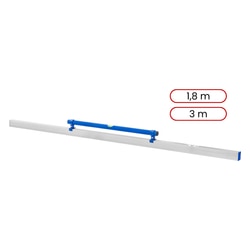
Łata aluminiowa do betonu z wbudowaną poziomicą (libellą) Toolsa
89TA43zł429.27 tax incl. 349,00 zł tax excl.View technical data Zobacz szczegóły
- Working width: 1,8 m | 3 m
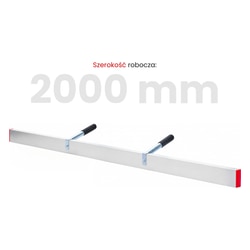
Łata magnezowa do betonu z podwójnymi uchwytami Toolsa
89TA28zł553.50 tax incl. 450,00 zł tax excl.View technical data Zobacz szczegóły
- Dimensions: 2000 mm | 2500 mm | 3000 mm
Lightweight Scraper Bar With Level 3m Beton Trowel
BT3000ASzł441.57 tax incl. 359,00 zł tax excl.View technical data Zobacz szczegóły
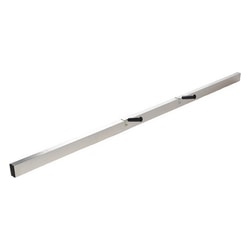
- Length: 3,0 m
Lightweight Aluminum Scraper Bar 2m
3900zł430.50 tax incl. 350,00 zł tax excl.No technical data available Zobacz szczegóły
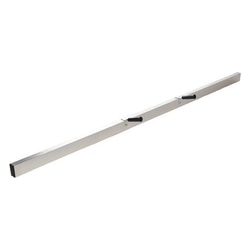
Lightweight Aluminum Scraper Bar 1.5m
3924zł369.00 tax incl. 300,00 zł tax excl.No technical data available Zobacz szczegóły
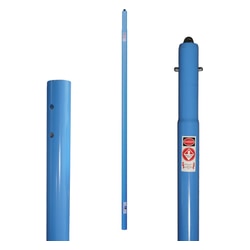
Pipe For Vibratory Screed Beton Trowel BT
BT000055zł221.40 tax incl. 180,00 zł tax excl.View technical data Zobacz szczegóły
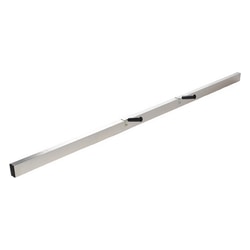
- Length: 1,8 m
Lightweight Aluminum Scraper Bar 2.5m
3902zł492.00 tax incl. 400,00 zł tax excl.No technical data available Zobacz szczegóły
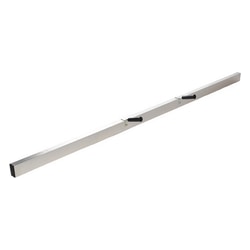
Lightweight Aluminum Scraper Bar 3m
3904zł553.50 tax incl. 450,00 zł tax excl.No technical data available Zobacz szczegóły
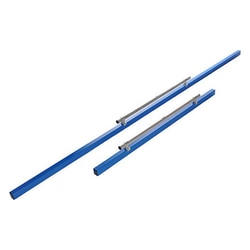
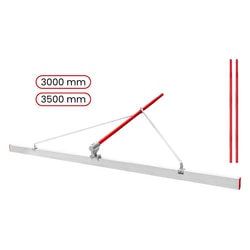
Kompletna łata wyrównująca Bump Cutter
89TA13zł3,565.77 tax incl. 2 899,00 zł tax excl.View technical data Zobacz szczegóły
- Working width: 3000 mm | 3500 mm
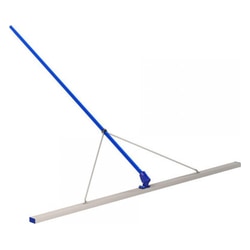
Beton Trowel Scraper Bar HEAVY DUTY BUMPCUTTER 3m
BT101026Czł4,059.00 tax incl. 3 300,00 zł tax excl.View technical data Zobacz szczegóły
- Dimensions (L x W x H): 3000 mm x 50 mm x 120 mm
Listwa wygładzająca do betonu Beton Trowel (2500 x 150 mm) (kopiuj)
BT101035Czł3,321.00 tax incl. 2 700,00 zł tax excl.View technical data Zobacz szczegóły
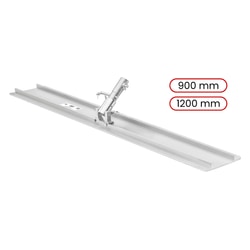
- Dimensions: 3000 x 150 mm
- Included: Aluminiowe przedłużki 1,83 m (3 szt.)
A screed board — also called a concrete screed or strike-off bar — is a rigid aluminium or magnesium profile used to strike off surplus fresh mix once it has been spread, and to set the finished level of the slab before floating begins. It is pulled towards the operator with a sawing motion, resting on two reference points such as screed rails, formwork or level pins, with a 10–15 cm overlap on every pass and normally within the first 15–30 minutes after the pour. This is the first tool to touch the concrete: how straight it runs decides whether the slab lands inside the usual tolerance of about 5 mm measured under a 2 m straightedge.
NORWIT.PL supplies professional screed boards and strike-off bars from Toolsa and Beton Trowel — light aluminium profiles from 1.5 to 3 m, versions with a built-in spirit level so levelling and striking off happen in one pass, magnesium bars with twin handles, and bump cutters for shearing high spots off a fresh slab. Both ranges are on the Toolsa and Beton Trowel brand pages, and they work alongside bull floats and the rest of our concrete hand tools. Below we explain how aluminium differs from magnesium, how to match blade length to the width of the bay, and when a powered screed beats a hand-pulled one.
Concrete screed board — what it is and what it does
A screed board is a rigid profile, most often 1.5–3 m long, used to strike off surplus mix immediately after it has been spread. The operator rests it on two reference points — screed rails, formwork or level pins — and drags it back with a sawing motion. Striking off belongs in the first 15–30 minutes after the pour, and each pass overlaps the previous one by 10–15 cm so no steps are left between strips. This stage settles the flatness of the whole slab: a bull float and a power trowel close the surface afterwards, but neither will lift a hollow already a dozen millimetres deep.
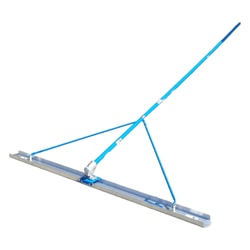
A distinct tool in this group is the bump cutter — a blade on a swivel bracket and handle poles, worked across a fresh slab from several metres away, at right angles to the first strike-off, to shear away high spots. NORWIT.PL carries bump cutter sets from Toolsa and heavy-duty versions from Beton Trowel with blades up to 3 m.
Types of screed board — aluminium, magnesium, bump cutter
Three things drive the choice: blade material, blade length, and whether you want level control built into the tool. Aluminium costs less and is stiffer at the same wall thickness; magnesium is lighter, with a density of roughly 1.74 g/cm³ against about 2.70 g/cm³ for aluminium, so an identical section weighs around a third less. Beyond 2.5 m the deciding factor is section stiffness: the deeper the profile and the thicker its wall, the less it sags in the middle under the weight of the mix.
- Light strike-off bar — aluminium profile of roughly 1.5–3 m for screeds and floor slabs.
- Bar with a built-in spirit level — aluminium, about 2–3 m; levelling and striking off in a single pass.
- Magnesium bar with twin handles — shorter blades intended for all-day work on small and medium bays.
- Bump cutter, including heavy-duty — blade up to 3 m on handle poles, for shearing high spots on large slabs.
Choosing the right blade length
The blade has to be longer than the span between its bearing points, with 15–25 cm to spare at each end. Too short a profile copies the unevenness of the base instead of cutting it away; too long a profile sags in the middle under the weight of the mix. A 1.5 m blade suits perimeter strips, steps and repairs, 2 m is the usual choice for garages, terraces and residential screeds, 2.5 m handles larger rooms, and 3 m belongs on industrial floors. Bays wider than 3 m are better split into strips with screed rails, and large areas call for vibratory screeds. Block paving and bedding layers take dedicated screed bars for paving work instead.
Hand-pulled or vibratory screed
A hand-pulled board removes surplus mix and defines the plane, but does not compact the concrete. On slabs thicker than roughly 10–12 cm, and with stiff low-slump mixes, you also need a concrete vibrator to drive out entrapped air. A vibratory screed does both jobs at once: the powered blade sets the mix vibrating and compacts a layer of usually up to about 15 cm in one pass.
| Criterion | Hand-pulled screed board | Vibratory screed |
|---|---|---|
| Compacts the mix | no | yes |
| Typical slab thickness | up to approx. 10–12 cm | up to approx. 15 cm in one pass |
| Blade length | 1.5–3 m | from approx. 2 m up to truss units of several metres |
| Who it is for | screeds, repairs, bays of a few dozen square metres | industrial floors, yards, large pours |
Frequently asked questions about screed boards
What is a screed board and how does it differ from a bull float?
A screed board is a rigid aluminium or magnesium profile, normally 1.5–3 m long, used to strike off surplus fresh concrete and fix the level of the slab within the first 15–30 minutes after the pour, pulled with a sawing motion along screed rails or level pins. A bull float comes later: its wide blade of roughly 100–150 mm on handle poles closes the surface pores but no longer corrects level. The running order never changes — strike off, float, then trowel.
What length of concrete screed board should I choose?
Length follows the span between the bearing points, plus 15–25 cm of overhang at each end. A 1.5 m blade covers perimeter strips, steps and repairs; 2 m is the standard for garages, terraces and residential screeds; 2.5 m suits larger rooms; 3 m is the working length on industrial floors. Blades of 3 m are pulled by two operators or run on handle poles, because a single-handed pull lets them sag in the middle under the weight of the mix.
Aluminium or magnesium screed board — which is better for concrete?
Magnesium has a density of about 1.74 g/cm³ against roughly 2.70 g/cm³ for aluminium, so a magnesium bar of the same section weighs around one third less. That makes it the more comfortable option for all-day work and for tools with twin handles. Aluminium is stiffer and cheaper, which is why it dominates the 2–3 m blades and the versions with a built-in spirit level.
What is a bump cutter used for and when should I reach for one?
A bump cutter is a blade of up to 3 m mounted on a swivel bracket with handle poles, worked across a fresh slab from several metres away. It shears off the high spots left after the first strike-off, running at right angles to the direction of that pass. It earns its place on larger pours and industrial floors, inside the same window of roughly 15–30 minutes after the pour; heavy-duty versions use a reinforced blade section for continuous daily use.
Can a screed board replace a vibratory screed?
A hand-pulled board only strikes off surplus mix — it does not compact the concrete. On slabs up to about 10–12 cm poured with a plastic mix that is enough, provided compaction is handled separately with an immersion vibrator. Above that thickness a vibratory screed is the right tool, compacting a layer of usually up to about 15 cm in one pass. Finished flatness is checked with a straightedge over a 2 m base, where the typical accepted gap is in the order of 5 mm.
Why buy your screed board from NORWIT.PL
We put together kit for concreting crews rather than a shelf of DIY-grade tools: Toolsa and Beton Trowel profiles, aluminium bars from 1.5 to 3 m, versions with a spirit level, magnesium bars with twin handles and bump cutters. We help match blade length and material to the bay you are pouring, and we supply the whole finishing sequence: bull floats, fresno floats and brooms and power trowels. The full range of hand equipment sits in concrete hand tools. Orders are placed online and shipped throughout Poland.