


-
-
Concrete
-
- Concreting
- Concrete Vibrators
- Complete 230 V Mechanical Vibrators
- Vibrator Heads
- Vibrator Shafts
- Vibrator Motors
- Concrete Vibrators 42 V | 200 Hz
- Mechanical Vibrators 230 V
- 42 V | 200 Hz Head and Shaft
- 230 V Concrete Vibrators
- Vibrators With Built-In 230 V | 200 Hz Converter
- 42 V | 200 Hz Converters
- Combustion Vibrators
- Pneumatic Vibrators
- External Vibrators
- Power Trowels
- Vibratory Screeds
- Concrete Hand Tools
- Concrete Vibrators
-
-
-
-
-
- Walk-Behind Combustion Power Trowels
-
-
-
Heating and cooling
-
Generators
-
Earthworks
-
Industrial vacuums
-
Finishing
-
Pumps
-
Measurement
-
BLOG & Tips
-
Promotions
Kategorie 16 kategorii
Kategorie
-
- Levels and Measurements
- Soil Compactors
- Tamping Rammers - Jumping Jacks
- Single Direction Vibratory Plates
- Reversible Vibratory Plates
- Rollers
- 100 kg Soil Compactors
- 200 kg Soil Compactors
- 300 kg Soil Compactors
- 400 kg Soil Compactors
- 500 kg Soil Compactors
- 600 kg Soil Compactors
- 700 kg Soil Compactors
- 800 kg Soil Compactors
- Wacker Neuson Compactors
- Accessories for Compactors
- Bomag Compactors
- Altrad Belle Compactors
- Paver Compactors
- Swepac Compactors
- Power Generators
- Concreting
- Concrete Vibrators
- Complete 230 V Mechanical Vibrators
- Vibrator Heads
- Vibrator Shafts
- Vibrator Motors
- Concrete Vibrators 42 V | 200 Hz
- Mechanical Vibrators 230 V
- 42 V | 200 Hz Head and Shaft
- 230 V Concrete Vibrators
- Vibrators With Built-In 230 V | 200 Hz Converter
- 42 V | 200 Hz Converters
- Combustion Vibrators
- Pneumatic Vibrators
- External Vibrators
- Vibratory Screeds
- Power Trowels
- Concrete Hand Tools
- Concrete Vibrators
- Pumps and Motor Pumps
- Cutting, Drilling and Grinding
- Heating and Cooling
- Wood Table Saws
- Painting and Plastering
- Combustion Engines
- Washing and Vacuuming
- Cement Mixers
- Paving Tools
- Wheelbarrows and Track Dumpers
- Demolition and Hammers
- Sales
- Levels and Measurements
Brak kategorii pasujących do wyszukiwania.
Combustion Demolition Hammers
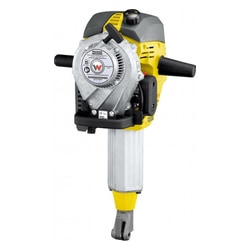
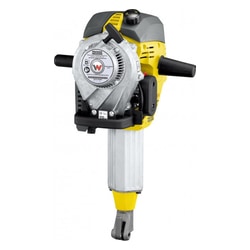
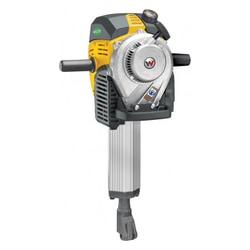
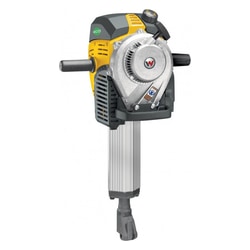
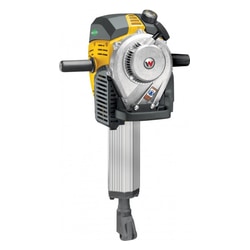
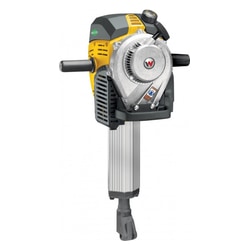
Wacker Neuson BH 65 27x80 Petrol Hammer
5100047106zł15,990.00 tax incl. 13 000,00 zł tax excl.View technical data Zobacz szczegóły
- Weight: 25,2 kg
- Dimensions: 848 x 492 x 346 mm
- Engine power: 1,7 kW / 2,3 KM
- Engine: Wacker Neuson WM 80 C
- Fuel tank: 1,8 l
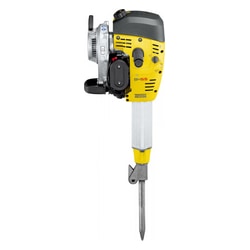
Wacker Neuson BH 55 27x80 Petrol Hammer
5100047063zł14,760.00 tax incl. 12 000,00 zł tax excl.View technical data Zobacz szczegóły
- Weight: 24 kg
- Dimensions: 777 x 492 x 346 mm
- Engine power: 1,6 kW / 2,8 KM
- Fuel tank: 1,8 l
- Model: Wacker Neuson WM 80 C
Wacker Neuson BH 55 HEX 28X160 Petrol Hammer
5100047105zł16,879.99 tax incl. 13 723,57 zł tax excl.View technical data Zobacz szczegóły
- Weight: 23,5 kg
- Dimensions: 833 x 492 x 346 mm
- Engine power: 2,18 kW / 2,96 KM
- Engine: Wacker Neuson WM 80
- Fuel tank: 1,8 l
Wacker Neuson BH 55 HEX 25X108 Petrol Hammer
5100047104zł16,879.99 tax incl. 13 723,57 zł tax excl.View technical data Zobacz szczegóły
- Weight: 22,7 kg
- Dimensions: 777 x 492 x 346 mm
- Engine power: 2,18 kW / 2,96 KM
- Engine: Wacker Neuson WM 80
- Fuel tank: 1,8 l
Wacker Neuson BH 55 HEX Ø 28X152 Petrol Hammer
5100004028zł18,219.99 tax incl. 14 813,00 zł tax excl.View technical data Zobacz szczegóły
- Weight: 25 kg
- Dimensions: 833 x 492 x 346 mm
- Engine power: 2,18 kW / 2,96 KM
- Engine: Wacker Neuson WM 80
- Fuel tank: 1,8 l
Wacker Neuson BH 55 RW Petrol Hammer
5100047100zł18,999.00 tax incl. 15 446,34 zł tax excl.View technical data Zobacz szczegóły
- Weight: 23,5 kg
- Dimensions: 777 x 492 x 346 mm
- Engine power: 2,18 kW / 2,96 KM
- Engine: Wacker Neuson WM 80
- Fuel: 1,8 l
Wacker Neuson BH 55 RW 25X108 Petrol Hammer
5100004039zł20,737.00 tax incl. 16 859,35 zł tax excl.View technical data Zobacz szczegóły
- Weight: 25 kg
- Dimensions: 777 x 492 x 346 mm
- Engine power: 2,18 kW / 2,96 KM
- Engine: Wacker Neuson WM 80
- Fuel tank: 1,8 l
Wacker Neuson BH 55 RW 28X152 Petrol Hammer
5100004040zł18,999.00 tax incl. 15 446,34 zł tax excl.View technical data Zobacz szczegóły
- Weight: 26 kg
- Dimensions: 833 x 492 x 346 mm
- Engine: Wacker Neuson WM 80
- Power: 2,18 kW / 2,96 KM
- Fuel tank: 1,8 l
Wacker Neuson BH 55 RW 28X160 Petrol Hammer
5100047101zł18,999.00 tax incl. 15 446,34 zł tax excl.View technical data Zobacz szczegóły
- Weight: 24,3 kg
- Dimensions: 833 x 492 x 346 mm
- Engine power: 2,18 kW / 2,96 KM
- Engine: Wacker Neuson WM 80
- Fuel tank: 1,8 l
Wacker Neuson BH 55 RW 32X160 Petrol Hammer
5100047102zł18,999.00 tax incl. 15 446,34 zł tax excl.View technical data Zobacz szczegóły
- Weight: 24,3 kg
- Dimensions: 833 x 492 x 346 mm
- Engine power: 2,18 kW / 2,96 KM
- Engine: Wacker Neuson WM 80
- Fuel tank: 1,8 l
Wacker Neuson BH 65 HEX 25X108 Petrol Hammer
5100047107zł19,294.33 tax incl. 15 686,45 zł tax excl.View technical data Zobacz szczegóły
- Weight: 23,5 kg
- Dimensions: 858 x 492 x 346 mm
- Engine power: 2,31 kW / 3,14 KM
- Engine: Wacker Neuson WM 80
- Fuel tank: 1,8 l
Wacker Neuson BH 65 HEX 28X152 Petrol Hammer
5100004034zł15,979.00 tax incl. 12 991,06 zł tax excl.View technical data Zobacz szczegóły
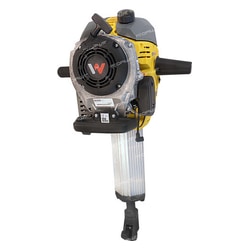
- Weight: 26 kg
- Dimensions: 905 x 492 x 346 mm
- Engine power: 23,1 kW / 31,4 KM
- Engine: Wacker Neuson WM 80
- Fuel tank: 1,8 l
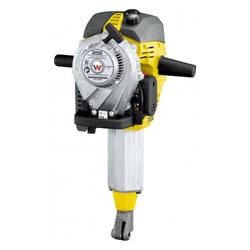
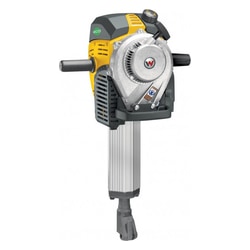
A petrol demolition hammer carries its own two-stroke engine, so it breaks concrete with no mains socket, no extension cable and no hydraulic power pack behind it. Engine, fuel tank and percussion unit sit inside a single housing — the operator carries the machine down into a trench, onto an embankment or out along a road lane and has it running within seconds. Impact energy in this class is typically 40–70 J at roughly 1300–1600 blows per minute, which is enough for breaking floor slabs, strip footings, asphalt surfaces and openings cut through masonry walls.
At NORWIT.PL we build the range of petrol demolition hammers mainly around Wacker Neuson, together with the tooling that goes with it: moil points, flat chisels and asphalt spades matched to the machine shank (27x80 mm on BH 55 class hammers). For work inside a trench, indoors or under water, look instead at hydraulic demolition hammers and the matching hydraulic power packs. Below we explain when a petrol drive works out cheaper than hydraulics and how to match the tool tip to the material.
Petrol demolition hammer — one machine, no power set
A petrol demolition hammer (also called a gasoline breaker) is a percussion tool driven by its own two-stroke engine of usually 50–90 cm³. The piston compresses air in the cylinder and an air cushion passes the impulse to striker and chisel. Operating weight normally falls between 23 and 33 kg, and a 1.8–2.0 litre tank covers 1–2 hours of continuous breaking.
What separates the drive types is logistics, not power: an electric breaker needs a cable run, a hydraulic one a power pack and two hoses, a pneumatic one a compressor.
Petrol, hydraulic or electric drive
The drive follows the working environment and the number of operators, not striking force: in the 25–35 kg class impact energy is similar whatever powers the machine.
| Feature | Petrol | Hydraulic | Electric |
|---|---|---|---|
| Power source needed | none — engine on board | power pack and two hoses | 230 V mains or a generator |
| Work in enclosed spaces | no (exhaust fumes) | yes | yes |
| Work in trenches and under water | no | yes | no |
| Best suited to | scattered, mobile jobs | one spot, long cycles | refurbishment inside buildings |
Where a crew breaks concrete in one spot all shift, a hydraulic set often costs less: one hydraulic power pack feeds a hydraulic demolition hammer, and larger units feed a second tool. On linear works the arithmetic flips back in favour of petrol.
Matching hammer and chisel to the material
Two things decide how fast material gives way: hammer mass and tip shape. A moil point concentrates energy on one spot and starts the crack in reinforced concrete, a flat chisel steers that crack along an edge, a wide spade levers asphalt off the base. The tool shank has to match the machine — on BH 55 class hammers from Wacker Neuson that means 27x80 mm.
- Concrete floor slab, 10–20 cm — roughly 25 kg with a moil point; score reinforced bays first with a petrol disc cutter.
- Strip footings and pad foundations — the heaviest units, impact energy of the order of 60–70 J, working inwards from an edge.
- Asphalt surfaces — a spade around 100–125 mm wide, hammer held at 15–30 degrees.
- Openings in masonry — a flat chisel and a lighter hammer, starting from a pilot hole.
The whole range sits in demolition hammers.
Petrol demolition hammers — FAQ
What fuel mix does a petrol demolition hammer use and how much does it burn?
Two-stroke engines in these hammers run on 95-octane unleaded petrol blended with two-stroke oil, most often at 1:50 — the binding ratio is the one in the manual. Continuous breaking consumes 1.0–1.5 litres per hour, so a 1.8–2.0 litre tank lasts 1–2 hours between refills. Mix fuel as you need it: after roughly 30 days the blend loses its lubricating properties, and stale fuel is the most common reason a hammer will not start.
Does a petrol hammer work out cheaper than an electric one with a generator?
The comparison turns on how many operators share one power source. A petrol machine is one item to buy and service; the electric option means a hammer, a generator of typically 2–3 kW and a site extension cable. For a single crew away from mains power the petrol hammer is cheaper and sets up in about a minute. The balance shifts once 2–3 hammers work side by side on a single generator.
How much floor slab can one operator break in a shift?
Output follows the thickness of the slab and whether it is reinforced. On an unreinforced floor of 10–15 cm an experienced operator with a 25 kg class machine clears roughly 8–15 m² per hour, or 50–90 m² over an eight-hour shift. Reinforcement can halve that, because the chisel is steered between the bars and the steel cut separately. Slabs over 20 cm are worth scoring into squares of 40–60 cm a side, which cuts breaking time markedly.
Can a petrol demolition hammer be used in a cellar or a deep trench?
Exhaust from a two-stroke engine carries carbon monoxide, which makes a petrol breaker an open-air machine. Polish exposure limits are 23 mg/m³ over eight hours and 117 mg/m³ short-term — in an unventilated cellar or a trench deeper than 1.2 m those levels are reached within minutes, and the gas gives no warning smell. Enclosed spaces and trenches call for a hydraulic hammer or an electric breaker instead.