

-
-
Concrete
-
- Concreting
- Concrete Vibrators
- Complete 230 V Mechanical Vibrators
- Vibrator Heads
- Vibrator Shafts
- Vibrator Motors
- Concrete Vibrators 42 V | 200 Hz
- Mechanical Vibrators 230 V
- 42 V | 200 Hz Head and Shaft
- 230 V Concrete Vibrators
- Vibrators With Built-In 230 V | 200 Hz Converter
- 42 V | 200 Hz Converters
- Combustion Vibrators
- Pneumatic Vibrators
- External Vibrators
- Power Trowels
- Vibratory Screeds
- Concrete Hand Tools
- Concrete Vibrators
-
-
-
-
-
- Walk-Behind Combustion Power Trowels
-
-
-
Heating and cooling
-
Generators
-
Earthworks
-
Industrial vacuums
-
Finishing
-
Pumps
-
Measurement
-
BLOG & Tips
-
Promotions
Kategorie 16 kategorii
Kategorie
-
- Levels and Measurements
- Soil Compactors
- Tamping Rammers - Jumping Jacks
- Single Direction Vibratory Plates
- Reversible Vibratory Plates
- Rollers
- 100 kg Soil Compactors
- 200 kg Soil Compactors
- 300 kg Soil Compactors
- 400 kg Soil Compactors
- 500 kg Soil Compactors
- 600 kg Soil Compactors
- 700 kg Soil Compactors
- 800 kg Soil Compactors
- Wacker Neuson Compactors
- Accessories for Compactors
- Bomag Compactors
- Altrad Belle Compactors
- Paver Compactors
- Swepac Compactors
- Power Generators
- Concreting
- Concrete Vibrators
- Complete 230 V Mechanical Vibrators
- Vibrator Heads
- Vibrator Shafts
- Vibrator Motors
- Concrete Vibrators 42 V | 200 Hz
- Mechanical Vibrators 230 V
- 42 V | 200 Hz Head and Shaft
- 230 V Concrete Vibrators
- Vibrators With Built-In 230 V | 200 Hz Converter
- 42 V | 200 Hz Converters
- Combustion Vibrators
- Pneumatic Vibrators
- External Vibrators
- Vibratory Screeds
- Power Trowels
- Concrete Hand Tools
- Concrete Vibrators
- Pumps and Motor Pumps
- Cutting, Drilling and Grinding
- Heating and Cooling
- Wood Table Saws
- Painting and Plastering
- Combustion Engines
- Washing and Vacuuming
- Cement Mixers
- Paving Tools
- Wheelbarrows and Track Dumpers
- Demolition and Hammers
- Sales
- Levels and Measurements
Brak kategorii pasujących do wyszukiwania.
Concrete Diamond Blades
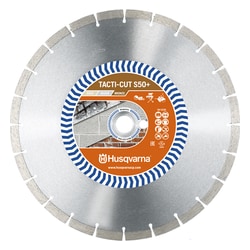
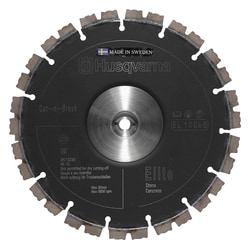
Tarcza diamentowa Husqvarna Tacti-Cut S50+ (350 mm)
579815620zł262.51 tax incl. 213,42 zł tax excl.View technical data Zobacz szczegóły
- Disc bore diameter: 25,4 mm
- Segment height: 13 mm
- Segment thickness: 2,8 mm
- Geometry: Segmenty oddzielne
- Quality class: Husqvarna brązowy
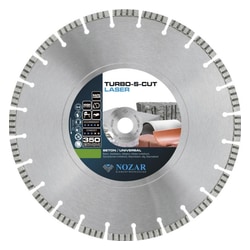
Diamond Blade TURBO S CUT 350
6525117zł490.77 tax incl. 399,00 zł tax excl.No technical data available Zobacz szczegóły
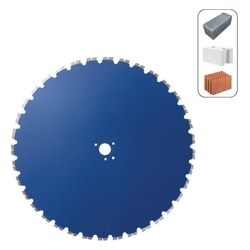
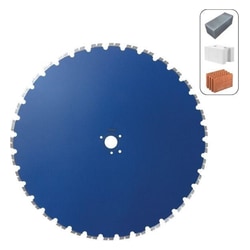
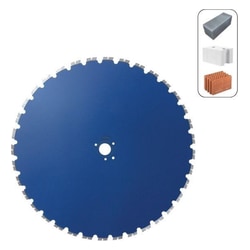
Jumbo 651 Norton Clipper Universal 650 12x4.4 Hollow Blade
70184647265zł1,398.01 tax incl. 1 136,59 zł tax excl.View technical data Zobacz szczegóły
- Segment height: 12 mm
- Segment thickness: 4 mm
- Application: Pustak ceramiczny. beton komórkowy. pustak typu ytong
- Disc diameter: 650 mm
- Dedicated to the saw: Norton clipper jumbo 651
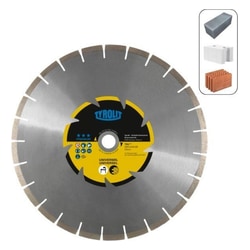
TYROLIT PREMIUM TSU 700 X 3.9 MM, 60/55 MM Diamond Disc
34171019zł1,114.38 tax incl. 906,00 zł tax excl.View technical data Zobacz szczegóły
- Producent: Tyrolit
- Disc bore diameter: 60 / 55 mm
- Segment height: 10 mm
- Geometry: C1 W
- Type of cooling: Dry
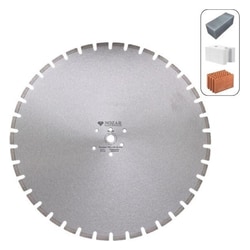
NOZAR KSP 700mm Diamond Blade
6700709zł1,783.50 tax incl. 1 450,00 zł tax excl.View technical data Zobacz szczegóły
- Disc bore diameter: 25,4 mm, 30 mm, 60 mm
- Disc diameter: 700 mm
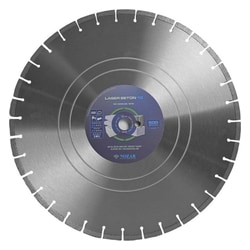
Nozar Laser Concrete 10 500mm Diamond Blade
PL6700413zł1,105.77 tax incl. 899,00 zł tax excl.View technical data Zobacz szczegóły
- Disc bore diameter: 25,4 mm
- Segment height: 10 mm
- Segment thickness: 4 mm
- Number of segments: 30
Tarcza diamentowa Husqvarna Tacti-Cut S50 (400 mm)
579815630zł338.00 tax incl. 274,80 zł tax excl.View technical data Zobacz szczegóły
- Disc bore diameter: 25,4 mm
- Segment height: 40 mm
- Segment thickness: 3,4 mm
- Quality class: Husqvarna brązowy
- Application: Beton utwardzany, beton zbrojony, cegła, dachówka, żeliwo sferoidalne, granit, marmur, kamień naturalny
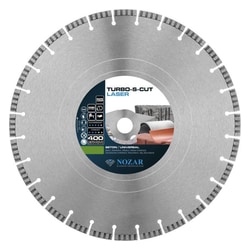
Nozar TURBO S CUT 400 Diamond Blade
6700470zł749.07 tax incl. 609,00 zł tax excl.View technical data Zobacz szczegóły
- Producent: Nozar niemcy
- Disc bore diameter: 25,4 mm
- Segment height: 10 mm
- Width: 3 mm
- Application: Kostka brukowa
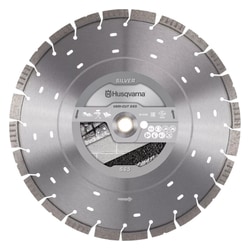
Tarcza diamentowa Husqvarna Vari-Cut S65 (500 mm) do asfaltu
534977060zł1,105.77 tax incl. 899,00 zł tax excl.View technical data Zobacz szczegóły
- Producent: Husqvarna
- Disc bore diameter: 25,4 mm
- Disc diameter (mm): 500
- Segment height (mm): 12
Jumbo 900 Norton Clipper Pro Universal 900 12mm Disc
70184647266zł2,189.40 tax incl. 1 780,00 zł tax excl.View technical data Zobacz szczegóły
- Segment height: 12 mm
- Segment thickness: 4,4 mm
- Bore diameter: 60 mm
- Application: Na sucho / na mokro
- Disc diameter: 900 mm
Zestaw 2 tarcz Cut-N-Break Husqvarna EL 10 CNB (230 mm)
597807901zł913.00 tax incl. 742,28 zł tax excl.View technical data Zobacz szczegóły
- Producent: Husqvarna
- Segment height: 11 mm
- Application: Beton utwardzany, beton zbrojony, cegła, dachówka, żeliwo sferoidalne, granit, marmur, kamień naturalny
- Disc diameter (mm): 230
Jumbo 651 Norton Clipper Universal 650 12x4.4 Hollow Blade
70184647265promzł1,672.80 tax incl. 1 360,00 zł tax excl.View technical data Zobacz szczegóły
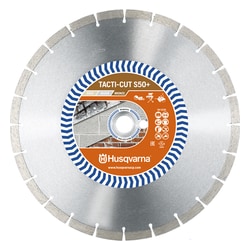
- Segment height: 12 mm
- Segment thickness: 4 mm
- Application: Pustak ceramiczny, beton komórkowy, pustak typu ytong
- Disc diameter: 650 mm
- Dedicated to the saw: Norton clipper jumbo 651
A diamond blade for concrete is a cutting tool whose segments or continuous rim are coated with sintered diamond grit set in a metal bond (the matrix) — diamond is the hardest abrasive there is, so it cuts concrete, reinforced concrete, paving blocks and stone that ordinary abrasive discs cannot get through. Mounted on an angle grinder, a cut-off saw or a petrol saw, it works wet and dry, with fraction-of-a-millimetre accuracy and a cutting rate several times higher than an abrasive disc. At NORWIT.PL you will find blades from Ø 115 to 500 mm with a 22.2 or 25.4 mm arbor — from small 125 mm discs for a grinder up to large Ø 500 mm blades for walk-behind floor saws.
We stock primarily Tyrolit blades, alongside the professional Cedima BET-GOLD and EC Diabolik ranges plus Nozar, Dr. Schulze and Altrad Belle discs. We organise the range by rim type: segmented blades for dry cutting, continuous (solid) blades for wet cutting, universal turbo blades and cup wheels for grinding concrete surfaces. This category belongs to the diamond blades section; related materials are served by blades for fresh concrete and for asphalt. Below we explain how to match the blade type, bond hardness and diameter to concrete, reinforced concrete and your specific machine.
Diamond blade for concrete — construction and how it cuts
A diamond blade is a steel disc (the core) with a working part fixed around its edge — either segments or a continuous rim made of sintered diamond crystals held in a metal bond called the matrix. During cutting the diamond does not "saw" the concrete like a toothed blade; it grinds it: exposed crystals scrape particles off the material, and once a grain wears down it breaks out and reveals the next one. That is why the tool life and cutting speed are decided not by the diamond alone, but by the hardness of the bond matched to the material being cut.
Medium-hard concrete calls for a hard bond, while heavily reinforced concrete and highly abrasive materials (fresh concrete, asphalt) call for a soft bond that exposes fresh crystals faster. The NORWIT.PL range is dominated by Tyrolit blades and the professional Cedima BET-GOLD and EC Diabolik series. Below we explain the differences between blade types, how to match the diameter to the machine, and how to pick the bond hardness for reinforced concrete.
Types of diamond blades for concrete — segmented, continuous, turbo and cup
The shape of the rim decides whether a blade cuts dry, wet, and how clean an edge it leaves. For concrete and reinforced concrete a segmented blade is the usual choice; continuous and cup wheels have narrower, specialised uses.
| Blade type | Rim design | Cutting | Typical use |
|---|---|---|---|
| Segmented | rim split into segments separated by cooling gullets | dry and wet | concrete, reinforced concrete, masonry, paving, stone — the fastest cutting |
| Continuous (solid) | unbroken rim with no gullets | mainly wet | porcelain stoneware, ceramic tiles, clinker — clean, chip-free edge |
| Turbo | continuous rim with a wavy or serrated edge | dry and wet | universal: concrete, brick, stone — a speed/finish compromise |
| Cup wheel | cup shape with segments on the face | grinding (dry) | grinding and levelling concrete surfaces, removing coatings and adhesives |
This category is part of the diamond blades section, where you will also find blades for other materials: to cut a slab right after pouring — blades for fresh concrete (as early as 1–2 h after casting), for bituminous surfaces — blades for asphalt, and for tiling — continuous blades for ceramic tiles. Choosing the right type often matters more than the brand: a concrete blade run on asphalt will glaze over and stop cutting.
Choosing the blade diameter for your machine — Ø 125, 230, 350 and 500 mm
The blade diameter has to match the machine and it sets the maximum cutting depth (roughly half the difference between the blade diameter and the guard flange). The arbor is matched to the spindle: smaller blades use 22.2 mm (angle grinders), larger ones use 25.4 mm (cut-off saws and floor saws), and reducing rings let you adapt between the two.
| Diameter | Machine | Arbor | Cutting depth | Use |
|---|---|---|---|---|
| Ø 115–125 mm | small angle grinder | 22.2 mm | approx. 30–38 mm | chases, socket boxes, cutting tiles and paving |
| Ø 230 mm | large angle grinder | 22.2 mm | approx. 65–70 mm | concrete, reinforced concrete, blocks — the most popular size |
| Ø 300–350 mm | table / petrol cut-off saw | 25.4 mm | approx. 100–125 mm | slabs, kerbs, deep floor cuts |
| Ø 400–500 mm | walk-behind floor saw | 25.4 mm | approx. 145–190 mm | expansion joints, road cutting, industrial slabs |
The Ø 115–500 mm span covers the entire NORWIT.PL range — Ø 350–500 mm blades from Tyrolit, Cedima and Altrad Belle mount on saws, while for hand-held grinder work Ø 125 or 230 mm is usually enough.
Reinforced concrete and bond hardness
Reinforced concrete (concrete cast around steel bars) is harder to cut than plain concrete: the steel it meets clogs the bond and "polishes" the segment. The key is choosing the matrix hardness and the diamond concentration correctly. The rule is counter-intuitive: the harder and more heavily reinforced the material, the softer the bond, because a soft matrix wears away faster and keeps exposing fresh, sharp crystals.
| Material | Bond (matrix) | Recommended blade |
|---|---|---|
| Fresh concrete, asphalt, abrasive materials | soft | segmented soft-bond blade, wet cutting |
| Reinforced concrete, hard concrete with heavy rebar | soft / medium | premium segmented blade with high diamond concentration, e.g. Cedima BET-GOLD PLUS |
| Ordinary concrete, masonry, blocks | medium | universal segmented or turbo blade |
| Paving blocks, clinker, hard stone | hard | segmented or turbo blade with a hard bond |
For regular cutting of reinforced concrete it pays to spend more on a professional blade — a segment that is usually 10–12 mm tall gives many times the working life of a hobby blade with a segment of about 7 mm. Water cooling further extends life and reduces the silica dust that is dangerous to the respiratory system.
Brands and models of concrete blades at NORWIT.PL
We focus on the professional range that is missing from offers dominated by DIY-store blades. Above all we carry Tyrolit blades — an Austrian maker with a line-up from universal to premium reinforced-concrete blades, in the Ø 115–500 mm span for dry and wet cutting. These are complemented by the professional Cedima series: the segmented BET-GOLD PLUS with a high diamond concentration (e.g. Ø 230 mm) for reinforced concrete, and the high-output EC Diabolik for cut-off saws (e.g. Ø 350 mm, 25.4 mm arbor). You will also find Nozar blades for masonry and hollow blocks, specialist Dr. Schulze blades for abrasive materials, and Altrad Belle Ø 350–500 mm blades for Belle cutting machines.
If you are not sure which blade to order for your machine and material, get in touch through the contact form — we will help you match the diameter, arbor, rim type and bond hardness.
Frequently asked questions about diamond blades for concrete
Which diamond blade is best for concrete?
A segmented blade is the best choice for concrete — a rim with cooling gullets cuts fast, both dry and wet. For ordinary concrete and masonry a Ø 125 or 230 mm on a grinder is enough; for floors, a Ø 300–500 mm on a saw. Professional Tyrolit and Cedima BET-GOLD ranges have a 10–12 mm segment and cut longer than hobby blades with a 7 mm segment.
What is the difference between a segmented and a continuous (solid) blade for concrete?
A segmented blade has a rim split by gullets that cool it and clear the dust — it cuts concrete and reinforced concrete fast, dry and wet, but leaves a rough edge. A continuous (solid) blade has an unbroken rim: it cuts more slowly, mainly wet, but gives a clean, chip-free edge (porcelain, tiles, clinker). For concrete and paving pick a segmented Ø 125–230 mm or Ø 350–500 mm.
Which diamond blade for reinforced concrete?
Reinforced concrete is concrete strengthened with steel bars, so it needs a segmented blade with a soft or medium bond and a high diamond concentration — a soft matrix exposes fresh crystals faster after meeting the steel. The most popular size is Ø 230 mm (about 65 mm depth); for a saw, Ø 350–500 mm. We recommend premium ranges such as Cedima BET-GOLD PLUS Ø 230 mm or Tyrolit, and cutting wet.
Which diamond blade should I pick for Ø 125, 230, 350 or 500 mm?
The diameter has to fit the machine and it sets the cutting depth. Ø 125 mm (22.2 mm arbor) cuts about 30–38 mm — chases and socket boxes. Ø 230 mm (22.2 mm) suits a large grinder and about 65 mm — the most popular size for concrete and reinforced concrete. Ø 350 mm (25.4 mm arbor) on a saw cuts about 120 mm, and Ø 500 mm about 190 mm on a walk-behind floor saw.
Can you cut wet and dry with a concrete diamond blade?
Most segmented and turbo concrete blades cut both wet and dry, while continuous (solid) blades work almost exclusively wet. Wet cutting cools the blade, binds the silica dust and gives a cleaner edge — recommended at Ø 300–500 mm and for continuous work. Dry, cut in short bursts with a Ø 125–230 mm grinder, pausing every few dozen seconds and wearing a mask.
Which diamond blade for grinding concrete (a cup wheel)?
For grinding rather than cutting you use a cup wheel — a cup shape with diamond segments on the face that removes high spots, coatings and adhesives from a concrete surface. The usual choice is Ø 125 mm (22.2 mm arbor) on an angle grinder; single- and double-row versions differ in aggressiveness. It makes no through-cuts — it only works the plane, dry and with a mask on.
How much does a diamond blade for concrete cost?
The price depends on the diameter and the class of blade. Small Ø 115–125 mm discs start from a few euros, a Ø 230 mm for concrete and reinforced concrete usually runs from a dozen up to several dozen euros, and professional Ø 350–500 mm blades from around a few dozen to a few hundred euros. What counts is the cost per running metre: a premium blade with a 10–12 mm segment cuts many times more than a cheap 7 mm one.
How long does a diamond blade last when cutting concrete?
Service life depends on the blade class, the hardness of the concrete and cooling — a professional segmented blade cuts from several hundred to a few thousand running metres, many times more than an abrasive disc that wears out after a few dozen metres. Segment height is decisive: 10–12 mm lasts longer than 7 mm. Dry cutting without breaks, excessive pressure and too-low RPM all shorten life.
Can a concrete blade cut asphalt, paving blocks or rebar?
A concrete blade cuts paving blocks and vibro-pressed concrete very well. It cuts the reinforcing steel in reinforced concrete "in passing", but for thick bars use a metal-cutting blade. Do not cut asphalt with it — the abrasive bituminous surface clogs the hard bond and the blade glazes over. For asphalt pick a dedicated soft-bond blade Ø 350–500 mm (25.4 mm arbor) from the diamond blades for asphalt category.
What arbor (22.2 or 25.4 mm) does a concrete diamond blade have?
The arbor is matched to the spindle. Ø 115–230 mm blades for angle grinders usually have a 22.2 mm bore, while Ø 300–500 mm blades for saws use 25.4 mm. Many blades have a 25.4 mm bore with a reducing ring down to 20 or 22.2 mm. Before buying, check the spindle diameter, the maximum permitted blade diameter and the maximum RPM printed on the blade — never exceed them.
Why buy a diamond blade for concrete at NORWIT.PL
We focus on a professional cutting range: the offer includes blades from Tyrolit, Cedima, Nozar, Dr. Schulze and Altrad Belle across the full Ø 115–500 mm span — from small grinder discs to large blades for walk-behind floor saws. We advise on matching the rim type and bond hardness to your exact material: plain concrete, reinforced concrete, paving, or cup-wheel grinding. This category is part of the diamond blades section, alongside blades for fresh concrete, for asphalt and for ceramic tiles. We ship online nationwide.