


-
-
Concrete
-
- Concreting
- Concrete Vibrators
- Complete 230 V Mechanical Vibrators
- Vibrator Heads
- Vibrator Shafts
- Vibrator Motors
- Concrete Vibrators 42 V | 200 Hz
- Mechanical Vibrators 230 V
- 42 V | 200 Hz Head and Shaft
- 230 V Concrete Vibrators
- Vibrators With Built-In 230 V | 200 Hz Converter
- 42 V | 200 Hz Converters
- Combustion Vibrators
- Pneumatic Vibrators
- External Vibrators
- Power Trowels
- Vibratory Screeds
- Concrete Hand Tools
- Concrete Vibrators
-
-
-
-
-
- Walk-Behind Combustion Power Trowels
-
-
-

Heating and cooling
-
Generators
-
Earthworks
-
Industrial vacuums
-
Finishing
-
Pumps
-
Measurement
-
BLOG & Tips
-
Promotions
Kategorie 16 kategorii
Kategorie
-
- Levels and Measurements
- Soil Compactors
- Tamping Rammers - Jumping Jacks
- Single Direction Vibratory Plates
- Reversible Vibratory Plates
- Rollers
- 100 kg Soil Compactors
- 200 kg Soil Compactors
- 300 kg Soil Compactors
- 400 kg Soil Compactors
- 500 kg Soil Compactors
- 600 kg Soil Compactors
- 700 kg Soil Compactors
- 800 kg Soil Compactors
- Wacker Neuson Compactors
- Accessories for Compactors
- Bomag Compactors
- Altrad Belle Compactors
- Paver Compactors
- Swepac Compactors
- Power Generators
- Concreting
- Concrete Vibrators
- Complete 230 V Mechanical Vibrators
- Vibrator Heads
- Vibrator Shafts
- Vibrator Motors
- Concrete Vibrators 42 V | 200 Hz
- Mechanical Vibrators 230 V
- 42 V | 200 Hz Head and Shaft
- 230 V Concrete Vibrators
- Vibrators With Built-In 230 V | 200 Hz Converter
- 42 V | 200 Hz Converters
- Combustion Vibrators
- Pneumatic Vibrators
- External Vibrators
- Vibratory Screeds
- Power Trowels
- Concrete Hand Tools
- Concrete Vibrators
- Pumps and Motor Pumps
- Cutting, Drilling and Grinding
- Heating and Cooling
- Wood Table Saws
- Painting and Plastering
- Combustion Engines
- Washing and Vacuuming
- Cement Mixers
- Paving Tools
- Wheelbarrows and Track Dumpers
- Demolition and Hammers
- Sales
- Levels and Measurements
Brak kategorii pasujących do wyszukiwania.
Diamond Blades for Ceramic Tiles
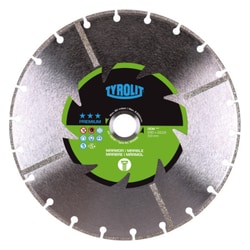
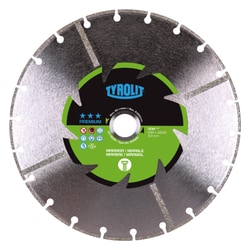
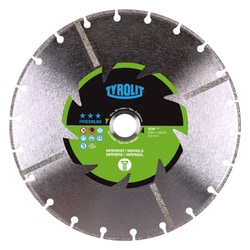
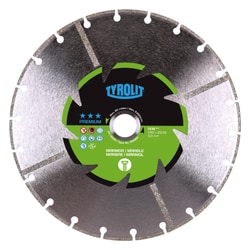
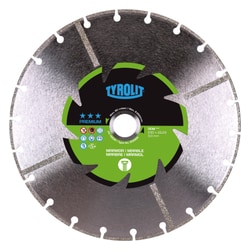
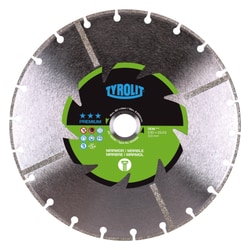
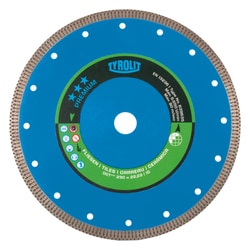
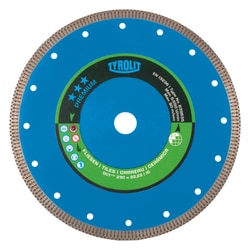
TYROLIT PREMIUM DCT 125 X 1.2 MM Diamond Disc
639560zł115.62 tax incl. 94,00 zł tax excl.View technical data Zobacz szczegóły
- Producent: Tyrolit
- Disc bore diameter: 22,23 mm
- Segment height: 10 mm
- Geometry: 1 A1r
- Type of cooling: Dry
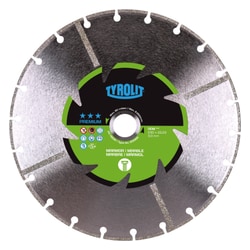
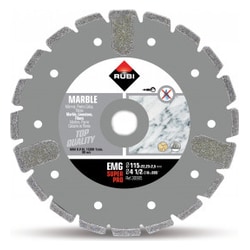
Diamond Disc For Marble, GALVANIC Edging EMG 115 SUPERPRO
30995zł179.58 tax incl. 146,00 zł tax excl.View technical data Zobacz szczegóły
- Outer diameter: 115 mm
- Inside diameter: 22,2 mm
- Disc edge thickness: 2,5 mm
- Height of the disc rim: 3 mm
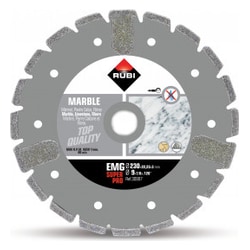
Diamond Disc For Marble, GALVANIC Edging EMG 230 SUPERPRO
30997zł353.01 tax incl. 287,00 zł tax excl.View technical data Zobacz szczegóły
- Outer diameter: 230 mm
- Inside diameter: 22,2 mm
- Disc edge thickness: 3 mm
- Height of the disc rim: 3 mm
TYROLIT PREMIUM DCM 115 X 2.5 MM Diamond Disc
315968zł147.60 tax incl. 120,00 zł tax excl.View technical data Zobacz szczegóły
- Producent: Tyrolit
- Disc bore diameter: 22,23 mm
- Segment height: 2 mm
- Geometry: Uc3
- Type of cooling: Dry
TYROLIT PREMIUM DCM 125 X 2.5 MM Diamond Disc
315967zł161.13 tax incl. 131,00 zł tax excl.View technical data Zobacz szczegóły
- Producent: Tyrolit
- Disc bore diameter: 22,23 mm
- Segment height: 2 mm
- Geometry: Uc3
- Type of cooling: Dry
TYROLIT PREMIUM DCM 150 X 3 MM Diamond Disc
547611zł241.08 tax incl. 196,00 zł tax excl.View technical data Zobacz szczegóły
- Producent: Tyrolit
- Disc bore diameter: 22,23 mm
- Segment height: 2 mm
- Geometry: Uc3
- Type of cooling: Dry
TYROLIT PREMIUM DCM 180 X 3 MM Diamond Disc
315966zł241.08 tax incl. 196,00 zł tax excl.View technical data Zobacz szczegóły
- Producent: Tyrolit
- Disc bore diameter: 22,23 mm
- Segment height: 2 mm
- Geometry: Uc3
- Type of cooling: Dry
TYROLIT PREMIUM DCM 230 X 3 MM Diamond Disc
315965zł293.97 tax incl. 239,00 zł tax excl.View technical data Zobacz szczegóły
- Producent: Tyrolit
- Disc bore diameter: 22,23 mm
- Segment height: 2 mm
- Geometry: Uc3
- Type of cooling: Dry
TYROLIT PREMIUM DCM 350 X 3 MM X 20 MM Diamond Disc
490961zł535.05 tax incl. 435,00 zł tax excl.View technical data Zobacz szczegóły
- Producent: Tyrolit
- Disc bore diameter: 20 mm
- Segment height: 2,5 mm
- Geometry: Uc3
- Type of cooling: Dry
TYROLIT PREMIUM DCM 350 X 3 MM X 25,4 MM Diamond Disc
490962zł543.66 tax incl. 442,00 zł tax excl.View technical data Zobacz szczegóły
- Producent: Tyrolit
- Disc bore diameter: 25,4 mm
- Segment height: 2,5 mm
- Geometry: Uc3
- Type of cooling: Dry
TYROLIT PREMIUM DCT 115 X 1.2 MM Diamond Disc
639559zł99.63 tax incl. 81,00 zł tax excl.View technical data Zobacz szczegóły
- Producent: Tyrolit
- Disc bore diameter: 22,23 mm
- Segment height: 10 mm
- Geometry: 1 A1r
- Type of cooling: Dry
TYROLIT PREMIUM DCT 180 X 1.4 MM (35 MM) Diamond Disc
639566zł193.11 tax incl. 157,00 zł tax excl.View technical data Zobacz szczegóły
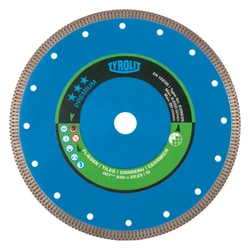
- Producent: Tyrolit
- Disc bore diameter: 35 mm
- Segment height: 10 mm
- Geometry: 1 A1r
- Type of cooling: Dry
A diamond blade for ceramic tiles is an abrasive tool for cutting wall tiles, porcelain stoneware and clinker: a working rim — segments of diamond grains set in a metal bond (matrix) — sits around the edge of a steel core and, spinning at several to over ten thousand rpm, grinds away the hard, brittle material instead of "sawing" it. A continuous rim (smooth, unbroken) cuts most precisely and does not chip the glazed surface of a tile, while a turbo rim — wavy, with cooling channels — handles hard technical porcelain stoneware faster.
At NORWIT.PL we stock diamond blades for ceramic tiles and porcelain stoneware primarily from Tyrolit, plus Nozar — in sizes from Ø 110 to 300 mm with 22.2 mm and 25.4 mm mounting bores, matched to angle grinders and tile saws. This category belongs to the diamond blades department, alongside blades for concrete and asphalt. Below we explain how to match rim type, diameter and bore to the material and the machine, and Tyrolit and Nozar blades can be ordered online, with nationwide shipping.
Tyrolit and Nozar diamond blades for ceramic tiles — how diamond cutting works
A diamond blade for ceramic tiles cuts by abrasion, not by classic blade-edge cutting: a working rim of sintered diamond grains set in a metal bond called a matrix sits around the edge of a steel core. The exposed diamond crystals grind away particles of the hard, glazed surface, and as grains wear out they break away to expose fresh ones underneath — which is why the blade never dulls the way a saw blade does. The maximum circumferential speed of a diamond blade is usually around 80 m/s, which caps a Ø 125 mm blade at roughly 12,200 rpm and a Ø 230 mm blade at roughly 6,600 rpm.
At NORWIT.PL we stock diamond blades for ceramic tiles and porcelain stoneware primarily from Tyrolit, plus Nozar (Nozar) — in continuous-rim and turbo-rim versions, in sizes from Ø 110 to 300 mm. This category is part of the diamond blades department. Below we explain how to match rim type, diameter and mounting bore to the material and to your cutting machine.
Types of blades for tiles and porcelain stoneware — continuous, turbo and segmented rim
Cut quality and edge durability on a tile depend on the shape of the rim. A continuous rim has a smooth, unbroken diamond edge — it cuts most finely and does not chip a glazed surface, which makes it the default choice for wall tiles and angled cuts. A turbo rim has a wavy edge with cooling channels — it cuts faster at the cost of a slightly rougher edge, so it suits hard technical porcelain stoneware and clinker. A segmented rim, with gaps between diamond segments, is built for concrete, brick and building stone — on tiles it leaves a ragged edge and is not recommended here.
| Rim type | Rim characteristics | Application |
|---|---|---|
| Continuous (full) | smooth, unbroken diamond edge | ceramic tiles, wall tiles, angled cuts, natural stone |
| Turbo | wavy edge with cooling channels | glazed and technical porcelain stoneware, clinker, faster cutting |
| Segmented | gaps between diamond segments | concrete, brick, building stone — outside this category |
Blades for materials other than ceramic cladding — segmented blades for concrete, brick and stone — are in the parent diamond blades category, together with blades for fresh concrete and asphalt.
Choosing blade diameter (Ø) and mounting bore for your cutter
Blade diameter is matched to the maximum size allowed by the cutting machine, and the mounting bore to the machine's spindle. The most common bores are 22.2 mm (angle grinders, hand-held tile cutters) and 25.4 mm (tile saws); a reducing ring bridges a mismatch between the two.
| Diameter (Ø) | Mounting bore | Typical use |
|---|---|---|
| 110–125 mm | 22.2 mm | angle grinder, detail and edge cuts |
| 150–180 mm | 22.2 mm | hand-held tile cutters |
| 200–230 mm | 22.2 or 25.4 mm | tile saws, larger formats |
| 250–300 mm | 25.4 mm | tile and bridge saws for large-format slabs |
An oversized blade can exceed the machine's maximum allowable circumferential speed, so size is always checked against the cutter's manual, not just against the mounting bore.
Wet or dry cutting and matching the blade to the material
Ceramic tile (terracotta, wall tile) has a soft, glazed surface — a fine-grit continuous rim is enough for it. Porcelain stoneware, fired at up to around 1,200°C, has a dense structure (water absorption below 0.5%) with hardness close to granite and needs a continuous or turbo rim with a harder bond, while clinker — more abrasive and coarser-grained — responds best to a turbo rim, which sheds heat faster during longer cuts.
Wet cutting, with a steady flow of water cooling the rim, gives a cleaner edge and binds dust instead of releasing it into the air — the standard method on tile and porcelain stoneware saws. Dry cutting with an angle grinder suits short, on-site cuts, but needs a break every 20–30 seconds of work to avoid overheating the diamond segment above around 600°C, which shortens its life and can separate the bond from the core. Universal Tyrolit and Nozar blades can be used with both methods unless the label states otherwise.
Frequently asked questions about diamond blades for ceramic tiles
What diamond blade is right for cutting ceramic tiles?
For ceramic tiles a continuous-rim diamond blade (with a smooth, unbroken edge) works best — its fine diamond grit cuts the glazed surface without chipping the edge. Typical diameters run Ø 110–230 mm, with a 22.2 mm or 25.4 mm mounting bore matched to an angle grinder or a tile saw. At NORWIT.PL you will find blades of this type from Tyrolit and Nozar.
What is the difference between a blade for ceramic tiles and a blade for porcelain stoneware?
A blade for ceramic tiles usually has a finer diamond grit and a smooth, continuous rim that protects the brittle, glazed surface from chipping. A blade for porcelain stoneware — fired at up to around 1,200°C and close to granite in hardness — more often has a turbo rim with cooling channels and a harder diamond bond that better withstands higher abrasiveness. Both versions come in the same Ø 115–230 mm sizes, so the choice depends on the material, not the machine.
How do I match blade diameter to my tile cutter?
Blade diameter is matched to the maximum diameter allowed by the cutter manufacturer and to the mounting bore of the spindle — most often 22.2 mm on angle grinders and 25.4 mm on tile saws. Small formats and detail cuts are handled comfortably with a Ø 110–125 mm blade, medium tiles and porcelain stoneware with Ø 180–230 mm, and large-format slabs need saws taking Ø 250–300 mm blades. An oversized blade can exceed the machine's maximum allowable circumferential speed.
Can a blade for ceramic tiles also cut porcelain stoneware and clinker?
A continuous-rim blade for ceramic tiles can cut porcelain stoneware and clinker, but on harder materials it wears faster than a dedicated blade — a fine-grit segment wears down 2–3 times faster on full-body technical porcelain stoneware than on wall tile. For regular cutting of porcelain stoneware and clinker, a turbo blade with a harder bond, in the same Ø 115–230 mm sizes, performs better.
Should ceramic tiles be cut wet or dry with a diamond blade?
Wet cutting, with a flow of water cooling the rim, gives a cleaner edge and less dust, which makes it the standard on tile and porcelain stoneware saws. Dry cutting with an angle grinder suits short, single cuts on site, but needs a break every 20–30 seconds of work to avoid overheating the diamond segment above around 600°C, which shortens its life. Universal Tyrolit and Nozar blades can be used with both methods unless the manufacturer states otherwise.
How long does a diamond blade for tiles last with frequent use?
Durability depends on the hardness of the material being cut and the height of the diamond segment — with regular cutting of wall tile and porcelain stoneware, one continuous blade of Ø 125–230 mm typically lasts from around 30 to more than 100 linear metres of cutting before the segment wears out. Dry work without cooling breaks can cut life in half, because overheating the rim above 600°C separates the bond from the core. Regularly dressing the blade with an abrasive block restores cutting ability once the diamond glazes over with melted material.
What is the difference between Tyrolit and Nozar blades for ceramic tiles?
Tyrolit is an Austrian manufacturer of diamond tools with a range of tile and porcelain stoneware blades in Ø 110–300 mm sizes and 22.2 mm or 25.4 mm bores, valued for consistent bond quality and precise balancing that limits vibration during cutting. Nozar, a Spanish manufacturer, offers blades with similar technical parameters in the same sizes, usually at a lower price point. Both brands come in continuous-rim and turbo-rim versions, so the choice depends more on budget than on quality differences.
How do I mount a diamond blade correctly on a tile cutter?
Before mounting, check that the blade's bore (usually 22.2 mm or 25.4 mm) fits the machine's spindle — bridge a mismatch with a reducing ring, never force the bore wider. The blade is fitted following the rotation-direction arrow shown on the label, tightening the mounting nut with a wrench, not by hand. Before the first cut it is worth checking the blade's lateral runout (it should not exceed around 0.5–1 mm) — excessive runout causes an uneven cut and faster segment wear.
Why buy diamond blades for tiles at NORWIT.PL
We stock diamond blades for ceramic tiles and porcelain stoneware primarily from Tyrolit, plus Nozar — in continuous-rim and turbo-rim versions. We advise on choosing rim type and diameter for the material (wall tile, porcelain stoneware, clinker) and for your cutting machine. This category is part of the diamond blades department, alongside blades for concrete and for fresh concrete. We ship orders online, nationwide.