


-
-
Concrete
-
- Concreting
- Concrete Vibrators
- Complete 230 V Mechanical Vibrators
- Vibrator Heads
- Vibrator Shafts
- Vibrator Motors
- Concrete Vibrators 42 V | 200 Hz
- Mechanical Vibrators 230 V
- 42 V | 200 Hz Head and Shaft
- 230 V Concrete Vibrators
- Vibrators With Built-In 230 V | 200 Hz Converter
- 42 V | 200 Hz Converters
- Combustion Vibrators
- Pneumatic Vibrators
- External Vibrators
- Power Trowels
- Vibratory Screeds
- Concrete Hand Tools
- Concrete Vibrators
-
-
-
-
-
- Walk-Behind Combustion Power Trowels
-
-
-
Heating and cooling
-
Generators
-
Earthworks
-
Industrial vacuums
-
Finishing
-
Pumps
-
Measurement
-
BLOG & Tips
-
Promotions
Kategorie 16 kategorii
Kategorie
-
- Levels and Measurements
- Soil Compactors
- Tamping Rammers - Jumping Jacks
- Single Direction Vibratory Plates
- Reversible Vibratory Plates
- Rollers
- 100 kg Soil Compactors
- 200 kg Soil Compactors
- 300 kg Soil Compactors
- 400 kg Soil Compactors
- 500 kg Soil Compactors
- 600 kg Soil Compactors
- 700 kg Soil Compactors
- 800 kg Soil Compactors
- Wacker Neuson Compactors
- Accessories for Compactors
- Bomag Compactors
- Altrad Belle Compactors
- Paver Compactors
- Swepac Compactors
- Power Generators
- Concreting
- Concrete Vibrators
- Complete 230 V Mechanical Vibrators
- Vibrator Heads
- Vibrator Shafts
- Vibrator Motors
- Concrete Vibrators 42 V | 200 Hz
- Mechanical Vibrators 230 V
- 42 V | 200 Hz Head and Shaft
- 230 V Concrete Vibrators
- Vibrators With Built-In 230 V | 200 Hz Converter
- 42 V | 200 Hz Converters
- Combustion Vibrators
- Pneumatic Vibrators
- External Vibrators
- Vibratory Screeds
- Power Trowels
- Concrete Hand Tools
- Concrete Vibrators
- Pumps and Motor Pumps
- Cutting, Drilling and Grinding
- Heating and Cooling
- Wood Table Saws
- Painting and Plastering
- Combustion Engines
- Washing and Vacuuming
- Cement Mixers
- Paving Tools
- Wheelbarrows and Track Dumpers
- Demolition and Hammers
- Sales
- Levels and Measurements
Brak kategorii pasujących do wyszukiwania.
Diamond Blades for Silicate (Silka)
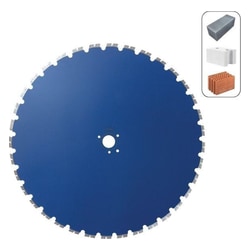
Toolsa R&W 650 Diamond Blade for Porotherm and Sand-Lime Blocks
TARW650zł1,217.70 tax incl. 990,00 zł tax excl.View technical data Zobacz szczegóły
- Disc bore diameter: 60 mm
- Segment height: 12 mm
- Segment thickness: 4 mm
- Disc diameter: 650 mm
- Destination: Porotherm i Silikat
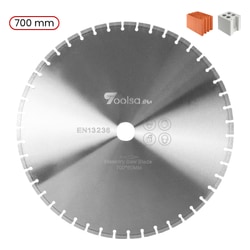
Toolsa R&W 700 Diamond Blade for Porotherm and Sand-Lime Blocks
TARW700zł1,340.70 tax incl. 1 090,00 zł tax excl.View technical data Zobacz szczegóły
- Disc bore diameter: 60 mm
- Segment height: 12 mm
- Segment thickness: 4 mm
- Disc diameter: 700 mm
- Destination: Porotherm i Silikat
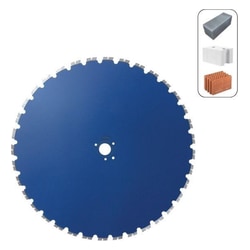
Jumbo 651 Norton Clipper Universal 650 12x4.4 Hollow Blade
70184647265promzł1,672.80 tax incl. 1 360,00 zł tax excl.View technical data Zobacz szczegóły
- Segment height: 12 mm
- Segment thickness: 4 mm
- Application: Pustak ceramiczny, beton komórkowy, pustak typu ytong
- Disc diameter: 650 mm
- Dedicated to the saw: Norton clipper jumbo 651
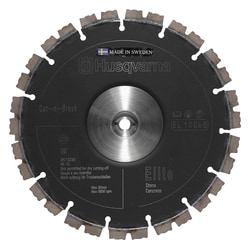
Zestaw 2 tarcz Cut-N-Break Husqvarna EL 10 CNB (230 mm)
597807901zł913.00 tax incl. 742,28 zł tax excl.View technical data Zobacz szczegóły
- Producent: Husqvarna
- Segment height: 11 mm
- Application: Beton utwardzany, beton zbrojony, cegła, dachówka, żeliwo sferoidalne, granit, marmur, kamień naturalny
- Disc diameter (mm): 230
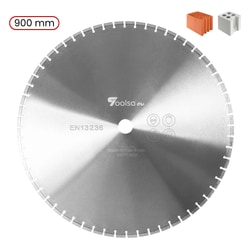
Toolsa R&W 900 Diamond Blade for Porotherm and Sand-Lime Blocks
TARW900zł2,089.77 tax incl. 1 699,00 zł tax excl.View technical data Zobacz szczegóły
- Disc bore diameter: 60 mm
- Segment height: 12 mm
- Segment thickness: 4 mm
- Disc diameter: 900 mm
- Destination: Porotherm i Silikat
Norton Clipper PRO Universal Laser Diamond Disc For CM 70 ALU 700
70184603061zł1,966.77 tax incl. 1 599,00 zł tax excl.View technical data Zobacz szczegóły
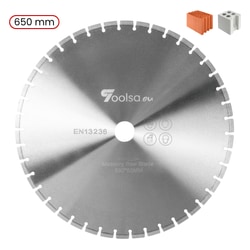
- Segment height: 12 mm
- Segment thickness: 4,4 mm
- Application: Pustak ceramiczny, beton komórkowy, pustak typu ytong
- Disc diameter: 700 mm
- Dedicated to the saw: Norton clipper cm 70 alu
A diamond blade for silicate is a cutting blade whose rim carries a sintered metal-diamond matrix matched to sand-lime masonry units — blocks pressed from quartz sand and lime, then cured with steam in an autoclave. Silicate cuts easily, yet it is extremely abrasive: the block behaves like compacted quartz and wears the bond away faster than concrete of a comparable grade. That is why silicate calls for blades with a harder bond, which releases the diamond grit more slowly, and an open rim geometry that clears the slurry and dust out of the cut.
At NORWIT.PL our silicate blades come mainly from Toolsa, alongside Norton Clipper and Husqvarna Construction. They are made with segmented and turbo rims, from 115 mm for an angle grinder up to 350–500 mm for table and block saws. Blades for other building materials sit in the diamond blades category. Below we explain how to match bond hardness, diameter and cooling method to sand-lime walls.
Why silicate needs a different blade
Autoclave curing at roughly 200 °C leaves units rated 15–25 MPa in compression, below structural concrete, yet they wear a blade far quicker. The culprit is quartz, rated 7 on the Mohs scale, which grinds down the bond holding the grit.
The rule runs against intuition: the more abrasive the material, the harder the bond. In reinforced concrete the diamond dulls faster than the matrix erodes, so a soft bond keeps exposing fresh grit. In silicate the matrix erodes by itself and grit drops out unused.
Silicate versus other masonry units
| Material | Abrasiveness | Recommended bond | Typical rim |
|---|---|---|---|
| Silicate (sand-lime blocks) | very high | hard | segmented, turbo |
| Ceramic block | medium | medium | continuous, turbo |
| Clinker brick | low | soft | continuous |
| Reinforced concrete | low to medium | soft | segmented |
In bond and rim geometry, a silicate blade sits closer to one for fresh concrete than to one for clinker brick.
Matching diameter to the block and the machine
Usable cutting depth is roughly 30–40 % of blade diameter; sand-lime units are 8–24 cm thick.
- 115–125 mm — angle grinder: chases and brick, 30–40 mm deep.
- 230 mm — large angle grinder: up to about 70 mm per pass.
- 300–350 mm — table saw: the everyday range.
- 400–500 mm — block saws: the thickest wall elements.
Arbor sizes are usually 22.2 mm on grinders and 25.4 mm on table saws. Heavy sections belong to masonry saws for 500–1000 mm blades.
Brands of silicate blades at NORWIT.PL
The core of the range comes from Toolsa, a line supplied exclusively through NORWIT.PL, backed by the versatile Norton Clipper range — including the PRO Uni series covering silicate — and by Husqvarna Construction. For other substrates take blades made for concrete or for ceramic blocks.
Diamond blades for silicate — common questions
Which diamond blade suits cutting sand-lime blocks?
Sand-lime blocks call for a hard bond and an open rim — segmented or turbo, with slots that evacuate dust. Quartz at 7 on the Mohs scale abrades the matrix faster than concrete, although the units reach only 15–25 MPa in compression. A hard bond releases the diamond more slowly, so a 10–12 mm segment survives many times more cuts. In practice, 115–125 mm blades serve angle grinders and 300–500 mm blades serve table and block saws.
Can a concrete blade be used on silicate?
Cutting silicate with a concrete blade works mechanically but rarely pays off. Its soft bond suits a material that blunts diamond, while in silicate the matrix wears away by itself and grit falls out unused — a 10 mm segment may be gone after a few dozen cuts through a 24 cm block instead of several hundred. The reverse fails too: a hard blade glazes over in reinforced concrete. On sites with both materials it pays to keep two dedicated blades, or one universal blade rated for silicate.
How do you cut silicate while limiting silica dust?
Dust control rests on two methods: wet cutting, or dry cutting with extraction at the blade. The block is mostly quartz, so each cut releases respirable crystalline silica, whose occupational exposure limit in Poland is 0.1 mg/m³ averaged over an 8-hour shift. A table saw with a water tray and pump kills dust at source and flushes slurry from the segments, extending blade life. Dry work needs a guard on a class H extractor and a half mask of at least FFP3.
What blade diameter cuts through a 24 cm silicate block in one pass?
Severing a 24 cm block in one pass takes a blade of around 500 mm, because usable depth runs to about 30–40 % of the diameter. A 350 mm blade delivers roughly 110–130 mm, so a 24 cm unit is turned over and finished with a second pass. A 400 mm blade cuts through elements up to some 15 cm. Check the largest diameter your guard accepts.
Why buy your silicate blade at NORWIT.PL
We match blades to the material and machine actually in use, not to the word "universal" on the label — tell us you cut sand-lime walls and we will advise on bond hardness and diameter for your saw. We also supply the saws for cutting masonry blocks.