


-
-
Concrete
-
- Concreting
- Concrete Vibrators
- Complete 230 V Mechanical Vibrators
- Vibrator Heads
- Vibrator Shafts
- Vibrator Motors
- Concrete Vibrators 42 V | 200 Hz
- Mechanical Vibrators 230 V
- 42 V | 200 Hz Head and Shaft
- 230 V Concrete Vibrators
- Vibrators With Built-In 230 V | 200 Hz Converter
- 42 V | 200 Hz Converters
- Combustion Vibrators
- Pneumatic Vibrators
- External Vibrators
- Power Trowels
- Vibratory Screeds
- Concrete Hand Tools
- Concrete Vibrators
-
-
-
-
-
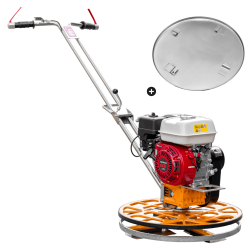
- Walk-Behind Combustion Power Trowels
-
-
-
Heating and cooling
-
Generators
-
Earthworks
-
Industrial vacuums
-
Finishing
-
Pumps
-
Measurement
-
BLOG & Tips
-
Promotions
Kategorie 16 kategorii
Kategorie
-
- Levels and Measurements
- Soil Compactors
- Tamping Rammers - Jumping Jacks
- Single Direction Vibratory Plates
- Reversible Vibratory Plates
- Rollers
- 100 kg Soil Compactors
- 200 kg Soil Compactors
- 300 kg Soil Compactors
- 400 kg Soil Compactors
- 500 kg Soil Compactors
- 600 kg Soil Compactors
- 700 kg Soil Compactors
- 800 kg Soil Compactors
- Wacker Neuson Compactors
- Accessories for Compactors
- Bomag Compactors
- Altrad Belle Compactors
- Paver Compactors
- Swepac Compactors
- Power Generators
- Concreting
- Concrete Vibrators
- Complete 230 V Mechanical Vibrators
- Vibrator Heads
- Vibrator Shafts
- Vibrator Motors
- Concrete Vibrators 42 V | 200 Hz
- Mechanical Vibrators 230 V
- 42 V | 200 Hz Head and Shaft
- 230 V Concrete Vibrators
- Vibrators With Built-In 230 V | 200 Hz Converter
- 42 V | 200 Hz Converters
- Combustion Vibrators
- Pneumatic Vibrators
- External Vibrators
- Vibratory Screeds
- Power Trowels
- Concrete Hand Tools
- Concrete Vibrators
- Pumps and Motor Pumps
- Cutting, Drilling and Grinding
- Heating and Cooling
- Wood Table Saws
- Painting and Plastering
- Combustion Engines
- Washing and Vacuuming
- Cement Mixers
- Paving Tools
- Wheelbarrows and Track Dumpers
- Demolition and Hammers
- Sales
- Levels and Measurements
Brak kategorii pasujących do wyszukiwania.
Electric Pumps
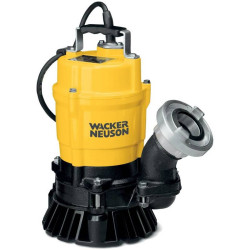
Wacker Neuson PST2 400 Submersible Sludge Pump
5000009173zł2,706.00 tax incl. 2 200,00 zł tax excl.View technical data Zobacz szczegóły
- Weight: 11,3 kg
- Dimensions: 265 x 185 x 330 mm
- Engine power: 0,4 kW / 0,5 KM
- Length of power cord_: 10 m
- Frequency: 50 Hz
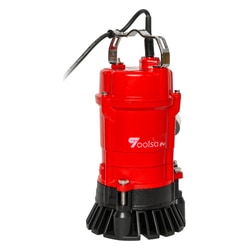
Toolsa TAX10-10-0.8 Submersible Sludge Pump
TAX10-10-0.8zł1,476.00 tax incl. 1 200,00 zł tax excl.View technical data Zobacz szczegóły
- Frequency: 50 Hz
- Voltage: 230 V
- Power: 0,8 kW
- Max. lifting height: 10 m
- Max capacity: 18 m³/h
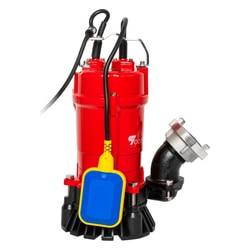
Toolsa TAX10-10-0.8F Submersible Sludge Pump With Float
TAX10-10-0.8Fzł1,599.00 tax incl. 1 300,00 zł tax excl.View technical data Zobacz szczegóły
- Frequency: 50 Hz
- Voltage: 230 V
- Power: 0,8 kW
- Max. lifting height: 5 m
- Max capacity: 18 m³/h
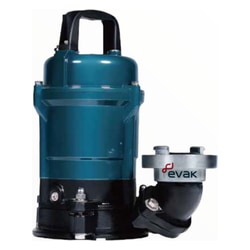
Evak 50EUSR5.05S Sludge Pump
50EUSR5.05Szł2,489.52 tax incl. 2 024,00 zł tax excl.View technical data Zobacz szczegóły
- Weight: 11,3 kg
- Dimensions: 310 x 243 mm
- Engine power: 0,37 kW / 0,5 KM
- Frequency: 50 Hz
- Voltage: 230 V
Toolsa TAX10-6-0.6 Submersible Sludge Pump With or Without Float
TAX10-6-0.6-TAX10-6-0.6Fzł1,228.77 tax incl. 999,00 zł tax excl.View technical data Zobacz szczegóły
- Frequency: 50 Hz
- Voltage: 230 V
- Power: 0,6 kW
- Max. lifting height: 6 m
- Max capacity: 18 m³/h
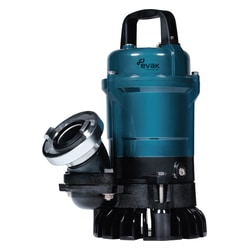
Submersible sludge pump 750W-EVAK 50 EUS-5.10S
50EUS-5.10Szł2,690.01 tax incl. 2 187,00 zł tax excl.View technical data Zobacz szczegóły
- Weight: 15 kg
- Engine power: 0,75 kW
- Length of power cord_: 10 m
- Frequency: 50 Hz
- Voltage: 230 V
Submersible sludge pump EVAK 50 EUS-5.05S
50 EUS-5.05Szł1,993.83 tax incl. 1 621,00 zł tax excl.View technical data Zobacz szczegóły
- Weight: 11,3 kg
- Engine power: 0,37 kW | 0,5 KM
- Frequency: 50 Hz
- Voltage: 230 V
- Rated current 1~: 2,6 A
Pompa samozasysająca przeponowa Caffini Libellula 1-3″
L13TAAARNVTMH61zł16,605.00 tax incl. 13 500,00 zł tax excl.View technical data Zobacz szczegóły
- Weight: 68 kg
- Startup: Manual
- Performance: 340 l/min
- Max. lifting height: 15 m
- Cooling: Powietrzem
Wacker Neuson PST2 400 Submersible Sludge Pump (with Float)
5000008789zł2,952.00 tax incl. 2 400,00 zł tax excl.View technical data Zobacz szczegóły
- Weight: 11,3 kg
- Dimensions: 265 x 185 x 330 mm
- Engine power: 0,4 kW / 0,5 KM
- Length of power cord_: 10 m
- Frequency: 50 Hz
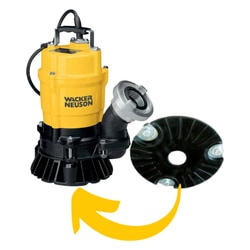
Wacker Neuson PST2 400 Flood Pump With Flood Plate
PST2400_ZALAzł3,037.01 tax incl. 2 469,11 zł tax excl.View technical data Zobacz szczegóły
- Weight: 11,3 kg
- Dimensions: 265 x 185 x 330 mm
- Engine power: 0,4 kW / 0,5 KM
- Length of power cord_: 10 m
- Frequency: 50 Hz
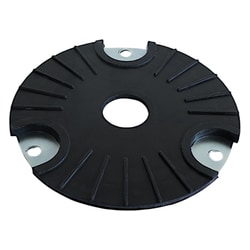
Plate For Suction From Flat Surfaces For PST2 Pumps
5000151148zł563.00 tax incl. 457,72 zł tax excl.No technical data available Zobacz szczegóły
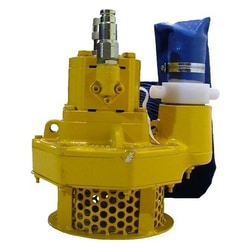
Altrad Belle Hydraulic Sludge Pump (midi/major)
2322-Szł7,195.50 tax incl. 5 850,00 zł tax excl.View technical data Zobacz szczegóły
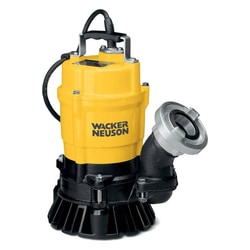
- Weight: 10 kg
- Dimensions: Brak danych
- Engine power: -
- Length of power cord_: -
- Frequency: -
An electric water pump is a device powered by 230V or 400V mains electricity that moves clean water, dirty water or thick sludge using an impeller driven by an electric motor. Unlike an engine-driven water pump, it runs quietly and produces no exhaust fumes, so it can be left permanently submerged in a well, septic tank or reservoir — though it still needs access to a power socket or a generator. Most models are submersible pumps — lowered directly into the liquid, rated IP68 and reaching a total head from a few metres up to several dozen metres.
At NORWIT.PL we stock electric water pumps primarily from Wacker Neuson, Enar and Master Heaters — from light-duty clean-water pumps, through dirty-water models that handle sand and small gravel, to abrasion-resistant electric sludge pumps. Below we explain the difference between clean-water, dirty-water and sludge pumps, how to choose the right power and voltage (230V or 400V) for your well depth and pumping distance, and when an engine-driven water pump is the better choice instead of an electric one.
Electric water pump — what it is
An electric water pump moves liquid with an impeller driven by a motor on a 230V or 400V supply. The most common design is the submersible pump — lowered directly into the water, rated IP68 (fully sealed for continuous submersion). Unlike an engine-driven water pump, it needs no refuelling, so it suits permanent installation in a well, septic tank or cellar.
The NORWIT.PL range includes electric water pumps primarily from Wacker Neuson, Enar and Master Heaters — from clean-water models to designs resistant to sand, silt and small stones. Equipment from these manufacturers is on the brand pages Wacker Neuson, Enar and Master Heaters. Below: the difference between clean-water, dirty-water and sludge pumps, and how to choose the right power and voltage for the job.
Types — clean-water, dirty-water and sludge pumps
Suitability depends on the size of solid particles the impeller can pass: around 5 mm in clean water, 20–35 mm in dirty water, up to 30–50 mm in electric sludge pumps with a wear-resistant cast-iron housing.
| Pump type | Solids / liquid | Typical use | Brands |
|---|---|---|---|
| Clean-water | clear liquid, particles up to approx. 5 mm | pools, rainwater tanks, groundwater | Wacker Neuson, Enar, Master Heaters |
| Dirty-water | sand and small gravel, particles 20–35 mm | excavations, flooded cellars, building sites | Wacker Neuson, Enar, Master Heaters |
| Sludge | thick suspension, silt, particles 30–50 mm | settling tanks, construction sludge, excavated soil | Wacker Neuson, Evak, Toolsa |
230V or 400V — sizing an electric water pump
Power is matched to the total head (the level difference between the water surface and the discharge point, from a few metres up to 40 m) and to the discharge hose length, since friction in the pipe reduces output with distance. Flow rate in this category ranges from around 100 to over 2,000 l/min.
| Power supply | Typical power | Application |
|---|---|---|
| 230V (single-phase) | 0.25–2.2 kW | home excavations, cellars, site power socket |
| 400V (three-phase) | 1.1–15 kW and higher | large excavations, high output, continuous duty |
A 400V supply is chosen above roughly 500–1,000 l/min, or when the site already has a three-phase connection — such a pump empties a deep excavation or large tank faster.
Electric pump or engine-driven pump — the differences
Both designs move water, but differ in power source. An electric pump needs a 230V or 400V supply, though it is quiet and stays permanently submerged. An engine-driven water pump has a petrol or diesel engine, works independently of the mains, but needs refuelling (a tank lasts 2–6 hours) and must run outdoors because of the exhaust.
| Feature | Electric pump | Engine-driven water pump |
|---|---|---|
| Submerged / permanent operation | yes, submersible pump rated IP68 | no, works above the water surface |
| Indoor use | unrestricted, no exhaust fumes | only with exhaust venting |
| Typical application | wells, septic tanks, cellars, continuous duty | excavations without power, floods, mobile jobs |
For a permanent well or pumping-station installation, choose an electric pump — it switches on automatically via a float switch. When there is no power on site, an engine-driven water pump is the better choice.
Dewatering excavations
A dirty-water or sludge pump is the standard tool for dewatering foundation excavations, cellars flooded after a failure, and for cleaning septic tanks and settling tanks. An impeller for 20–35 mm particles (up to 30–50 mm in the sludge version) handles the sand and silt carried by the water, and a total head of up to several dozen metres empties even a deep excavation. It starts manually or automatically via a float switch, which turns the pump on once the water reaches a set level.
After working in water with sand or sludge, flush the pump with clean water for 1–2 minutes before lifting it out. Every few dozen to a few hundred running hours, check the mechanical seal, float switch and power cable for wear, and store the pump in a dry place during longer standstills.
Frequently asked questions about electric water pumps
What is the difference between an electric water pump and an engine-driven water pump?
An electric water pump runs on 230V or 400V mains, is quiet, produces no exhaust fumes, and can stay permanently submerged in a well or tank. An engine-driven water pump has a petrol or diesel engine and works independently of the mains, but needs refuelling (a tank typically lasts 2–6 hours) and must run outdoors because of the exhaust. Mobile jobs without power favour the engine-driven pump; permanent installations favour the electric one.
What is the difference between a clean-water submersible pump and a dirty-water or sludge pump?
A clean-water submersible pump has a closed impeller and passes particles up to around 5 mm, so it suits pools and rainwater tanks. A dirty-water pump has an open or semi-open impeller and tolerates 20–35 mm particles — sand and small gravel from excavations. A sludge pump has a reinforced cast-iron housing and copes with thick suspension of up to 30–50 mm, including silt and small stones.
How do I size an electric water pump for the depth of the source and the pumping distance?
An electric pump's power is matched to the total head (the level difference between the water surface and the discharge point, from a few metres up to 40 m) and to the discharge hose length, since friction reduces output with distance. Shallow, short runs need only a 230V pump of 0.25–1.1 kW. Deep wells or a flow rate above 500–1,000 l/min require a 400V pump of several to over ten kW.
How much does a submersible electric pump for construction use cost?
A simple clean-water pump of up to 1 kW usually costs from a few hundred zloty net. Dirty-water pumps (20–35 mm solids passage) fall in the range of a few thousand zloty net, and rugged sludge pumps with a cast-iron housing cost a few to over ten thousand zloty net. Price rises with motor power and a 400V supply.
Will an electric dirty-water pump handle sand, sludge and small stones?
A dirty-water pump with an open or semi-open impeller passes 20–35 mm particles — sand, small gravel and small stones — without clogging. For thicker suspension and silt, a dedicated electric sludge pump with a cast-iron housing, tolerating up to 30–50 mm, is the better choice. Occasional sand suits a dirty-water pump; constant contact with thick sludge needs a sludge design.
What power supply do construction electric water pumps use — 230V or 400V?
Construction electric water pumps run on two supplies: single-phase 230V (0.25–2.2 kW) and three-phase 400V (1.1 kW up to over ten kW) for large excavations and continuous duty. 230V suits an ordinary site socket, while 400V is chosen above roughly 500–1,000 l/min or when the site has a three-phase connection.
How do I maintain an electric pump after working in contaminated water or sludge?
After working in water with sand or sludge, flush the pump with clean water for 1–2 minutes before lifting it out. Every few dozen to a few hundred running hours, check the mechanical seal, float switch and power cable for wear, and store the pump in a dry place. Sludge models with a cast-iron housing also need periodic checks of the impeller for wear.
Can an electric pump be used to dewater excavations and flooded cellars?
A dirty-water or sludge pump is the standard solution for dewatering foundation excavations and cellars flooded after a failure. An impeller for 20–35 mm particles (up to 30–50 mm, sludge version) handles sand and silt, and a total head of up to several dozen metres empties a deep excavation. The pump is submerged (rated IP68) and started with a float switch.
Why buy electric water pumps at NORWIT.PL
For electric water pumps, we rely on proven brands: Wacker Neuson, Enar and Master Heaters for clean and dirty water, plus Evak and Toolsa in electric sludge pumps. We advise on the right power, voltage (230V or 400V) and total head for the job. When mains independence matters, check our water pumps and engine-driven pumps. Orders are placed online, with nationwide shipping.