


-
-
Concrete
-
- Concreting
- Concrete Vibrators
- Complete 230 V Mechanical Vibrators
- Vibrator Heads
- Vibrator Shafts
- Vibrator Motors
- Concrete Vibrators 42 V | 200 Hz
- Mechanical Vibrators 230 V
- 42 V | 200 Hz Head and Shaft
- 230 V Concrete Vibrators
- Vibrators With Built-In 230 V | 200 Hz Converter
- 42 V | 200 Hz Converters
- Combustion Vibrators
- Pneumatic Vibrators
- External Vibrators
- Power Trowels
- Vibratory Screeds
- Concrete Hand Tools
- Concrete Vibrators
-
-
-
-
-
- Walk-Behind Combustion Power Trowels
-
-
-
Heating and cooling
-
Generators
-
Earthworks
-
Industrial vacuums
-
Finishing
-
Pumps
-
Measurement
-
BLOG & Tips
-
Promotions
Kategorie 16 kategorii
Kategorie
-
- Levels and Measurements
- Soil Compactors
- Tamping Rammers - Jumping Jacks
- Single Direction Vibratory Plates
- Reversible Vibratory Plates
- Rollers
- 100 kg Soil Compactors
- 200 kg Soil Compactors
- 300 kg Soil Compactors
- 400 kg Soil Compactors
- 500 kg Soil Compactors
- 600 kg Soil Compactors
- 700 kg Soil Compactors
- 800 kg Soil Compactors
- Wacker Neuson Compactors
- Accessories for Compactors
- Bomag Compactors
- Altrad Belle Compactors
- Paver Compactors
- Swepac Compactors
- Power Generators
- Concreting
- Concrete Vibrators
- Complete 230 V Mechanical Vibrators
- Vibrator Heads
- Vibrator Shafts
- Vibrator Motors
- Concrete Vibrators 42 V | 200 Hz
- Mechanical Vibrators 230 V
- 42 V | 200 Hz Head and Shaft
- 230 V Concrete Vibrators
- Vibrators With Built-In 230 V | 200 Hz Converter
- 42 V | 200 Hz Converters
- Combustion Vibrators
- Pneumatic Vibrators
- External Vibrators
- Vibratory Screeds
- Power Trowels
- Concrete Hand Tools
- Concrete Vibrators
- Pumps and Motor Pumps
- Cutting, Drilling and Grinding
- Heating and Cooling
- Wood Table Saws
- Painting and Plastering
- Combustion Engines
- Washing and Vacuuming
- Cement Mixers
- Paving Tools
- Wheelbarrows and Track Dumpers
- Demolition and Hammers
- Sales
- Levels and Measurements
Brak kategorii pasujących do wyszukiwania.
External Vibrators
Wacker Neuson AR 52/6/042 Trailing Vibrator
5100004253zł4,110.00 tax incl. 3 341,46 zł tax excl.View technical data Zobacz szczegóły
- Centrifugal force: 14,14 kN
- Weight: 18,6 kg
- Dimensions: 231 x 217 x 204 mm
- Engine power: 1,1 kW / 1,4 KM
- Current: 18,2 A (znamionowy)
Enar VEM 300 Traction Vibrator
242102zł2,151.00 tax incl. 1 748,78 zł tax excl.View technical data Zobacz szczegóły
- Centrifugal force: 0 - 2,9 kN
- Weight: 9 kg
- Vibration frequency: 3000 obr/min
- Power: 240 W
- Producent: Enar
Wacker Neuson AR 75/3/400 Trailing Vibrator
5000007799zł6,411.01 tax incl. 5 212,20 zł tax excl.View technical data Zobacz szczegóły
- Centrifugal force: 25,2 kN
- Weight: 33 kg
- Dimensions: 420 x 218 x 218 mm
- Engine power: 1,4 kW / 1,9 KM
- Current: 2,4 A (znamionowy)
Wacker Neuson PEV10 Pneumatic Traction Vibrator
PEV10zł1,958.16 tax incl. 1 592,00 zł tax excl.View technical data Zobacz szczegóły
- Centrifugal force: 10 kN
- Weight: 7,2 kg
- Dimensions: 162 x 190 x 139 mm
- Vibration frequency: 16 500/min
- Vacuum: 6 bar
Wacker Neuson PEV14 Pneumatic Traction Vibrator
PEV14zł1,958.16 tax incl. 1 592,00 zł tax excl.View technical data Zobacz szczegóły
- Centrifugal force: 14 kN
- Weight: 7,3 kg
- Dimensions: 162 x 190 x 139 mm
- Vibration frequency: 16 000/min
- Vacuum: 6 bar
Wacker Neuson PEV27 Pneumatic Traction Vibrator
PEV27zł1,958.16 tax incl. 1 592,00 zł tax excl.View technical data Zobacz szczegóły
- Centrifugal force: 27 kN
- Weight: 14 kg
- Dimensions: 180 x 242 x 215 mm
- Vibration frequency: 16 000/min
- Vacuum: 6 bar
Wacker Neuson PEV45 Pneumatic Traction Vibrator
PEV45zł1,958.16 tax incl. 1 592,00 zł tax excl.View technical data Zobacz szczegóły
- Centrifugal force: 45 kN
- Weight: 17 kg
- Dimensions: 180 x 242 x 215 mm
- Vibration frequency: 8500/min
- Vacuum: 6 bar
Wacker Neuson PEV60 Pneumatic Traction Vibrator
PEV60zł1,958.16 tax incl. 1 592,00 zł tax excl.View technical data Zobacz szczegóły
- Centrifugal force: 60 kN
- Weight: 16,3 kg
- Dimensions: 180 x 242 x 215 mm
- Vibration frequency: 14 500/min
- Vacuum: 6 bar
Enar VEM 100 Traction Vibrator
241807zł1,659.27 tax incl. 1 349,00 zł tax excl.View technical data Zobacz szczegóły
- Centrifugal force: 0 - 0,6 kN
- Weight: 4 kg
- Vibration frequency: 3000 obr/min
- Power: 105 W
- Producent: Enar
Enar VEM 150 Traction Vibrator
242202zł1,721.00 tax incl. 1 399,19 zł tax excl.View technical data Zobacz szczegóły
- Centrifugal force: 0 - 1,5 kN
- Weight: 6,5 kg
- Vibration frequency: 3000 obr/min
- Power: 190 W
- Producent: Enar
Enar VET 100 Traction Vibrator
241806c5zł1,351.77 tax incl. 1 099,00 zł tax excl.View technical data Zobacz szczegóły
- Centrifugal force: 0-980 N
- Weight: 5,1 kg
- Vibration frequency: 3000 obr/min
- Power: 130 W
- Producent: Enar
Enar VET150 Traction Vibrator
242201c5zł1,597.77 tax incl. 1 299,00 zł tax excl.View technical data Zobacz szczegóły
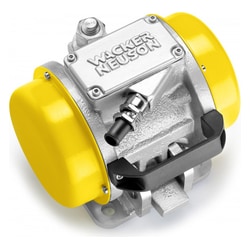
- Centrifugal force: 0 - 1835 kN
- Weight: 6,5 kg
- Vibration frequency: 3000 obr/min
- Power: 130 W
- Producent: Enar
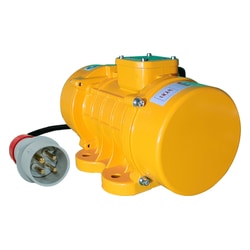
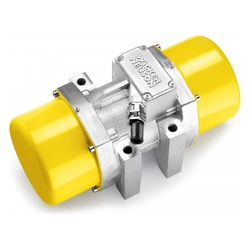
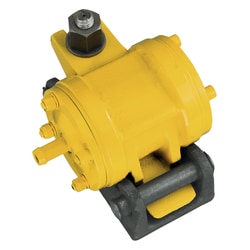
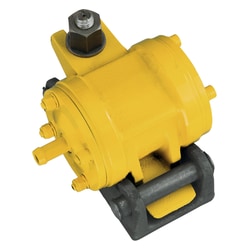
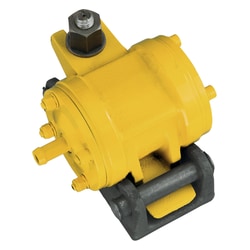
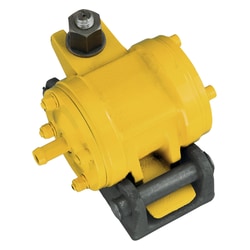
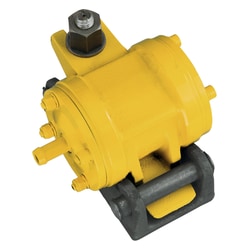
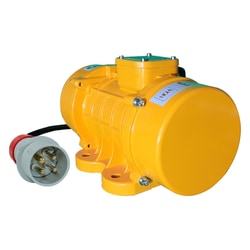
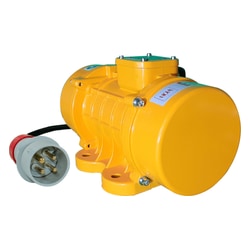
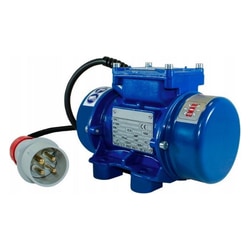
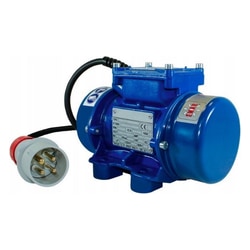
An external concrete vibrator (also called a trailer, form or attached vibrator) mounts on the outer wall of formwork or a steel precast mould and transmits the vibrations of an internal eccentric weight through the structure of the mould directly into the concrete mix — without immersing a head in the concrete, as a poker vibrator does. A pneumatic drive (compressed air, working pressure of around 5–6 bar) or an electric drive (a motor powered from a 230 V or 400 V mains supply) sets the mould vibrating at high frequency, driving out trapped air and compacting the mix even in densely reinforced elements where a poker would not fit. External vibrators are standard equipment in precast concrete plants — for pipes, hollow-core slabs, kerbs and wall panels — and they also work well on large-format formwork on site.
At NORWIT.PL we stock external vibrators primarily from Wacker Neuson — the pneumatic PEV series (from the PEV10 up to the PEV60) and the electric AR 26/3/230 W model — with the range complemented by Husqvarna Construction vibrators. Equipment from both brands is on the Wacker Neuson and Husqvarna Construction brand pages. This category belongs to the concreting equipment department, where you will also find poker (internal) concrete vibrators for compacting the mix directly on site. Below we explain the difference between pneumatic and electric drives, how to match power to mould thickness, and how to mount a vibrator on formwork.
External concrete vibrator — how it works and where it is used
An external vibrator (trailer vibrator, form vibrator) is a unit fixed to the outer wall of formwork, shuttering or a steel precast mould. Unlike a poker (internal) vibrator, which is immersed directly in the mix, an external vibrator transmits vibration through the wall of the mould — an eccentric weight spinning inside the housing sets the whole structure vibrating at high frequency, and those vibrations travel through the metal or formwork into the concrete filling the mould. This lets the mix compact evenly even in elements with complex shapes and dense reinforcement, where fitting a poker between the bars would be impossible.
An external vibrator's drive can be pneumatic (compressed air from a compressor) or electric (a motor powered from a 230 V single-phase or 400 V three-phase mains supply). Both types are bolted permanently to the mould structure using screw brackets, so the choice is made once — at the stage of equipping the mould, not before every pour. External vibrators are standard equipment in precast concrete plants, but they also work well on large-format formwork on site, where a whole wall or column needs vibrating without access for a poker from above.
Types of external vibrators — pneumatic or electric
The choice of drive mainly depends on the infrastructure of the plant or jobsite. Where a compressed-air network is already running — most often in precast plants — a pneumatic vibrator makes sense: light, with high frequency regulated by air pressure. Where a plain power socket is all that is available, an electric vibrator wired directly into the mains is the simpler installation.
| Feature | Pneumatic vibrator | Electric vibrator |
|---|---|---|
| Drive | compressed air from a compressor, working pressure around 5–6 bar | electric motor, 230 V (single-phase) or 400 V (three-phase) supply |
| Vibration frequency | high, regulated by air pressure/flow | fixed, tied to mains frequency (50 Hz) |
| Installation | requires a compressed-air network (typical in precast plants) | a power socket is enough, simpler to install on site |
| Continuous duty | low risk of overheating, cooled by the air stream | needs a motor rated for continuous-duty class S1 for prolonged use |
| Typical use | large precast plants with a compressed-air installation | smaller moulds, jobsites without a compressed-air network |
Pneumatic vibrators, such as the Wacker Neuson PEV series, run at a working pressure of around 5–6 bar and cope well with continuous duty, because the air stream cools the mechanism on every cycle. An electric vibrator, such as the Wacker Neuson AR 26/3/230 W, only needs a mains connection, but for long continuous runs it is worth checking the datasheet for whether the motor carries a continuous-duty class S1 rating — otherwise it can overheat. External vibrators of both types are in the concreting equipment department at NORWIT.PL, alongside poker vibrators and vibrating screeds for surface compaction.
Popular external vibrator models at NORWIT.PL
Below is a cross-section of the range, from the smallest pneumatic class up to the electric model. Exact parameters — centrifugal force, air consumption, motor power — are given on the individual product pages.
| Model | Type | Typical use |
|---|---|---|
| Wacker Neuson PEV10 | pneumatic, smallest class | light moulds, thin-walled precast elements |
| Wacker Neuson PEV14 | pneumatic | medium-sized moulds, slabs and blocks |
| Wacker Neuson PEV27 | pneumatic, mid class | larger moulds, elements of medium thickness |
| Wacker Neuson PEV45 | pneumatic, upper class | heavy moulds, thicker precast elements |
| Wacker Neuson PEV60 | pneumatic, largest class | the heaviest moulds, large concrete elements |
| Wacker Neuson AR 26/3/230 W | electric, 230 V supply | moulds and formwork without a compressed-air installation |
The range is complemented by Husqvarna Construction external vibrators — a full overview of variants and parameters is on the product pages for this brand. For compacting the mix directly in the concrete rather than through a mould wall, see poker vibrators — the difference between the two methods is explained in the FAQ section below.
Matching external vibrator power to slab thickness and mould size
The thicker and heavier the concrete element, the greater the centrifugal force needed to compact the mix effectively through the mould wall. The Wacker Neuson pneumatic series steps up through classes from the PEV10, through the PEV14 and PEV27, to the PEV45 and PEV60 — successive models are matched to progressively larger moulds and thicker elements. Thin slabs and elements with a cross-section of up to around 8–10 cm are handled by the smallest class, while thick floor slabs, precast walls or structural elements need a higher force class.
With large moulds, one vibrator usually is not enough — manufacturers recommend distributing several units across the mould surface so the vibration covers the whole area without dead zones. Under-sizing extends vibration time and risks incomplete compaction at the mould edges, while over-sizing wastes energy and accelerates wear on mounts and bearings.
Mounting an external vibrator on formwork or a precast mould
An external vibrator is mounted at the stiffest point of the mould structure — usually a reinforced rib, frame or bracket welded or bolted to the steel mould. Mounting it on thin, flexible sheet metal wastes vibration energy and risks cracking or permanent deformation of the panel. The position is chosen close to areas of dense reinforcement and complex shapes, where the vibration needs to reach most effectively.
A pneumatic vibrator connects to the compressed-air installation through a pressure regulator usually set to around 5–6 bar, while an electric vibrator connects to a power socket matching the unit's voltage (230 V or 400 V), ideally through a residual-current device. Mounting bolts need periodic re-tightening, because working vibration loosens them over time — a loose vibrator loses effectiveness and accelerates bearing wear.
Frequently asked questions about external concrete vibrators
What is an external concrete vibrator and what is it used for?
An external concrete vibrator is a unit mounted on the outer wall of formwork or a steel mould, which transmits the vibrations of an internal eccentric weight through the mould structure directly into the concrete mix — without immersing a head in the concrete. A pneumatic or electric drive (230 V or 400 V) sets the mould vibrating at high frequency, driving out trapped air and compacting the mix even in densely reinforced elements. It is used mainly in precast production — pipes, slabs, kerbs and wall panels — and on large formwork on site.
What is the difference between an external vibrator and a poker (internal) vibrator?
An external vibrator is fixed outside the formwork or mould and transmits vibration through its wall, while a poker (internal) vibrator immerses a cylindrical head, typically 25–65 mm in diameter, directly in the fresh mix. A poker works well when pouring on site — foundations, walls, floor slabs — where the operator has free access from above. An external vibrator is the only option where the mould is closed, reinforcement is too dense to insert a poker, or the element has thin walls, as with pipes or precast slabs.
What is the difference between a pneumatic external vibrator and an electric external vibrator?
A pneumatic vibrator runs on compressed air at a working pressure of around 5–6 bar and copes well with continuous duty, because the flowing air cools the mechanism on every cycle — it suits sites with a compressed-air installation, most often precast plants. An electric vibrator is powered directly from a 230 V (single-phase) or 400 V (three-phase) mains supply, which simplifies installation on site without a compressor, but for long continuous runs it needs a motor rated for continuous-duty class S1, otherwise it risks overheating.
How do you match external vibrator power to concrete slab thickness?
The force class of an external vibrator depends on the thickness and mass of the element formed in a given mould. The Wacker Neuson pneumatic series steps up from the PEV10, through the PEV14 and PEV27, to the PEV45 and PEV60 — successive models match progressively thicker and heavier elements. Thin slabs and elements with a cross-section of up to around 8–10 cm are handled by the smallest class, while thick floor slabs or precast walls need a higher force class and often several vibrators distributed across one mould.
How do you mount an external vibrator on formwork or a precast mould?
An external vibrator is mounted at the stiffest point of the mould — a reinforced rib or bracket welded or bolted to the steel structure, close to areas of dense reinforcement. A pneumatic vibrator connects through a pressure regulator usually set to around 5–6 bar, and an electric one connects to a socket matching the unit's voltage (230 V or 400 V), ideally through a residual-current device. Mounting bolts need periodic re-tightening, because working vibration loosens them over time, reducing compaction effectiveness.
How are external vibrators used in precast concrete production?
In precast plants, external vibrators are permanently mounted on steel production moulds for concrete pipes, hollow-core slabs, kerbs, blocks and wall panels, especially for elements with walls thinner than around 5 cm, where inserting a poker would be impossible. Vibration transmitted through the mould wall compacts the mix evenly along the whole length of the element without manual vibrating of each piece, which shortens the production cycle where output is counted in dozens or hundreds of units a day. On site, external vibrators are also fixed to large-format wall and column formwork.
Is an external vibrator suitable for compacting concrete in densely reinforced elements?
An external vibrator works well precisely where reinforcement is too dense to fit a poker of 25 mm diameter or more between the bars. Vibration transmitted through the mould wall reaches the mix from outside, so reinforcement density does not limit access the way it does with internal vibration. For elements thicker than around 40–50 cm, manufacturers recommend combining external vibration with additional poker vibration at points of the heaviest reinforcement, to rule out the risk of air voids around the bars.
How much does a Wacker Neuson or Husqvarna external vibrator cost?
The price of an external vibrator depends on the drive type and force class. The smallest pneumatic models, such as the Wacker Neuson PEV10, run to several thousand PLN net, while larger classes — the PEV45 or PEV60 — and the electric AR 26/3/230 W model are priced correspondingly higher because of their stronger drive and greater mass. Husqvarna Construction models fall within similar price ranges. Current prices and availability are listed on the individual product pages.
How long can an external vibrator run before the drive overheats?
A pneumatic vibrator can run practically without a break, because the compressed-air stream at around 5–6 bar cools the mechanism on every work cycle — the limiting factor here is compressor output, not the vibrator itself. An electric vibrator without a continuous-duty S1 rating is best run in cycles, for example around 30–45 minutes of work followed by 10–15 minutes of rest to let the motor windings cool. Models with an S1 rating are built for continuous duty without such breaks, as confirmed on the specific model's datasheet.
Why buy an external concrete vibrator at NORWIT.PL
We specialise in concrete compaction equipment: our external vibrators come primarily from Wacker Neuson — the pneumatic PEV series and the electric AR model — with the range complemented by Husqvarna Construction. We advise on drive type and force class for a specific mould or formwork, and provide servicing and parts availability. The full concreting equipment department also includes poker vibrators for work on site. Orders are fulfilled online, with delivery across the whole country.