


-
-
Concrete
-
- Concreting
- Concrete Vibrators
- Complete 230 V Mechanical Vibrators
- Vibrator Heads
- Vibrator Shafts
- Vibrator Motors
- Concrete Vibrators 42 V | 200 Hz
- Mechanical Vibrators 230 V
- 42 V | 200 Hz Head and Shaft
- 230 V Concrete Vibrators
- Vibrators With Built-In 230 V | 200 Hz Converter
- 42 V | 200 Hz Converters
- Combustion Vibrators
- Pneumatic Vibrators
- External Vibrators
- Power Trowels
- Vibratory Screeds
- Concrete Hand Tools
- Concrete Vibrators
-
-
-
-
-
- Walk-Behind Combustion Power Trowels
-
-
-
Heating and cooling
-
Generators
-
Earthworks
-
Industrial vacuums
-
Finishing
-
Pumps
-
Measurement
-
BLOG & Tips
-
Promotions
Kategorie 16 kategorii
Kategorie
-
- Levels and Measurements
- Soil Compactors
- Tamping Rammers - Jumping Jacks
- Single Direction Vibratory Plates
- Reversible Vibratory Plates
- Rollers
- 100 kg Soil Compactors
- 200 kg Soil Compactors
- 300 kg Soil Compactors
- 400 kg Soil Compactors
- 500 kg Soil Compactors
- 600 kg Soil Compactors
- 700 kg Soil Compactors
- 800 kg Soil Compactors
- Wacker Neuson Compactors
- Accessories for Compactors
- Bomag Compactors
- Altrad Belle Compactors
- Paver Compactors
- Swepac Compactors
- Power Generators
- Concreting
- Concrete Vibrators
- Complete 230 V Mechanical Vibrators
- Vibrator Heads
- Vibrator Shafts
- Vibrator Motors
- Concrete Vibrators 42 V | 200 Hz
- Mechanical Vibrators 230 V
- 42 V | 200 Hz Head and Shaft
- 230 V Concrete Vibrators
- Vibrators With Built-In 230 V | 200 Hz Converter
- 42 V | 200 Hz Converters
- Combustion Vibrators
- Pneumatic Vibrators
- External Vibrators
- Vibratory Screeds
- Power Trowels
- Concrete Hand Tools
- Concrete Vibrators
- Pumps and Motor Pumps
- Cutting, Drilling and Grinding
- Heating and Cooling
- Wood Table Saws
- Painting and Plastering
- Combustion Engines
- Washing and Vacuuming
- Cement Mixers
- Paving Tools
- Wheelbarrows and Track Dumpers
- Demolition and Hammers
- Sales
- Levels and Measurements
Brak kategorii pasujących do wyszukiwania.
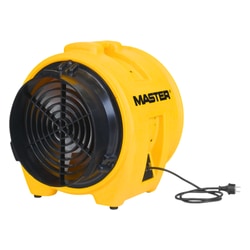
Fans and Blowers
Dmuchawa profesjonalna Master BL 6800
4604.026zł1,257.99 tax incl. 1 022,76 zł tax excl.View technical data Zobacz szczegóły
- Weight: 14,7 kg
- Dimensions: 470 × 370 × 520 mm
- Frequency: 50 Hz
- Power supply: 230 V
- Degree of protection: IP44
Dmuchawa profesjonalna Master BL 4800
4604.021zł811.00 tax incl. 659,35 zł tax excl.View technical data Zobacz szczegóły
- Weight: 7,2 kg
- Dimensions: 340 × 250 × 370 mm
- Frequency: 50 Hz
- Power supply: 230 V
- Degree of protection: IP44
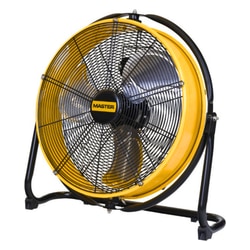
Master DF 20 Professional Fan
4604.008zł798.00 tax incl. 648,78 zł tax excl.View technical data Zobacz szczegóły
- Weight: 9 kg
- Dimensions: 690 × 200 × 675 mm
- Frequency: 50 Hz
- Power supply: 230 V
- Degree of protection: IP44
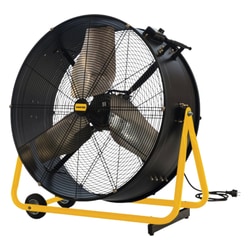
Wentylator profesjonalny Master DF 30
4604.015zł2,492.00 tax incl. 2 026,02 zł tax excl.View technical data Zobacz szczegóły
- Weight: 32 kg
- Dimensions: 910 × 350 × 935 mm
- Frequency: 50 Hz
- Power supply: 230 V
- Degree of protection: IP44
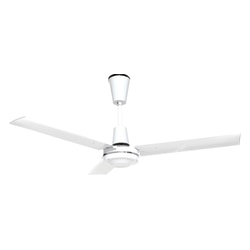
Destratyfikator Master E56002 (Ø 1400 mm)
4150.402zł1,065.00 tax incl. 865,85 zł tax excl.View technical data Zobacz szczegóły
- Weight: 9,8 kg
- Dimensions: Ø 1400 × 600 mm
- Frequency: 50 Hz
- Power supply: 230 V
- Air flow: 41 600 m³/h
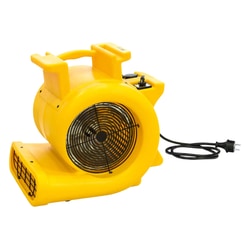
Master CD 5000 Floor Blower
4604.051zł1,314.00 tax incl. 1 068,29 zł tax excl.View technical data Zobacz szczegóły
- Weight: 14,2 kg
- Dimensions: 510 × 420 × 480 mm
- Frequency: 50 Hz
- Power supply: 230 V
- Degree of protection: IP44
Dmuchawa profesjonalna Master BL 8800
4604.027zł1,406.00 tax incl. 1 143,09 zł tax excl.View technical data Zobacz szczegóły
- Weight: 19 kg
- Dimensions: 510 × 530 × 580 mm
- Frequency: 50 Hz
- Power supply: 230 V
- Degree of protection: IP44
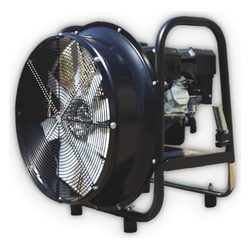
MW 22 Rato Firefighter Blower
34918zł4,059.00 tax incl. 3 300,00 zł tax excl.View technical data Zobacz szczegóły
- Dimensions: 640 x 570 x 526 mm
- Startup: Manualny
- Engine: Rato R210
- Fuel tank: 1,2 l/h
- Number of blades: 8 pcs
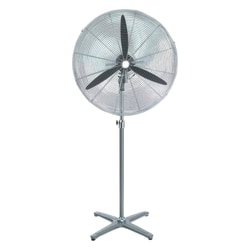
Wentylator profesjonalny Master FS 75
4025.067zł1,355.00 tax incl. 1 101,63 zł tax excl.View technical data Zobacz szczegóły
- Weight: 19,5 kg
- Dimensions: 800 × 665 × 1445–1610 mm
- Frequency: 50 Hz
- Power supply: 230 V
- Air flow: 13 140 m³/h
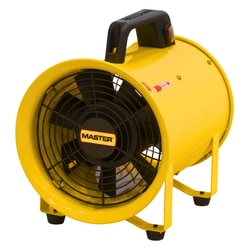
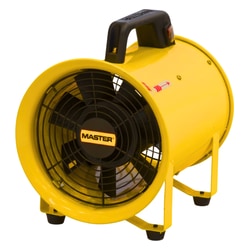
Dmuchawa profesjonalna Master BLM 4800
4604.031zł647.00 tax incl. 526,02 zł tax excl.View technical data Zobacz szczegóły
- Weight: 6,4 kg
- Dimensions: 250 × 305 × 230 mm
- Frequency: 50 Hz
- Power supply: 230 V
- Degree of protection: IP44
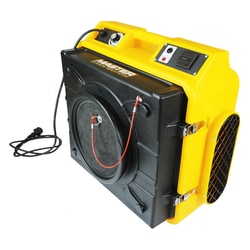
Master MAS 13 Air Purifier
4025.068zł3,998.73 tax incl. 3 251,00 zł tax excl.No technical data available Zobacz szczegóły
Dmuchawa profesjonalna Master BLM 6800
4604.032zł822.00 tax incl. 668,29 zł tax excl.View technical data Zobacz szczegóły
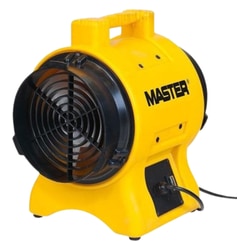
- Weight: 9,5 kg
- Dimensions: 343 × 383 × 317 mm
- Frequency: 50 Hz
- Power supply: 230 V
- Degree of protection: IP44
Industrial fans and industrial blowers both move air by force, but they work on different principles: a fan moves large volumes of air — several thousand m³/h — at low pressure and provides general ventilation for halls, warehouses and rooms after wet construction work. A blower generates higher pressure, often above 2 kPa, and pushes air through a flexible duct over distance — into a tunnel, excavation, shaft or channel that a standard fan cannot reach. By construction they split into axial units (high airflow, low pressure) and radial or centrifugal units (lower airflow, higher pressure).
At NORWIT.PL we carry primarily fans and blowers from Master Heaters, Trotec and Heylo — from compact axial fans running on 230V power, through professional blowers for tunnels and excavations, to three-phase 400V units for large halls. The category sits under heating and cooling, and the full range from one of these brands is on the Master Heaters page. Below we explain the difference between an axial and a radial fan, how to size airflow to room volume, and how a fan works together with a dehumidifier when drying a building.
Industrial fan and industrial blower — difference and working principle
An industrial fan moves large volumes of air — even several thousand m³/h — at low operating pressure, usually up to around 500 Pa, and provides general air exchange in a hall, warehouse or workshop. An industrial blower generates higher pressure, often above 2 kPa, and pushes air through a flexible duct over distance — into a tunnel, excavation, well or shaft, where a standard fan cannot reach.
At NORWIT.PL we carry primarily fans and blowers from Master Heaters, Trotec and Heylo — from compact axial fans to three-phase 400V units for large halls, plus professional blowers for tunnels. Equipment from one of these brands is on the Master Heaters page. Below we explain the difference between an axial and a radial fan, how to size airflow to a room, and 230V/400V power supply.
Types of fans and blowers — range segments
The range splits into four segments: general hall ventilation, portable construction fans, tunnel/duct blowers, and units that support drying. The table below lists equipment type against application and brands.
| Equipment type | What it is used for | Example brands |
|---|---|---|
| Axial industrial fan | general ventilation of halls and workshops, low pressure | Master Heaters, Trotec |
| Portable construction fan | supply and extract airflow on site, drying after wet works | Master Heaters, Heylo |
| Tunnel / duct blower | ventilating tunnels, excavations and shafts | Trotec, Heylo |
| Drying fan / blower | air circulation between a dehumidifier and damp surfaces | Master Heaters, Trotec, Heylo |
This category has no subcategories of its own — all heating, cooling and drying equipment for construction sites is in the parent department heating and cooling.
Axial vs radial fan — difference in construction
The choice comes down mainly to impeller construction — an axial fan moves large volumes of air at low pressure, while a radial (centrifugal) fan generates higher pressure at the cost of lower airflow. The table compares both constructions.
| Feature | Axial fan | Radial fan |
|---|---|---|
| Airflow direction | parallel to the impeller axis | perpendicular to the impeller axis |
| Airflow rate | high, up to well over ten thousand m³/h | lower than an axial fan |
| Operating pressure | low, typically up to about 300–500 Pa | higher, often 1–3 kPa |
| Typical use | halls, warehouses, general ventilation | tunnels, ducts, blowers with long hoses |
Applications — construction sites, halls, tunnels and excavations
On a construction site, a fan or blower forces air exchange where there is no natural draught: in foundation excavations, wells and shafts several to over a dozen metres deep, removing exhaust fumes from construction machinery, dust and excess moisture. Longer spaces, such as tunnels running 20–50 m, need a blower with a flexible duct — the range includes, for example, the Master BLM 4800 professional blower. Halls are usually designed for 6–10 air changes per hour, and 15–20 air changes/h where dust or fumes are present — several smaller fans placed around the perimeter of a hall give a more even airflow than one large unit.
Fan and blower use when drying a building
A dehumidifier on its own, in a large or poorly ventilated room, only dries the air effectively in its immediate surroundings. A fan or blower positioned facing the dehumidifier forces air to circulate between the unit and damp walls, floors or ceilings, which can cut drying time by around 20–30% at the same dehumidifier output (typically 20–100 l/24h). This combination works well after flooding and when drying screeds. Dehumidifiers suited to this use are in the condensation dehumidifiers and desiccant dehumidifiers categories.
230V and 400V power supply — output and portability
Smaller and medium fans and construction blowers run on standard 230V single-phase power, available from a typical site socket, and draw usually up to 1–2 kW — enough for ventilating a single room, an excavation or a short tunnel section. Larger units with airflow rated in thousands of m³/h need three-phase 400V power (a 16A or 32A socket), because a motor rated at 3 kW or more requires an appropriately sized cable and overcurrent protection.
Frequently asked questions about fans and blowers
What is the difference between an industrial fan and a blower?
An industrial fan moves large volumes of air — even several thousand m³/h — at low pressure, typically up to around 500 Pa, and exchanges air inside a hall or workshop. A blower generates higher pressure, often above 2 kPa, and pushes air through a duct over distance, for example into a tunnel or excavation. Both types are available from Master Heaters, Trotec and Heylo.
What is a professional blower used for on a construction site?
A professional blower on a construction site pushes air where a fan cannot reach: into excavations, wells and tunnels running even several dozen metres, supplying fresh air and clearing exhaust fumes or dust. A flexible duct connects to the outlet — the range includes, for example, the Master BLM 4800 professional blower. It is also used when drying buildings after flooding, cutting drying time by anywhere from several to several dozen percent.
How do you size a fan to a hall or room?
A fan for a hall is sized from the room's volume and the required number of air changes per hour — industrial halls typically need 6–10 air changes/h, rising to 15–20 air changes/h where dust or fumes are present. Required airflow in m³/h equals volume multiplied by the number of air changes: a 2,000 m³ hall at 8 air changes/h needs about 16,000 m³/h. Several smaller fans usually perform better than one large unit.
Is an industrial fan suitable for ventilating a tunnel or excavation?
A blower or tunnel fan works better for ventilating a tunnel or deep excavation, because it has to overcome the resistance of a long duct — even 20–50 m — and maintain airflow under pressure. These units typically run on 230V single-phase power at lower outputs, or three-phase 400V at higher airflow, mounted at the tunnel entrance with a flexible sleeve. Forced ventilation removes exhaust fumes, dust and excess moisture.
What is the difference between an axial and a radial fan?
An axial fan has its blades set parallel to the direction of airflow and moves large volumes of air — even well over ten thousand m³/h — at low pressure, typically up to around 300–500 Pa. A radial fan directs air perpendicular to the impeller axis and generates higher pressure, often 1–3 kPa, at the cost of lower airflow, which lets it cope with long ducts and filters. The choice depends on distance and system resistance.
Can an industrial fan be combined with a dehumidifier when drying a building?
A fan or blower is paired with a dehumidifier to force circulation of damp air between the unit and the walls, floor or ceiling — a dehumidifier on its own only dries the air in its immediate surroundings effectively. Positioning a fan facing the dehumidifier, or diagonally across the room, can cut drying time by around 20–30%. This combination, together with a condensation dehumidifier (typical output 20–100 l/24h), is used after flooding and when drying screeds.
What power supply — 230V or 400V — do professional construction blowers use?
Smaller and medium fans and blowers run on 230V single-phase power, available from a standard site socket, drawing typically up to 1–2 kW. Larger units with airflow rated in thousands of m³/h need three-phase 400V power, because a motor rated at 3 kW or more requires an appropriately sized cable and overcurrent protection. Check whether a 400V connection (16A or 32A socket) is available on site.
Are Master, Trotec and Heylo fans and blowers available for rent, or only for purchase?
NORWIT.PL sells equipment rather than renting it out — fans and blowers are purchased outright, with a manufacturer's warranty typically lasting 12–24 months. Master Heaters and Trotec models are mostly available immediately or shipped within 1–3 business days, while Heylo items are sometimes ordered specially. For orders of several or more than a dozen units at once, it is worth checking availability in advance through the contact form.
Why buy fans and blowers at NORWIT.PL
We carry fans and blowers primarily from Master Heaters, Trotec and Heylo. We help with choosing the right type (axial or radial), sizing airflow to room volume, and picking the right power supply (230V or 400V), and when drying a building we help put together a set with a dehumidifier matched to the situation. Orders are processed online, with shipping across the country.