


-
-
Concrete
-
- Concreting
- Concrete Vibrators
- Complete 230 V Mechanical Vibrators
- Vibrator Heads
- Vibrator Shafts
- Vibrator Motors
- Concrete Vibrators 42 V | 200 Hz
- Mechanical Vibrators 230 V
- 42 V | 200 Hz Head and Shaft
- 230 V Concrete Vibrators
- Vibrators With Built-In 230 V | 200 Hz Converter
- 42 V | 200 Hz Converters
- Combustion Vibrators
- Pneumatic Vibrators
- External Vibrators
- Power Trowels
- Vibratory Screeds
- Concrete Hand Tools
- Concrete Vibrators
-
-
-
-
-
- Walk-Behind Combustion Power Trowels
-
-
-
Heating and cooling
-
Generators
-
Earthworks
-
Industrial vacuums
-
Finishing
-
Pumps
-
Measurement
-
BLOG & Tips
-
Promotions
Kategorie 16 kategorii
Kategorie
-
- Levels and Measurements
- Soil Compactors
- Tamping Rammers - Jumping Jacks
- Single Direction Vibratory Plates
- Reversible Vibratory Plates
- Rollers
- 100 kg Soil Compactors
- 200 kg Soil Compactors
- 300 kg Soil Compactors
- 400 kg Soil Compactors
- 500 kg Soil Compactors
- 600 kg Soil Compactors
- 700 kg Soil Compactors
- 800 kg Soil Compactors
- Wacker Neuson Compactors
- Accessories for Compactors
- Bomag Compactors
- Altrad Belle Compactors
- Paver Compactors
- Swepac Compactors
- Power Generators
- Concreting
- Concrete Vibrators
- Complete 230 V Mechanical Vibrators
- Vibrator Heads
- Vibrator Shafts
- Vibrator Motors
- Concrete Vibrators 42 V | 200 Hz
- Mechanical Vibrators 230 V
- 42 V | 200 Hz Head and Shaft
- 230 V Concrete Vibrators
- Vibrators With Built-In 230 V | 200 Hz Converter
- 42 V | 200 Hz Converters
- Combustion Vibrators
- Pneumatic Vibrators
- External Vibrators
- Vibratory Screeds
- Power Trowels
- Concrete Hand Tools
- Concrete Vibrators
- Pumps and Motor Pumps
- Cutting, Drilling and Grinding
- Heating and Cooling
- Wood Table Saws
- Painting and Plastering
- Combustion Engines
- Washing and Vacuuming
- Cement Mixers
- Paving Tools
- Wheelbarrows and Track Dumpers
- Demolition and Hammers
- Sales
- Levels and Measurements
Brak kategorii pasujących do wyszukiwania.
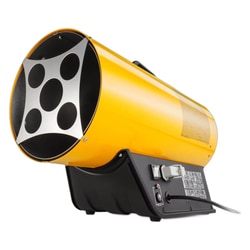
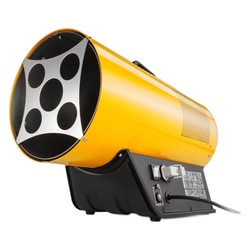
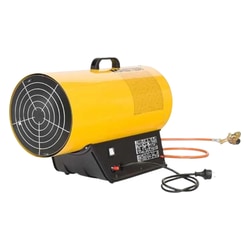
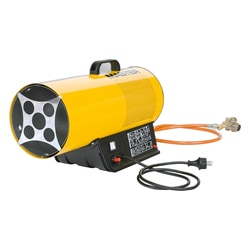
Gas-Fired Air Heaters
Nagrzewnica gazowa Master BLP 103 ET
4015.026zł4,088.99 tax incl. 3 324,38 zł tax excl.View technical data Zobacz szczegóły
- Weight: 22,3 kg
- Dimensions: 895 × 324 × 624 mm
- Frequency: 50 Hz
- Fuel: Propan | butan
- Fuel consumption: 6,66 kg/h
Nagrzewnica gazowa Master BLP 33 M
4015.601zł1,004.00 tax incl. 816,26 zł tax excl.View technical data Zobacz szczegóły
- Weight: 7,5 kg
- Dimensions: 552 × 220 × 342 mm
- Frequency: 50 Hz
- Fuel: Propan | butan
- Fuel consumption: 2,4 kg/h
Nagrzewnica gazowa Master BLP 17 M
4015.015zł627.00 tax incl. 509,76 zł tax excl.View technical data Zobacz szczegóły
- Weight: 4,5 kg
- Dimensions: 471 × 188 × 293 mm
- Frequency: 50 Hz
- Fuel: Propan | butan
- Fuel consumption: 1,16 kg/h
Nagrzewnica gazowa Master BLP 73 ET
4015.113zł3,039.00 tax incl. 2 470,73 zł tax excl.View technical data Zobacz szczegóły
- Weight: 15 kg
- Dimensions: 685 × 276 × 444 mm
- Frequency: 50 Hz
- Fuel: Propan | butan
- Fuel consumption: 5,02 kg/h
Nagrzewnica gazowa Master BLP 33 ET
4015.100zł1,744.99 tax incl. 1 418,69 zł tax excl.View technical data Zobacz szczegóły
- Weight: 7,5 kg
- Dimensions: 552 × 220 × 342 mm
- Frequency: 50 Hz
- Fuel: Propan | butan
- Fuel consumption: 2,4 kg/h
Nagrzewnica gazowa Master BLP 53 ET
4015.106zł2,397.00 tax incl. 1 948,78 zł tax excl.View technical data Zobacz szczegóły
- Weight: 13 kg
- Dimensions: 605 × 276 × 444 mm
- Frequency: 50 Hz
- Fuel: Propan | butan
- Fuel consumption: 3,78 kg/h
Nagrzewnica gazowa Master BLP 53 M
4015.211zł1,689.98 tax incl. 1 373,97 zł tax excl.View technical data Zobacz szczegóły
- Weight: 13 kg
- Dimensions: 605 × 276 × 444 mm
- Frequency: 50 Hz
- Fuel: Propan | butan
- Fuel consumption: 3,78 kg/h
Nagrzewnica gazowa Master BLP 73 M
4015.212zł1,898.00 tax incl. 1 543,09 zł tax excl.View technical data Zobacz szczegóły
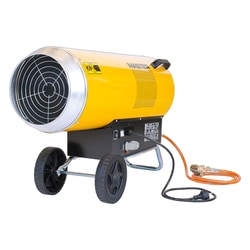
- Weight: 15 kg
- Dimensions: 685 × 276 × 444 mm
- Frequency: 50 Hz
- Fuel: Propan | butan
- Fuel consumption: 5,02 kg/h
A gas-fired air heater is a forced-air unit burning LPG from a cylinder or natural gas from a fixed supply: the burner heats the air stream and a fan pushes it into the space. All the heat output comes from the fuel, so the only electricity needed is a standard 230 V socket for the fan, ignition and controls — no three-phase supply and no generator. That is what makes this heater the practical choice on sites with no heavy power available. An 11 kg LPG cylinder holds roughly 140 kWh of energy, and heat outputs range from about 15 kW to around 100 kW.
NORWIT.PL stocks gas-fired air heaters mainly from Master — from compact single-cylinder units to high-output construction heaters for warehouses, marquees and livestock buildings. The category sits within heating and cooling; where a heavy-duty power supply is available, electric air heaters are the alternative, and for continuous running on diesel there are oil-fired air heaters. Below we cover how to size the output to the volume of the space, gas consumption, the ventilation required and how to connect the cylinder.
How a gas-fired air heater works and where it wins
Heat in a gas-fired heater comes from burning LPG from a cylinder, or natural gas from a fixed supply. The burner warms an air stream and the fan drives it into the space. Mains power runs the fan, ignition and controls only: typically 30–250 W from a 230 V socket, against 15 kW to roughly 100 kW of heat.
That ratio is the whole argument on site. Getting 50 kW out of an electric air heater means a 400 V three-phase connection; the gas equivalent needs a cylinder and a wall socket. In a shell-and-core building, a marquee or a warehouse with no distribution board, it is often the only workable heat source. The NORWIT.PL range is built mainly around Master equipment, including the BLP series; hoses and regulators sit in heater accessories.
Types of gas heaters — cylinder, natural gas, flued
The split follows the fuel and the way combustion gases leave the unit. A direct-fired heater has no flue, so combustion products enter the room with the warm air and a permanent fresh-air supply becomes mandatory. A sealed-combustion model delivers clean air only, at the cost of a flue routed outdoors. The diesel counterpart of the first group is the direct oil-fired air heater.
| Type of gas heater | Gas supply | Best suited to |
|---|---|---|
| Direct-fired, cylinder-fed (no flue) | 11 or 33 kg LPG cylinder, regulator and hose | shell-and-core work, marquees, ventilated warehouses, drying plaster |
| Sealed combustion chamber with flue | cylinder or fixed gas installation | occupied rooms, livestock buildings, storage facilities |
| Natural gas from a fixed supply | mains gas connection, network pressure | workshops and industrial buildings with gas, continuous duty |
Sizing a gas heater to the volume of the space
Output follows the volume of the space and its insulation, not the floor area. Shell-and-core work and uninsulated warehouses take roughly 50–60 W per m³, an insulated room roughly 25–35 W/m³: 400 m³ therefore calls for about 20–25 kW, and 1,500 m³ for 70–100 kW. Spare capacity shortens warm-up but empties the cylinder faster — above 30 kW an 11 kg cylinder frosts over, so a 33 kg cylinder or a manifolded bank is used instead.
Gas-fired air heaters — frequently asked questions
How much gas does a gas-fired heater use and how long does an 11 kg cylinder last?
LPG consumption follows the burner rating. One kilogram of LPG releases roughly 12.8 kWh, so a 15 kW heater at full load burns about 1.2 kg an hour and a 30 kW heater about 2.3 kg/h. An 11 kg cylinder stores around 140 kWh — roughly 9 hours of running for the 15 kW unit, 4–5 hours for the 30 kW one. With a thermostat the burner cycles instead of firing continuously, which usually cuts real consumption by 30–50%.
How do you connect a gas heater to an LPG cylinder?
The gas feed runs through an adjustable high-pressure regulator, usually set in the 0.7–1.5 bar range, joined to the heater by a braided hose most often 1.5–3 m long. Keep the cylinder upright, clear of the hot air stream and around 2 m from the heater outlet. Check joints for leaks with soapy water, never with a flame. The fan takes its own supply from a 230 V socket and draws a few dozen to a few hundred watts, depending on unit size.
What ventilation does a direct-fired gas heater need?
A direct-fired unit discharges its combustion products into the room along with the warm air, so a permanent fresh-air supply is essential. The working rule of thumb is around 25 m³ of fresh air per hour for every 1 kW of output, in practice open vents or a window left ajar. Burning 1 kg of LPG consumes roughly 12 m³ of air, and once oxygen runs short the flame starts producing carbon monoxide. For occupied rooms and livestock buildings a sealed-combustion model is safer, and any enclosed building should have a carbon monoxide detector.
Gas or diesel heater for a construction site?
Fuel logistics and running time decide this one. A gas heater is lighter, quieter and leaves no diesel smell, which suits short heating cycles, marquees and livestock buildings. The cylinder is its limit: 30 kW empties an 11 kg cylinder in 4–5 hours, and pressure drops in hard frost. An oil-fired heater carries a tank of several dozen litres, runs most of a working day without refuelling and copes better with frost, but it is heavier and noisier. Continuous heating of large industrial buildings usually goes to diesel; mobile work goes to gas.
Why buy a gas-fired air heater from NORWIT.PL
We size equipment against site conditions: output against room volume, cylinder format and the ventilation required. Where heating must run without cylinder changes, oil-fired air heaters take over; with three-phase power on site, the wider heating and cooling range applies. Orders are placed online, with delivery across Poland.