


-
-
Concrete
-
- Concreting
- Concrete Vibrators
- Complete 230 V Mechanical Vibrators
- Vibrator Heads
- Vibrator Shafts
- Vibrator Motors
- Concrete Vibrators 42 V | 200 Hz
- Mechanical Vibrators 230 V
- 42 V | 200 Hz Head and Shaft
- 230 V Concrete Vibrators
- Vibrators With Built-In 230 V | 200 Hz Converter
- 42 V | 200 Hz Converters
- Combustion Vibrators
- Pneumatic Vibrators
- External Vibrators
- Power Trowels
- Vibratory Screeds
- Concrete Hand Tools
- Concrete Vibrators
-
-
-
-
-
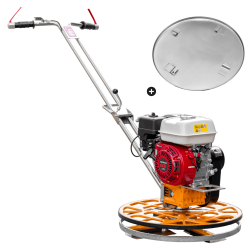
- Walk-Behind Combustion Power Trowels
-
-
-

Heating and cooling
-
Generators
-
Earthworks
-
Industrial vacuums
-
Finishing
-
Pumps
-
Measurement
-
BLOG & Tips
-
Promotions
Kategorie 16 kategorii
Kategorie
-
- Levels and Measurements
- Soil Compactors
- Tamping Rammers - Jumping Jacks
- Single Direction Vibratory Plates
- Reversible Vibratory Plates
- Rollers
- 100 kg Soil Compactors
- 200 kg Soil Compactors
- 300 kg Soil Compactors
- 400 kg Soil Compactors
- 500 kg Soil Compactors
- 600 kg Soil Compactors
- 700 kg Soil Compactors
- 800 kg Soil Compactors
- Wacker Neuson Compactors
- Accessories for Compactors
- Bomag Compactors
- Altrad Belle Compactors
- Paver Compactors
- Swepac Compactors
- Power Generators
- Concreting
- Concrete Vibrators
- Complete 230 V Mechanical Vibrators
- Vibrator Heads
- Vibrator Shafts
- Vibrator Motors
- Concrete Vibrators 42 V | 200 Hz
- Mechanical Vibrators 230 V
- 42 V | 200 Hz Head and Shaft
- 230 V Concrete Vibrators
- Vibrators With Built-In 230 V | 200 Hz Converter
- 42 V | 200 Hz Converters
- Combustion Vibrators
- Pneumatic Vibrators
- External Vibrators
- Vibratory Screeds
- Power Trowels
- Concrete Hand Tools
- Concrete Vibrators
- Pumps and Motor Pumps
- Cutting, Drilling and Grinding
- Heating and Cooling
- Wood Table Saws
- Painting and Plastering
- Combustion Engines
- Washing and Vacuuming
- Cement Mixers
- Paving Tools
- Wheelbarrows and Track Dumpers
- Demolition and Hammers
- Sales
- Levels and Measurements
Brak kategorii pasujących do wyszukiwania.
Gauges and Sensors of Physical Parameters
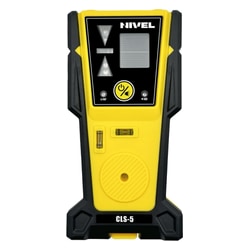
Nivel System CLS-5 Laser Sensor
CLS-5zł356.70 tax incl. 290,00 zł tax excl.View technical data Zobacz szczegóły
- Weight: 0,15 kg
- Dimensions: 140 x 70 x 20 mm
- Frequency: 10 kHz
- Power supply: 2 x 1,5V AAA
- Working range: 70 m
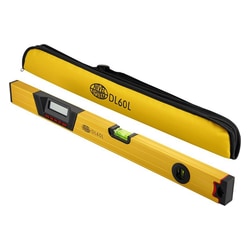
Electronic Laser Level Nivel System DL 60L
DL60Lzł386.00 tax incl. 313,82 zł tax excl.View technical data Zobacz szczegóły
- Weight: 0,475 kg
- Dimensions: 600 x 51 x 25 mm
- Brand: Nivel System
- Power supply: 9 V cc
- Length: 600 mm
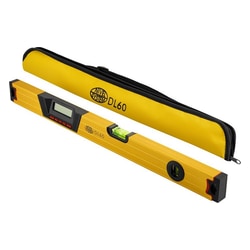
Electronic Spirit Level Nivel System DL 60
DL60zł364.01 tax incl. 295,94 zł tax excl.View technical data Zobacz szczegóły
- Weight: 0,475 kg
- Dimensions: 600 x 51 x 25 mm
- Brand: Nivel System
- Power supply: 9 V cc
- Length: 600 mm
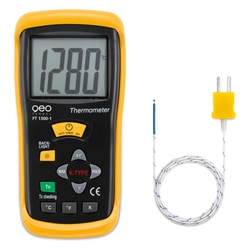
Geo Fennel Professional Thermometer With Single Probe FT 1300-1
18-201-21zł429.27 tax incl. 349,00 zł tax excl.View technical data Zobacz szczegóły
- Weight: ok. 210 g
- Dimensions: 162 × 76 × 39 mm
- Power supply: 1 x 9 V (6F22)
- Display: 45 mm
- Resolution: 0,1 °C / 1 °C (przełączana)
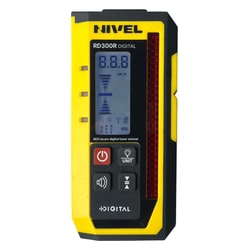
Nivel System RD300R DIGITAL Laser Sensor
RD300Rzł1,094.70 tax incl. 890,00 zł tax excl.View technical data Zobacz szczegóły
- Weight: 0,3 kg
- Dimensions: 155 x 75 x 30 mm
- Power supply: 4 x AAA
- Operating temperature range: -20°c do +50°c
- Detection range: 105 mm
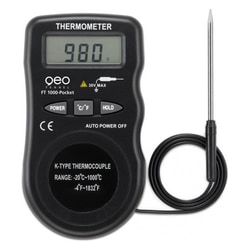
Professional Thermometer With Probe FT 1000-Pocket
18-201-23zł227.55 tax incl. 185,00 zł tax excl.No technical data available Zobacz szczegóły
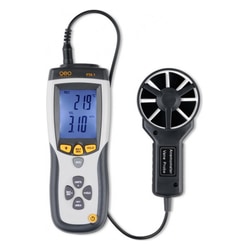
Anemometer-Thermometer FTA 1
18-201-32zł1,154.97 tax incl. 939,00 zł tax excl.No technical data available Zobacz szczegóły
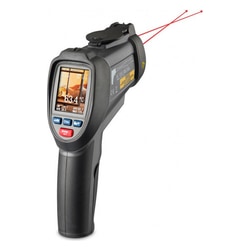
Datavision FIRT 1000 Pyrometer
18-201-35zł3,148.80 tax incl. 2 560,00 zł tax excl.No technical data available Zobacz szczegóły
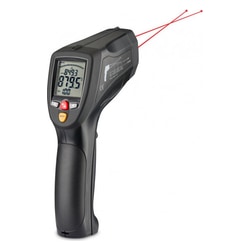
FIRT 1600 Data Pyrometer
18-201-36zł2,212.77 tax incl. 1 799,00 zł tax excl.No technical data available Zobacz szczegóły
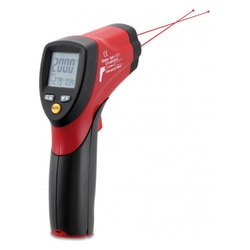
FIRT 550 Pyrometer
18-201-33zł626.07 tax incl. 509,00 zł tax excl.View technical data Zobacz szczegóły
- Weight: 0,178 kg
- Dimensions: 146 x 104 x 43 mm
- Operating temperature range: -50 °C – +550 °C
- Laser safety class/wavelength: 2
- Battery power supply: Bateria 9 V
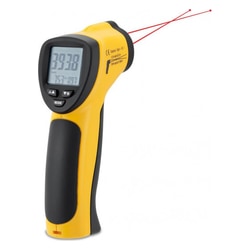
FIRT 800 Pyrometer
18-201-34zł773.67 tax incl. 629,00 zł tax excl.View technical data Zobacz szczegóły
- Weight: 0,178 kg
- Dimensions: 160 x 82 x 42 mm
- Operating temperature range: -35 °C – +800 °C
- Laser safety class/wavelength: 2
- Battery power supply: Bateria 9 V
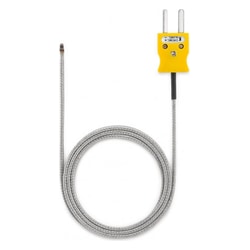
Flexible Probe 100 Cm Steel NR-88B
18-201-28zł120.54 tax incl. 98,00 zł tax excl.No technical data available Zobacz szczegóły
A meter or sensor for physical parameters measures quantities such as air velocity, temperature or humidity — used on construction sites, in ventilation systems and HVAC installations to check working conditions and the quality of completed work. The most common instrument in this category is an anemometer (an air velocity meter, also called a wind meter): it measures airflow with a rotating vane or a thermal sensor and reports the reading in m/s or km/h, typically within a range of about 0.3 to 30 m/s. Equipment of this class checks the output of mechanical ventilation and heat recovery units, monitors weather conditions during work at height, and measures ambient temperature and humidity during finishing works.
At NORWIT.PL, meters and sensors for physical parameters are supplied by Nivel System — a manufacturer known primarily for levels and construction lasers, which also offers compact measuring instruments, including a combined anemometer-thermometer that reads air velocity and temperature in a single measurement. You can find this brand's equipment on the Nivel System page, and the full measuring department is in the levels and measuring equipment category. Below we explain the differences between meter types and how to choose the right device for your application.
Anemometers and physical parameter meters by Nivel System — what they are for
A meter for physical parameters is an instrument for measuring quantities such as air velocity, temperature or humidity — on construction sites and in ventilation systems it checks working conditions and the quality of completed work. The most common device in this category is an anemometer (an air velocity meter, also called a wind meter): it measures airflow with a rotating vane (a vane or cup anemometer) or with a thermal sensor, and reports the reading in m/s or km/h, typically within a range of 0.3-30 m/s and a resolution around 0.1 m/s. Equipment of this class checks the output of ventilation and heat recovery systems and measures ambient temperature and humidity during finishing works.
At NORWIT.PL, meters and sensors for physical parameters are supplied by Nivel System — a manufacturer known primarily for levels and construction lasers, which also extends its range with compact measuring instruments, including an anemometer-thermometer that reads two physical quantities in a single measurement. You can find this brand's equipment on the Nivel System page. Below we explain the meter and sensor types in this category and how to choose the right device for construction and ventilation work.
Types of physical parameter meters and sensors
The category is organized by the physical quantity it measures — air velocity, temperature and humidity. The table below sets out the instrument types available in the range.
| Device type | What it measures | Brand in range |
|---|---|---|
| Anemometer (wind meter) | air velocity and airflow (m/s, km/h) | Nivel System |
| Anemometer-thermometer | air velocity and temperature at once | Nivel System (e.g. FTA 1) |
| Thermometer | air or surface temperature (°C) | Nivel System |
| Humidity meter (hygrometer) | relative humidity of air or materials (% RH) | Nivel System |
The full measuring department — laser and optical levels, rangefinders, tripods and surveying accessories — is available in the parent levels and measuring equipment category.
Applications: ventilation, heat recovery and site working conditions
An anemometer most often ends up in the hands of ventilation and heat-recovery installers, checking whether the air handling unit and ducts deliver the designed airflow. Measuring velocity at a grille (typically 0.3-30 m/s) reveals a clogged filter or a poorly adjusted unit. The combined FTA 1 anemometer-thermometer by Nivel System also measures supply air temperature (typically -10°C to +50°C) at the same time, which makes it easier to diagnose a heat exchanger without carrying two separate meters.
On a construction site, temperature and humidity meters check conditions for work sensitive to microclimate — concrete curing, plastering or painting is usually carried out at 5-35°C and 0-100% RH, and deviating from the recommended conditions extends setting time. The table below summarizes typical applications and approximate measurement ranges.
| Application | Measured parameter | Approximate measurement range |
|---|---|---|
| Checking mechanical ventilation and heat recovery units | airflow velocity | typically 0.3-30 m/s |
| Conditions for concrete curing, plastering, painting | air temperature and humidity | typically 5-35°C and 0-100% RH |
| Checking substrate moisture before finishing | relative material humidity | depends on the meter model |
The choice between a single-purpose meter and a combined model, such as an anemometer-thermometer, depends on how many physical quantities you need to check and how often you take measurements on site.
Frequently asked questions about physical parameter meters and sensors
What is an anemometer and what is it used for on a construction site?
An anemometer is an instrument for measuring air velocity and airflow, most often using a rotating vane (a vane or cup anemometer) or a thermal sensor, with the result reported in m/s, km/h or other speed units. On a construction site an anemometer checks the output of natural and mechanical ventilation, monitors the performance of heat recovery units, and measures wind conditions during work at height, where strong wind — usually above a dozen or so m/s — limits safe working. A typical measurement range is about 0.3-30 m/s, with a resolution around 0.1 m/s.
How does an anemometer-thermometer combine two measuring functions?
An anemometer-thermometer combines two sensors in a single housing: a vane or probe for measuring air velocity and a temperature sensor, so one reading gives both airflow velocity (typically 0.3-30 m/s) and ambient temperature (usually -10°C to +50°C). In the NORWIT.PL range, this combined type is represented by the Nivel System FTA 1 anemometer-thermometer — a compact 2-in-1 device for quickly checking conditions on site and in ventilation systems, without carrying two separate meters. One device instead of two shortens measurement time and lightens the crew's toolbox.
What is the difference between an anemometer and a humidity or temperature meter?
An anemometer measures only air velocity and airflow, typically within 0.3-30 m/s, while a humidity meter (hygrometer) reports relative humidity on a scale of 0-100% RH, and a thermometer reads temperature, most often within -10°C to +50°C for construction-grade meters. Each instrument measures a different physical quantity, so a full diagnosis of a ventilation system uses them together — an anemometer for airflow output, a hygrometer and thermometer for microclimate. Combined devices, such as an anemometer-thermometer, measure two of these quantities in a single reading.
Which physical parameters do sensors used in construction and ventilation measure?
Meters and sensors for physical parameters used in construction and ventilation mainly cover air velocity and airflow (m/s, m³/h), temperature (°C) and the relative humidity of air and materials (% RH). An anemometer checks mechanical ventilation and heat recovery, where duct velocities typically fall within 0.3-30 m/s, while temperature and humidity meters assess conditions for concrete curing, plastering or painting, usually carried out at 5-35°C. Choosing a sensor depends on which physical quantity needs to be checked.
Is a Nivel System anemometer suitable for measuring airflow in ventilation and heat recovery systems?
A Nivel System anemometer works well for checking mechanical ventilation and heat recovery, because it measures airflow velocity at grilles and in ducts with a resolution typically around 0.1 m/s within a range of 0.3-30 m/s. This reading shows whether a heat recovery unit delivers the designed airflow (usually stated in m³/h), and a deviation signals a clogged filter or a poorly adjusted unit. The anemometer-thermometer model also checks supply air temperature, easing diagnosis of the heat exchanger.
How much does a professional physical parameter meter for construction use cost?
The price of a professional physical parameter meter depends mainly on the number of quantities it measures — a single-purpose anemometer costs less than a combined model measuring 2 parameters at once — as well as on the measurement range (e.g. up to 20 m/s versus up to 30 m/s) and reading resolution (0.1 m/s). Features such as a backlit display or reading memory also add to the price. Current prices of Nivel System meters are listed on the product pages at NORWIT.PL.
How do you choose the right meter or sensor for a specific job on site?
Choosing a meter starts with identifying which physical quantity needs checking: assessing ventilation and heat recovery output calls for an anemometer measuring airflow velocity (0.3-30 m/s), checking conditions for concrete curing or painting calls for a thermometer and hygrometer covering 5-35°C and 0-100% RH, and a quick check of both at once calls for a 2-in-1 anemometer-thermometer. Reading resolution (typically 0.1 of the measured unit) is another selection criterion. For applications that require a documented result, it is also worth checking the date of the device's last calibration.
Do physical parameter meters require periodic calibration?
Calibrating a physical parameter meter means comparing its readings against a reference standard and correcting them if they deviate — recommended once a year for equipment used regularly for professional work, and every 3-6 months for devices operating in dust, moisture or large temperature swings. Anemometers and temperature sensors without periodic calibration can drift by a few percent from the true value over time, which matters when checking ventilation or concrete curing conditions. Meters used only occasionally can simply be checked against another calibrated device.
Why buy physical parameter meters and sensors at NORWIT.PL
Physical parameter meters and sensors at NORWIT.PL are supplied by Nivel System — a manufacturer known for levels and construction lasers that also provides instruments for checking working conditions on site and in ventilation systems. We advise on matching the right device to the physical quantity you need to measure — from an anemometer to humidity and temperature meters — and offer the full measuring department in the levels and measuring equipment category. Orders are processed online, with delivery across the country.