


-
-
Concrete
-
- Concreting
- Concrete Vibrators
- Complete 230 V Mechanical Vibrators
- Vibrator Heads
- Vibrator Shafts
- Vibrator Motors
- Concrete Vibrators 42 V | 200 Hz
- Mechanical Vibrators 230 V
- 42 V | 200 Hz Head and Shaft
- 230 V Concrete Vibrators
- Vibrators With Built-In 230 V | 200 Hz Converter
- 42 V | 200 Hz Converters
- Combustion Vibrators
- Pneumatic Vibrators
- External Vibrators
- Power Trowels
- Vibratory Screeds
- Concrete Hand Tools
- Concrete Vibrators
-
-
-
-
-
- Walk-Behind Combustion Power Trowels
-
-
-
Heating and cooling
-
Generators
-
Earthworks
-
Industrial vacuums
-
Finishing
-
Pumps
-
Measurement
-
BLOG & Tips
-
Promotions
Kategorie 16 kategorii
Kategorie
-
- Levels and Measurements
- Soil Compactors
- Tamping Rammers - Jumping Jacks
- Single Direction Vibratory Plates
- Reversible Vibratory Plates
- Rollers
- 100 kg Soil Compactors
- 200 kg Soil Compactors
- 300 kg Soil Compactors
- 400 kg Soil Compactors
- 500 kg Soil Compactors
- 600 kg Soil Compactors
- 700 kg Soil Compactors
- 800 kg Soil Compactors
- Wacker Neuson Compactors
- Accessories for Compactors
- Bomag Compactors
- Altrad Belle Compactors
- Paver Compactors
- Swepac Compactors
- Power Generators
- Concreting
- Concrete Vibrators
- Complete 230 V Mechanical Vibrators
- Vibrator Heads
- Vibrator Shafts
- Vibrator Motors
- Concrete Vibrators 42 V | 200 Hz
- Mechanical Vibrators 230 V
- 42 V | 200 Hz Head and Shaft
- 230 V Concrete Vibrators
- Vibrators With Built-In 230 V | 200 Hz Converter
- 42 V | 200 Hz Converters
- Combustion Vibrators
- Pneumatic Vibrators
- External Vibrators
- Vibratory Screeds
- Power Trowels
- Concrete Hand Tools
- Concrete Vibrators
- Pumps and Motor Pumps
- Cutting, Drilling and Grinding
- Heating and Cooling
- Wood Table Saws
- Painting and Plastering
- Combustion Engines
- Washing and Vacuuming
- Cement Mixers
- Paving Tools
- Wheelbarrows and Track Dumpers
- Demolition and Hammers
- Sales
- Levels and Measurements
Brak kategorii pasujących do wyszukiwania.
Paving hammers, pullers and adjusters

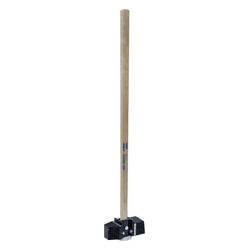
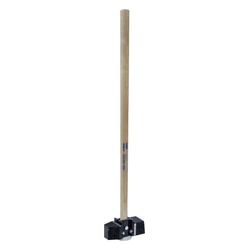
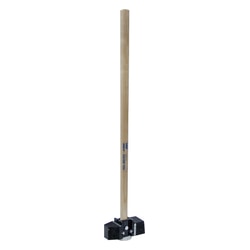
Probst Paving Hammer With Rubber Shoes GH-ERGO
51800113zł468.00 tax incl. 380,49 zł tax excl.View technical data Zobacz szczegóły
- Weight: 2,9 kg
- Length: 1000 mm
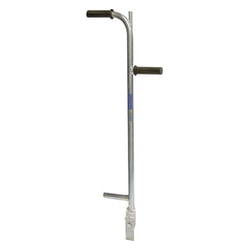
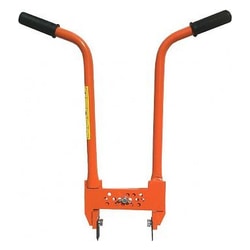
Probst RE Paving Crowbar For Moving Pavers
51800111zł303.99 tax incl. 247,15 zł tax excl.View technical data Zobacz szczegóły
- Weight: 2,7 kg
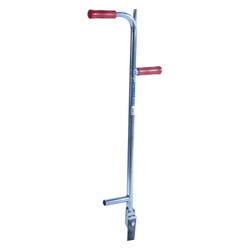
Probst RE Paving Crowbar For Moving Pavers
51800011zł388.00 tax incl. 315,45 zł tax excl.View technical data Zobacz szczegóły
- Weight: 2,7 kg
Paving Hammer With Rubber Shoes GH Probst Long
51800012zł289.00 tax incl. 234,96 zł tax excl.View technical data Zobacz szczegóły
- Weight: 2,9 kg
- Length: 1000 mm
Paving Hammer With Rubber Shoes GH-K Probst Short
51800051zł289.00 tax incl. 234,96 zł tax excl.View technical data Zobacz szczegóły
- Weight: 2,5 kg
- Length: 400 mm
ENZ Probst Rod Pulling Tool
51800038zł452.00 tax incl. 367,48 zł tax excl.View technical data Zobacz szczegóły
- Weight: 0,64 kg
- Outer diameter: 10-30 mm
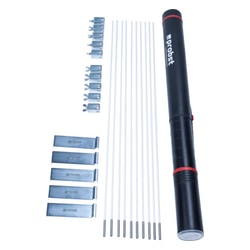
FLEXMARKER-KIT FMK Probst.
51800074zł1,083.00 tax incl. 880,49 zł tax excl.View technical data Zobacz szczegóły
- Weight: 3,1 kg
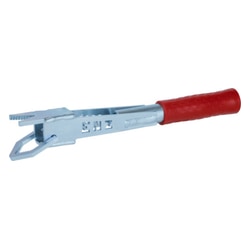
Altrad Belle MBS09 Paving Vice
MBS09zł328.00 tax incl. 266,67 zł tax excl.View technical data Zobacz szczegóły
- Range of adjustment: 90 - 240 mm
Paving Hammer With Rubber Shoes GH-ERGO-K Probst
51800114zł468.63 tax incl. 381,00 zł tax excl.View technical data Zobacz szczegóły
- Weight: 2,5 kg
- Length: 400 mm
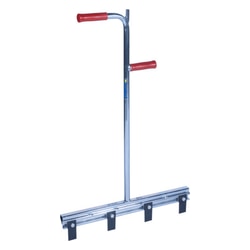
Probst MRE Quadruple Paving Crowbar
51800045zł1,121.00 tax incl. 911,38 zł tax excl.View technical data Zobacz szczegóły
- Weight: 6 kg
- Working width: 650 mm
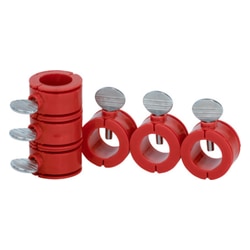
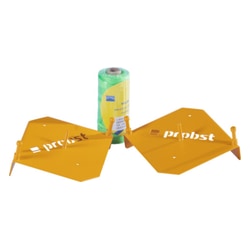
Probst STRING ALONG SA
51800062zł190.00 tax incl. 154,47 zł tax excl.View technical data Zobacz szczegóły
- Weight: 0,24 kg
- Inside diameter: 25 mm
Probst STRINGTIGHT SB
51800072zł261.01 tax incl. 212,20 zł tax excl.View technical data Zobacz szczegóły
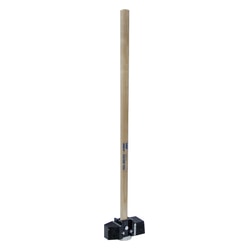
- Weight: 8,3 kg
- Dimensions: 120 x 120 mm
Paving hammers, block pullers, pry bars and adjusters are the paver's core hand tools — everything used to seat, shift and lift blocks once they are already laid. A paving hammer with rubber faces beds an element without chipping or marking its face, a paving pry bar shifts laid blocks without taking up a section of the surface, and a block puller grips a single unit for removal and replacement.
NORWIT.PL carries tools by Probst and Altrad Belle: rubber-faced hammers in a short version (2.5 kg, 400 mm handle) and a long one (2.9 kg, 1000 mm handle, also in the ergonomic GH-ERGO variant), RE paving pry bars weighing 2.7 kg, the quadruple MRE bar with a working width of 650 mm, the Altrad Belle MBS09 block puller with a jaw range of 90–240 mm, plus supporting tools: string tensioners, the FlexMarker for setting out cutting lines and the ENZ tool for pulling spacer bars.
These tools complement mechanical clamps, block splitters and screed bars — see the full range in paving tools.
Paving hammer — why the faces are rubber
A paving hammer is a hammer with an oversized head fitted with hard rubber faces, used to bed paving blocks into the laying course. Rubber spreads the impact across the whole element instead of a single point, so the block seats without chipped edges and without marks on its face. An ordinary steel-faced club hammer breaks up the concrete surface and leaves white scuffs that cannot be removed once the job is finished.
Two figures decide how well it works: head mass and handle length. The Probst GH range weighs 2.5–2.9 kg — clearly more than a typical DIY rubber mallet (0.5–1.5 kg), because a concrete block 6–8 cm thick needs real impact energy rather than a light tap. A 1000 mm handle allows work from a standing position and increases leverage, while the 400 mm version gives control when working from your knees and along edges.
Tool types in this category
The category covers four groups of hand tools, each matching a different stage of work on an already laid surface.
| Tool | What it does | When it is used |
|---|---|---|
| Paving hammer | beds blocks into the laying course | continuously, as each element is laid |
| Paving pry bar | shifts blocks and closes joints | correcting a laid section without lifting it |
| Block puller | grips and lifts a single block | replacing a damaged unit, access to services |
| String tensioners, FlexMarker | setting out laying and cutting lines | before starting and before cutting curves |
The RO/RE paving bar weighs about 2.7 kg and works one block at a time, while the quadruple MRE bar with a working width of 650 mm shifts a whole row at once — on large areas this cuts joint correction from hours to minutes. The Altrad Belle MBS09 block puller handles elements with a spacing of 90–240 mm, which covers standard block and edging sizes.
Choosing a paving hammer — weight and handle length
The choice comes down to how heavy the block is and what position you work in. Below are the models stocked at NORWIT.PL with their typical use.
| Model | Mass | Length | Typical use |
|---|---|---|---|
| Probst GH-K (short) | 2.5 kg | 400 mm | work from the knees, edges, edgings |
| Probst GH (long) | 2.9 kg | 1000 mm | large areas, standing work |
| Probst GH-ERGO | 2.9 kg | 1000 mm | as above, ergonomic handle — less strain on the wrist |
| Probst GH-ERGO-K | approx. 2.5 kg | short | precise bedding, ergonomic handle |
A practical rule: the thicker and heavier the block, the heavier the hammer — for 6 cm blocks a 2.5 kg tool is enough, while 8 cm blocks and patio slabs call for 2.9 kg. Pick the long handle when laying driveways and yards and you want to spare your back; pick the short one for kerbs, edgings and tight spots. On granite and ceramic use rubber faces only, as these materials chip far more easily than vibro-pressed concrete.
Pry bars, pullers and adjusters — fixes without lifting the surface
The most common laying fault is joints drifting out of line — after a few metres a row of blocks stops running straight. A paving pry bar lets you shift a laid section and close the joint without removing elements, which is faster and leaves the laying course undisturbed. The quadruple MRE bar does the same across 650 mm at a time.
A block puller comes in later — when replacing a cracked block or when services beneath the surface need access. It grips the element by its sides and lifts it vertically, without levering against the neighbouring blocks. For larger elements — paving slabs, kerbs and blocks — use mechanical clamps, and for large-format units vacuum laying devices, which lift a slab without gripping its edges.
String tensioners (String-Along SA, StringTight SB) and the FlexMarker FMK belong to the set-out stage: the first keep the paving string under constant tension along the full run, the second marks the cutting line for curves, which is then cut with a block splitter or a saw.
Frequently asked questions — paving hammers and hand tools
Which paving hammer should I choose for concrete block paving?
For standard 6 cm concrete blocks, a rubber-faced paving hammer of about 2.5 kg is the right choice, for example the Probst GH-K with a 400 mm handle. For 8 cm blocks, patio slabs and large-format elements, a 2.9 kg model with a 1000 mm handle works better and allows you to stay standing. The faces must be rubber — a steel club hammer breaks the edges and leaves permanent scuffs on the concrete face.
How much should a paving hammer weigh?
Professional paving hammers weigh between 2.5 and 2.9 kg, roughly twice as much as the rubber mallets sold in DIY stores (0.5–1.5 kg). That mass is needed because a concrete block 6–8 cm thick requires real impact energy to settle level with its neighbours. A tool that is too light forces repeated blows in the same spot, which slows the work down and increases the risk of shifting the block.
Which hammer is best for edgings and kerbs?
For edgings and kerbs a short-handled hammer of about 400 mm and 2.5 kg works best — it gives control over the blow in tight spaces and lets you work close to the element. Kerbs are additionally set using a block puller or clamp, since a single road kerb weighs from 40 to over 100 kg and cannot be positioned with a hammer alone.
How does a paving pry bar differ from an ordinary crowbar?
A paving pry bar has a flat, wide working foot that spreads pressure across several blocks rather than a single point, so it shifts a laid section without crumbling the edges. Single bars weigh about 2.7 kg, while the quadruple MRE version with a 650 mm working width moves a whole row at once. An ordinary steel crowbar has a narrow blade and damages the corners of the elements when used to correct joints.
What is a block puller used for?
A block puller is a tool with adjustable jaws that grips a single block by its sides and lifts it vertically out of the laid surface. It is used when replacing a cracked element and when reaching services laid beneath the paving. The Altrad Belle MBS09 model handles elements with a spacing of 90–240 mm, covering standard block and edging dimensions. Without a puller, removing one block means levering against its neighbours, which loosens the whole joint.
Is a paving hammer suitable for granite setts?
Granite and ceramic setts should only be worked with rubber-faced hammers, and preferably the heavier version of about 2.9 kg. Granite is harder than vibro-pressed concrete but at the same time more prone to edge chipping, so the blow must be spread by the rubber across the whole element. Hammers with steel faces or high-hardness plastic leave visible chips on granite.
What tools are needed for laying block paving besides a hammer?
A paver's basic kit includes a paving hammer, a pry bar for correcting joints, a puller or clamp for moving elements, string tensioners for setting out lines and a screed bar for levelling the laying course. Cutting blocks requires a splitter or a saw with a diamond blade, and compacting the surface requires a plate compactor with a protective mat. See the full range in paving tools.