


-
-
Concrete
-
- Concreting
- Concrete Vibrators
- Complete 230 V Mechanical Vibrators
- Vibrator Heads
- Vibrator Shafts
- Vibrator Motors
- Concrete Vibrators 42 V | 200 Hz
- Mechanical Vibrators 230 V
- 42 V | 200 Hz Head and Shaft
- 230 V Concrete Vibrators
- Vibrators With Built-In 230 V | 200 Hz Converter
- 42 V | 200 Hz Converters
- Combustion Vibrators
- Pneumatic Vibrators
- External Vibrators
- Power Trowels
- Vibratory Screeds
- Concrete Hand Tools
- Concrete Vibrators
-
-
-
-
-
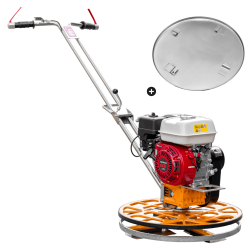
- Walk-Behind Combustion Power Trowels
-
-
-
Heating and cooling
-
Generators
-
Earthworks
-
Industrial vacuums
-
Finishing
-
Pumps
-
Measurement
-
BLOG & Tips
-
Promotions
Kategorie 16 kategorii
Kategorie
-
- Levels and Measurements
- Soil Compactors
- Tamping Rammers - Jumping Jacks
- Single Direction Vibratory Plates
- Reversible Vibratory Plates
- Rollers
- 100 kg Soil Compactors
- 200 kg Soil Compactors
- 300 kg Soil Compactors
- 400 kg Soil Compactors
- 500 kg Soil Compactors
- 600 kg Soil Compactors
- 700 kg Soil Compactors
- 800 kg Soil Compactors
- Wacker Neuson Compactors
- Accessories for Compactors
- Bomag Compactors
- Altrad Belle Compactors
- Paver Compactors
- Swepac Compactors
- Power Generators
- Concreting
- Concrete Vibrators
- Complete 230 V Mechanical Vibrators
- Vibrator Heads
- Vibrator Shafts
- Vibrator Motors
- Concrete Vibrators 42 V | 200 Hz
- Mechanical Vibrators 230 V
- 42 V | 200 Hz Head and Shaft
- 230 V Concrete Vibrators
- Vibrators With Built-In 230 V | 200 Hz Converter
- 42 V | 200 Hz Converters
- Combustion Vibrators
- Pneumatic Vibrators
- External Vibrators
- Vibratory Screeds
- Power Trowels
- Concrete Hand Tools
- Concrete Vibrators
- Pumps and Motor Pumps
- Cutting, Drilling and Grinding
- Heating and Cooling
- Wood Table Saws
- Painting and Plastering
- Combustion Engines
- Washing and Vacuuming
- Cement Mixers
- Paving Tools
- Wheelbarrows and Track Dumpers
- Demolition and Hammers
- Sales
- Levels and Measurements
Brak kategorii pasujących do wyszukiwania.
Heavy-Duty Sprayers
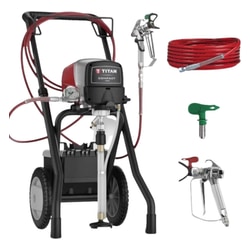
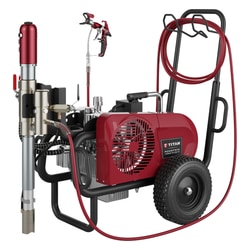
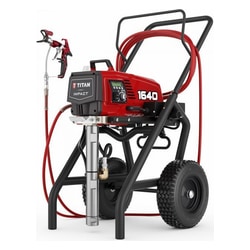
Generator Titan Impact 1640 Paint Sprayer
2413451zł27,239.58 tax incl. 22 146,00 zł tax excl.View technical data Zobacz szczegóły
- Engine power: 2,6 kW
- Voltage: 230 V
- Engine: Elektryczny
- Max. pressure: 228 bar
- Hose length: Brak danych
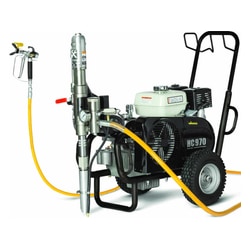
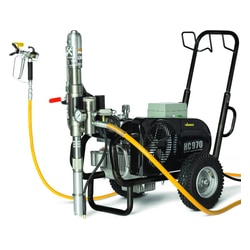
Generator Wagner Heavycoat 970G Paint And Filler Unit
2332192zł41,205.00 tax incl. 33 500,00 zł tax excl.View technical data Zobacz szczegóły
- Weight: 88 kg
- Engine power: 6 kW
- Engine: Spalinowy (benzyna)
- Max. pressure: 250 bar
- Hose length: 15 m
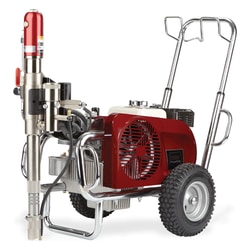
Generator Heavy Duty Paint Sprayer Titan POWRTWIN 12000 PLUS DI 400V
290034zł44,518.62 tax incl. 36 194,00 zł tax excl.View technical data Zobacz szczegóły
- Weight: 87,1 kg
- Engine power: 2,72 kW
- Voltage: 400 V
- Engine: Elektryczny
- Max. pressure: 228 br
Generator Titan Wagner PT 6900 Plus DI Paint And Filler Unit
0290033zł26,936.00 tax incl. 21 899,19 zł tax excl.View technical data Zobacz szczegóły
- Weight: 74,8 kg
- Engine power: 2,72 kW
- Voltage: 230 V
- Engine: Elektryczny
- Max. pressure: 228 bar
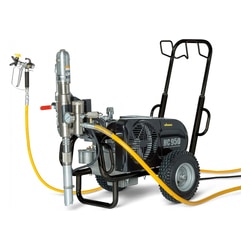
Generator Wagner Heavycoat 950E Paint And Filler Unit
2332184zł31,365.00 tax incl. 25 500,00 zł tax excl.View technical data Zobacz szczegóły
- Weight: 83 kg
- Engine power: 3,6 kW
- Engine: Elektryczny
- Max. pressure: 250 bar
- Hose length: 15 m
Generator Wagner Heavycoat 970E Paint And Filler Unit
2332191zł41,205.00 tax incl. 33 500,00 zł tax excl.View technical data Zobacz szczegóły
- Weight: 100 kg
- Engine power: 5,5 kW
- Engine: Elektryczny
- Max. pressure: 250 bar
- Hose length: 15 m
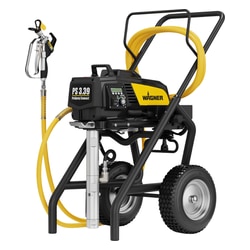
Generator Titan Prospray 3.39 Connect Paint And Filler Unit
2308264zł26,506.50 tax incl. 21 550,00 zł tax excl.View technical data Zobacz szczegóły
- Weight: 50 kg
- Frequency: 50 Hz
- Voltage: 230 V
- Power: 1,65 kW
- Working speed: 1000 m²/dzień
A heavy-duty filler sprayer is an airless pump built for dense materials — gypsum and polymer skim coats, machine-applied fillers, renovation mortars and high-build primers. What sets it apart from a paint unit is the working pressure, usually 200–250 bar, a reinforced fluid section and large-orifice tips of roughly 0.6–1.0 mm that let through material many times thicker than latex paint.
NORWIT.PL supplies skim-coat spraying machines mainly from Titan Wagner and Wagner — from combined paint-and-filler outfits to heavy units intended for continuous work over large surfaces. Spraying cuts skim-coating a wall from several hours to under an hour and lays down an even film thickness, so far less sanding follows. If the job is paint only, look at our paint sprayers instead.
Spraying skim coat and filler — how the machine works
A hydraulic pump pressurises the compound and forces it through the hose to the gun, where the tip breaks the stream into an even fan. Compressed air never touches the material, so no fog forms. With fillers the working pressure normally reaches 200–250 bar, noticeably more than the 150–200 bar used for latex paint, because a dense mix meets far greater resistance along the hose.
Output runs on the order of 100–250 m² per hour with one operator, against roughly 15–25 m²/h by hand with a trowel. The film comes out at a repeatable thickness, typically 1–3 mm, so fewer corrections and less dust follow at sanding. The crew sprays the compound and smooths it straight away with a wide blade — the machine replaces spreading, not finishing.
Filler sprayer versus paint sprayer — where they part ways
Both machines run airless, but each is engineered around a different viscosity. A light paint sprayer handles paints and primers; a thick skim coat stalls its pump and blocks the tip. A filler machine has a stronger motor, a wider fluid section and a 3/8" hose in place of 1/4".
| Parameter | Filler sprayer | Paint sprayer |
|---|---|---|
| Working material | skim coats, machine fillers, renovation mortars | paints, primers, varnishes |
| Working pressure | approx. 200–250 bar | approx. 150–230 bar |
| Tip orifice | usually 0.6–1.0 mm | usually 0.2–0.5 mm |
| High-pressure hose | 3/8" class, reinforced | 1/4" class |
| Can apply paint | yes, once the tip and hose are swapped | yes |
For painting alone the choice narrows to pump design: membrane paint sprayers flush out more easily, while piston paint sprayers push higher pressure through facade coatings.
Matching the machine to the scale of the job
Two figures drive the choice: pump output in l/min and the largest tip supported. They set the square metres covered per shift and decide whether two guns can run off one machine.
- Residential fit-outs — a paint-and-filler outfit around 3–5 l/min, one gun, skim coats at standard consistency.
- Housing estates, warehouses, continuous duty — machines above 6 l/min, two guns at once, hose runs measured in tens of metres.
Wear parts — tips, filters, extension poles — sit in sprayer accessories, and the full range sits under painting and plastering.
Frequently asked questions about filler sprayers
Can a paint sprayer spray skim coat?
A standard paint unit copes with skim coat only where the manufacturer lists fillers in the manual. Latex paint sits at a few thousand mPa·s while mixed skim coat reaches tens of thousands, so a pump built for paint runs against its 200 bar ceiling and wears out seals and the inlet valve fast. The practical requirement is a tip of at least 0.6 mm orifice on a 3/8" hose. Combined paint-and-filler machines carry both as standard, which makes them the safer buy whenever compound is in the plan.
Which spray tip suits skim coat?
Tips for filler compounds fall between 0.6 and 1.0 mm of orifice. In the tip code the first digit is half the fan width in inches at 30 cm, and the last two are the orifice in thousandths of an inch — a 629 tip lays a band of about 30 cm through a 0.74 mm orifice. Walls take a fan of 25–35 cm; ceilings and reveals call for something narrower. Tips wear in service: the orifice opens up, the fan starts to split, and material consumption can climb by a tenth or more.
How much compound does spraying use per square metre?
Consumption follows film thickness and the state of the substrate. A 1–2 mm coat over flat gypsum plaster works out at roughly 1.2–2.5 kg of dry compound per square metre, much the same as hand application. Spraying saves time, not material: one operator covers 100–250 m²/h against 15–25 m²/h by hand. When pricing a job, add a few per cent for compound left in the hose — a run of several dozen metres holds a few litres.
How do you clean the machine after working with filler?
Cleaning starts the moment spraying stops — gypsum skim coats set some 30–60 minutes after mixing and residue left in the hose hardens permanently. Push the material out with water at reduced pressure, flush the circuit until it runs clear, then wash the tip and filters separately. For longer downtime a preservative fluid keeps the seals from drying out. Neglected cleaning is the most common cause of pressure loss and a replaced fluid section.