


-
-
Concrete
-
- Concreting
- Concrete Vibrators
- Complete 230 V Mechanical Vibrators
- Vibrator Heads
- Vibrator Shafts
- Vibrator Motors
- Concrete Vibrators 42 V | 200 Hz
- Mechanical Vibrators 230 V
- 42 V | 200 Hz Head and Shaft
- 230 V Concrete Vibrators
- Vibrators With Built-In 230 V | 200 Hz Converter
- 42 V | 200 Hz Converters
- Combustion Vibrators
- Pneumatic Vibrators
- External Vibrators
- Power Trowels
- Vibratory Screeds
- Concrete Hand Tools
- Concrete Vibrators
-
-
-
-
-
- Walk-Behind Combustion Power Trowels
-
-
-

Heating and cooling
-
Generators
-
Earthworks
-
Industrial vacuums
-
Finishing
-
Pumps
-
Measurement
-
BLOG & Tips
-
Promotions
Kategorie 16 kategorii
Kategorie
-
- Levels and Measurements
- Soil Compactors
- Tamping Rammers - Jumping Jacks
- Single Direction Vibratory Plates
- Reversible Vibratory Plates
- Rollers
- 100 kg Soil Compactors
- 200 kg Soil Compactors
- 300 kg Soil Compactors
- 400 kg Soil Compactors
- 500 kg Soil Compactors
- 600 kg Soil Compactors
- 700 kg Soil Compactors
- 800 kg Soil Compactors
- Wacker Neuson Compactors
- Accessories for Compactors
- Bomag Compactors
- Altrad Belle Compactors
- Paver Compactors
- Swepac Compactors
- Power Generators
- Concreting
- Concrete Vibrators
- Complete 230 V Mechanical Vibrators
- Vibrator Heads
- Vibrator Shafts
- Vibrator Motors
- Concrete Vibrators 42 V | 200 Hz
- Mechanical Vibrators 230 V
- 42 V | 200 Hz Head and Shaft
- 230 V Concrete Vibrators
- Vibrators With Built-In 230 V | 200 Hz Converter
- 42 V | 200 Hz Converters
- Combustion Vibrators
- Pneumatic Vibrators
- External Vibrators
- Vibratory Screeds
- Power Trowels
- Concrete Hand Tools
- Concrete Vibrators
- Pumps and Motor Pumps
- Cutting, Drilling and Grinding
- Heating and Cooling
- Wood Table Saws
- Painting and Plastering
- Combustion Engines
- Washing and Vacuuming
- Cement Mixers
- Paving Tools
- Wheelbarrows and Track Dumpers
- Demolition and Hammers
- Sales
- Levels and Measurements
Brak kategorii pasujących do wyszukiwania.
Laser Levels with No Slopes
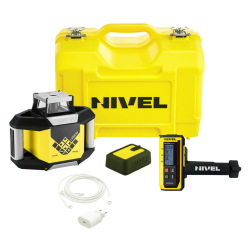
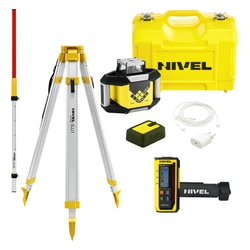
Laser Level Nivel System NL300R DIGITAL (red)
NL300R-DIGITALzł3,062.70 tax incl. 2 490,00 zł tax excl.View technical data Zobacz szczegóły
- Weight: 3 kg
- Dimensions: 206 x 206 x 211 mm
- Operating temperature range: -20°c do +50°c
- Leveling accuracy: ± 1,0 mm / 10 m
- Self-leveling range: ±5°
KIT Nivel System NL300R DIGITAL Laser Level (red) + SJJ1 Tripod + LS-24 Staff
NL300R-DIGITAL-zestaw1zł3,431.70 tax incl. 2 790,00 zł tax excl.View technical data Zobacz szczegóły
- Weight: 3 kg
- Dimensions: 206 x 206 x 211 mm
- Operating temperature range: -20°c do +50°c
- Leveling accuracy: ± 1,0 mm / 10 m
- Self-leveling range: ±5°
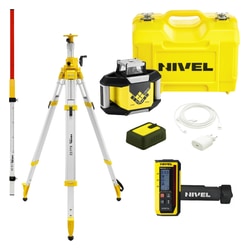
KIT Nivel System NL300R DIGITAL Laser Level (red) + SJJ32 Tripod + LS-24 Staff
NL300R-DIGITAL-zestaw2zł4,046.70 tax incl. 3 290,00 zł tax excl.View technical data Zobacz szczegóły
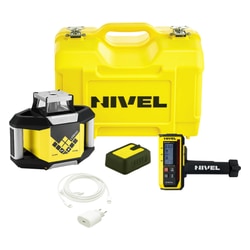
- Weight: 3 kg
- Dimensions: 206 x 206 x 211 mm
- Operating temperature range: -20°c do +50°c
- Leveling accuracy: ± 1,0 mm / 10 m
- Self-leveling range: ±5°
A self-levelling rotary laser without a grade function projects a horizontal (and vertical) plane only — there is no way to dial in an inclination along the X or Y axis. The compensator brings the head level on its own, typically within a range of about ±5°, and holds that reference to an accuracy in the order of ±1–3 mm at 30 m. This class of instrument covers every job where the reference points share one elevation: setting out strip footings, levelling formwork, marking floor datum points, and installing suspended ceilings or partition wall framing.
Our range here is built mainly around Nivel System equipment — the full line-up sits on the Nivel System brand page. The category belongs to rotating laser levels; when a job calls for a set slope on roads, ramps or drainage runs, move to laser levels with slopes. For short-range interior fit-out work, crossline lasers are often the faster alternative.
How a self-levelling laser without a grade function works
The heart of the instrument is the compensator — a magnetically damped pendulum or a servo system that pulls the head into level once the laser sits on a tripod, and holds it there while the crew works. Self-levelling covers roughly ±5°, so the tripod only needs a rough set-up. The head spins at some 300–600 rpm and sweeps a continuous reference plane; outdoors the spot is invisible to the naked eye, so elevations are read with a detector clamped to a grade rod.
A unit without a grade function carries no tilt motors and no keypad for a slope percentage. Less electronics means a lower price and fewer settings that can drift out of adjustment. Four parameters matter in this class: accuracy of about ±1–3 mm at 30 m, a working radius in the order of 400–600 m with a detector, an enclosure rating usually between IP54 and IP66, and battery endurance of roughly 20–40 h.
Fixed-plane, grade or crossline — a comparison
| Feature | Rotary, no grade | Rotary with grade | Crossline laser |
|---|---|---|---|
| Horizontal plane | yes | yes | yes (a line, not a full plane) |
| Slope entered as a percentage | no | yes, usually within about ±5–10% | no |
| Typical working radius | about 400–600 m with detector | about 400–600 m with detector | about 20–50 m, more with detector |
| Where it earns its keep | open sites and large interiors | roads, ramps, drainage | interiors, fit-out |
| Operating complexity | low | medium | low |
Build the kit around the instrument: a laser level extension pole with a detector, a rigid surveying tripod and the surveying accessories to match. The measuring family sits under laser levels.
Frequently asked questions
What is a self-levelling laser level without a grade function?
A self-levelling laser level without a grade function is a rotary laser producing a horizontal reference plane, some models a vertical one too, with no mechanism for tilting the beam. The compensator finds level automatically within roughly ±5° and holds an accuracy in the order of ±1–3 mm at 30 m; on most models, knocking the tripod makes the head flag the deviation and stop rotating. Dropping the grade function lowers the price and the number of settings an operator can get wrong, while levelling accuracy stays the same — hence the default choice where every reference point sits on one elevation.
Which jobs can a fixed-plane laser level handle?
A fixed-plane laser level covers tasks where points share one elevation: setting out strip and pad foundations, checking formwork heights, marking datum points before a screed pour, verifying floor flatness, and installing suspended ceilings, partition framing and soffit services. With a working radius in the order of 400–600 m using a detector, one tripod position serves a typical plot or a warehouse of several thousand square metres. Gradients for roads, ramps and sewer runs are the one thing it cannot do — those need a grade function.
Can a laser level with no grade function set out a slope?
Setting out a fall with a fixed-plane instrument means working around it, because the reference plane always stays horizontal. The gradient comes from the rod readings instead: for 1% the detector moves 10 cm down the rod for every 10 m of run, and pegs go in a few metres at a time. That works over short stretches — a terrace, a driveway, a screed fall towards a gully — but on roads, ramps and sewer runs it is slow and the errors accumulate. Those jobs call for a grade model, where the slope is keyed in on the panel.
How do you check the accuracy of a self-levelling laser on site?
The standard field check uses two instrument positions. Set the laser midway along a run of about 30 m between two grade rods, read the height on each with the detector, note the difference. Then move the tripod a few metres beyond one rod, repeat both readings and compare the differences. A discrepancy larger than roughly 3 mm at 30 m points to a compensator out of adjustment and sends the unit to service. Repeat the test every few weeks of use, and always after a drop.
Why buy from NORWIT.PL
We match the laser with its accessories so the kit works from day one on site: a Nivel System instrument, a detector, a grade rod and a tripod from one supplier. We also say when a unit from the laser levels with slopes range makes more sense, and when an optical level is enough. We serve contractors, flooring crews and rental companies, with a VAT invoice and service support.