


-
-
Concrete
-
- Concreting
- Concrete Vibrators
- Complete 230 V Mechanical Vibrators
- Vibrator Heads
- Vibrator Shafts
- Vibrator Motors
- Concrete Vibrators 42 V | 200 Hz
- Mechanical Vibrators 230 V
- 42 V | 200 Hz Head and Shaft
- 230 V Concrete Vibrators
- Vibrators With Built-In 230 V | 200 Hz Converter
- 42 V | 200 Hz Converters
- Combustion Vibrators
- Pneumatic Vibrators
- External Vibrators
- Power Trowels
- Vibratory Screeds
- Concrete Hand Tools
- Concrete Vibrators
-
-
-
-
-
- Walk-Behind Combustion Power Trowels
-
-
-
Heating and cooling
-
Generators
-
Earthworks
-
Industrial vacuums
-
Finishing
-
Pumps
-
Measurement
-
BLOG & Tips
-
Promotions
Kategorie 16 kategorii
Kategorie
-
- Levels and Measurements
- Soil Compactors
- Tamping Rammers - Jumping Jacks
- Single Direction Vibratory Plates
- Reversible Vibratory Plates
- Rollers
- 100 kg Soil Compactors
- 200 kg Soil Compactors
- 300 kg Soil Compactors
- 400 kg Soil Compactors
- 500 kg Soil Compactors
- 600 kg Soil Compactors
- 700 kg Soil Compactors
- 800 kg Soil Compactors
- Wacker Neuson Compactors
- Accessories for Compactors
- Bomag Compactors
- Altrad Belle Compactors
- Paver Compactors
- Swepac Compactors
- Power Generators
- Concreting
- Concrete Vibrators
- Complete 230 V Mechanical Vibrators
- Vibrator Heads
- Vibrator Shafts
- Vibrator Motors
- Concrete Vibrators 42 V | 200 Hz
- Mechanical Vibrators 230 V
- 42 V | 200 Hz Head and Shaft
- 230 V Concrete Vibrators
- Vibrators With Built-In 230 V | 200 Hz Converter
- 42 V | 200 Hz Converters
- Combustion Vibrators
- Pneumatic Vibrators
- External Vibrators
- Vibratory Screeds
- Power Trowels
- Concrete Hand Tools
- Concrete Vibrators
- Pumps and Motor Pumps
- Cutting, Drilling and Grinding
- Heating and Cooling
- Wood Table Saws
- Painting and Plastering
- Combustion Engines
- Washing and Vacuuming
- Cement Mixers
- Paving Tools
- Wheelbarrows and Track Dumpers
- Demolition and Hammers
- Sales
- Levels and Measurements
Brak kategorii pasujących do wyszukiwania.
Measuring Wheels
Roadometer Nivel System M 100 DIGITAL
M100 DIGITALzł712.00 tax incl. 578,86 zł tax excl.View technical data Zobacz szczegóły
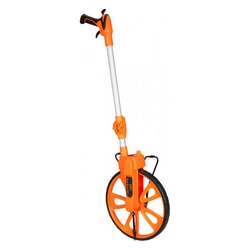
- Weight: 2,5 kg
- Dimensions: 0,98 m (po złożeniu)
- Brand: Nivel System
- Maximum measurement length: 9999,99 m
- Minimum measurement length: 1cm (lub 1 cal)
Easywheel M20 Circular Roadometer
16-202-27zł453.87 tax incl. 369,00 zł tax excl.View technical data Zobacz szczegóły
- Instrument accuracy: 0,1%
- Measurement range: 9999,9 m
- Measurement wheel diameter/circumference with tire: 318,5 mm / 1 m
- Maximum measurement speed: 7 km/h
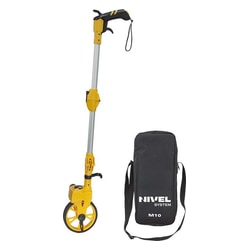
Nivel System M10 Road Meter
M10zł468.00 tax incl. 380,49 zł tax excl.View technical data Zobacz szczegóły
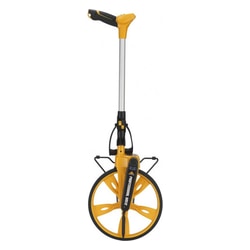
- Weight: 1,1 kg
- Dimensions: 1,04 m (po złożeniu)
- Brand: Nivel System
- Maximum measurement length: 9999,9 m
- Minimum measurement length: 0,1 m
Electronic Circular Roadometer DM 12 Professional
16-202-24zł752.76 tax incl. 612,00 zł tax excl.View technical data Zobacz szczegóły
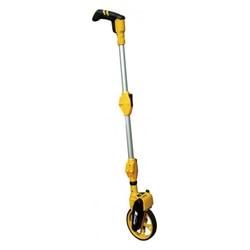
- Instrument accuracy: 0,1%
- Measurement range: 1 cm - 9999,99 m
- Measurement wheel diameter/circumference with tire: 320,1
- Maximum measurement speed: 7 km/h
Compact Circular Roadometer GM 06
16-202-25zł400.98 tax incl. 326,00 zł tax excl.View technical data Zobacz szczegóły
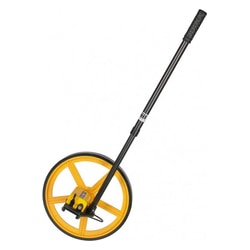
- Measurement range: 9999,9 m
- Measurement wheel diameter/circumference with tire: 160 mm
- Maximum measurement speed: 7 km/h
Mechanical Circular Roadometer MD 318
16-202-23zł285.36 tax incl. 232,00 zł tax excl.View technical data Zobacz szczegóły
- Instrument accuracy: 1%
- Measurement range: 9999,9 m
- Measurement wheel diameter/circumference with tire: 318,5 mm / 1 m
- Maximum measurement speed: 7 km/h
- Smallest plot: 1 dm
Roadometer Nivel System M 100
M100zł539.97 tax incl. 439,00 zł tax excl.View technical data Zobacz szczegóły
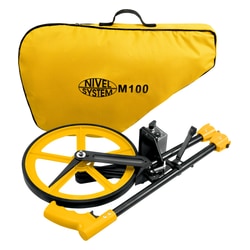
- Weight: 2,1 kg
- Dimensions: 1,10 m (po złożeniu)
- Brand: Nivel System
- Maximum measurement length: 99999,9 m
- Minimum measurement length: 0,1 m
A measuring wheel records distance by rolling: the wheel travels along the route and every revolution feeds a counter that adds up the metres covered. With a circumference of roughly 1 m the reading stays within about 0.5% of the measured length, and a single walk covers stretches running into hundreds of metres — the range where a tape runs out and a laser rangefinder loses its clear line of sight. Because the wheel follows the ground, curves, kerbs, pavements and undulating terrain cause it no trouble.
NORWIT.PL supplies measuring wheels mainly from Nivel System, including the EasyWheel series — usually with a mechanical or electronic counter, a folding handle and a carrying grip. You will find the full line-up on the Nivel System brand page, and the wider survey kit in levels and measurements. Below we cover wheel diameter, the point at which a wheel beats a rangefinder, and how to keep readings repeatable.
Measuring wheels — how they work and what they are for
A measuring wheel (also called a surveyor's wheel) determines length by rolling contact: the wheel runs over the surface while a counter converts revolutions into metres. On a wheel with a 1 m circumference one turn equals exactly 1 m, and the figure grows continuously — no intermediate marks, no moving a tape along. Counters commonly run to 9,999.9 m with a resolution of 0.1 m, so one pass handles a 20 m fence line or a kilometre of carriageway.
What separates the wheel from optical measurement is that it reports distance along the surface. On a bend, beside a kerb or across uneven ground it returns the real length a cable, pipe or edging will have to cover, often a few per cent more than the direct distance. Hence its place with road crews and installers: 300 m of fencing means ten moves of a 30 m tape and two people — or a single walk with a wheel.
We stock mainly Nivel System wheels, from the EasyWheel series, usually with a folding handle and a counter brake. A mechanical counter needs no batteries and works in frost and rain; an electronic one adds unit conversion and stored readings. It rounds out a field kit built around optical levels, surveying staffs and surveying paints for marking out points.
Measuring wheel versus laser rangefinder and tape
A wheel, a rangefinder and a measuring tape cover three different jobs. A laser rangefinder works to roughly ±1.5 mm but needs the target in view; a tape beyond 30–50 m calls for a second pair of hands and still sags. A measuring wheel records the route you can actually walk.
| Criterion | Measuring wheel | Laser rangefinder | Measuring tape |
|---|---|---|---|
| What it measures | length along the surface, curves included | straight-line distance | straight span between two points |
| Typical accuracy | approx. 0.5% of length | approx. ±1.5 mm | under 5 mm over 30 m |
| Practical range | up to approx. 9,999 m on the counter | usually 50–200 m | 10–50 m |
Most crews carry both: the wheel measures trench runs, the rangefinder handles heights and interiors. Setting out points also calls for tripods and extension poles plus surveying accessories.
Frequently asked questions about measuring wheels
What is a measuring wheel and how accurate is it?
A measuring wheel is a hand-guided distance meter in which a wheel rolled over the ground drives a counter that turns revolutions into metres. A wheel with a 1 m circumference clocks 1 m per turn, the counter reads to 0.1 m and totals runs of up to roughly 9,999 m. On firm surfaces the usual error is around 0.5% of the length, about 0.5 m over 100 m of route. Over loose aggregate or long grass it climbs towards 1%, because the wheel bounces and briefly loses contact.
When is a measuring wheel the better choice than a laser rangefinder?
A measuring wheel wins wherever the route is not a straight line or the target cannot be seen: along road curves and kerbs, across slopes and behind obstacles. A laser rangefinder reaches roughly ±1.5 mm, yet it needs a clear line of sight and works to 50–200 m. The wheel covers several hundred metres in one walk at an error near 0.5% — enough for material take-offs and as-built measurement.
Which wheel diameter suits work in the field?
Diameter follows the surface underfoot. Wheels of around 30–32 cm, with a circumference close to 1 m, cope with soil, aggregate and grass, because they ride over stones and ruts without losing contact. Wheels of around 15–16 cm, with a circumference near 0.5 m, weigh roughly a kilogram less and feel handier on finished floors, but they under-read over rough ground. On a construction site, choose the larger wheel.
How can readings from a measuring wheel be made more repeatable?
Repeatability rests almost entirely on technique. Zero the counter over the starting point, keep the wheel upright without pushing it sideways, and hold an even pace, since jerks make the tyre slip. As a check, roll a known 50 m or 100 m stretch now and then: a deviation above 1% normally points to a worn tyre or play on the axle. Clean mud off the wheel after work, because a build-up changes the effective rolling circumference.
Measuring wheels at NORWIT.PL
One order covers the whole kit: a measuring wheel from Nivel System, a levelling instrument, staffs and marking paint. The full survey equipment overview sits in levels and measurements.