

-
-
Concrete
-
- Concreting
- Concrete Vibrators
- Complete 230 V Mechanical Vibrators
- Vibrator Heads
- Vibrator Shafts
- Vibrator Motors
- Concrete Vibrators 42 V | 200 Hz
- Mechanical Vibrators 230 V
- 42 V | 200 Hz Head and Shaft
- 230 V Concrete Vibrators
- Vibrators With Built-In 230 V | 200 Hz Converter
- 42 V | 200 Hz Converters
- Combustion Vibrators
- Pneumatic Vibrators
- External Vibrators
- Power Trowels
- Vibratory Screeds
- Concrete Hand Tools
- Concrete Vibrators
-
-
-
-
-
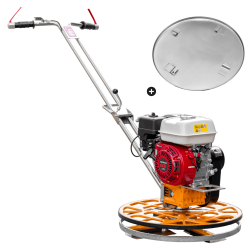
- Walk-Behind Combustion Power Trowels
-
-
-
Heating and cooling
-
Generators
-
Earthworks
-
Industrial vacuums
-
Finishing
-
Pumps
-
Measurement
-
BLOG & Tips
-
Promotions
Kategorie 16 kategorii
Kategorie
-
- Levels and Measurements
- Soil Compactors
- Tamping Rammers - Jumping Jacks
- Single Direction Vibratory Plates
- Reversible Vibratory Plates
- Rollers
- 100 kg Soil Compactors
- 200 kg Soil Compactors
- 300 kg Soil Compactors
- 400 kg Soil Compactors
- 500 kg Soil Compactors
- 600 kg Soil Compactors
- 700 kg Soil Compactors
- 800 kg Soil Compactors
- Wacker Neuson Compactors
- Accessories for Compactors
- Bomag Compactors
- Altrad Belle Compactors
- Paver Compactors
- Swepac Compactors
- Power Generators
- Concreting
- Concrete Vibrators
- Complete 230 V Mechanical Vibrators
- Vibrator Heads
- Vibrator Shafts
- Vibrator Motors
- Concrete Vibrators 42 V | 200 Hz
- Mechanical Vibrators 230 V
- 42 V | 200 Hz Head and Shaft
- 230 V Concrete Vibrators
- Vibrators With Built-In 230 V | 200 Hz Converter
- 42 V | 200 Hz Converters
- Combustion Vibrators
- Pneumatic Vibrators
- External Vibrators
- Vibratory Screeds
- Power Trowels
- Concrete Hand Tools
- Concrete Vibrators
- Pumps and Motor Pumps
- Cutting, Drilling and Grinding
- Heating and Cooling
- Wood Table Saws
- Painting and Plastering
- Combustion Engines
- Washing and Vacuuming
- Cement Mixers
- Paving Tools
- Wheelbarrows and Track Dumpers
- Demolition and Hammers
- Sales
- Levels and Measurements
Brak kategorii pasujących do wyszukiwania.
Painting and Plastering
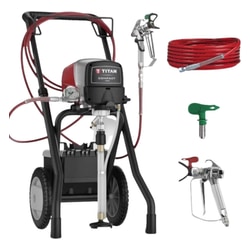
Generator Titan Compact 190 Paint Sprayer
2429263zł3,698.00 tax incl. 3 006,50 zł tax excl.View technical data Zobacz szczegóły
- Engine power: 0,56 kW
- Voltage: 230 V
- Engine: Elektryczny
- Max. pressure: 200 bar
- Hose length: 15 m
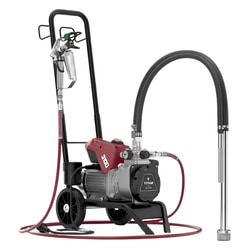
Generator Titan Elite 3100 Membrane Paint Sprayer
2432635zł8,998.00 tax incl. 7 315,45 zł tax excl.View technical data Zobacz szczegóły
- Weight: 27 kg
- Engine power: 1,3 kW
- Frequency: 50 Hz
- Voltage: 230 V
- Engine: Elektryczny
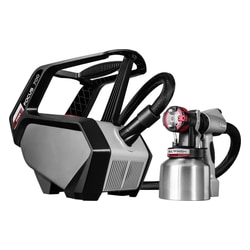
Generator Titan Focus 700 Paint Sprayer
2335642zł3,319.77 tax incl. 2 699,00 zł tax excl.View technical data Zobacz szczegóły
- Engine power: 1400 W
- Length of power cord_: 4 m
- Voltage: 230 V
- Engine: Elektryczny
- Producent: Titan
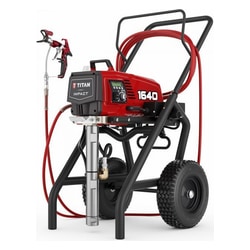
Generator Titan Impact 1640 Paint Sprayer
2413451zł27,239.58 tax incl. 22 146,00 zł tax excl.View technical data Zobacz szczegóły
- Engine power: 2,6 kW
- Voltage: 230 V
- Engine: Elektryczny
- Max. pressure: 228 bar
- Hose length: Brak danych
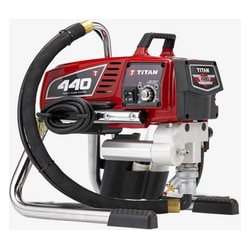
Generator Titan Impact 440 Paint Sprayer
0532035Azł9,373.01 tax incl. 7 620,33 zł tax excl.View technical data Zobacz szczegóły
- Engine power: 1,03 kW
- Voltage: 230 V
- Engine: Elektryczny
- Max. pressure: 223 bar
- Hose length: 15 m
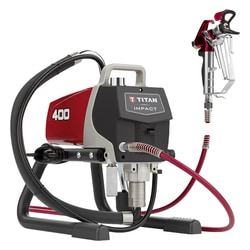
Generator Titan Impact 400 HEA Paint Unit
2413461zł7,054.00 tax incl. 5 734,96 zł tax excl.View technical data Zobacz szczegóły
- Engine power: 0,56 kW
- Voltage: 230 V
- Engine: Elektryczny
- Max. pressure: 207 bar
- Hose length: 15 m
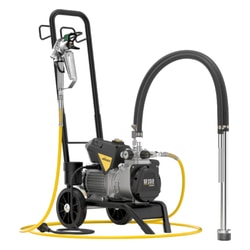
Generator Wagner Superfinish 23 PRO Paint Unit
2399198zł9,963.00 tax incl. 8 100,00 zł tax excl.View technical data Zobacz szczegóły
- Engine power: 1,3 kW
- Voltage: 230 V
- Engine: Elektryczny
- Max. pressure: 250 bar
- Hose length: 15 m
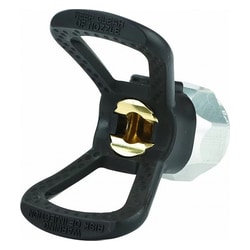
Nozzle Cover Head 7/8" TITAN Wagner
0289390zł185.73 tax incl. 151,00 zł tax excl.View technical data Zobacz szczegóły
- Spray angle: 30°
- Belt width: 15cm
- Nozzle opening size: 0,015”
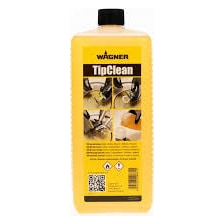
Tipclean Wagner Nozzle Cleaner 1 Liter
2400216zł134.07 tax incl. 109,00 zł tax excl.No technical data available Zobacz szczegóły
HEA Protip 519 Wagner Nozzle
0554519zł190.99 tax incl. 155,28 zł tax excl.No technical data available Zobacz szczegóły
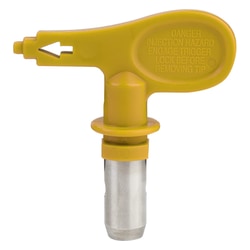
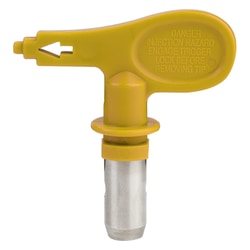
Trade TIP Nozzle 3 - 413 Wagner
0553413zł144.00 tax incl. 117,07 zł tax excl.View technical data Zobacz szczegóły
- Spray angle: 40°
- Belt width: 20 cm
- Nozzle opening size: 0,013”
Trade TIP Nozzle 3 - 417 Wagner
0553417zł148.01 tax incl. 120,33 zł tax excl.View technical data Zobacz szczegóły
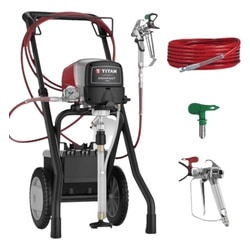
- Spray angle: 40°
- Belt width: 20 cm
- Nozzle opening size: 0,017”
The Painting & Plastering department at NORWIT.PL groups professional airless (also called hydraulic) spraying equipment — for paints, primers, varnishes and filling compounds. In airless spraying the pump pressurises the material to as much as 230 bar and forces it through a tip, breaking the stream into a fine mist without any compressed air. Thanks to this a sprayer covers 100–400 m² per hour, several to a dozen times faster than a roller (20–40 m²/h), with an even, covering film on walls, façades, roofs and steel structures.
We stock primarily professional Titan Wagner equipment — from compact finishing models to heavy PowrTwin sets built for continuous work. The range splits into paint sprayers, including piston paint sprayers for thick primers and façades and membrane paint sprayers for water-based paints. These are complemented by spackling machines for machine compounds, Titan POWRLINER road marking machines for line marking, and the tips, filters and hoses in paint sprayer accessories. Below we explain how to match the pump type, tip and output to your material and the scale of the job.
Painting and plastering — Titan Wagner airless sprayers
The Painting & Plastering department groups machines for spraying paints, primers, lacquers and filling compounds. At the heart of each is a paint sprayer (also called an airless or hydraulic sprayer), which sprays by the airless method, without compressed air. The pump pressurises paint to around 150–230 bar and pushes it through a tip with a chosen orifice that breaks the stream into a uniform mist. With no air in the stream the film is smooth and covers in a single pass, and a sprayer reaches 100–400 m² per hour — several times faster than a roller (20–40 m²/h).
At NORWIT.PL you will find professional spraying equipment, primarily by Titan Wagner — from compact finishing models to heavy PowrTwin sets for continuous work and machine filling; you can browse them on the Titan Wagner brand page. Below we cover how the department splits into subcategories, the difference between membrane and piston pumps, tip selection and when buying pays off.
Types of equipment in the Painting and Plastering department
We split the range by pump type and purpose: paint sprayers for airless spraying of paints and primers on walls and façades, plus machines for filling and line marking. The table below lists the subcategories along with what each is for.
| Subcategory | What it does | Examples / brand |
|---|---|---|
| paint sprayers | all-round airless spraying of paints, primers and lacquers on walls and façades | Titan Wagner |
| piston paint sprayers | piston pump, pressure up to 230 bar, thick primers, façade paints, continuous work | Titan Wagner |
| membrane paint sprayers | membrane pump, water-based, latex and acrylic paints, smooth finishes | Titan Wagner |
| spackling machines | spraying thick compounds and machine fillers, tips 0.025–0.035" and larger | Titan Wagner |
| road marking machines | horizontal line marking of car parks, roads, halls and yards | Titan POWRLINER |
| paint sprayer accessories | tips, filters, heads, hoses, oil and wear seals | Titan Wagner |
For finishing work you usually pick membrane sprayers; for façades and thick primers — piston sprayers; for machine compounds — spackling machines; and for line marking — Titan POWRLINER road marking machines. Although the department is called Painting & Plastering, the range covers spraying of paints, primers and filling compounds — it does not include plastering machines for mortars; surface smoothing is handled by spackling machines rather than plastering pumps.
Membrane or piston sprayer — how to choose
A sprayer's suitability is decided above all by pump type. In a membrane sprayer the paint is fed through a flexible diaphragm and never touches the piston — simpler to clean and cheaper to service, and well suited to water-based and medium-viscosity paints. A piston sprayer pumps material directly, reaching higher pressure and output for thick primers, façade paints and long continuous runs.
| Feature | Membrane sprayer | Piston sprayer |
|---|---|---|
| Pump principle | diaphragm feeds paint without contact with moving parts | piston pumps material directly |
| Working pressure | usually up to approx. 200 bar | up to 230 bar and above |
| Materials | water-based, latex, acrylic paints, thin primers | thick primers, façade paints, high-viscosity materials |
| Output | approx. 100–200 m²/h | up to 300–400 m²/h in continuous work |
| Service | easier cleaning, lower running cost | higher durability under heavy load |
| Best for | interior finishing, painting crews | façades, structures, large-area work |
Some Titan Wagner models use HEA (High Efficiency Airless) technology, which lowers working pressure and cuts overspray by about 55% versus classic airless — less wasted paint and easier work indoors and around detail.
Matching the tip and pressure to your material
Film thickness and fan width are governed by the tip. Its size is given in thousandths of an inch — the first digits set the angle (fan width) and the last two the orifice (output). Thinner materials need a smaller orifice, thicker ones a larger one; the right tip and pressure limit both mist and paint use. Replacement tips are available in paint sprayer accessories.
| Material | Tip orifice range | Notes |
|---|---|---|
| Lacquers, stains, thin paints | 0.008–0.012" | low pressure, fine mist, thin film |
| Water-based wall paints (latex, acrylic) | 0.013–0.017" | interior standard, high coverage |
| Primers, façade paints | 0.017–0.023" | higher pressure, thicker materials |
| Sprayable compounds and fillers | 0.025–0.035"+ | piston and spackling machines, continuous work |
How to match a sprayer to the scale of work
For interior finishing and single renovations, compact sprayers of around 100–150 m²/h are enough — good with water-based and latex paints. For houses, flats and the regular work of painting crews, stronger piston units (150–250 m²/h) that hold pressure with primers fit better. For façades, halls and machine filling there are heavy piston sprayers running continuously at 300–400 m²/h, such as the Titan Wagner PowrTwin series, and for line marking — Titan POWRLINER road marking machines.
Exact parameters — output in l/min, maximum tip size and motor power — are listed on each product page. When choosing, it is not only output that counts but also material viscosity and hose length, which affect the pressure drop at the tip.
Frequently asked questions about paint sprayers
How do I choose a paint sprayer for paints, primers and lacquers?
Choosing a sprayer starts with material viscosity. For lacquers and thin paints a membrane sprayer with a 0.008–0.012" tip and pressure up to 200 bar is enough. Water-based wall paints are sprayed with a 0.013–0.017" tip, while thick primers and façade paints call for a piston sprayer with a 0.017–0.023" tip and pressure up to 230 bar. The second criterion is scale: 100–150 m²/h covers finishing work, while façades need a piston unit delivering 300–400 m²/h.
What is the difference between a piston and a membrane paint sprayer?
A membrane sprayer feeds paint through a flexible diaphragm, which makes it simpler to clean and cheaper to service — it works best with water-based and medium-viscosity paints at around 100–200 m²/h. A piston sprayer pumps material directly with a piston, reaches up to 230 bar and outputs of 300–400 m²/h, so it handles thick primers, façade paints and continuous work. Finishers tend to pick the membrane type; façade crews the piston type.
What is the difference between a paint sprayer and a spackling machine?
A paint sprayer applies paints, primers and lacquers at pressures up to about 230 bar with 0.008–0.023" tips. A spackling machine pumps far thicker compounds and machine fillers, so it has a stronger piston pump, larger tip orifices (0.025–0.035" and above) and wider hoses. Many heavy Titan Wagner models, such as the PowrTwin series, do both — painting and filling.
How much does spraying cost per m² and when does buying pay off?
The cost per m² depends on the material and region, but the key gain is time: a sprayer covers 100–400 m²/h against just 20–40 m²/h with a roller, up to ten times faster. At that rate one operator does the work of several roller painters. For companies painting regularly the purchase pays for itself in saved labour within a few larger jobs — on a façade or hall the difference is several days of work.
Is a paint sprayer suitable for solvent-based paints?
Professional Titan Wagner sprayers apply both water-based and solvent-based paints, as well as primers and façade paints — provided you fit the right tip (0.017–0.023" for thick materials) and solvent-resistant seals. After work, flush the system thoroughly with thinner and earth the set against electrostatic charges. For large surfaces, piston sprayers delivering 300–400 m²/h are the best choice.
Which Titan Wagner paint sprayer should I choose for large surfaces?
For façades, halls and large surfaces the best choice is a heavy piston sprayer built for continuous work, such as the Titan Wagner PowrTwin 6900 Plus DI. It holds pressure up to 230 bar with thick primers and façade paints, takes large tips and long hoses, and its 300–400 m²/h output cuts the time to paint a hall from days to hours.
What is a road marking machine and how does it differ from a paint sprayer?
A road marking machine (e.g. Titan POWRLINER) is a wheeled sprayer for marking lines on car parks, roads, halls and yards. Unlike a paint sprayer it is pushed like a cart, has a gun pointing downward and adjustable line width, and some models run two guns for double lines. It uses the same airless technology at pressures up to about 230 bar, but is optimised for repeatable straight lines rather than painting walls.
Which paint sprayer accessories (tips, filters, hoses) do I need?
The core consumables are tips matched to the material (0.008–0.035"), tip guards and heads, pump filters (e.g. 60 mesh) and gun filters, high-pressure hoses and lubricating oil for the pumping section. A clogged filter or tip is the most common cause of a drop in output, so keep spare wear parts on hand. At NORWIT.PL you will find Titan Wagner accessory items that fit this brand's sprayer range.
What is a hydraulic (airless) sprayer and how does it work?
A hydraulic, or airless, sprayer is a machine in which the pump pressurises paint to 150–230 bar and forces it through a tip that breaks the material into a fine mist without any compressed air. With no air in the stream you get an even film in a single pass and less misting around detail. The result is an output of 100–400 m² per hour — several times higher than a roller (20–40 m²/h) — with uniform coverage on ceilings, profiles and textured surfaces.
Is it better to buy a paint sprayer or rent one?
Renting makes sense for a one-off renovation of a few days when no further painting work is planned. For those painting regularly, buying is more cost-effective — a professional Titan Wagner sprayer with service and parts availability pays for itself in saved labour within a few larger jobs, and its 300–400 m²/h output cuts every job by hours or days.
Why buy paint sprayers at NORWIT.PL
We focus on professional spraying: we focus on Titan Wagner equipment — no consumer-grade substitutes — and we advise on pump and tip selection for your material. The core is paint sprayers — piston models for façades and primers and membrane models for water-based paints — completed by spackling machines, Titan POWRLINER road marking machines and consumables from paint sprayer accessories. We fulfil orders online with nationwide shipping.