


-
-
Concrete
-
- Concreting
- Concrete Vibrators
- Complete 230 V Mechanical Vibrators
- Vibrator Heads
- Vibrator Shafts
- Vibrator Motors
- Concrete Vibrators 42 V | 200 Hz
- Mechanical Vibrators 230 V
- 42 V | 200 Hz Head and Shaft
- 230 V Concrete Vibrators
- Vibrators With Built-In 230 V | 200 Hz Converter
- 42 V | 200 Hz Converters
- Combustion Vibrators
- Pneumatic Vibrators
- External Vibrators
- Power Trowels
- Vibratory Screeds
- Concrete Hand Tools
- Concrete Vibrators
-
-
-
-
-
- Walk-Behind Combustion Power Trowels
-
-
-
Heating and cooling
-
Generators
-
Earthworks
-
Industrial vacuums
-
Finishing
-
Pumps
-
Measurement
-
BLOG & Tips
-
Promotions
Kategorie 16 kategorii
Kategorie
-
- Levels and Measurements
- Soil Compactors
- Tamping Rammers - Jumping Jacks
- Single Direction Vibratory Plates
- Reversible Vibratory Plates
- Rollers
- 100 kg Soil Compactors
- 200 kg Soil Compactors
- 300 kg Soil Compactors
- 400 kg Soil Compactors
- 500 kg Soil Compactors
- 600 kg Soil Compactors
- 700 kg Soil Compactors
- 800 kg Soil Compactors
- Wacker Neuson Compactors
- Accessories for Compactors
- Bomag Compactors
- Altrad Belle Compactors
- Paver Compactors
- Swepac Compactors
- Power Generators
- Concreting
- Concrete Vibrators
- Complete 230 V Mechanical Vibrators
- Vibrator Heads
- Vibrator Shafts
- Vibrator Motors
- Concrete Vibrators 42 V | 200 Hz
- Mechanical Vibrators 230 V
- 42 V | 200 Hz Head and Shaft
- 230 V Concrete Vibrators
- Vibrators With Built-In 230 V | 200 Hz Converter
- 42 V | 200 Hz Converters
- Combustion Vibrators
- Pneumatic Vibrators
- External Vibrators
- Vibratory Screeds
- Power Trowels
- Concrete Hand Tools
- Concrete Vibrators
- Pumps and Motor Pumps
- Cutting, Drilling and Grinding
- Heating and Cooling
- Wood Table Saws
- Painting and Plastering
- Combustion Engines
- Washing and Vacuuming
- Cement Mixers
- Paving Tools
- Wheelbarrows and Track Dumpers
- Demolition and Hammers
- Sales
- Levels and Measurements
Brak kategorii pasujących do wyszukiwania.
Pumps and Motor Pumps
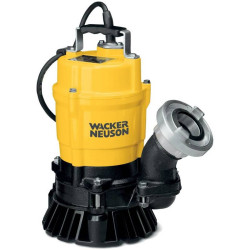
Wacker Neuson PST2 400 Submersible Sludge Pump
5000009173zł2,706.00 tax incl. 2 200,00 zł tax excl.View technical data Zobacz szczegóły
- Weight: 11,3 kg
- Dimensions: 265 x 185 x 330 mm
- Engine power: 0,4 kW / 0,5 KM
- Length of power cord_: 10 m
- Frequency: 50 Hz
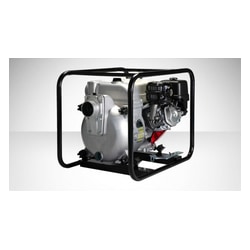
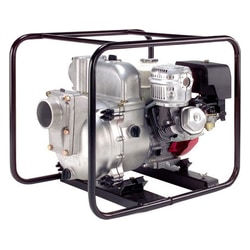
KTH 80X KOSHIN Sludge Pump
13109zł6,998.70 tax incl. 5 690,00 zł tax excl.View technical data Zobacz szczegóły
- Weight: 59 kg
- Dimensions: 690 x 485 x 537 mm
- Startup: Manual
- Engine: Honda GX 240
- Power: 8 KM
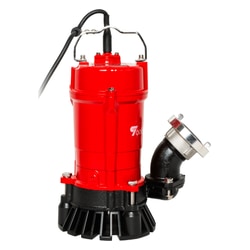
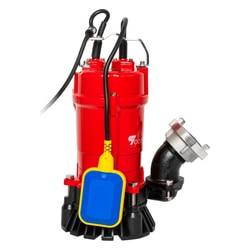
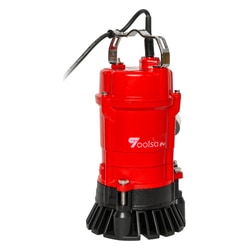
Toolsa TAX10-10-0.8 Submersible Sludge Pump
TAX10-10-0.8zł1,476.00 tax incl. 1 200,00 zł tax excl.View technical data Zobacz szczegóły
- Frequency: 50 Hz
- Voltage: 230 V
- Power: 0,8 kW
- Max. lifting height: 10 m
- Max capacity: 18 m³/h
Toolsa TAX10-10-0.8F Submersible Sludge Pump With Float
TAX10-10-0.8Fzł1,599.00 tax incl. 1 300,00 zł tax excl.View technical data Zobacz szczegóły
- Frequency: 50 Hz
- Voltage: 230 V
- Power: 0,8 kW
- Max. lifting height: 5 m
- Max capacity: 18 m³/h
KTH 50X KOSHIN Sludge Pump
13108zł5,995.02 tax incl. 4 874,00 zł tax excl.View technical data Zobacz szczegóły
- Weight: 47 kg
- Dimensions: 462 x 620 x 481 mm
- Startup: Manual
- Engine: Honda GX 160
- Power: 4,8 KM
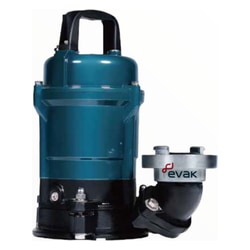
Evak 50EUSR5.05S Sludge Pump
50EUSR5.05Szł2,489.52 tax incl. 2 024,00 zł tax excl.View technical data Zobacz szczegóły
- Weight: 11,3 kg
- Dimensions: 310 x 243 mm
- Engine power: 0,37 kW / 0,5 KM
- Frequency: 50 Hz
- Voltage: 230 V
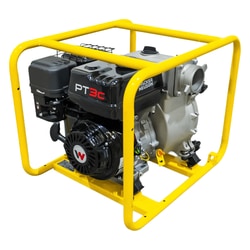
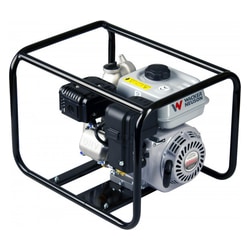
Wacker Neuson Pt3g-C Dirty Water Motor Pump
5100079343zł4,305.00 tax incl. 3 500,00 zł tax excl.View technical data Zobacz szczegóły
- Weight: 64 kg
- Dimensions: 678 × 530 × 535 mm
- Engine: Loncin G300FA
- Max capacity: 69 m³/h
- Speed: 3 600 obr./min
Toolsa TAX10-6-0.6 Submersible Sludge Pump With or Without Float
TAX10-6-0.6-TAX10-6-0.6Fzł1,228.77 tax incl. 999,00 zł tax excl.View technical data Zobacz szczegóły
- Frequency: 50 Hz
- Voltage: 230 V
- Power: 0,6 kW
- Max. lifting height: 6 m
- Max capacity: 18 m³/h
Wacker Neuson MCP2 Clean Water Motor Pump
5100056321zł1,216.47 tax incl. 989,00 zł tax excl.View technical data Zobacz szczegóły
- Weight: 26 kg
- Dimensions: 550 x 430 x 390 mm
- Startup: Manual
- Engine: Loncin g200fa
- Power: 5,5 KM
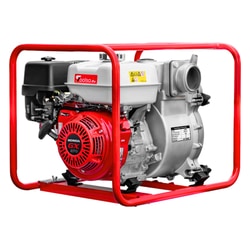
Toolsa TA-HLS80 Trash Water Pump (Honda GX 270)
TA-HLS80zł6,027.00 tax incl. 4 900,00 zł tax excl.View technical data Zobacz szczegóły
- Weight: 63 kg
- Dimensions: 675 x 560 x 530 mm
- Engine power: 8 KM
- Performance: 1252 l/min
- Maximum solids diameter: 27 mm
Submersible sludge pump 750W-EVAK 50 EUS-5.10S
50EUS-5.10Szł2,690.01 tax incl. 2 187,00 zł tax excl.View technical data Zobacz szczegóły
- Weight: 15 kg
- Engine power: 0,75 kW
- Length of power cord_: 10 m
- Frequency: 50 Hz
- Voltage: 230 V
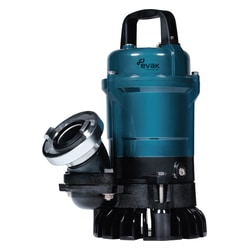
Submersible sludge pump EVAK 50 EUS-5.05S
50 EUS-5.05Szł1,993.83 tax incl. 1 621,00 zł tax excl.View technical data Zobacz szczegóły
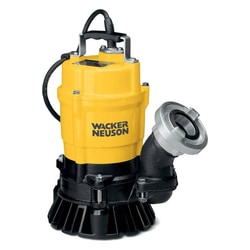
- Weight: 11,3 kg
- Engine power: 0,37 kW | 0,5 KM
- Frequency: 50 Hz
- Voltage: 230 V
- Rated current 1~: 2,6 A
An engine-driven water pump (also called a petrol or diesel water pump) is a portable pump powered by a combustion engine, while an electric pump runs on a mains motor and most often comes as a submersible unit. Both types move clean water, dirty water or slurry at flow rates from a few hundred to over 1,500 l/min, with a total head of 25–70 m. You choose a pump by the type of liquid, the port diameter (usually 2 or 3 inches) and the power source — for dewatering excavations and cellars, water transfer, irrigation, washing and land drainage.
At NORWIT.PL we stock construction water pumps from Wacker Neuson, Altrad Belle, Enar and Koshin — no firefighting equipment and no market-store substitutes. The range splits into electric pumps (submersible, the widest choice for dewatering), engine-driven water pumps for fieldwork without mains power, and pump accessories — suction and delivery hoses, couplings, strainers and filters. You will find the largest selection of submersible units on the Wacker Neuson brand page. Below we explain how to match pump type, port and flow rate to the water and the scale of the job.
Water pumps and trash pumps — design and how they work
An engine-driven water pump (a portable centrifugal pump with its own drive) uses a combustion engine — petrol or diesel — to spin an impeller that moves water from the suction port to the discharge port and creates the vacuum that draws liquid up from several metres below. An electric pump works the same way, but its impeller is driven by a 230 V or 400 V mains motor; such a unit usually runs as a submersible pump, placed directly in the water. The output of construction pumps ranges from a few hundred to over 1,500 l/min, and the total head (the level difference the pump can push water to) reaches 25–70 m.
Three parameters decide which unit to choose: the type of liquid (clean water, dirty water or slurry with suspended solids), the port diameter (usually 2 or 3 inches) and the power source (mains or engine). The NORWIT.PL range covers construction pumps from Wacker Neuson, Altrad Belle, Enar and Koshin — for dewatering excavations and cellars, water transfer, irrigation and land drainage. Below we explain the pump types and how to match the equipment to the task.
Types of water pumps — electric, engine-driven and accessories
We split the range by power source and purpose. The widest choice is in electric pumps — submersible units for dewatering excavations, cellars and sumps that run quietly and without refuelling as long as they have mains power. Where there is no supply, engine-driven water pumps with a petrol or diesel engine take over, mobile and grid-independent. Both groups are completed by pump accessories: suction and delivery hoses, couplings, strainers and filters.
| Type | What for | Brands in range |
|---|---|---|
| Electric pumps (submersible) | dewatering excavations, cellars and sumps; continuous work with mains access | Wacker Neuson, Master Heaters |
| Engine-driven pumps | terrain without power, on-site water transfer, irrigation, land drainage | Enar, Altrad Belle |
| Pump accessories | suction and delivery hoses, couplings, suction strainers, filters, foot valves | Bezalin, Toolsa |
Even though the department's lead keyword is the engine-driven pump, our largest selection is in electric pumps — dominated by Wacker Neuson submersible dewatering units, usually quieter and more convenient than an engine-driven pump wherever mains power is available.
Clean water, dirty water or slurry — matching the pump to the liquid
The most common buying mistake is choosing a clean-water pump where slurry actually flows — suspended solids and grit clog its narrow impeller or destroy it. The key figure is the maximum solids passage — the particle diameter a pump can pass without failing. A trash pump (for dirty water with sediment) has an open impeller and large ports, so it passes grains up to 25–30 mm.
| Water type | Allowed contamination | Typical use | Pump type |
|---|---|---|---|
| Clean water | particles up to approx. 5 mm | irrigation, water transfer, emptying tanks | centrifugal clean-water pump |
| Dirty water | particles up to approx. 8–10 mm | trench drainage, rainwater, flooded cellars | dirty-water / submersible pump |
| Slurry and mud | grains up to 25–30 mm | sediment, mud, construction sites, treatment plants | trash / slurry pump |
| Pressurised water | clean water | washing, long-distance irrigation, pumping uphill | high-pressure pump |
A separate group are high-pressure pumps such as the Koshin SERH 50 V — instead of high flow they deliver high pressure (up to approx. 7–8 bar) and a head of around 50–70 m. The heaviest sediment is handled by hydraulic slurry pumps (driven by a hydraulic power pack), for example Altrad Belle Midi/Major units.
Popular water pumps and trash pumps at NORWIT.PL
Below is a cross-section of the range, from submersible electric pumps to heavy trash pumps. Exact specifications (l/min, head, power, solids passage) are given on each product page.
| Model | Type | Typical use |
|---|---|---|
| Wacker Neuson (submersible range) | submersible electric pump | dewatering excavations, cellars and sumps |
| Altrad Belle ABP 80T | trash pump | slurry and dirty water, construction sites |
| PGT 30T trash pump | trash pump | mud, suspended solids, sediment |
| Koshin SERH 50 V | high-pressure engine pump | washing, long-distance irrigation, pumping uphill |
| Enar VOLGA 3" | engine-driven pump | clean water, field water transfer |
| Altrad Belle BGA (5 m hose) | water pump | clean water, construction work |
| Altrad Belle Midi / Major | hydraulic slurry pump | hydraulic drive, heavy slurry |
The core of the range is Wacker Neuson in the electric-pump category, while the engine and trash segment is filled by Enar, Altrad Belle and Koshin. For every pump you will find hoses and couplings in pump accessories.
How to choose a water pump step by step
The choice starts with the type of liquid: clean water needs a centrifugal pump, dirty water a unit with 8–10 mm solids passage, and slurry a trash pump that passes 25–30 mm grains. Next, assess power access: with a 230/400 V socket pick a submersible electric pump, in terrain without power an engine-driven pump. Finally match the port to the required flow: 2 inches (500–700 l/min) for small jobs, 3 inches (1,000–1,300 l/min) for site work, 4 inches for large floods.
Also account for the total head and the hose length — the higher and farther you pump, the lower the real output. Complete the set with a reinforced suction hose, a suction strainer with a foot valve and a delivery hose from pump accessories.
Frequently asked questions about water pumps and trash pumps
What is the difference between an engine-driven pump and an electric pump?
An engine-driven pump has its own petrol or diesel engine, so it works in the field without mains access — on site, for land drainage or dewatering far from a socket. An electric pump on a 230 V or 400 V supply runs more quietly and without exhaust, most often as a submersible unit for excavations and cellars. Engine-driven pumps reach higher output (over 1,500 l/min with a 3–4 inch port), while electric pumps win on indoor mobility and continuous work without refuelling.
How do I choose a water pump — electric or engine-driven?
Access to power and the nature of the work decide the choice. With a 230 V or 400 V socket a submersible electric pump is usually more convenient — quiet, fume-free and ideal for dewatering cellars and excavations. In terrain without power the only option is an engine-driven pump, mobile and grid-independent, with output from 500 to over 1,500 l/min. Also account for the water type: slurry needs 25–30 mm solids passage, dirty water 8–10 mm.
How does a clean-water pump differ from a trash pump?
A clean-water pump has a closed impeller and narrow channels, so it passes only fine particles up to about 5 mm and serves for transfer or irrigation. A trash pump has an open impeller and larger ports, so it passes grains and suspended solids up to 25–30 mm — suitable for mud, sediment and construction-site water. For intermediate dirty water (particles 8–10 mm) a dirty-water or submersible pump is enough.
How many litres per minute does an engine-driven pump move?
Output depends mainly on the port diameter. A 2 inch pump (50 mm) moves roughly 500–700 l/min, a 3 inch model (80 mm) reaches 1,000–1,300 l/min, and a 4 inch unit (100 mm) delivers 1,600 l/min and more, at a head of around 25–30 m for clean water. Real output drops with pumping height and hose length, so these figures are industry ranges — exact data is on each product page.
What is a high-pressure pump used for?
A high-pressure pump such as the Koshin SERH 50 V delivers high working pressure (up to approx. 7–8 bar) and a head of around 50–70 m instead of high flow. It is used for long-distance irrigation, surface washing and pumping water to upper floors — wherever the reach of the jet matters more than the volume moved. It runs on clean water and, unlike a trash pump, is not designed for suspended solids.
Which pump should I choose to empty a flooded cellar or excavation?
For a flooded cellar or excavation an electric submersible dirty-water pump works best — it is placed directly in the water and runs quietly and fume-free in an enclosed space. Choose a unit with 8–10 mm solids passage, because flood water carries sand and fine debris; in the NORWIT.PL range Wacker Neuson dominates here. When there is no power or a large excavation must be dewatered fast, use a 3 inch engine-driven pump with an output of 1,000–1,300 l/min.
Does an engine-driven pump need special hoses and accessories?
An engine-driven pump needs a reinforced suction hose (which will not collapse under vacuum), a delivery hose, a suction strainer with a foot valve and couplings matching the port — 2 or 3 inches. Without a foot valve the pump loses its prime and stops drawing after a standstill. Hose diameter is critical: too narrow a hose can cut output by tens of percent, so a 3 inch port uses an 80 mm hose. Hoses, couplings, strainers and filters are in pump accessories.
What is the difference between a 2 inch and a 3 inch pump port?
The difference comes down to output and scale of use. A 2 inch port equals 50 mm and moves roughly 500–700 l/min — enough for small excavations, garden irrigation and emptying cellars. A 3 inch port is 80 mm and gives 1,000–1,300 l/min, meaning equipment for site work, larger dewatering and ponds. The 3 inch model is heavier and burns more fuel, but it dewaters faster and, in trash pumps, passes larger particles.
How much does a water pump cost and what affects the price?
Price depends on the drive type, output, impeller material and brand. Simple submersible electric pumps start from a few hundred zloty, engine-driven clean-water pumps of 2–3 inches usually fall between about 1,500 and several thousand zloty, and professional trash pumps and hydraulic units cost from a few to over ten thousand zloty. The engine also matters — diesel is more expensive than petrol. Current prices are shown on each product page.
How do I look after an engine-driven pump (oil, filter, servicing)?
The basics are changing the engine oil every roughly 25–50 running hours (the first change after about 20 h of run-in), regular air-filter cleaning and spark-plug checks. After every job with dirty water or slurry, flush the pump body with clean water so deposits do not dry on the impeller. Before a longer standstill drain the pump and fuel system, and in frost remove any remaining water so it does not crack the casing — with these rules a pump lasts several thousand running hours.
Why buy a water pump at NORWIT.PL
We specialise in professional construction equipment: our range includes pumps and engine-driven pumps from Wacker Neuson, Altrad Belle, Enar and Koshin — no market-store substitutes. We help you match the pump type, port and output to a specific task: dewatering, water transfer, irrigation or pumping slurry. You will find the widest choice of submersible units among electric pumps, mains-independent equipment among engine-driven pumps, and hoses, couplings and filters in pump accessories. We ship orders placed online across the whole country.