


-
-
Concrete
-
- Concreting
- Concrete Vibrators
- Complete 230 V Mechanical Vibrators
- Vibrator Heads
- Vibrator Shafts
- Vibrator Motors
- Concrete Vibrators 42 V | 200 Hz
- Mechanical Vibrators 230 V
- 42 V | 200 Hz Head and Shaft
- 230 V Concrete Vibrators
- Vibrators With Built-In 230 V | 200 Hz Converter
- 42 V | 200 Hz Converters
- Combustion Vibrators
- Pneumatic Vibrators
- External Vibrators
- Power Trowels
- Vibratory Screeds
- Concrete Hand Tools
- Concrete Vibrators
-
-
-
-
-
- Walk-Behind Combustion Power Trowels
-
-
-

Heating and cooling
-
Generators
-
Earthworks
-
Industrial vacuums
-
Finishing
-
Pumps
-
Measurement
-
BLOG & Tips
-
Promotions
Kategorie 16 kategorii
Kategorie
-
- Levels and Measurements
- Soil Compactors
- Tamping Rammers - Jumping Jacks
- Single Direction Vibratory Plates
- Reversible Vibratory Plates
- Rollers
- 100 kg Soil Compactors
- 200 kg Soil Compactors
- 300 kg Soil Compactors
- 400 kg Soil Compactors
- 500 kg Soil Compactors
- 600 kg Soil Compactors
- 700 kg Soil Compactors
- 800 kg Soil Compactors
- Wacker Neuson Compactors
- Accessories for Compactors
- Bomag Compactors
- Altrad Belle Compactors
- Paver Compactors
- Swepac Compactors
- Power Generators
- Concreting
- Concrete Vibrators
- Complete 230 V Mechanical Vibrators
- Vibrator Heads
- Vibrator Shafts
- Vibrator Motors
- Concrete Vibrators 42 V | 200 Hz
- Mechanical Vibrators 230 V
- 42 V | 200 Hz Head and Shaft
- 230 V Concrete Vibrators
- Vibrators With Built-In 230 V | 200 Hz Converter
- 42 V | 200 Hz Converters
- Combustion Vibrators
- Pneumatic Vibrators
- External Vibrators
- Vibratory Screeds
- Power Trowels
- Concrete Hand Tools
- Concrete Vibrators
- Pumps and Motor Pumps
- Cutting, Drilling and Grinding
- Heating and Cooling
- Wood Table Saws
- Painting and Plastering
- Combustion Engines
- Washing and Vacuuming
- Cement Mixers
- Paving Tools
- Wheelbarrows and Track Dumpers
- Demolition and Hammers
- Sales
- Levels and Measurements
Brak kategorii pasujących do wyszukiwania.
Receivers and Detectors
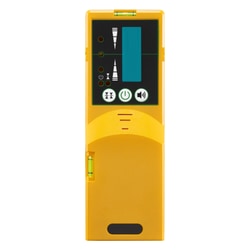
Laser Sensor With Red Beam Nivel System CLS-1
CLS-1zł323.99 tax incl. 263,41 zł tax excl.View technical data Zobacz szczegóły
- Weight: 155 g
- Dimensions: 167 x 52 x 27 mm
- Automatic shutdown: Przy bezczynności po ok, 10 minutach
- Brand: Nivel System
- Power supply: Bateria 9 V
Laser Sensor With A Green Beam Nivel System CLS-1G
CLS-1Gzł320.99 tax incl. 260,97 zł tax excl.View technical data Zobacz szczegóły
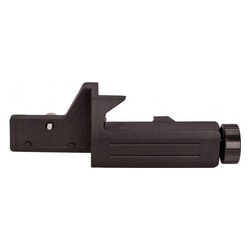
- Weight: 155 g
- Dimensions: 167 x 52 x 27 mm
- Automatic shutdown: Przy bezczynności po ok, 10 minutach
- Brand: Nivel System
- Power supply: Bateria 9 V
FR 45 Detector Mount For Rotating Lasers
14-101-01zł166.05 tax incl. 135,00 zł tax excl.View technical data Zobacz szczegóły
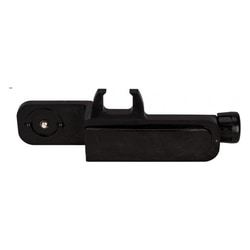
- Weight: 0,01 kg
- Dimensions: 206 x 68 x 40 mm
- Typ: FR 45
ELR 702 Detector Mount For Rotating Lasers
14-101-04zł151.29 tax incl. 123,00 zł tax excl.View technical data Zobacz szczegóły
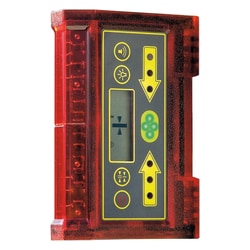
- Weight: 0,1 kg
- Dimensions: 217 x 70 x 40 mm
- Typ: ELR 702
FMR 600 Laser Detector
135142zł2,704.77 tax incl. 2 199,00 zł tax excl.View technical data Zobacz szczegóły
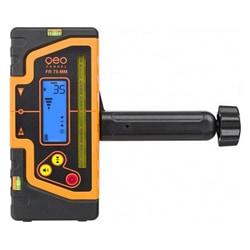
- Weight: 0,96 kg
- Dimensions: 170 x 100 x 42 mm
- Detector battery power supply: 4 x AA alkaliczne
- Operating time - battery set: 50 h
- Length of detection field: 125 mm
Digital Detector For Cross Lasers (red And Green) FR 75-MM
15-100-22zł1,531.35 tax incl. 1 245,00 zł tax excl.View technical data Zobacz szczegóły
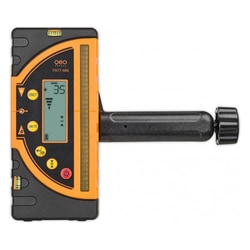
- Weight: 0,5 kg
- Operating temperature range: -10 °C - + 50 °C
- Detector battery power supply: 4 x alkaliczne
- Operating time - battery set: 55 h
- Length of detection field: 100 mm
FR 77-MM Digital Detector For Rotating Lasers (red And Green)
15-101-27zł1,826.55 tax incl. 1 485,00 zł tax excl.View technical data Zobacz szczegóły
- Weight: 0,54 kg
- Detector battery power supply: 4 x AA alkaliczne
- Operating time - battery set: 110 h
- Length of detection field: 125 mm
- Libelles built into the detector: 2
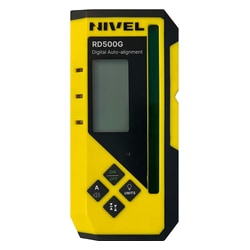
Nivel System RD500G DIGITAL Laser Sensor With Auto-Adjustment
RD500G DIGITALzł1,748.00 tax incl. 1 421,14 zł tax excl.View technical data Zobacz szczegóły
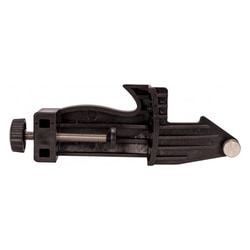
- Brand: Nivel System
- Leveling accuracy: Tryb precyzyjny +/- 1 mm; tryb średni +/- 5 mm; tryb zgrubny 10mm
- Kolor lasera: Green
- Detection range: 125 mm
- Auto-fit function: Tak
FR 55 Detector Mount For Crossed Lasers
13-100-01zł151.29 tax incl. 123,00 zł tax excl.View technical data Zobacz szczegóły
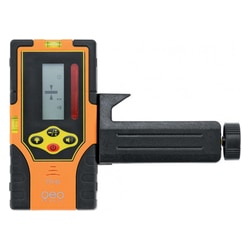
- Weight: 0,117 kg
- Dimensions: 190 x 66 x 40 mm
- Tripod mount: FR 55
FR 45 Detector For Rotating Lasers
15-101-20zł805.65 tax incl. 655,00 zł tax excl.View technical data Zobacz szczegóły
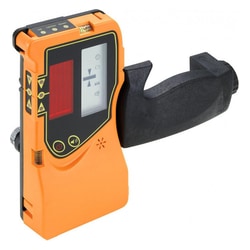
- Weight: 0,42 kg
- Shipping dimensions: 16 x 21,5 x 4 cm
- Detector battery power supply: 1 x 9 V alkaliczne
- Length of detection field: 50 mm
- Libelles built into the detector: 2
FR 55 Detector For Crossed Lasers (red And Green)
15-100-20zł859.77 tax incl. 699,00 zł tax excl.View technical data Zobacz szczegóły
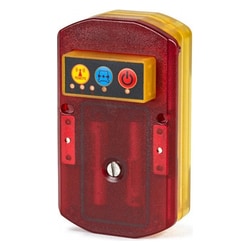
- Weight: 0,32 kg
- Shipping dimensions: 15 x 19 x 3,5 cm
- Detector battery power supply: 1 x 9 V alkaliczne
- Length of detection field: 40 mm
- Libelles built into the detector: 2
FR-FKL TRACKING Detector
15-103-20zł1,068.87 tax incl. 869,00 zł tax excl.View technical data Zobacz szczegóły
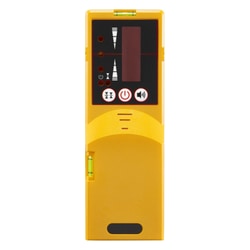
- Weight: 0,42 kg
- Detector battery power supply: 2 x AAA alkaliczne
- Length of detection field: 50 mm
- Type of detected beam: Czerwona, punktowa
- Designation ds: FR-FKL Tracking
A laser receiver (also called a laser detector or laser sensor) picks up the beam of a laser level that is invisible to the naked eye in daylight, and signals a hit on the plane with a sound and a backlit display, accurate to about ±1 mm. It clips onto a leveling staff or sits in a tripod bracket, and is used mainly outdoors and over longer distances, where the beam of a cross-line or rotary laser level fades in sunlight after just a dozen or so metres.
At NORWIT.PL we stock laser receivers and detectors primarily from Nivel System — matched to cross-line, cross-hair and rotary laser levels, with a red or a green beam. The category is part of our wider levels and measurement range, where you'll also find compatible staffs, tripods and accessories. Below we explain the difference between a red-beam and a green-beam detector, the real working range, and how to match a receiver to a specific laser level.
What a laser receiver is and how it works
A laser receiver (laser detector or laser sensor) is a device that picks up a laser level's beam where the eye cannot — outdoors, in sunlight and over longer distances. Inside the receiver sits a photodiode tuned to a specific range of laser light; when the beam hits the receiving window, the unit signals it with a sound and a backlit display showing an arrow for the direction of height correction. Reading resolution is typically around ±1 mm, and the housing carries an ingress protection rating of roughly IP54–IP66, useful in dust and rain on site.
In the NORWIT.PL range, laser receivers and detectors come primarily from Nivel System — for example a red-beam laser detector from Nivel for standard cross-line and rotary laser levels. The full range of this brand's gear is on the Nivel System page. Below we explain the split between red-beam and green-beam detectors, the real working range, and mounting on a staff or a tripod.
Types of laser receivers and detectors
Receivers differ mainly in the beam colour they work with and the way they mount. The "Receivers and detectors" category is part of the wider levels and measurement department and rounds out the laser levels, kits, tripods and staffs sold there.
| Receiver type | What it is for | Brands in stock |
|---|---|---|
| Red-beam receiver | picking up the standard red beam of cross-line, cross-hair and rotary laser levels | Nivel System |
| Green-beam receiver | working with the brighter green beam, for use in strong light and over longer distances | Nivel System |
| Universal detector | picking up both beam colours, one receiver for different laser levels | Nivel System |
| Receiver mounting brackets | fixing the detector to a leveling staff or to a tripod | Nivel System |
A detector is chosen to match a specific laser level, not the other way round — what matters is the laser class (red or green beam) and the way of working: on its own on a staff, or paired with a tripod for a rotary laser level.
Red-beam or green-beam laser receiver
Beam colour determines which receiver matches a given laser level. A red laser works at about 635 nm, a green one at about 532 nm — to the human eye a green beam is up to several times more visible, but both colours need a detector tuned to the right range of light, unless it's a universal model.
| Feature | Red-beam receiver | Green-beam receiver |
|---|---|---|
| Beam wavelength | about 635 nm | about 532 nm |
| Visibility to the eye | standard | up to several times better |
| Typical range with a detector | 50–70 m with cross-line lasers, 150–250 m with rotary ones | comparable or greater in bright surroundings |
| Typical use | standard construction and finishing work | halls, strong sunlight, longer distances |
Before buying, check which beam colour your laser level is tuned to — a red-beam detector will not read a green beam and vice versa, unless it's a universal model.
Range, mounting and matching to a laser level
Without a detector, the beam of a cross-line or cross-hair laser level is readable by eye for a dozen to several dozen metres indoors, and outdoors in sunlight it fades after just a dozen or so metres. A laser receiver extends the working range to about 50–70 m with cross-line laser levels, and with rotary laser levels — to a radius of 150–250 m, so a working diameter of several hundred metres.
A detector clips onto a leveling staff (a telescopic graduated rod for reading height) or sits in a tripod bracket with a 5/8" thread — the choice of bracket depends on the unit's mounting socket. Power usually comes from AA batteries or a rechargeable battery, with runtime reaching several dozen hours per charge. When matching a receiver to a Nivel System laser level, check the beam colour (red or green) and the mounting type — staff or tripod.
Frequently asked questions about laser receivers and detectors
What is a laser receiver for a rotary laser level?
A laser receiver for a rotary laser level is a detector that picks up the spinning beam over a radius of up to 150–250 m, a distance the naked eye simply cannot cover. The unit mounts on a staff or a tripod and signals a hit on the plane with a sound and a backlit display, accurate to about ±1 mm. Without a receiver, a rotary laser level only reads clearly for a dozen to several dozen metres indoors, which is why on an open site the detector is a required part of the kit, not an optional extra.
How does a red-beam laser detector work?
A red-beam laser detector, like the Nivel System model in this range, has a photodiode tuned to about 635 nm, the wavelength of a standard construction laser. When the beam hits the receiving window, the unit signals it with a sound and a backlit display with an arrow showing the direction of height correction, accurate to around ±1 mm. A red-beam detector will not read a green laser (about 532 nm) unless it's a universal model, which is why you match it to the colour of a specific laser level.
What range does a laser receiver reach outdoors?
Outdoors, a laser receiver working with a cross-line or cross-hair laser level extends the working range to about 50–70 m, and with a rotary laser level — to a radius of 150–250 m, so a working diameter of several hundred metres. The actual range depends on the laser class, the detector's sensitivity and the lighting conditions — in full sun it can be shorter than in shade or at dusk. Exact figures for a specific kit are listed on the Nivel System product pages.
What is the difference between a red-beam and a green-beam laser receiver?
A red-beam receiver is tuned to about 635 nm and suits standard construction conditions, while a green-beam receiver (about 532 nm) works with a beam that is up to several times more visible to the eye, which helps in bright surroundings and over longer distances. Both types read a hit on the plane with a similar accuracy of about ±1 mm — the main difference is the range of light the photodiode responds to, so the detector's colour has to match the laser's colour.
Does a laser receiver work in strong sunlight outdoors?
A laser receiver is designed exactly for outdoor use, where the bare beam of a laser level fades in daylight after just a dozen or so metres. The detector's photodiode picks up the laser pulse regardless of ambient brightness, so with a rotary laser level it holds a working range on the order of 150–250 m even in full sun. In very strong sunlight the range can be a touch shorter than in shade, so at longer distances it's worth matching the laser class to the working conditions.
How do you match a laser receiver to a Nivel System rotary laser level?
Matching a receiver to a Nivel System rotary laser level starts with beam colour — red (about 635 nm) or green (about 532 nm) — since the detector needs to be tuned to the same range of light as the laser. The second criterion is the mounting method: a clamp on a leveling staff for reading against a graduated scale, or a tripod bracket with a 5/8" thread. For work over large areas, at a radius of 150–250 m, choose a detector built for rotary laser levels rather than one designed only for cross-line lasers.
Can a laser detector be mounted on a leveling staff or a tripod?
A laser detector mounts on both a leveling staff and a tripod — the choice depends on the type of work. On a graduated staff, the receiver's clamp lets you read height against the ground in a single step, which speeds up fieldwork. On a tripod with a 5/8" thread, the detector works from a fixed point, for example during a longer measurement without moving around. Both mounting methods give comparable reading precision, around ±1 mm, so the choice comes down to working method rather than measurement quality.
What is a laser detector used for beyond surveying on a construction site?
Beyond classic site surveying, a laser detector is used when installing suspended ceilings and building services, setting out foundation heights, and checking grade in earthworks and agriculture, where machinery uses the receiver's signal to steer attachments. It also comes in handy for simpler finishing jobs, like laying tiles or fitting built-in units, when the laser is working over a distance greater than a dozen or so metres indoors. A range of up to 150–250 m means a detector often gets used well beyond typical surveying.
Why buy a laser receiver at NORWIT.PL
We stock laser receivers and detectors primarily from Nivel System — matched to work with cross-line, cross-hair and rotary laser levels, in a red or a green beam. We advise on the detector colour and mounting method for your specific laser level, and the full range of measuring gear — from laser levels to tripods and staffs — is available in the levels and measurement department. Orders are fulfilled online, with nationwide shipping.