

-
-
Concrete
-
- Concreting
- Concrete Vibrators
- Complete 230 V Mechanical Vibrators
- Vibrator Heads
- Vibrator Shafts
- Vibrator Motors
- Concrete Vibrators 42 V | 200 Hz
- Mechanical Vibrators 230 V
- 42 V | 200 Hz Head and Shaft
- 230 V Concrete Vibrators
- Vibrators With Built-In 230 V | 200 Hz Converter
- 42 V | 200 Hz Converters
- Combustion Vibrators
- Pneumatic Vibrators
- External Vibrators
- Power Trowels
- Vibratory Screeds
- Concrete Hand Tools
- Concrete Vibrators
-
-
-
-
-
- Walk-Behind Combustion Power Trowels
-
-
-
Heating and cooling
-
Generators
-
Earthworks
-
Industrial vacuums
-
Finishing
-
Pumps
-
Measurement
-
BLOG & Tips
-
Promotions
Kategorie 16 kategorii
Kategorie
-
- Levels and Measurements
- Soil Compactors
- Tamping Rammers - Jumping Jacks
- Single Direction Vibratory Plates
- Reversible Vibratory Plates
- Rollers
- 100 kg Soil Compactors
- 200 kg Soil Compactors
- 300 kg Soil Compactors
- 400 kg Soil Compactors
- 500 kg Soil Compactors
- 600 kg Soil Compactors
- 700 kg Soil Compactors
- 800 kg Soil Compactors
- Wacker Neuson Compactors
- Accessories for Compactors
- Bomag Compactors
- Altrad Belle Compactors
- Paver Compactors
- Swepac Compactors
- Power Generators
- Concreting
- Concrete Vibrators
- Complete 230 V Mechanical Vibrators
- Vibrator Heads
- Vibrator Shafts
- Vibrator Motors
- Concrete Vibrators 42 V | 200 Hz
- Mechanical Vibrators 230 V
- 42 V | 200 Hz Head and Shaft
- 230 V Concrete Vibrators
- Vibrators With Built-In 230 V | 200 Hz Converter
- 42 V | 200 Hz Converters
- Combustion Vibrators
- Pneumatic Vibrators
- External Vibrators
- Vibratory Screeds
- Power Trowels
- Concrete Hand Tools
- Concrete Vibrators
- Pumps and Motor Pumps
- Cutting, Drilling and Grinding
- Heating and Cooling
- Wood Table Saws
- Painting and Plastering
- Combustion Engines
- Washing and Vacuuming
- Cement Mixers
- Paving Tools
- Wheelbarrows and Track Dumpers
- Demolition and Hammers
- Sales
- Levels and Measurements
Brak kategorii pasujących do wyszukiwania.
Rollers
Bomag BW 65 D Guided Roller
83400084-600zł60,408.99 tax incl. 49 113,00 zł tax excl.View technical data Zobacz szczegóły
- Centrifugal force: 25 kN
- Weight: 740 kg
- Working width: 650 mm
- Engine power: 6,2 kW / 8,4 KM
- Frequency: 63 Hz
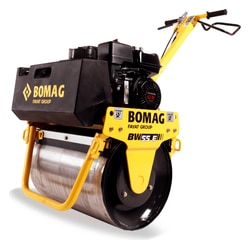
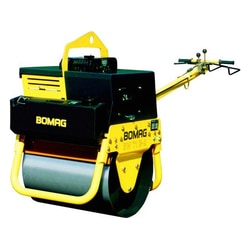
Bomag BW 55 E Guided Single Drum Roller
BW 55 Ezł25,718.07 tax incl. 20 909,00 zł tax excl.View technical data Zobacz szczegóły
- Centrifugal force: 10 kN
- Weight: 150 kg
- Working width: 560 mm
- Engine power: 2,5 kW
- Frequency: 77 Hz
Bomag BW 65 H Guided Roller
BW 65Hzł54,618.00 tax incl. 44 404,88 zł tax excl.View technical data Zobacz szczegóły
- Centrifugal force: 25 kN
- Weight: 720 kg
- Working width: 650 mm
- Engine power: 8,2 kW / 11 KM
- Frequency: 63 Hz
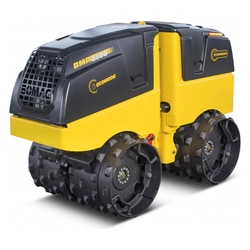
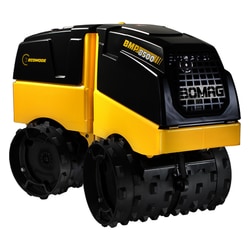
Bomag BMP 8500 Kubota Wheeled Roller
BMP 8500zł135,299.99 tax incl. 109 999,99 zł tax excl.View technical data Zobacz szczegóły
- Centrifugal force: 72 / 36 kN
- Weight: 1595 kg
- Startup: Electric
- Frequency: 42 Hz
- Typ: Spalinowy (diesel)
Bomag BW 138 AC-5 Earthmoving Roller
BW 138zł275,520.00 tax incl. 224 000,00 zł tax excl.View technical data Zobacz szczegóły
- Centrifugal force: 45/57 kN
- Working width: 1380 mm
- Frequency: 50/56 Hz
- Engine: Kubota V 2403 stage V/tier 4 f
- Power: 34,1 kW
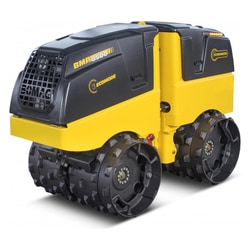
Bomag BMP 8500 ECONOMIZER Wheeled Roller
BMP 8500 ECONOMIZERzł144,318.36 tax incl. 117 332,00 zł tax excl.View technical data Zobacz szczegóły
- Centrifugal force: 72 / 36 kN
- Weight: 1595 kg
- Startup: Electric
- Frequency: 42 hz / 42 Hz
- Typ: Spalinowy (diesel)
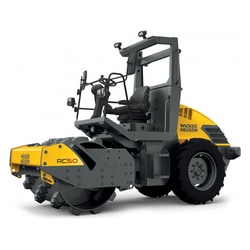
Wacker Neuson RC 50 Earthmoving Roller
5100047388zł386,416.80 tax incl. 314 160,00 zł tax excl.View technical data Zobacz szczegóły
- Centrifugal force: 69 kN
- Weight: 5035 kg
- Dimensions: 4040 x 1500 x 2867 mm
- Engine power: 54,6 kW / 74,3 KM
- Frequency: 30 Hz
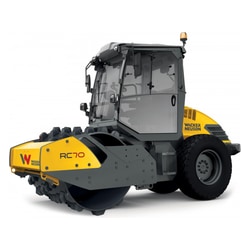
Wacker Neuson RC 70 Earthmoving Roller
5100047410zł440,229.30 tax incl. 357 910,00 zł tax excl.View technical data Zobacz szczegóły
- Centrifugal force: 125 kn (poziom i) / 95 kn (poziom ii)
- Weight: 6540 kg
- Dimensions: 4409 x 1844 x 2925 mm
- Engine power: 54,6 kW / 74,3 KM
- Frequency: 30 hz (poziom i) / 42 hz (poziom ii)
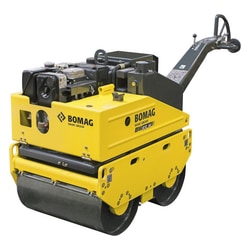
Bomag BW 71 E - 2 D/E Guided Single Drum Roller
BW 71 E-2zł57,403.01 tax incl. 46 669,11 zł tax excl.View technical data Zobacz szczegóły
- Centrifugal force: 16 kN
- Working width: 710 mm
- Frequency: 75 Hz
- Engine: Hatz 1B20
- Power: 3,4 kW
Bomag BMP 8500 Kohler Wheeled Roller
72000013-042zł139,414.01 tax incl. 113 344,72 zł tax excl.View technical data Zobacz szczegóły
- Centrifugal force: 72 / 36 kN
- Working width: 610 mm / 850 mm
- Frequency: 42 hz / 42 Hz
- Engine: Kohler kdw1003
- Working speed: 1,2 - 2,8 m/min (do przodu i do tyłu)
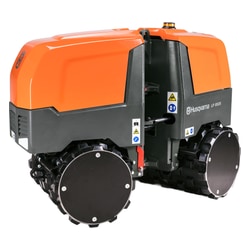
Walec okołkowany Husqvarna LP 9505
967950801zł120,449.00 tax incl. 97 926,02 zł tax excl.View technical data Zobacz szczegóły
- Centrifugal force: 72 kN
- Weight: 1 680 kg
- Dimensions: 1 856 x 850 x 1 369 mm
- Fuel: Olej napędowy
- Starter: Elektryczny
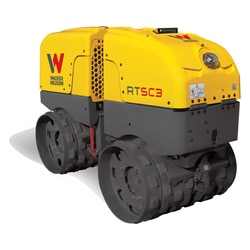
Wacker Neuson Rtlx-Sc3 Kohler Wheeled Roller
5100061401zł191,280.01 tax incl. 155 512,20 zł tax excl.View technical data Zobacz szczegóły
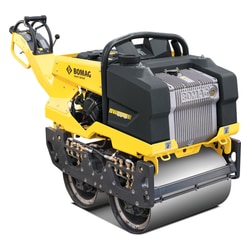
- Centrifugal force: 34,2 kn – 68,4 kN
- Weight: 1495 kg
- Dimensions: 1853 x 820 x 1270 mm
- Engine power: 14,8 kW / 20 km (przy prędkości obrotowej 3000/min)
- Frequency: 41,7 Hz
A road roller is a self-propelled or walk-behind machine for compacting soil and pavements: a rotating drum presses the material layer with static force (its own weight), and in the vibratory version adds vibration at a frequency usually around 30–70 Hz that drives energy deep into the ground. This lets a roller compact layers about 20–40 cm thick in a few passes — far more, and over larger areas, than a plate compactor. At NORWIT.PL we stock professional road and soil compaction rollers primarily from Bomag, Wacker Neuson and Enar. You can browse these makers on the Bomag, Wacker Neuson and Enar brand pages.
The range splits by drum design and method of guidance: smooth single-drum rollers for sub-bases and surfaces, padfoot rollers for cohesive soils, and walk-behind (operated on foot) and ride-on (with an operator on the machine) units for larger areas. Rollers are complemented by soil compactors — plate compactors and rammers — for surface work and tight trenches. Below we explain how a single-drum roller differs from a padfoot one, how to match the mass and type of roller to the scope of work, and when a plate compactor beats a roller.
Road and soil compaction rollers — how they work
A road roller is a machine for compacting soil and pavements in which a rotating drum presses the material layer with static force, meaning its own weight. In the most common vibratory version a second mechanism comes into play: an eccentric (an unbalanced shaft) inside the drum generates vibration at a frequency usually around 30–70 Hz that drives energy deep into the ground and packs the soil grains more tightly. The combination of weight and vibration lets a roller compact layers about 20–40 cm thick in a few passes — far more than a plate compactor.
At NORWIT.PL we stock professional rollers primarily from Bomag, Wacker Neuson and Enar — from compact walk-behind rollers, through padfoot models, to ride-on units for earthworks. Below we explain how a single-drum roller differs from a padfoot one and a walk-behind from a ride-on, and how to match the mass and type of roller to the ground and scale of the job.
Types of rollers — single-drum, padfoot, walk-behind and ride-on
Rollers are grouped by two features: drum design and method of guidance. The drum can be smooth (a single-drum roller — one working drum that compacts across the whole contact surface) or padfoot (a drum with pads that sink into the ground). The method of guidance splits machines into walk-behind rollers (operated on foot behind the drawbar) and ride-on rollers (with an operator on the machine). The table below sets out the types available in the range and their use.
| Roller type | Design and use | Examples from the range |
|---|---|---|
| Walk-behind single-drum roller | operated on foot; narrow trenches, utility backfills, work near foundations, smaller yards | Bomag BW 55 E, Bomag BW 71 E-2 D/E |
| Ride-on roller for earthworks | operator on the machine; roads, car parks, sub-bases, larger surfaces | Bomag BW 138 AC-5 |
| Padfoot roller | drum with pads; cohesive soils (clay, silt), embankments, deeper trench compaction | Bomag BMP 8500 ECONOMIZER |
Compact Enar rollers round out the range for smaller jobs. For surface work and the tightest spots where even a small roller will not fit, the alternative is soil compactors — vibratory plates and rammers (jumping jacks).
Popular Bomag and Wacker Neuson rollers in the range
Below is a cross-section of the range — from compact walk-behind rollers to a padfoot model. Exact specifications (operating weight, drum width, centrifugal force, power) are listed on each product page.
| Model | Type | Typical use |
|---|---|---|
| Bomag BW 55 E | walk-behind single-drum | narrow trenches, utility connections, work near foundations |
| Bomag BW 71 E-2 D/E | walk-behind single-drum | pavements, yards, building perimeters and backfills |
| Wacker Neuson RC 50 | roller for earthworks | estate roads, car parks, sub-bases |
| Wacker Neuson RC 70 | roller for earthworks | larger yards and surfaces |
| Bomag BW 138 AC-5 | ride-on for earthworks | roads, sub-bases, larger areas |
| Bomag BMP 8500 ECONOMIZER | padfoot | cohesive soils, embankments, deep trench compaction |
The widest choice comes from Bomag and Wacker Neuson, with a compact range from Enar.
Walk-behind or ride-on roller — mass and choice for the job
The choice between a walk-behind and a ride-on roller depends on available space, the size of the surface and the required mass. A walk-behind roller (operated on foot behind the drawbar) is lighter, narrower and more maneuverable, so it reaches narrow trenches and spots near foundations; compact models — small and mini rollers — usually weigh about 0.3–1.5 t. A ride-on roller (with an operator on the machine) has a wider drum, a mass of about 1.5–5 t and an output measured in thousands of m² per hour, so it pays off on roads, yards and sub-bases. Large road rollers for national roads and embankments weigh from several to a dozen or more, even several dozen tonnes.
The NORWIT.PL range concentrates on compact classes: for a 20–30 cm backfill in a narrow trench a walk-behind roller (Bomag BW 55 E) is enough, while for a sub-base with 30–40 cm layers a roller for earthworks (Wacker Neuson RC 50/RC 70, Bomag BW 138 AC-5) or a padfoot roller works better. Exact mass and compaction depth are on the product pages.
Roller vs plate compactor — the differences
A roller and a plate compactor compact the ground by a different method and on a different scale — a roller with a rotating drum over long surfaces, a plate compactor with vibration in place as it moves forward. You will find both types of machine in the soil compactors category.
| Criterion | Roller | Plate compactor |
|---|---|---|
| Method | rotating drum, pressure + vibration | vibrating plate, surface compaction |
| Compaction depth | about 20–40 cm and more | about 15–30 cm |
| Output | thousands of m²/h (ride-on) | hundreds of m²/h |
| Best use | roads, yards, sub-bases, embankments | paving blocks, small areas, tight spots |
| Mobility | larger machine, transport on a trailer | light and maneuverable, easy transport |
Frequently asked questions about road rollers
What is the difference between a single-drum and a padfoot roller?
A single-drum roller has a smooth drum that compacts material with pressure and vibration across the whole contact surface — ideal for aggregate, sub-bases and surfaces that need an even finish. A padfoot roller has a drum with protruding pads that sink into the ground and compact it from the bottom of the layer, so it handles cohesive soils such as clay and silt better. A smooth drum compacts layers up to about 20–40 cm, while a padfoot drum drives energy deeper, into cohesive layers 30 cm thick and more. In the range, smooth drums are used by the Bomag BW and Wacker Neuson RC models, while the padfoot type is the Bomag BMP 8500 ECONOMIZER.
Which roller should I choose for soil compaction?
A roller for soil compaction is chosen by the type of ground and the scale of the job. For granular soils (sand, gravel, aggregate) and sub-bases, a smooth single-drum roller is best — for example the Wacker Neuson RC 50 or Bomag BW 138 AC-5, compacting 20–40 cm layers. For cohesive soils (clay, silt) a padfoot roller such as the Bomag BMP 8500 is more effective. For narrow trenches, pick a compact walk-behind roller of about 0.3–1.5 t (Bomag BW 55 E); for larger yards a ride-on unit of 1.5–5 t.
How much does a road roller weigh?
The mass of a road roller depends on the class of machine. Compact walk-behind rollers (small and mini) usually weigh about 0.3–1.5 t, ride-on tandem rollers for earthworks about 1.5–5 t, and large road rollers for roads and embankments from several to a dozen or more, even several dozen tonnes. The NORWIT.PL range is dominated by compact classes — up to a few tonnes — matched to urban, road and earthwork jobs. The greater the mass and drum diameter, the greater the compaction depth (over 40 cm) and output, but the harder the transport.
What is a padfoot roller used for?
A padfoot roller has a drum with pads that penetrate the ground and compact it from the bottom of the layer, so it is used mainly for cohesive soils — clay, silt and soil-and-stone mixes. It performs well when building embankments and road sub-bases and compacting trenches in 30–40 cm layers, where a smooth drum struggles to press soil deeper than 20 cm. The pads aerate the top layer while compacting the lower one, which speeds up the drying of wet soils. In the range this role is filled by the Bomag BMP 8500 ECONOMIZER.
What is the difference between a walk-behind and a ride-on roller?
A walk-behind roller is operated on foot behind the drawbar — the operator walks behind the machine, which usually weighs about 0.3–1.5 t and has a small working width, so it reaches narrow trenches, utility connections and spots near foundations. A ride-on roller has an operator station on the machine, weighs about 1.5–5 t and more, has a wider drum and an output measured in thousands of m² per hour, so it suits roads and yards. Walk-behind units include the Bomag BW 55 E and BW 71 E-2 D/E, while a ride-on one is the Bomag BW 138 AC-5.
How much does a road roller cost?
The price of a road roller depends above all on the type and operating mass. The cheapest are compact walk-behind rollers (about 0.3–1.5 t) for narrow trenches; more expensive are ride-on tandem rollers for earthworks (about 1.5–5 t) with a wider drum and higher output. Price is also affected by equipment and brand (Bomag, Wacker Neuson, Enar). Current net prices and availability are given on each model's product page.
Which roller for narrow trenches and work near foundations?
For narrow trenches, utility backfills and work near foundations, a compact walk-behind roller of about 0.3–1.5 t with a small working width is best, as it fits between the trench walls. In the range this role is filled by the Bomag BW 55 E and Bomag BW 71 E-2 D/E — operated on foot, with vibration compacting backfill layers up to about 20–30 cm. In very tight spots the alternative is a plate compactor or a vibratory rammer (jumping jack).
Do you need a licence to operate a road roller?
Operating ride-on road rollers professionally requires an earthmoving machine operator licence — in Poland the operator's booklet issued after a course and an exam before a board. The course usually runs from a dozen to about 30–50 hours of theory and practice. Small walk-behind rollers (up to about 1.5 t) operated on foot in many cases do not require a formal machine licence, but health-and-safety training and the manufacturer's manual always apply. Confirm the exact scope with an accredited training centre.
What is the difference between a roller and a plate compactor?
A roller compacts the ground with a rotating drum that combines static pressure with vibration, and travels over large surfaces — roads, yards, sub-bases — compacting 20–40 cm layers. A plate compactor works with a plate that vibrates in place and moves forward, compacts 15–30 cm layers at the surface and is lighter and more maneuverable, so it performs better on small areas, around paving blocks and in tight spots. A roller offers greater output and compaction depth, while a plate offers greater precision and mobility.
What is a vibratory roller and how does it work?
A vibratory roller is a roller whose drum, on top of its own weight, produces vibration thanks to a rotating eccentric (an unbalanced shaft) inside the drum. Vibration at a frequency usually around 30–70 Hz drives energy deep into the ground and packs the soil grains more tightly than static pressure alone. As a result a vibratory roller compacts thicker layers (20–40 cm) faster and at a lower mass than a purely static roller. The vibration can usually be switched off so the final pass smooths the surface with the drum's weight alone.
Why buy a road roller at NORWIT.PL
We focus on professional compaction: the range includes rollers primarily from Bomag, Wacker Neuson and Enar — no consumer-grade substitutes. We advise on drum type, guidance and mass for your specific ground and scale of work, and complement the machines with the rest of our soil compactors — vibratory plates and rammers. We provide service and keep consumable parts in stock. We ship orders across the country.