


-
-
Concrete
-
- Concreting
- Concrete Vibrators
- Complete 230 V Mechanical Vibrators
- Vibrator Heads
- Vibrator Shafts
- Vibrator Motors
- Concrete Vibrators 42 V | 200 Hz
- Mechanical Vibrators 230 V
- 42 V | 200 Hz Head and Shaft
- 230 V Concrete Vibrators
- Vibrators With Built-In 230 V | 200 Hz Converter
- 42 V | 200 Hz Converters
- Combustion Vibrators
- Pneumatic Vibrators
- External Vibrators
- Power Trowels
- Vibratory Screeds
- Concrete Hand Tools
- Concrete Vibrators
-
-
-
-
-
- Walk-Behind Combustion Power Trowels
-
-
-
Heating and cooling
-
Generators
-
Earthworks
-
Industrial vacuums
-
Finishing
-
Pumps
-
Measurement
-
BLOG & Tips
-
Promotions
Kategorie 16 kategorii
Kategorie
-
- Levels and Measurements
- Soil Compactors
- Tamping Rammers - Jumping Jacks
- Single Direction Vibratory Plates
- Reversible Vibratory Plates
- Rollers
- 100 kg Soil Compactors
- 200 kg Soil Compactors
- 300 kg Soil Compactors
- 400 kg Soil Compactors
- 500 kg Soil Compactors
- 600 kg Soil Compactors
- 700 kg Soil Compactors
- 800 kg Soil Compactors
- Wacker Neuson Compactors
- Accessories for Compactors
- Bomag Compactors
- Altrad Belle Compactors
- Paver Compactors
- Swepac Compactors
- Power Generators
- Concreting
- Concrete Vibrators
- Complete 230 V Mechanical Vibrators
- Vibrator Heads
- Vibrator Shafts
- Vibrator Motors
- Concrete Vibrators 42 V | 200 Hz
- Mechanical Vibrators 230 V
- 42 V | 200 Hz Head and Shaft
- 230 V Concrete Vibrators
- Vibrators With Built-In 230 V | 200 Hz Converter
- 42 V | 200 Hz Converters
- Combustion Vibrators
- Pneumatic Vibrators
- External Vibrators
- Vibratory Screeds
- Power Trowels
- Concrete Hand Tools
- Concrete Vibrators
- Pumps and Motor Pumps
- Cutting, Drilling and Grinding
- Heating and Cooling
- Wood Table Saws
- Painting and Plastering
- Combustion Engines
- Washing and Vacuuming
- Cement Mixers
- Paving Tools
- Wheelbarrows and Track Dumpers
- Demolition and Hammers
- Sales
- Levels and Measurements
Brak kategorii pasujących do wyszukiwania.
Paving Screed Bars and Levelling Systems

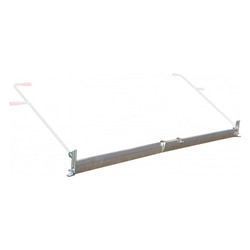
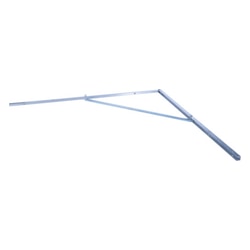
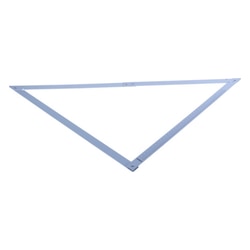
Aluminum Angle Bracket AW-120 Arm Length (m) 1.2 X 1.2 Probst
51800085zł330.87 tax incl. 269,00 zł tax excl.View technical data Zobacz szczegóły
- Weight: 1,7 kg
- Dimensions: 1200 x 1200 mm
TELEPLAN TP-150/260 Probst Manual Leveling System Profile
51010002zł1,879.00 tax incl. 1 527,64 zł tax excl.View technical data Zobacz szczegóły
- Weight: 6 kg
- Working width: 150 – 260 cm 1500-2600 mm
TELEPLAN TP-200/350 Probst Manual Leveling System
51010003zł1,942.99 tax incl. 1 579,67 zł tax excl.View technical data Zobacz szczegóły
- Weight: 6 kg 7,3 kg
- Working width: 200-350 cm 2000-3500 mm
Telescopic Leveling System TAS-UNI-600 Probst
51000043zł18,410.00 tax incl. 14 967,48 zł tax excl.View technical data Zobacz szczegóły
- Weight: 110 kg
- Working width: 75 – 600 cm
Telescopic Leveling System TAS-UNI-450 Probst
51000042zł14,401.00 tax incl. 11 708,13 zł tax excl.View technical data Zobacz szczegóły
- Weight: 85 kg
- Working width: 75 – 450 cm
EASYPLAN EP-UNI 230/300 Probst Aluminum Hand Patch System
51000041zł3,633.42 tax incl. 2 954,00 zł tax excl.View technical data Zobacz szczegóły
- Weight: 15 kg
- Working width: 2300-3000 mm
EASYPLAN EP-UNI 90/230 Probst Aluminum Hand Patch System
51000040zł3,633.42 tax incl. 2 954,00 zł tax excl.View technical data Zobacz szczegóły
- Weight: 16 kg
- Working width: 900-2300 mm
Aluminum Angle Bracket AW-200 Probst
51800018zł1,223.85 tax incl. 995,00 zł tax excl.View technical data Zobacz szczegóły
- Weight: 6 kg
- Dimensions: 2000 x 2000 mm
Probst AW-60 Aluminum Angle Bracket
51800052zł245.00 tax incl. 199,19 zł tax excl.View technical data Zobacz szczegóły
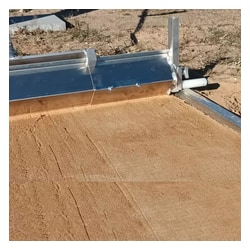
- Weight: 0,72 kg
- Dimensions: 600 x 600 x 840 mm
Aluminum Hand Shaping Batten LR2M
LR2Mzł2,328.00 tax incl. 1 892,68 zł tax excl.View technical data Zobacz szczegóły
- Producent: Jazon
- Adjustable working width: 80 - 250 cm
- Weight of the scraper patch: 10,5 cm
Telescopic Ground Profiling Staff For Machine Work TAK-350 Probst
51000018zł33,602.37 tax incl. 27 319,00 zł tax excl.View technical data Zobacz szczegóły
- Weight: 200 kg
- Working width: 1750-3500 mm
Telescopic Ground Profiling Staff For Machine Work TAK-750 Probst
51000013zł60,000.63 tax incl. 48 781,00 zł tax excl.View technical data Zobacz szczegóły
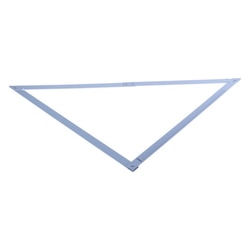
- Weight: 285 kg
- Working width: 1200-7500 mm
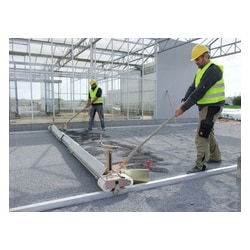
A paving screed bar (also called a screed or levelling bar) is a paving tool for levelling the bedding layer before blocks are laid. Drawn along two rails, it strikes off surplus aggregate and leaves a layer of even thickness, so every block seats at the same level. The quality of this single operation decides whether the finished surface is flat — an error in the bedding carries straight through to the face of the paving and cannot be corrected later by compaction.
NORWIT.PL carries Probst systems in three classes: TELEPLAN telescopic hand screeds with a working width from 600 to 3,500 mm (from 4.6 kg), the EASYPLAN EP-UNI aluminium system, and the large TAS-UNI levelling systems with a working width of 75–450 cm and 600 cm for extensive areas. These are completed by AZL levelling rails, the AW-120 aluminium square (1200 × 1200 mm) and the LevelKing LK attachment. For smaller jobs there is the LR2M aluminium profiling staff, operated by one person.
Once the bedding is levelled, blocks are seated with a paving hammer, cut with a block splitter and the surface compacted with a plate compactor fitted with a protective mat. The complete range is in paving tools.
What a screed bar does in paving work
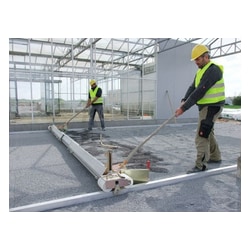
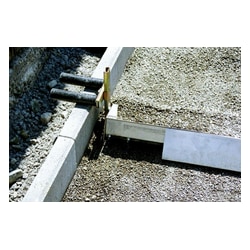
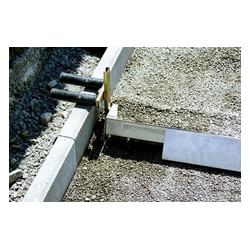
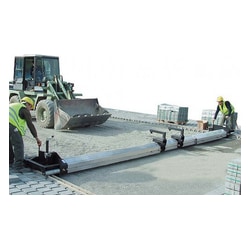
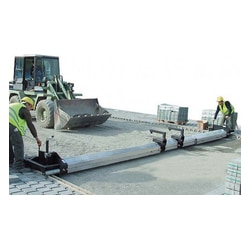
A screed bar, also called a levelling or profiling bar, is used to level the sand-cement or aggregate bedding before paving blocks are laid. The principle is simple: two rails are set on the prepared base at a given height, material is spread between them, and the bar is drawn along the rails. Surplus aggregate is struck off, leaving a layer of exactly the same thickness along the whole run.
Typical bedding thickness under block paving is 3–5 cm and has to be held to a tolerance of a few millimetres. The deviation is not cosmetic: a block laid on too thick a layer will settle lower than its neighbours after compaction, and one on too thin a layer will stand higher. Running a plate compactor over it will not fix this — compaction locks in whatever the levelling stage produced. Even bedding is therefore a condition of even paving, not an optional refinement.
A screed bar is a purely paving tool and should not be confused with a vibratory screed, which compacts and finishes fresh concrete — those are in vibratory screeds.
Types of bedding levelling system
The distinction follows the scale of the job: the larger the area, the more a wide, telescopic system pays off.
| Solution | Working width | Weight | Application |
|---|---|---|---|
| TELEPLAN hand screeds | 600–3,500 mm | from 4.6 kg | driveways, patios, pavements, edge work |
| EASYPLAN EP-UNI system | 230–300 cm | medium | medium areas, two-person work |
| TAS-UNI systems | 75–450 cm / up to 600 cm | 85 kg (TAS-UNI-450) | yards, car parks, large areas |
| AZL rails, AW-120 square | accessories | 1.7 kg (AW-120) | setting level and right angles |
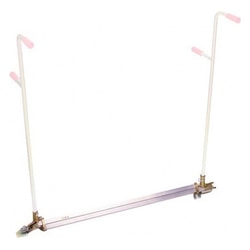
TELEPLAN telescopic screeds have an adjustable width — the TP-100/165 works across 1,000–1,650 mm at a weight of 4.6 kg, while the larger TP-150/260 and TP-200/350 cover 1.5–2.6 m and 2–3.5 m respectively. One tool therefore handles runs of different widths without carrying several fixed bars. The TAS-UNI systems are stationary structures weighing 85 kg, set up across a wide working front.
Choosing a screed bar
The first criterion is the width of the run you want to level in one pass. A 1.5 m pavement is covered by the TP-100/165 or TP-150/260; a 3 m driveway by the TP-200/350; a yard or car park by a TAS-UNI system reaching 4.5 or 6 m. The wider the reach, the less rail repositioning — but also the heavier the equipment and the greater the need for two operators.
| Type of work | Typical width | Recommendation |
|---|---|---|
| Pavements, perimeter strips | 0.6–1.6 m | TELEPLAN TP-60/100 or TP-100/165 |
| Patios, garden paths | 1.5–2.6 m | TELEPLAN TP-150/260 |
| Driveways, garage approaches | 2–3.5 m | TELEPLAN TP-200/350 or EASYPLAN EP-UNI |
| Yards, car parks, access roads | over 3.5 m | TAS-UNI-450 or TAS-UNI-600 |
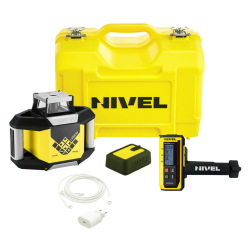
The second criterion is how levels are set. On small areas, rails placed at a given height and checked with a spirit level are enough. On larger ones, levels and falls are set with a laser level, and the bar merely reproduces the established plane. On driveways and yards a fall is mandatory: typically 1.5–2% towards the drainage point, meaning 1.5–2 cm per metre of length.
The third point is accessories. AZL levelling rails hold a constant height along the full run, and the AW-120 aluminium square with 1200 × 1200 mm arms lets you check right angles at corners and edges — an overlooked detail that decides whether courses of blocks start drifting out of line.
Frequently asked questions — screed bars and bedding preparation
What is a screed bar for block paving used for?
A screed bar levels the bedding before blocks are laid: drawn along two rails, it strikes off surplus aggregate and leaves a layer of uniform thickness, typically 3–5 cm. Every block then seats at the same level. This operation determines how flat the finished surface will be — an error in the bedding cannot be fixed by later compaction, because a plate compactor locks in the shape of the layer rather than correcting it.
How thick should the bedding under block paving be?
Standard sand-cement or aggregate bedding under block paving is 3–5 cm thick after compaction, held to a tolerance of a few millimetres across the whole area. A thicker layer causes uneven settlement after compaction; a thinner one leaves no room to adjust the height of individual blocks during laying. The bedding does not replace the sub-base — it sits on a load-bearing aggregate layer of far greater thickness, sized to the loading the surface will carry.
How does a screed bar differ from a vibratory screed?
A screed bar is an unpowered paving tool — it levels dry bedding under blocks by striking off surplus material. A vibratory screed is a powered machine that compacts and finishes freshly poured concrete by vibrating it. Both have a long profile and both level, but they work on different materials at different stages of construction.
What width of screed bar should I choose?
Width is matched to the run levelled in a single pass. Pavements and perimeter strips 0.6–1.6 m wide are served by the telescopic TP-60/100 or TP-100/165 weighing from 4.6 kg. Patios and paths call for the TP-150/260, driveways up to 3.5 m for the TP-200/350. Yards and car parks over 3.5 m use TAS-UNI systems with a working width of 450 or 600 cm, which weigh around 85 kg and need two operators.
What fall should a block-paved surface have?
Block paving requires a fall to shed water, typically 1.5–2%, which is 1.5–2 cm per metre of length, directed away from the building towards drainage or a planted area. The fall is set while levelling the bedding, by placing the rails at correspondingly varying heights — most often with a laser level. A surface without a fall leads to standing water, and in winter to frost damage to the joints and sub-base.
Do I need a laser level to level the bedding?
On small areas — perimeter strips, paths, modest patios — rails set at a given height and checked with a spirit level and string line are enough. On driveways, yards and car parks, levels and falls are set with a laser level and the bar simply reproduces the established plane. The larger the area, the faster errors accumulate when transferring levels by hand, so beyond a few hundred square metres a laser stops being a convenience and becomes a condition of repeatability.
Can a screed bar be used on aggregate and crushed stone?
A screed bar works on fine loose materials — sand, sand-cement mix and the grit used as bedding. Spreading and initial profiling of thicker crushed-stone sub-base layers is instead done with spreading machines such as the PowerPlan, because large aggregate fractions jam under the bar's profile. Bedding for block paving is always laid on a previously compacted sub-base, never directly on natural ground.