


-
-
Concrete
-
- Concreting
- Concrete Vibrators
- Complete 230 V Mechanical Vibrators
- Vibrator Heads
- Vibrator Shafts
- Vibrator Motors
- Concrete Vibrators 42 V | 200 Hz
- Mechanical Vibrators 230 V
- 42 V | 200 Hz Head and Shaft
- 230 V Concrete Vibrators
- Vibrators With Built-In 230 V | 200 Hz Converter
- 42 V | 200 Hz Converters
- Combustion Vibrators
- Pneumatic Vibrators
- External Vibrators
- Power Trowels
- Vibratory Screeds
- Concrete Hand Tools
- Concrete Vibrators
-
-
-
-
-
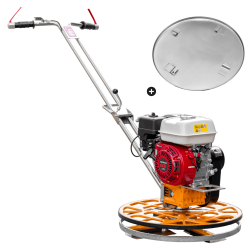
- Walk-Behind Combustion Power Trowels
-
-
-
Heating and cooling
-
Generators
-
Earthworks
-
Industrial vacuums
-
Finishing
-
Pumps
-
Measurement
-
BLOG & Tips
-
Promotions
Kategorie 16 kategorii
Kategorie
-
- Levels and Measurements
- Soil Compactors
- Tamping Rammers - Jumping Jacks
- Single Direction Vibratory Plates
- Reversible Vibratory Plates
- Rollers
- 100 kg Soil Compactors
- 200 kg Soil Compactors
- 300 kg Soil Compactors
- 400 kg Soil Compactors
- 500 kg Soil Compactors
- 600 kg Soil Compactors
- 700 kg Soil Compactors
- 800 kg Soil Compactors
- Wacker Neuson Compactors
- Accessories for Compactors
- Bomag Compactors
- Altrad Belle Compactors
- Paver Compactors
- Swepac Compactors
- Power Generators
- Concreting
- Concrete Vibrators
- Complete 230 V Mechanical Vibrators
- Vibrator Heads
- Vibrator Shafts
- Vibrator Motors
- Concrete Vibrators 42 V | 200 Hz
- Mechanical Vibrators 230 V
- 42 V | 200 Hz Head and Shaft
- 230 V Concrete Vibrators
- Vibrators With Built-In 230 V | 200 Hz Converter
- 42 V | 200 Hz Converters
- Combustion Vibrators
- Pneumatic Vibrators
- External Vibrators
- Vibratory Screeds
- Power Trowels
- Concrete Hand Tools
- Concrete Vibrators
- Pumps and Motor Pumps
- Cutting, Drilling and Grinding
- Heating and Cooling
- Wood Table Saws
- Painting and Plastering
- Combustion Engines
- Washing and Vacuuming
- Cement Mixers
- Paving Tools
- Wheelbarrows and Track Dumpers
- Demolition and Hammers
- Sales
- Levels and Measurements
Brak kategorii pasujących do wyszukiwania.
Single-Phase 230 V Generators
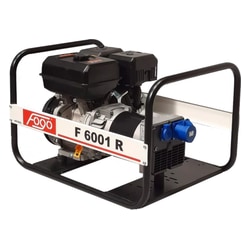
FOGO F 3001 R Single-Phase Generator Set
28804zł2,526.99 tax incl. 2 054,46 zł tax excl.View technical data Zobacz szczegóły
- Weight: 38 kg
- Dimensions: 580 x 395 x 405 mm
- Voltage: 230 V
- Engine: Rato R210
- Fuel: Petrol
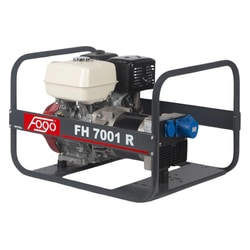
FOGO FH 7001 R Single-Phase Generator Set
36755zł6,628.00 tax incl. 5 388,62 zł tax excl.View technical data Zobacz szczegóły
- Weight: 68 kg
- Dimensions: 790 x 580 x 505
- Voltage: 230 V
- Engine: Honda GX 390
- Fuel: Petrol
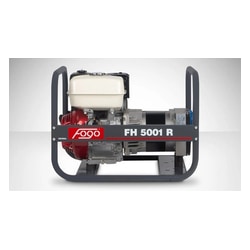
FOGO FH 5001R Single-Phase Generator Set
37038zł5,502.00 tax incl. 4 473,17 zł tax excl.View technical data Zobacz szczegóły
- Weight: 53 kg
- Dimensions: 650 x 520 x 490 mm
- Voltage: 230 V
- Engine: Honda GX 270
- Fuel: Bezołowiowa 95
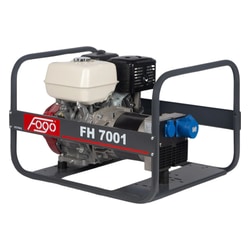
FOGO FH 7001 Single-Phase Generator Set
37018zł5,415.00 tax incl. 4 402,44 zł tax excl.View technical data Zobacz szczegóły
- Weight: 68 kg
- Dimensions: 790 x 580 x 505
- Voltage: 230 V
- Engine: Honda GX 390
- Fuel: Petrol
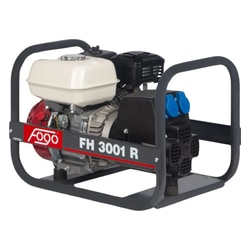
FOGO FH 3001 R Single-Phase Generator Set
28152zł3,752.93 tax incl. 3 051,16 zł tax excl.View technical data Zobacz szczegóły
- Weight: 38 kg
- Dimensions: 580 x 395 x 405 mm
- Voltage: 230 V
- Engine: Honda GX 200
- Fuel: Petrol
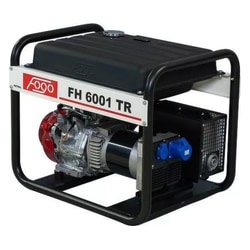
FOGO FH 6001 TR Single-Phase Generator Set
28157zł7,686.00 tax incl. 6 248,78 zł tax excl.View technical data Zobacz szczegóły
- Weight: 86 kg
- Dimensions: 790 x 580 x 650mm
- Voltage: 230 V
- Engine: Honda GX 390
- Fuel: Petrol
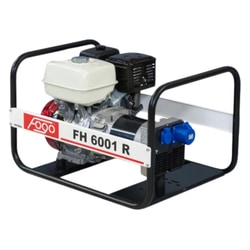
FOGO FH 6001 R Single-Phase Generator Set
28156zł5,506.71 tax incl. 4 477,00 zł tax excl.View technical data Zobacz szczegóły
- Weight: 68 kg
- Dimensions: 790 x 580 x 505
- Voltage: 230 V
- Engine: Honda GX 390
- Fuel: Petrol
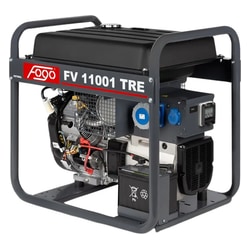
FOGO FV 11001 TRE Single-Phase Generator Set
28178zł14,629.01 tax incl. 11 893,50 zł tax excl.View technical data Zobacz szczegóły
- Weight: 131 kg
- Dimensions: 790 x 580 x 65 mm
- Voltage: 230 V
- Engine: Vanguard 21km
- Fuel: Petrol
FOGO FH 3001 Single-Phase Generator Set
35665zł2,898.99 tax incl. 2 356,90 zł tax excl.View technical data Zobacz szczegóły
- Weight: 37 kg
- Dimensions: 580 x 395 x 405 mm
- Current: Linz
- Voltage: 230 V
- Engine: Honda GX 200
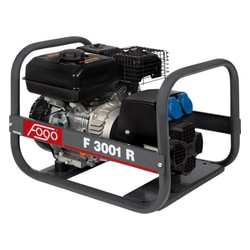
FOGO F 3001 Single-Phase Generator Set
28803zł2,113.00 tax incl. 1 717,89 zł tax excl.View technical data Zobacz szczegóły
- Weight: 37 kg
- Dimensions: 580 x 395 x 405 mm
- Voltage: 230 V
- Engine: Rato R210
- Fuel: Petrol
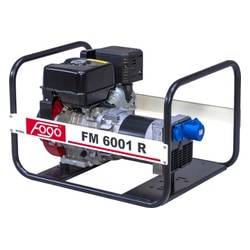
FOGO FM 6001R Single-Phase Generator Set
34433zł5,259.48 tax incl. 4 276,00 zł tax excl.View technical data Zobacz szczegóły
- Weight: 70 kg
- Dimensions: Brak danych
- Voltage: 230 V
- Engine: Mitsubishi GB40GPN
- Fuel: Petrol
FOGO FH 6001 Single-Phase Generator Set
28153zł4,825.29 tax incl. 3 923,00 zł tax excl.View technical data Zobacz szczegóły
- Weight: 68 kg
- Dimensions: 790 x 580 x 505
- Voltage: 230 V
- Engine: Honda GX 390
- Fuel: Petrol
A single-phase generator delivers 230 V at 50 Hz through a single circuit — the supply that power tools, temporary lighting, diaphragm pumps and lighter construction machines are built for. It is the standard choice on sites with no three-phase loads, where what matters is a clean split of power across 16 A and 32 A sockets.
This category covers 230 V generators built for continuous duty on construction and renovation jobs: mostly petrol units with recoil start, plus stronger versions with electric start and a larger fuel tank. The range includes machines from fogo, enar and wacker neuson, among others.
If voltage quality drives your decision, compare units with AVR stabilization against those without AVR stabilization. For 400 V loads, go to three-phase generators.
When a single-phase 230 V generator is enough on site
A single-phase generator pushes all of its output through one 230 V circuit, so what it can actually run depends as much on socket rating as on the nameplate figure. A 16 A socket carries roughly 3.7 kW continuously and a 32 A socket about 7.4 kW — so even a 6 kVA set will never deliver more than that through a single 16 A outlet. With several machines running at once, socket count and load distribution matter more than the rated power.
Apparent power in kVA and real power in kW are not the same figure: at a typical power factor of 0.8 a 5 kVA set gives roughly 4 kW. Resistive loads draw the full real power, while electric motors also draw an inrush current of 3–7 times their rated current — and that surge decides whether a compactor, a pump or a cement mixer will start without the voltage collapsing.
Power classes of single-phase 230 V generators
The ranges below describe typical power classes rather than any single model — exact figures are on the individual product pages.
| Power class | Continuous current at 230 V | Typical use | Electric start |
|---|---|---|---|
| 2–3 kVA | approx. 9–13 A | drills, angle grinders, lighting, tool chargers | usually no |
| 3–5 kVA | approx. 13–22 A | wall chasers, hand-held cut-off saws, diaphragm pumps, concrete vibrators | optional |
| 5–7 kVA | approx. 22–30 A | electric compactors, cement mixers, several tool stations at once | usually yes |
| above 7 kVA | approx. 30 A and more | site distribution board, several hours of continuous duty | yes |
Sizing the set and choosing the equipment
- Add up the real power of everything that will run simultaneously, then add a 20–30% margin for motor starts and for the output a petrol engine loses in hot weather and at altitude.
- Check how many 230 V sockets the set has and how each one is protected — two 16 A outlets spread the load better than a single higher-rated socket.
- Convert tank capacity into running hours: at a consumption of roughly 1–2.5 l/h, a 15–25 l tank normally covers 6 to 12 hours between refills.
- If electronically controlled equipment is part of the set, pick a unit with AVR voltage stabilization; for resistive loads and simple motors alone, a version without AVR stabilization will do.
- Extension leads, service kits and adapters are in power generator accessories.
Frequently asked questions about single-phase 230 V generators
What power rating should a single-phase 230 V generator have for power tools and construction machines?
Sizing starts from the combined real power of everything running at once, plus a 20–30% margin. A 1.1 kW drill, a 2.2 kW grinder and 0.3 kW of lighting come to about 3.6 kW, which in practice calls for a 5–6 kVA set at a power factor of 0.8. Rated current alone is not a sufficient guide: induction motors draw 3–7 times their working current on start-up, so a 2.2 kW machine can load the generator with 6–8 kW for a moment. Above 1,000 m altitude or in temperatures over 30°C, allow a few percent more for the loss of engine output.
How much current can be drawn from one 230 V socket on a generator?
Socket capacity is set by its own rated current, not by the output of the whole generator. A standard 16 A socket at 230 V carries about 3.7 kW continuously and a 32 A socket about 7.4 kW. That means a 6 kVA generator fitted with two 16 A outlets only gives its full output once the loads are split across both of them. An overloaded socket trips its protection before the set reaches rated power. Long cable runs add voltage drop — around 11 V over 50 m of 2.5 mm² cable at 16 A.
Will a 230 V generator start an electric compactor, a pump or a cement mixer?
Starting any induction-motor machine calls for spare capacity to cover the inrush current. A 0.8–1.5 kW cement mixer normally starts from a 3–5 kVA set, whereas a 2–3 kW pump or electric compactor realistically needs a 5–7 kVA unit. Start machines one at a time, beginning with the one that draws the highest inrush current. If the voltage sags and the motor hums without spinning up, the generator is undersized or the supply cable is too thin.
How much fuel does a single-phase 230 V generator use and how long does a tank last?
Fuel consumption is driven mainly by load. Petrol generators in the 3–7 kVA class typically burn 1–2.5 l/h at around 75% of rated output, and as little as half that at idle. With a 15–25 l tank this works out at roughly 6 to 12 hours of continuous running — one or two shifts without refuelling. An engine held at the edge of its output burns more and runs hotter, so a 20–30% margin lowers the hourly cost. At light loads, inverter generators are the more economical option.