

-
-
Concrete
-
- Concreting
- Concrete Vibrators
- Complete 230 V Mechanical Vibrators
- Vibrator Heads
- Vibrator Shafts
- Vibrator Motors
- Concrete Vibrators 42 V | 200 Hz
- Mechanical Vibrators 230 V
- 42 V | 200 Hz Head and Shaft
- 230 V Concrete Vibrators
- Vibrators With Built-In 230 V | 200 Hz Converter
- 42 V | 200 Hz Converters
- Combustion Vibrators
- Pneumatic Vibrators
- External Vibrators
- Power Trowels
- Vibratory Screeds
- Concrete Hand Tools
- Concrete Vibrators
-
-
-
-
-
- Walk-Behind Combustion Power Trowels
-
-
-
Heating and cooling
-
Generators
-
Earthworks
-
Industrial vacuums
-
Finishing
-
Pumps
-
Measurement
-
BLOG & Tips
-
Promotions
Kategorie 16 kategorii
Kategorie
-
- Levels and Measurements
- Soil Compactors
- Tamping Rammers - Jumping Jacks
- Single Direction Vibratory Plates
- Reversible Vibratory Plates
- Rollers
- 100 kg Soil Compactors
- 200 kg Soil Compactors
- 300 kg Soil Compactors
- 400 kg Soil Compactors
- 500 kg Soil Compactors
- 600 kg Soil Compactors
- 700 kg Soil Compactors
- 800 kg Soil Compactors
- Wacker Neuson Compactors
- Accessories for Compactors
- Bomag Compactors
- Altrad Belle Compactors
- Paver Compactors
- Swepac Compactors
- Power Generators
- Concreting
- Concrete Vibrators
- Complete 230 V Mechanical Vibrators
- Vibrator Heads
- Vibrator Shafts
- Vibrator Motors
- Concrete Vibrators 42 V | 200 Hz
- Mechanical Vibrators 230 V
- 42 V | 200 Hz Head and Shaft
- 230 V Concrete Vibrators
- Vibrators With Built-In 230 V | 200 Hz Converter
- 42 V | 200 Hz Converters
- Combustion Vibrators
- Pneumatic Vibrators
- External Vibrators
- Vibratory Screeds
- Power Trowels
- Concrete Hand Tools
- Concrete Vibrators
- Pumps and Motor Pumps
- Cutting, Drilling and Grinding
- Heating and Cooling
- Wood Table Saws
- Painting and Plastering
- Combustion Engines
- Washing and Vacuuming
- Cement Mixers
- Paving Tools
- Wheelbarrows and Track Dumpers
- Demolition and Hammers
- Sales
- Levels and Measurements
Brak kategorii pasujących do wyszukiwania.
400 kg Soil Compactors
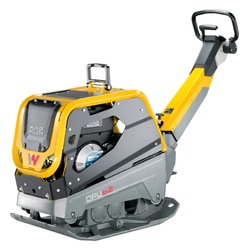
Wacker Neuson DPU 45 YEH Reversible Compactor
5100068380zł33,825.00 tax incl. 27 500,00 zł tax excl.View technical data Zobacz szczegóły
- Centrifugal force: 45 kN
- Weight: 385 kg
- Working width: 600 mm
- Motor manufacturer: Yanmar
- Startup: Electric
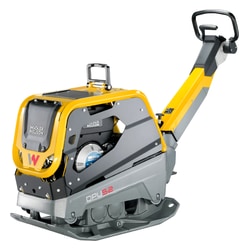
Wacker Neuson DPU 40 YEH Reversible Compactor
5100068379zł31,980.00 tax incl. 26 000,00 zł tax excl.View technical data Zobacz szczegóły
- Centrifugal force: 40 kN
- Weight: 376 kg
- Working width: 600 mm
- Motor manufacturer: Yanmar
- Startup: Elektryczny - kluczyk
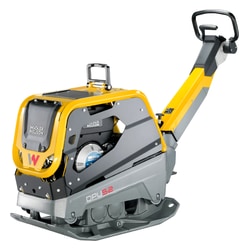
Wacker Neuson BPU 5260 Ah Reversible Compactor
5100077265zł33,210.00 tax incl. 27 000,00 zł tax excl.View technical data Zobacz szczegóły
- Centrifugal force: 52 kN
- Weight: 373 kg
- Working speed: 26 m/min
- Performance: 733 m²/h
- Turnover: 3 600/min (znamionowe)
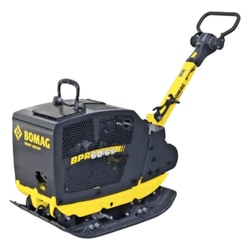
Zagęszczarka rewersyjna Bomag BPR 60/65 (Honda GX 390)
69500077-001zł35,053.77 tax incl. 28 499,00 zł tax excl.View technical data Zobacz szczegóły
- Centrifugal force: 60 kN
- Weight: 415 kg
- Dimensions: 780 x 980 x 1350 mm
- Engine type: Spalinowy (benzyna)
- Frequency: 68 Hz
Wacker Neuson DPU 6260 Hehcpb+ Reversible Compactor
5100077282zł42,927.00 tax incl. 34 900,00 zł tax excl.View technical data Zobacz szczegóły
- Weight: 497 kg
- Engine type: wysokoprężny, 4-suwowy, 1 cylinder, Hatz
- Startup: Electric
- Turnover: 2 800/min
- Rated power: 7,3 kW
Wacker Neuson DPU 5260 Hehcpb+ Reversible Compactor
5100076468zł39,237.00 tax incl. 31 900,00 zł tax excl.View technical data Zobacz szczegóły
- Centrifugal force: 52 kN
- Weight: 437 kg
- Engine type: wysokoprężny, 4-suwowy, 1 cylinder, Hatz
- Startup: Electric
- Performance: 1 008 m²/h
Wacker Neuson DPU 5260 Hehp Reversible Compactor
5100076466zł36,777.00 tax incl. 29 900,00 zł tax excl.View technical data Zobacz szczegóły
- Centrifugal force: 52 kN
- Engine type: wysokoprężny, 4-suwowy, 1 cylinder, Hatz
- Startup: Electric
- Performance: 1 008 m²/h
- Fuel tank: 5 l
Wacker Neuson DPU 4045 Yeh Reversible Compactor
5100063123zł32,472.00 tax incl. 26 400,00 zł tax excl.View technical data Zobacz szczegóły
- Centrifugal force: 40 kN
- Weight: 376 kg
- Working width: 600 mm
- Motor manufacturer: Yanmar
- Startup: Electric
Wacker Neuson DPU 6260 Hehp Reversible Compactor
5100076469zł40,467.00 tax incl. 32 900,00 zł tax excl.View technical data Zobacz szczegóły
- Weight: 475 kg
- Engine type: wysokoprężny, 4-suwowy, 1 cylinder, Hatz
- Startup: Electric
- Performance: 1 000 m²/h
- Fuel tank: 5 l
Wacker Neuson DPU 4545 HE Reversible Compactor
5100016951zł50,759.00 tax incl. 41 267,48 zł tax excl.View technical data Zobacz szczegóły
- Centrifugal force: 45 kN
- Weight: 423 kg
- Working width: 440 mm
- Motor manufacturer: Hatz
- Startup: Electric
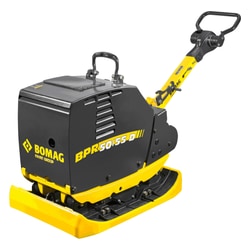
Bomag BPR 50/55 D Reversible Compactor STONEGUARD
BPR 50/55 D STONEGUARDzł47,957.70 tax incl. 38 990,00 zł tax excl.View technical data Zobacz szczegóły
- Centrifugal force: 50 kN
- Weight: 440 kg
- Working width: 680 mm
- Motor manufacturer: Hatz
- Startup: Electric
Altrad Belle RPC 60/80 Honda Reversible Compactor
161.9.142zł29,930.00 tax incl. 24 333,33 zł tax excl.View technical data Zobacz szczegóły
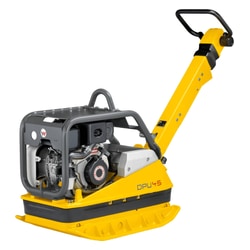
- Centrifugal force: 60 kN
- Weight: 380 kg
- Working width: 700 mm
- Motor manufacturer: Honda
- Startup: Manual
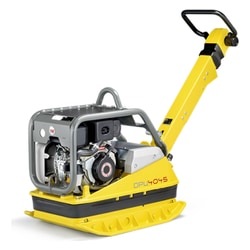
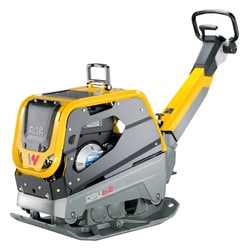
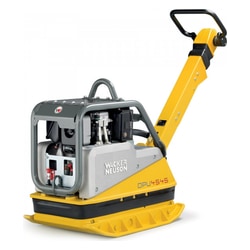
A 400 kg soil compactor is a reversible vibratory plate — a machine that travels both forwards and backwards without the operator turning it by hand — sitting in the medium-heavy end of the compaction range. Operating weight is around 380–420 kg and centrifugal force typically 40–60 kN, enough to compact a 40–55 cm lift of granular soil or aggregate in a single pass with a plate 45–70 cm wide. This class presses layers harder and deeper than 200–300 kg machines, yet stays far easier to move around than the 500–700 kg units used on industrial-building foundations and road embankments.
Because a machine of this weight is almost always built as a reversible plate, the 400 kg class suits road and yard sub-bases, trench backfill, pipeline bedding and aggregate layers on medium-sized areas. At NORWIT.PL this segment is built mainly around Wacker Neuson, Altrad Belle and Bomag — engine-driven reversible plates chosen for earthworks and road jobs, where working force matters as much as being able to haul the machine on an ordinary trailer. The full span of weight classes is set out in the parent category soil compactors, while protective mats, filters and wear parts sit in compactor accessories; machines from these manufacturers also have their own pages — Wacker Neuson, Altrad Belle and Bomag. Below we explain how to match the 400 kg class to soil type, lift thickness and the scale of the job.
The 400 kg compactor — specifications and working principle
A soil compactor, also known as a vibratory plate, densifies the ground with a vibrating steel plate driven by an eccentric exciter — an assembly of rotating unbalanced masses that turns engine revolutions into vertical vibration of the plate. In the 380–420 kg operating-weight class the centrifugal force is usually 40–60 kN, vibration frequency around 65–80 Hz and the working plate 45–70 cm wide. Together those figures compact a 40–55 cm lift of granular soil in one pass at a travel speed of roughly 20–25 m/min.
Power comes from a combustion engine rated at some 6–9 kW (about 8–12 hp), most often a single-cylinder diesel in this class. The 400 kg machines offered by NORWIT.PL come mainly from Wacker Neuson, Altrad Belle and Bomag.
Why every 400 kg machine is a reversible design
A single-direction plate travels forwards only, so the operator has to swing it round by hand at the edge of the working area. In practice such designs stop at roughly 150–200 kg. A reversible plate carries a twin eccentric arrangement inside the exciter and changes travel direction smoothly, forwards and back, which is why the whole 400 kg segment is reversible. The machine can finish a trench, a ditch or the strip along a foundation wall where it stands, without anyone manhandling a plate weighing close to half a tonne.
The same feature allows compaction on the spot — around manhole bedding and service crossings. The two designs across the remaining weight classes are compared in the categories reversible vibratory plates and single-direction vibratory plates.
The 400 kg class against neighbouring weight classes
Operating weight translates directly into centrifugal force and compaction depth, so the weight class follows the lift thickness specified in the design. The values below are typical for each class — exact figures for every machine are given on its product page.
| Weight class | Centrifugal force | Lift per pass | Typical use | Reversible |
|---|---|---|---|---|
| 100–200 kg | approx. 12–30 kN | approx. 20–40 cm | paving stones, pavements, domestic jobs | rarely |
| 300 kg | approx. 30–50 kN | approx. 30–45 cm | trenches, sub-bases under paving and yards | yes |
| 400 kg | approx. 40–60 kN | approx. 40–55 cm | road sub-bases, backfill, pipeline bedding | yes |
| 500 kg | approx. 50–70 kN | approx. 50–70 cm | larger yards, embankments, foundations | yes |
| 600 kg and above | approx. 60–100 kN | approx. 60–90 cm | industrial-building foundations, road embankments, industrial yards | yes |
Where the design calls for lifts no thicker than 40–50 cm, the lighter choice is a machine from soil compactors 300 kg. For embankments and yards measured in thousands of square metres it is worth looking at soil compactors 500 kg. Laying the surface itself calls for lighter machines fitted with a protective mat — see compactors for paving stones.
Which soils a 400 kg machine will compact
Vibratory plates work best on granular soils, where vibration rearranges loose grains into a dense, load-bearing structure. Cohesive soils — loams and clays — transmit vibration poorly, because capillary water binds the clay particles together; a rammer or a roller does a better job there.
| Soil type | Suitability of the 400 kg class | Practical notes |
|---|---|---|
| Sand, sand-and-gravel mix | very good | 40–55 cm lift per pass, usually 2–3 passes to full density |
| Gravel, crushed stone, crushed aggregate | very good | the standard on road and manoeuvring-yard sub-bases |
| Mixed and stabilised soil | good | lifts of 30–40 cm, at moisture close to optimum |
| Loam, clay | limited | a rammer or a padfoot roller performs better |
| Freshly laid paving stones | not advisable | far too much force — use machines up to 200 kg with a mat |
Wacker Neuson, Altrad Belle and Bomag in the 400 kg class
This segment is built around manufacturers with an established position in compaction equipment: Wacker Neuson (Germany) — a broad reversible line-up and a hard-wearing exciter; Bomag (Germany, Fayat Group) — specialists in compacting road surfaces; Altrad Belle (United Kingdom) — simpler designs that are easy to service.
| Brand | Strength in the 400 kg class | Brand page |
|---|---|---|
| Wacker Neuson | broad weight range, durable exciter, extensive service network | wacker neuson |
| Bomag | steady performance on road sub-bases, compaction control | bomag |
| Altrad Belle | straightforward design, easy access to wear parts | altrad belle |
Each manufacturer also has its own listing: Wacker Neuson compactors, Bomag compactors and Altrad Belle compactors.
Transport, handling and servicing
At 380–420 kg the machine still fits on a trailer with a gross weight rating of up to 750 kg (payload from roughly 500 kg) — the biggest logistical advantage this class holds over the 500–700 kg segment. Loading is done up a ramp rated for at least 500 kg, with a forklift, or by lorry-mounted loader crane using the factory lifting eye; carrying it by hand is out of the question.
Routine servicing covers checking engine oil and exciter oil, cleaning the air filter and checking V-belt tension. The first service falls after about 20 operating hours, subsequent ones every 100–200 hours. Protective mats, filters and other parts are listed in compactor accessories.
Frequently asked questions about 400 kg soil compactors
How deep does a 400 kg compactor compact?
A soil compactor with an operating weight of 380–420 kg densifies a lift of granular material — sand, sand-and-gravel mix, gravel or crushed aggregate — some 40–55 cm thick in a single pass. That comes from a centrifugal force of 40–60 kN and a vibration frequency of around 65–80 Hz. Reaching full density normally takes 2–3 passes over the same lift, and on mixed or stabilised soils the lift is kept down to 30–40 cm. By comparison, the 300 kg class handles about 30–45 cm and machines from 600 kg upwards reach 60–90 cm.
What jobs is a 400 kg soil compactor suited to?
The 400 kg class is equipment for road and yard sub-bases, trench backfill, bedding around pipelines and tanks, and aggregate layers under surfacing on medium-sized areas. A centrifugal force of 40–60 kN and a plate 45–70 cm wide build a load-bearing lift of 40–55 cm without repeated passes, while the reversible design lets the operator work inside a trench without turning the machine. For laying paving stones this class is simply too powerful — that work calls for machines of up to about 200 kg fitted with a protective mat.
How does the 400 kg class differ from 300 kg and 500 kg machines?
The difference comes down to centrifugal force and the thickness of the compacted lift. The 300 kg class generates roughly 30–50 kN and compacts 30–45 cm, the 400 kg class about 40–60 kN and 40–55 cm, and the 500 kg class some 50–70 kN and 50–70 cm. The 400 kg segment is the compromise: it works on road sub-bases like heavier equipment, yet at 380–420 kg it still travels on a trailer rated up to 750 kg. Machines of 500 kg and above need a higher-payload outfit and more often a permanent service base.
Are there single-direction plates in the 400 kg class?
The 380–420 kg segment consists, in practice, exclusively of reversible machines — plates that travel forwards and back without being turned by hand. Single-direction designs usually stop at 150–200 kg, because above that weight manual manoeuvring stops being feasible for the operator. Reversibility comes from the twin eccentric arrangement inside the exciter and also allows compaction on the spot, which matters around manhole bedding and service crossings inside trenches.
What trailer do I need to haul a 400 kg compactor?
With an operating weight of 380–420 kg, a trailer with a payload of at least 500 kg is enough — in other words a standard trailer rated up to 750 kg gross, with no low-loader needed. Loading is done up a ramp rated for a minimum of 500 kg, with a forklift, or by lorry-mounted loader crane using the factory lifting eye; carrying the machine by hand is out of the question. This is the main logistical advantage of the 400 kg class over the 500–700 kg segment, where the heavier machines already demand a trailer rated above 750 kg gross.
How often should a compactor of this class be serviced?
The first service with an engine oil change normally falls after about 20 operating hours, with subsequent ones every 100–200 hours, following the manufacturer's manual. Daily checks cover oil level in the engine and in the exciter, cleaning the air filter and V-belt tension — in dry, dusty ground the filter is worth inspecting every few hours. Neglected exciter oil is a common cause of expensive failures in 380–420 kg machines, because the eccentric assembly runs at 65–80 Hz.
Why buy a 400 kg soil compactor at NORWIT.PL
We carry compaction equipment across the full weight range, so we can help match the class to the lift thickness in your design. In the 400 kg segment we offer mainly reversible vibratory plates from Wacker Neuson, Altrad Belle and Bomag, backed by wear parts and protective mats in compactor accessories. Neighbouring classes can be compared in soil compactors 300 kg and soil compactors 500 kg, and the complete overview sits in the soil compactors category. Orders are placed online, with delivery throughout Poland.