


-
-
Concrete
-
- Concreting
- Concrete Vibrators
- Complete 230 V Mechanical Vibrators
- Vibrator Heads
- Vibrator Shafts
- Vibrator Motors
- Concrete Vibrators 42 V | 200 Hz
- Mechanical Vibrators 230 V
- 42 V | 200 Hz Head and Shaft
- 230 V Concrete Vibrators
- Vibrators With Built-In 230 V | 200 Hz Converter
- 42 V | 200 Hz Converters
- Combustion Vibrators
- Pneumatic Vibrators
- External Vibrators
- Power Trowels
- Vibratory Screeds
- Concrete Hand Tools
- Concrete Vibrators
-
-
-
-
-
- Walk-Behind Combustion Power Trowels
-
-
-
Heating and cooling
-
Generators
-
Earthworks
-
Industrial vacuums
-
Finishing
-
Pumps
-
Measurement
-
BLOG & Tips
-
Promotions
Kategorie 16 kategorii
Kategorie
-
- Levels and Measurements
- Soil Compactors
- Tamping Rammers - Jumping Jacks
- Single Direction Vibratory Plates
- Reversible Vibratory Plates
- Rollers
- 100 kg Soil Compactors
- 200 kg Soil Compactors
- 300 kg Soil Compactors
- 400 kg Soil Compactors
- 500 kg Soil Compactors
- 600 kg Soil Compactors
- 700 kg Soil Compactors
- 800 kg Soil Compactors
- Wacker Neuson Compactors
- Accessories for Compactors
- Bomag Compactors
- Altrad Belle Compactors
- Paver Compactors
- Swepac Compactors
- Power Generators
- Concreting
- Concrete Vibrators
- Complete 230 V Mechanical Vibrators
- Vibrator Heads
- Vibrator Shafts
- Vibrator Motors
- Concrete Vibrators 42 V | 200 Hz
- Mechanical Vibrators 230 V
- 42 V | 200 Hz Head and Shaft
- 230 V Concrete Vibrators
- Vibrators With Built-In 230 V | 200 Hz Converter
- 42 V | 200 Hz Converters
- Combustion Vibrators
- Pneumatic Vibrators
- External Vibrators
- Vibratory Screeds
- Power Trowels
- Concrete Hand Tools
- Concrete Vibrators
- Pumps and Motor Pumps
- Cutting, Drilling and Grinding
- Heating and Cooling
- Wood Table Saws
- Painting and Plastering
- Combustion Engines
- Washing and Vacuuming
- Cement Mixers
- Paving Tools
- Wheelbarrows and Track Dumpers
- Demolition and Hammers
- Sales
- Levels and Measurements
Brak kategorii pasujących do wyszukiwania.
500 kg Soil Compactors
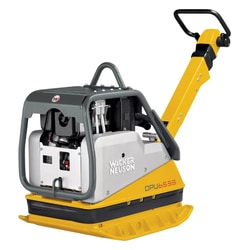
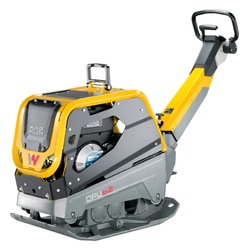
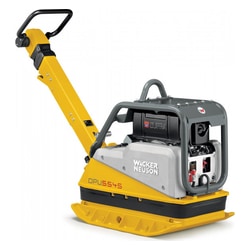
Wacker Neuson DPU 6555 HECH Reversible Compactor With Compaction Measurement
5100009639zł49,077.00 tax incl. 39 900,00 zł tax excl.View technical data Zobacz szczegóły
- Centrifugal force: 65 kN
- Weight: 497 kg
- Working width: 700 mm
- Motor manufacturer: Hatz
- Startup: Electric
Wacker Neuson DPU 6555 HEH Reversible Compactor Without Compaction Measurement
5100009636zł46,617.00 tax incl. 37 900,00 zł tax excl.View technical data Zobacz szczegóły
- Centrifugal force: 65 kN
- Weight: 498 kg
- Working width: 700 mm
- Motor manufacturer: Hatz
- Startup: Electric
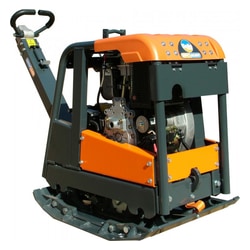
Altrad Belle RPC 60/80 DE Reversible Compactor
161.9.065zł38,031.60 tax incl. 30 920,00 zł tax excl.View technical data Zobacz szczegóły
- Centrifugal force: 60 kN
- Weight: 505 kg
- Working width: 700 mm
- Motor manufacturer: Hatz
- Startup: Electric
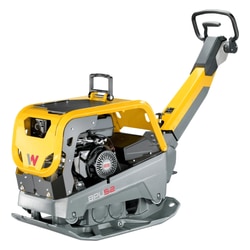
Wacker Neuson BPU 5260 Ah Reversible Compactor
5100077265zł33,210.00 tax incl. 27 000,00 zł tax excl.View technical data Zobacz szczegóły
- Centrifugal force: 52 kN
- Weight: 373 kg
- Working speed: 26 m/min
- Performance: 733 m²/h
- Turnover: 3 600/min (znamionowe)
Wacker Neuson DPU 6260 Hehcpb+ Reversible Compactor
5100077282zł42,927.00 tax incl. 34 900,00 zł tax excl.View technical data Zobacz szczegóły
- Weight: 497 kg
- Engine type: wysokoprężny, 4-suwowy, 1 cylinder, Hatz
- Startup: Electric
- Turnover: 2 800/min
- Rated power: 7,3 kW
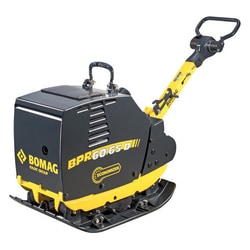
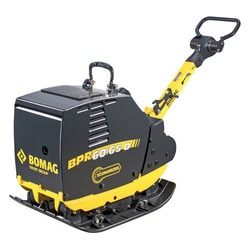
Bomag BPR 60/65 DE Reversible Compactor
69500075-001zł41,718.99 tax incl. 33 917,88 zł tax excl.View technical data Zobacz szczegóły
- Centrifugal force: 60 kN
- Weight: 455 kg
- Working width: 650 mm
- Motor manufacturer: Hatz
- Startup: Electric
Wacker Neuson DPU 5545 HEHAP Reversible Compactor
5100009654zł44,278.77 tax incl. 35 999,00 zł tax excl.View technical data Zobacz szczegóły
- Centrifugal force: 55 kN
- Weight: 448 kg
- Working width: 780 mm
- Motor manufacturer: Hatz
- Startup: Electric
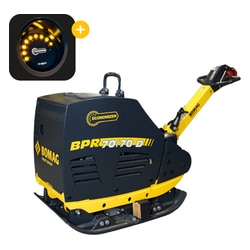
Bomag BPR 70/70 DE Economizer Reversible Compactor
69500067-002zł57,009.00 tax incl. 46 348,78 zł tax excl.View technical data Zobacz szczegóły
- Centrifugal force: 70 kN
- Weight: 580 kg
- Working width: 700 mm
- Motor manufacturer: Hatz
- Startup: Electric
Bomag BPR 60/65 D Economizer reversible compactor
69500075-005zł46,125.00 tax incl. 37 500,00 zł tax excl.View technical data Zobacz szczegóły
- Centrifugal force: 60 kN
- Weight: 455 kg
- Working width: 650 mm
- Motor manufacturer: Hatz
- Startup: Electric
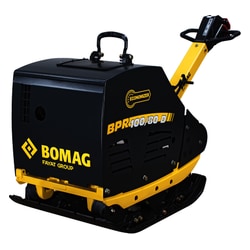
Bomag BPR 100/80 D Economizer reversible compactor
69500068-002zł71,179.01 tax incl. 57 869,11 zł tax excl.View technical data Zobacz szczegóły
- Centrifugal force: 100 kN
- Weight: 687 kg
- Working width: 800 mm
- Motor manufacturer: Hatz
- Startup: Electric
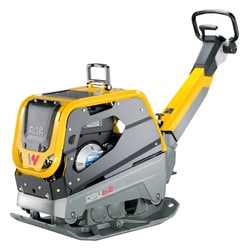
Wacker Neuson DPU 6260 Hehp Reversible Compactor
5100076469zł40,467.00 tax incl. 32 900,00 zł tax excl.View technical data Zobacz szczegóły
- Weight: 475 kg
- Engine type: wysokoprężny, 4-suwowy, 1 cylinder, Hatz
- Startup: Electric
- Performance: 1 000 m²/h
- Fuel tank: 5 l
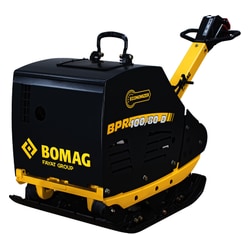
Bomag BPR 100/80 D Reversible Compactor
100/80 Dzł63,791.00 tax incl. 51 862,60 zł tax excl.View technical data Zobacz szczegóły
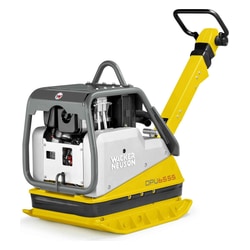
- Centrifugal force: 100 kN
- Weight: 687 kg
- Working width: 800 mm
- Motor manufacturer: Hatz
- Startup: Electric
Soil compactors in the 500 kg class deliver the compaction force needed for heavy civil and road construction. Machines of this size are built almost exclusively as reversible vibratory plates: two counter-rotating exciters let the plate travel forward, reverse and compact on the spot, so the operator never has to turn the machine around inside a trench. Centrifugal force in this class typically reaches 50–70 kN with a plate width of 450–700 mm, which is enough to bring lifts of roughly 50–70 cm of granular fill up to the required density; the category also covers stronger configurations with a higher centrifugal force and a wider plate.
At NORWIT.PL you will find a broad selection of 500 kg soil compactors — powerful, reliable machines that compact hard surfaces and loose aggregate under demanding site conditions. The range covers Wacker Neuson, Bomag and Altrad Belle machines with diesel engines, electric start and versions with or without on-board compaction measurement. Neighbouring weight classes are grouped under 400 kg soil compactors and 600 kg soil compactors, while every machine type sits together in soil compactors. Below we explain how to match centrifugal force, plate width and drive to your ground conditions and the scale of the job.
500 kg soil compactors — serious compaction power for demanding groundwork
Soil compactors in the 500 kg class are built for heavy earthworks and road construction, where lighter plates simply cannot reach the bottom of the lift. Almost every machine of this size is a reversible vibratory plate, also described as a forward-and-reverse or two-way plate. Reversing works by shifting the phase between two counter-rotating exciters inside the housing: the same drive that pushes the plate forward pulls it back, or holds it compacting in one spot, without turning the machine inside a trench.
What the machine can actually achieve is governed by centrifugal force — the dynamic load transferred to the ground by the base plate on every vibration cycle, quoted in kilonewtons. The 500 kg class usually produces 50–70 kN across a plate 450–700 mm wide, whereas a light 100 kg forward plate manages only around 10–20 kN. That gap translates directly into the lift thickness you can bring up to the specified density. The category also groups stronger configurations with a higher centrifugal force and a wider base plate; exact figures are given on each product page.
NORWIT.PL supplies these machines for hard surfaces and loose granular material alike, in conditions where output and reliability decide the schedule. The range covers Wacker Neuson (DPU and BPU series), Bomag (BPR and BPH series) and Altrad Belle (RPC and RPX series).
Variants of 500 kg soil compactors
Within the class the machines differ mainly in engine type, starting system and whether compaction is measured on board. Ground conditions and contract requirements decide which combination makes sense.
| Variant | Characteristics | Choose it when |
|---|---|---|
| Diesel engine | high torque, built for all-day running, lower fuel consumption | road and earthworks running full shifts |
| Electric start | key or button start instead of a recoil pull starter | frequent stops and restarts, cold-weather work |
| With compaction measurement | a display on the console signals how density builds up in the lift | contracts with a specified degree of compaction and handover records |
| Without compaction measurement | simpler build, less electronics, lower running cost | general construction where counting passes is control enough |
| Narrow and wide plates | plate usually 450–700 mm; narrower fits into trenches | utility trenches (narrow) or open areas (wide) |
Where 500 kg soil compactors are used
Machines of this class handle the more demanding end of construction work:
- Road construction — compacting sub-bases for roads, motorways, car parks and surfaces carrying heavy traffic.
- Large foundations for industrial plants, warehouse and production buildings, and other large-footprint structures.
- Compacting concrete, asphalt and other hard surfaces that call for high compaction force.
- Earthworks in difficult terrain, where the machine has to stay stable on uneven ground.
- Backfilling utility trenches for pipelines, cables and service connections, where working forward and back without turning saves real time.
Advantages of the 500 kg class
- High compaction force — the operating weight of around 500 kg turns exciter energy into a dynamic load that hard materials actually respond to.
- Output — large areas are compacted quickly, which keeps road and construction schedules on track.
- Stability — the frame and plate geometry keep the machine steady on uneven and broken ground.
- Versatility — one machine covers road, industrial and general construction duties.
- Reversible operation — travelling both ways and compacting on the spot cuts the number of manoeuvres in trenches and alongside structures.
Working output in practice
Output depends on centrifugal force, operating weight and travel speed. At a typical working speed of 20–30 m/min a 500 kg plate treats several hundred square metres of a lift per hour, and the specified degree of compaction is normally reached after 3–5 passes. Ground conditions matter as much as the machine: dry, well-graded granular fill compacts in fewer passes than material that is too wet or too dry.
How to choose a 500 kg soil compactor
A handful of parameters decide whether the machine will suit your sites:
- Centrifugal force — typically 50–70 kN in this class and more in the stronger configurations; the higher figure gives more reserve on stiff, hard-to-compact material.
- Operating weight — around 500 kg is the balance point between compaction energy and a machine one crew can still handle on site.
- Ground type — these plates excel on granular fill such as gravel, sand and crushed aggregate, and on hard surfaces; loams and clays respond far better to a rammer.
- Plate width — decides whether the machine fits the trench; narrow plates work around utilities, wide ones speed up open areas.
- Transport — at roughly 500 kg the machine is lifted by crane or hoist from its lifting eye, and needs a trailer rated for the load.
Compaction force versus travel speed
Force and speed together determine real output, but speed never substitutes for force. Driving too fast over a thick lift leaves the bottom of the layer under-compacted, and the fault only shows up later as settlement in the finished surface. Slower passes at full centrifugal force, repeated 3–5 times, give a result that survives handover testing.
Matching the machine to the job
The 500 kg class belongs on road works, foundation construction and industrial or infrastructure surfaces. For lighter duties — laying paving, landscaping, small repairs — a single-direction vibratory plate or a machine from a lower weight class is the better and cheaper tool.
The 500 kg class against other soil compactors
Operating weight is the simplest guide to the lift thickness a machine can handle. The ranges below are indicative — exact figures for each model are given on the product pages.
| Weight class | Centrifugal force | Lift thickness (granular fill) | Typical use |
|---|---|---|---|
| 300 kg soil compactors | approx. 30–50 kN | approx. 30–45 cm | utility trenches, service connections, footpath sub-bases |
| 400 kg soil compactors | approx. 40–60 kN | approx. 40–55 cm | manoeuvring yards, paving sub-bases, internal roads |
| 500 kg | approx. 50–70 kN | approx. 50–70 cm | road and car park sub-bases, industrial building foundations |
| 600 kg soil compactors and above | approx. 60–100 kN | approx. 60–90 cm | road embankments, civil engineering structures, thick aggregate lifts |
The brands available in this class are also grouped by make: Wacker Neuson compactors, Bomag compactors and Altrad Belle compactors. Every reversible machine, whatever its weight, sits in reversible vibratory plates, and wear parts and attachments are in compactor accessories.
Frequently asked questions about 500 kg soil compactors
How deep does a 500 kg soil compactor compact?
A 500 kg soil compactor brings lifts of roughly 50–70 cm up to the required density in granular fill such as sand, gravel and crushed aggregate. The figure follows from a centrifugal force of 50–70 kN combined with the machine's operating weight. In cohesive ground — loams and clays — effective depth normally drops to 25–40 cm, and a rammer is the better tool. The specified degree of compaction is usually reached after 3–5 passes; thicker fill has to be placed and compacted in stages, otherwise the under-compacted bottom of the lift shows up later as settlement in the finished surface.
Which 500 kg compactor suits road construction?
For road works running full shifts, choose a reversible plate with a diesel engine and electric start, from about 50 kN of centrifugal force and a plate 450 mm wide upwards. Where the contract calls for a documented degree of compaction, take the version with on-board compaction measurement: the console display shows density building up and lets the operator stop after 3–5 effective passes instead of guessing. For car park and internal road sub-bases the simpler version without measurement is enough and costs less to run. Both configurations exist in the Wacker Neuson DPU and BPU, Bomag BPR and BPH, and Altrad Belle RPC and RPX series.
Is it better to buy or hire a 500 kg compactor?
Hiring makes sense for a one-off job lasting a few days: no capital is tied up and no service back-up is needed. Buying starts to pay once the machine works regularly — as a rule of thumb, at 40–60 working days a year hire charges exceed the price of a new unit within 2–3 seasons, and you also gain availability on demand and no waiting for equipment. A new machine comes with a full warranty and a known number of running hours, which used equipment with an uncertain history cannot offer.
How does a 500 kg machine differ from 300 kg and 600 kg models?
The difference comes down to centrifugal force and lift thickness. A 300 kg plate produces roughly 30–50 kN and compacts lifts of about 30–45 cm; the 500 kg class delivers 50–70 kN and 50–70 cm; models from 600 kg upwards reach 60–100 kN and handle 60–90 cm. Plate width and transport requirements grow with weight — a 500 kg machine is lifted by crane from its lifting eye rather than by hand. The 500 kg class is the practical compromise: enough energy for road sub-bases while still fitting into standard utility trenches.
Can a 500 kg compactor be used on laid paving?
A 500 kg machine belongs under the paving, not on it. Centrifugal force of 50–70 kN chips the edges of concrete blocks and drives jointing sand out of the joints. Finished paving is bedded in with 100–200 kg plates fitted with a polyurethane or rubber protective mat, normally 2–3 passes in two directions. Machines intended for that job are grouped in compactors for paving stones, while the aggregate sub-base beneath is exactly what the 500 kg class is for.
Wacker Neuson, Bomag or Altrad Belle in the 500 kg class?
All three makes cover the 500 kg class from about 50 kN of centrifugal force upwards and work as reversible machines. Wacker Neuson offers the widest choice of configurations — the DPU and BPU series include diesel engines, electric start and versions with and without compaction measurement. Bomag's BPR and BPH series favour straightforward, robust builds with a clearly readable compaction indicator. Altrad Belle's RPC and RPX series give a strong price-to-capability ratio and are a common choice for general construction firms.
500 kg soil compactors at NORWIT.PL
Explore the 500 kg soil compactor range at NORWIT.PL. We supply professional machines from Wacker Neuson, Bomag and Altrad Belle with diesel engines, electric start and optional compaction measurement. We advise on centrifugal force and plate width for your specific ground conditions, provide service and keep wear parts in stock through compactor accessories. A full overview of weight classes and machine types is available in soil compactors — compare the models and pick the machine that matches your sites. We ship orders throughout Poland.