


-
-
Concrete
-
- Concreting
- Concrete Vibrators
- Complete 230 V Mechanical Vibrators
- Vibrator Heads
- Vibrator Shafts
- Vibrator Motors
- Concrete Vibrators 42 V | 200 Hz
- Mechanical Vibrators 230 V
- 42 V | 200 Hz Head and Shaft
- 230 V Concrete Vibrators
- Vibrators With Built-In 230 V | 200 Hz Converter
- 42 V | 200 Hz Converters
- Combustion Vibrators
- Pneumatic Vibrators
- External Vibrators
- Power Trowels
- Vibratory Screeds
- Concrete Hand Tools
- Concrete Vibrators
-
-
-
-
-
- Walk-Behind Combustion Power Trowels
-
-
-
Heating and cooling
-
Generators
-
Earthworks
-
Industrial vacuums
-
Finishing
-
Pumps
-
Measurement
-
BLOG & Tips
-
Promotions
Kategorie 16 kategorii
Kategorie
-
- Levels and Measurements
- Soil Compactors
- Tamping Rammers - Jumping Jacks
- Single Direction Vibratory Plates
- Reversible Vibratory Plates
- Rollers
- 100 kg Soil Compactors
- 200 kg Soil Compactors
- 300 kg Soil Compactors
- 400 kg Soil Compactors
- 500 kg Soil Compactors
- 600 kg Soil Compactors
- 700 kg Soil Compactors
- 800 kg Soil Compactors
- Wacker Neuson Compactors
- Accessories for Compactors
- Bomag Compactors
- Altrad Belle Compactors
- Paver Compactors
- Swepac Compactors
- Power Generators
- Concreting
- Concrete Vibrators
- Complete 230 V Mechanical Vibrators
- Vibrator Heads
- Vibrator Shafts
- Vibrator Motors
- Concrete Vibrators 42 V | 200 Hz
- Mechanical Vibrators 230 V
- 42 V | 200 Hz Head and Shaft
- 230 V Concrete Vibrators
- Vibrators With Built-In 230 V | 200 Hz Converter
- 42 V | 200 Hz Converters
- Combustion Vibrators
- Pneumatic Vibrators
- External Vibrators
- Vibratory Screeds
- Power Trowels
- Concrete Hand Tools
- Concrete Vibrators
- Pumps and Motor Pumps
- Cutting, Drilling and Grinding
- Heating and Cooling
- Wood Table Saws
- Painting and Plastering
- Combustion Engines
- Washing and Vacuuming
- Cement Mixers
- Paving Tools
- Wheelbarrows and Track Dumpers
- Demolition and Hammers
- Sales
- Levels and Measurements
Brak kategorii pasujących do wyszukiwania.
600 kg Soil Compactors
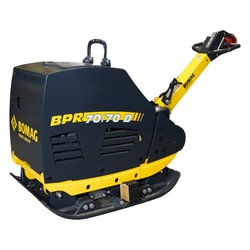
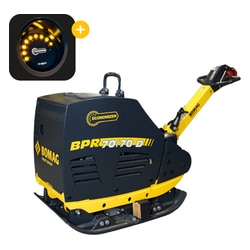
Bomag BPR 70/70 DE Economizer Reversible Compactor
69500067-002zł57,009.00 tax incl. 46 348,78 zł tax excl.View technical data Zobacz szczegóły
- Centrifugal force: 70 kN
- Weight: 580 kg
- Working width: 700 mm
- Motor manufacturer: Hatz
- Startup: Electric
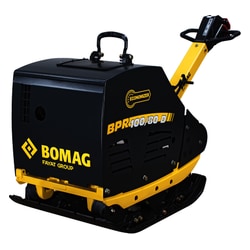
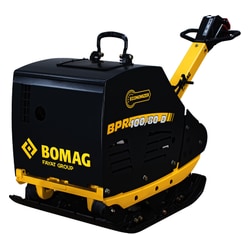
Bomag BPR 100/80 D Economizer reversible compactor
69500068-002zł71,179.01 tax incl. 57 869,11 zł tax excl.View technical data Zobacz szczegóły
- Centrifugal force: 100 kN
- Weight: 687 kg
- Working width: 800 mm
- Motor manufacturer: Hatz
- Startup: Electric
Bomag BPR 70/70 DE Reversible Compactor
69500067-001zł52,149.98 tax incl. 42 398,36 zł tax excl.View technical data Zobacz szczegóły
- Centrifugal force: 70 kN
- Weight: 580 kg
- Working width: 700 mm
- Motor manufacturer: Hatz
- Startup: Electric
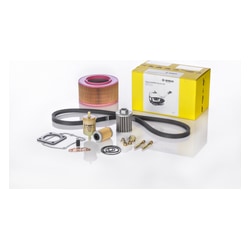
Service Package For Bomag Compactor BPR 100/80 D/E
77569238zł926.19 tax incl. 753,00 zł tax excl.No technical data available Zobacz szczegóły
Bomag BPR 100/80 D Reversible Compactor
100/80 Dzł63,791.00 tax incl. 51 862,60 zł tax excl.View technical data Zobacz szczegóły
- Centrifugal force: 100 kN
- Weight: 687 kg
- Working width: 800 mm
- Motor manufacturer: Hatz
- Startup: Electric
A 600 kg soil compactor is a heavy reversible vibratory plate — it works forward and back without turning — with an operating weight of roughly 560–660 kg and centrifugal force usually between 60 and 80 kN. The plate is about 55–75 cm across, compacts granular fill in lifts of some 50–65 cm and advances at 20–25 m/min. This is the class for linear earthworks and industrial ground: embankments, sub-bases under warehouse floor slabs and wide backfills, where compaction must be proven by a load test.
Machines this size normally run a diesel engine, a vibration-damped handle and hydraulic direction control. The NORWIT.PL range here covers primarily Bomag equipment and service parts. Neighbouring weight classes sit in 500 kg soil compactors and 700 kg soil compactors, the full overview of types in the parent category soil compactors, and the maker's range on the Bomag brand page. Below we explain how many passes to plan and how to pick the right class.
Where the 600 kg class sits among vibratory plates
Operating weight decides how deep the compaction wave reaches. A plate of around 600 kg transmits 60–80 kN of centrifugal force at an amplitude near 1.5–2.0 mm and a frequency of 40–60 Hz, so it handles thicker lifts than mid-size machines while still fitting a trailer rated 1.3–2.0 t GVW. The table compares three neighbouring plate classes.
| Parameter | 500 kg class | 600 kg class | 700 kg class |
|---|---|---|---|
| Operating weight | approx. 460–540 kg | approx. 560–660 kg | approx. 670–780 kg |
| Centrifugal force | usually 50–70 kN | usually 60–80 kN | usually 80–100 kN |
| Lift per cycle (granular soil) | approx. 45–60 cm | approx. 50–65 cm | approx. 55–70 cm |
| Working plate width | approx. 45–70 cm | approx. 55–75 cm | approx. 60–85 cm |
| Remote control availability | rarely | yes, on some configurations | yes |
| Usual transport | light trailer with ramps | 1.3–2.0 t trailer or loader crane | loader crane, low-loader |
| Work along kerbs and in narrow trenches | yes | limited | no |
What jobs this class is chosen for
The 600 kg class suits sites where hand-over depends on a bearing capacity test: road and yard sub-bases, embankments, frost protection layers and platforms under industrial floors. On crushed aggregate 0/31.5 and 0/63 a plate of this weight covers 500–800 m²/h on a single pass, so about 125–200 m² of finished 30–40 cm lift per hour.
Reversible travel lets the operator compact a strip in both directions without lifting the machine, which over four passes cuts the cycle by roughly 25–30% against a single-direction plate. Lighter work — footpaths, edging strips, bedding paving stones — calls for smaller equipment from the single-direction vibratory plates category, while the full choice of two-way machines sits in reversible vibratory plates. Filters, mats and parts belong to compactor accessories, and this maker's machines are also listed under Bomag compactors.
Frequently asked questions about 600 kg soil compactors
How many passes and what lift thickness should be planned with a 600 kg compactor?
Lift thickness follows the material, not the machine's ceiling. On sand and sandy gravel a 600 kg plate works lifts of 40–60 cm after compaction, on crushed aggregate 30–40 cm, and on mixes carrying a share of fines 20–30 cm. Plan 3 to 5 passes per lift at 20–25 m/min with a strip overlap of about 10–15 cm. The first pass is run slower so the machine does not float on loose material. Beyond the fourth pass the gain in bearing capacity usually drops below 5%, and further cycles risk crushing the grain.
When is a 600 kg compactor the better choice than the 500 kg or 700 kg class?
Weight class follows lift thickness and the width of the working front, not spare power. A 600 kg plate pays off on lifts of 40–60 cm and a front at least 2.5 m wide — on anything narrower the machine loses more time turning than it gains in force. The 500 kg class stays handier along kerbs and inside trenches, because it drives up ramps onto a light trailer. The 700 kg class only earns its keep on lifts above 60 cm and stretches longer than 100 m, where output offsets the cost of a crane or low-loader.
How should cohesive soils and mixed backfill be compacted?
Cohesive soils — loams, clays and silts — take thinner lifts of 20–30 cm and need moisture close to optimum, in practice within roughly 2 percentage points of the Proctor test value. A vibratory plate acts less effectively on such ground than on granular fill, because the energy dissipates within the layer instead of rearranging grains; with a high clay content a tamping rammer is often the better tool. Backfill from rubble and demolition mixes calls for 4 to 6 passes and even spreading, since lumps over 100 mm leave voids hidden once the surface looks compacted.
How many hours a day can an operator run such a machine given hand-arm vibration?
Working time is capped by hand-arm vibration exposure. Regulations set an action value of 2.5 m/s² and a limit value of 5 m/s², both normalised to an eight-hour shift. Heavy plates in the 600 kg class with a vibration-damped drawbar usually measure 2–5 m/s² at the handle, so at a reading of 4 m/s² the action value is reached after roughly 3 hours of work and the limit value only past 12 hours. Remote control, offered on some configurations in this class, removes almost all exposure and is often the only answer where the machine runs a full shift. Declared values come from the machine data sheet.