


-
-
Concrete
-
- Concreting
- Concrete Vibrators
- Complete 230 V Mechanical Vibrators
- Vibrator Heads
- Vibrator Shafts
- Vibrator Motors
- Concrete Vibrators 42 V | 200 Hz
- Mechanical Vibrators 230 V
- 42 V | 200 Hz Head and Shaft
- 230 V Concrete Vibrators
- Vibrators With Built-In 230 V | 200 Hz Converter
- 42 V | 200 Hz Converters
- Combustion Vibrators
- Pneumatic Vibrators
- External Vibrators
- Power Trowels
- Vibratory Screeds
- Concrete Hand Tools
- Concrete Vibrators
-
-
-
-
-
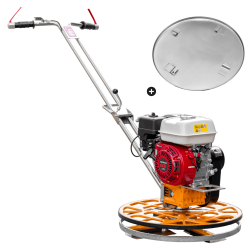
- Walk-Behind Combustion Power Trowels
-
-
-
Heating and cooling
-
Generators
-
Earthworks
-
Industrial vacuums
-
Finishing
-
Pumps
-
Measurement
-
BLOG & Tips
-
Promotions
Kategorie 16 kategorii
Kategorie
-
- Levels and Measurements
- Soil Compactors
- Tamping Rammers - Jumping Jacks
- Single Direction Vibratory Plates
- Reversible Vibratory Plates
- Rollers
- 100 kg Soil Compactors
- 200 kg Soil Compactors
- 300 kg Soil Compactors
- 400 kg Soil Compactors
- 500 kg Soil Compactors
- 600 kg Soil Compactors
- 700 kg Soil Compactors
- 800 kg Soil Compactors
- Wacker Neuson Compactors
- Accessories for Compactors
- Bomag Compactors
- Altrad Belle Compactors
- Paver Compactors
- Swepac Compactors
- Power Generators
- Concreting
- Concrete Vibrators
- Complete 230 V Mechanical Vibrators
- Vibrator Heads
- Vibrator Shafts
- Vibrator Motors
- Concrete Vibrators 42 V | 200 Hz
- Mechanical Vibrators 230 V
- 42 V | 200 Hz Head and Shaft
- 230 V Concrete Vibrators
- Vibrators With Built-In 230 V | 200 Hz Converter
- 42 V | 200 Hz Converters
- Combustion Vibrators
- Pneumatic Vibrators
- External Vibrators
- Vibratory Screeds
- Power Trowels
- Concrete Hand Tools
- Concrete Vibrators
- Pumps and Motor Pumps
- Cutting, Drilling and Grinding
- Heating and Cooling
- Wood Table Saws
- Painting and Plastering
- Combustion Engines
- Washing and Vacuuming
- Cement Mixers
- Paving Tools
- Wheelbarrows and Track Dumpers
- Demolition and Hammers
- Sales
- Levels and Measurements
Brak kategorii pasujących do wyszukiwania.
Surveying Tripods
Nivel System SJJ32 Tripod
SJJ32zł958.00 tax incl. 778,86 zł tax excl.View technical data Zobacz szczegóły
- Weight: Ok, 7,2 kg
- Brand: Nivel System
- Maximum height: Ok, 3,20 m
- Head type: Płaska
- Minimum height: Ok, 1,30 m
Nivel System SJJ-M1 EX Tripod
SJJ-M1 EXzł323.99 tax incl. 263,41 zł tax excl.View technical data Zobacz szczegóły
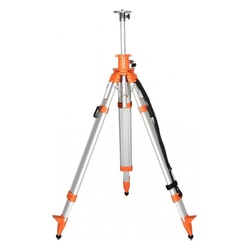
- Weight: Ok, 3 kg
- Brand: Nivel System
- Maximum height: Ok, 1,82 m
- Head type: 3d
- Minimum height: Ok, 0,62 m
Construction Tripod With Cranked Column FS 30-M
15-108-22zł810.57 tax incl. 659,00 zł tax excl.View technical data Zobacz szczegóły
- Weight: 5,1 kg
- Head type: Płaska, okrągła, obrotowa
- Dimensions of the head (height of the triangle): 102 mm
- Type of coupling screw: Zintegrowana 5/8″ x 11
- Effective spacing height: 80 do 200 cm
Complete Drilling Rig With Micro-Impact AGP DM52D With AS200 Tripod
AGPDM52DAS200zł13,407.00 tax incl. 10 900,00 zł tax excl.View technical data Zobacz szczegóły
- Weight: 15,5 kg
- Engine power: 1800 W
- Drilling diameter: Beton zbrojony - 82 mm, miękkie materiały konstrukcyjne - 182 mm
- Voltage: 230 V / 50 Hz
- Mounting: 1 1/4''
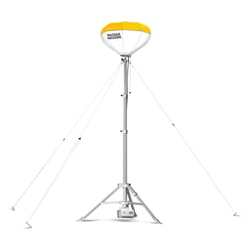
Complete Lighting Kit Balloon Tripod Weight Mount
5100030747zł9,854.76 tax incl. 8 012,00 zł tax excl.View technical data Zobacz szczegóły
- Power: 1000 W
- Max. lifting height: 5 m
- Tripod mount: Tak
- Lighting: Balon lb 80 m
- Load: Tak
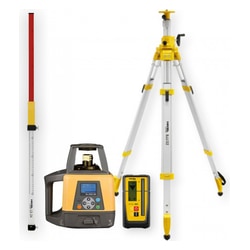
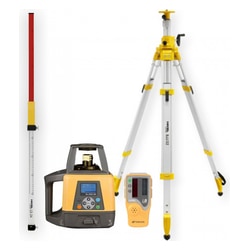
Topcon RL-200 2S DIGITAL Laser Level - KIT Staff LS-24 Tripod SJJ1
RL-200 2S DIGITAL-zestaw1zł29,260.00 tax incl. 23 788,62 zł tax excl.No technical data available Zobacz szczegóły
Topcon RL-200 2S DIGITAL Laser Level - KIT Staff LS-24 Tripod SJJ32
RL-200 2S DIGITAL-zestaw2zł29,875.00 tax incl. 24 288,62 zł tax excl.No technical data available Zobacz szczegóły
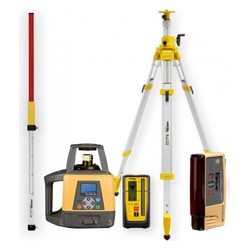
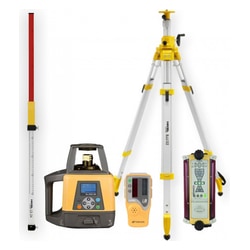
Topcon RL-200 2S DIGITAL Laser Level - KIT Staff LS-24 Tripod SJJ32 Sensor LS-B10
RL-200 2S DIGITAL-zestaw3zł21,881.70 tax incl. 17 790,00 zł tax excl.View technical data Zobacz szczegóły
- Weight: 3,4 kg
- Dimensions: 253 x 218 x 174 mm
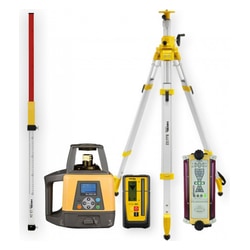
Topcon RL-200 2S DIGITAL Laser Level - KIT Staff LS-24 Tripod SJJ32 Sensor LS-B110
RL-200 2S DIGITAL-zestaw4zł40,317.00 tax incl. 32 778,05 zł tax excl.View technical data Zobacz szczegóły
- Weight: 3,4 kg
- Dimensions: 253 x 218 x 174 mm
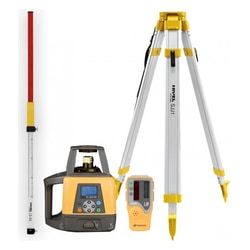
Topcon RL-200 2S Laser Level - KIT Staff LS-24 Tripod SJJ1
RL-200 2S-zestaw1zł28,153.00 tax incl. 22 888,62 zł tax excl.No technical data available Zobacz szczegóły
Topcon RL-200 2S Laser Level - KIT Staff LS-24 Tripod SJJ32
RL-200 2S-zestaw2zł28,768.00 tax incl. 23 388,62 zł tax excl.No technical data available Zobacz szczegóły
Topcon RL-200 2S Laser Level - KIT LS-24 Staff SJJ32 Tripod LS-B110 Sensor
RL-200 2S-zestaw4zł39,210.00 tax incl. 31 878,05 zł tax excl.No technical data available Zobacz szczegóły
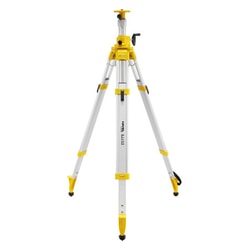
A surveying tripod is a three-legged stand (survey tripod) that holds a measuring instrument — a level, rotary laser or total station — steady and precisely level during a measurement. Splayable, telescopic legs and an adjustable working height of about 1.0–1.7 m let you set the head at a comfortable position and level the instrument regardless of uneven ground. The standard mounting thread is 5/8", which fits most levels and surveying lasers; some construction-grade tripods use a finer 3/8" thread and need an adapter.
At NORWIT.PL we carry surveying tripods primarily by Dr. Schulze, Topcon and Nivel System, rounded out by Geo Fennel — from light aluminium tripods to heavier wooden constructions with better vibration damping. We split the range by height-adjustment mechanism into crank tripods (with a centre column, smooth adjustment) and fixed-leg tripods, and the whole assortment belongs to the tripods and staffs department. Match your tripod to the instrument you own — an optical level, a rotary laser or a cross-line laser — and complete the setup with a levelling staff. Below we explain how to choose the material, head type and thread for your equipment.
Surveying tripod — what it is and what it's for
A surveying tripod (survey tripod) is a three-legged stand that holds a measuring instrument — a level (an instrument for determining height differences), a rotary laser or a total station — steady and precisely level. Without a rigid base even the best instrument loses repeatability: a vibration of a fraction of a millimetre at the head produces an error of several millimetres in the reading at a distance of several dozen metres.
Telescopic legs give a working height of about 1.0–1.7 m, and the total weight usually falls in a range of about 2.9–6 kg, depending on the material. The instrument is mounted with a 5/8" thread. At NORWIT.PL we carry surveying tripods primarily by Dr. Schulze and Topcon, rounded out by Nivel System and Geo Fennel.
Types of surveying tripods — crank or fixed-leg
The first dividing line is the adjustment mechanism. A crank tripod has a centre column with a small crank that smoothly raises and lowers the head by several dozen centimetres without moving the legs — handy with rotary lasers. A fixed-leg tripod has no column; height is set solely by leg length. It has fewer moving parts, so it tends to be stiffer and lighter — preferred for precise measurements with an optical level and a total station.
| Feature | Crank tripod (with column) | Fixed-leg tripod |
|---|---|---|
| Height adjustment | smooth via crank plus leg extension; the column adds several dozen cm of reserve | leg length only, in a range of about 1.0–1.7 m |
| Rigidity | an extra adjustment point — needs a good column lock | fewer play points, inherently stiffer construction |
| Typical use | rotary lasers, construction work, frequent height changes | optical levels, total stations, precision measurement |
| Brands in range | Nivel System | Nivel System, Geo Fennel |
Both groups belong to the tripods and staffs department. Frequent height changes — choose a crank tripod; maximum rigidity as the priority — choose a fixed-leg tripod.
Aluminium or wooden tripod
The second dividing line is material. An aluminium tripod is lighter (about 2.9–4 kg), cheaper and handier to carry often. A wooden tripod weighs about 5–6 kg or more, but damps vibration better and is thermally stable — wood doesn't expand in the sun the way aluminium does, so the head doesn't "drift" during long measurement sessions.
| Feature | Aluminium tripod | Wooden tripod |
|---|---|---|
| Weight | about 2.9–4 kg | about 5–6 kg or more |
| Vibration damping | good, transmits more ground vibration | very good — wood absorbs vibration |
| Thermal stability | metal expands in the sun — drift possible | minimal dimensional change in heat |
| Best for | construction sites, lasers, mobile work | precision surveying, total stations, long sessions |
For construction work (foundations, formwork, floor slabs) an aluminium tripod is enough. Choose wood for a total station or long measurement sessions in full sun.
Matching a tripod to a level, laser, total station and GNSS receiver
A tripod is matched to the instrument that will stand on it: a rotary laser draws a reference plane with its beam, while a total station measures angles and distances. The mount matters: a flat head suits instruments screwed on directly, while a spherical (ball) head makes rough levelling easier for optical levels fitted with a tribrach. A GNSS base station mounts the same way as a total station — through a tribrach and a 5/8" thread.
| Instrument | Recommended tripod | Notes |
|---|---|---|
| Optical level | fixed-leg, ideally wooden, flat/spherical head, 5/8" thread | rigidity matters more than smooth adjustment |
| Rotary laser | crank type, aluminium or wooden, 5/8" thread | the column gives smooth adjustment of the plane's height |
| Total station / GNSS base station | heavy, fixed-leg, wooden, flat head with tribrach, 5/8" thread | weight and vibration damping are critical for accuracy |
| Cross-line / line laser | light aluminium, 5/8" thread or 1/4"/3/8" via an adapter | low instrument weight, mobility matters |
For a complete setup, add a levelling staff for reading heights and surveying accessories — adapters, carrying cases and turning plates.
Thread, head and height — technical parameters
The most important spec is the mounting thread — it must match between the tripod head and the instrument base, otherwise you need an adapter.
| Parameter | Typical value | What it means |
|---|---|---|
| Mounting thread | 5/8" (surveying standard), some construction models 3/8" | must match the instrument |
| Head | flat or spherical (ball) | flat for a screw mount, spherical eases levelling |
| Working height | about 1.0–1.7 m; folded about 1.0–1.1 m | operator comfort and transport |
| Weight | about 2.9–6 kg or more | heavier = more stable; lighter = handier |
| Leg locks / feet | cam or wing-nut clamps; metal spikes | secure leg-length locking and ground grip |
Frequently asked questions about surveying tripods
What is a surveying tripod and what is it used for?
A surveying tripod (survey tripod) is a three-legged stand that holds an instrument — a level, rotary laser or total station — steady and precisely level during a measurement. An adjustable working height of about 1.0–1.7 m lets you set the head regardless of uneven ground, and the instrument mounts with a 5/8" thread. Without a stable tripod a measurement loses repeatability — a vibration of a fraction of a millimetre at the head produces an error of several millimetres in the reading at a distance of several dozen metres.
What is the difference between a crank tripod and a fixed-leg tripod?
A crank tripod has a centre column with a small crank that smoothly raises and lowers the head by several dozen centimetres without moving the legs — handy with rotary lasers and frequent changes of the reference height. A fixed-leg tripod has no column; height is set solely by leg length, in a range of about 1.0–1.7 m. It has fewer moving parts, so it tends to be stiffer and lighter, which is why it's preferred for precise measurements with an optical level and a total station.
Which should I choose: an aluminium or a wooden tripod?
The choice depends on the balance between mobility and stability. An aluminium tripod usually weighs about 2.9–4 kg, is cheaper and handier to carry often, so it works well with lasers and construction-site levels. A wooden tripod weighs about 5–6 kg or more, but damps vibration better and is thermally stable — wood doesn't expand in the sun the way metal does, so the head doesn't "drift" during long measurement sessions. Wood is chosen more often for total stations and higher-class optical levels, while aluminium suits construction and mobile work.
Does a surveying tripod fit every level, total station and GPS receiver?
A tripod with a 5/8" thread (the surveying standard) fits most optical levels, rotary lasers and total stations, and a GNSS/GPS base station mounts on it the same way as a total station — through a tribrach and the same thread. Some construction equipment, such as small cross-line lasers, uses a 3/8" thread and needs an adapter. Mobile rover GPS receivers are usually mounted on a light pole rather than a tripod.
How much does a typical surveying tripod weigh and how does that affect fieldwork?
A typical surveying tripod weighs from about 2.9 kg in light aluminium versions to over 6 kg in massive wooden constructions. A heavier tripod is more stable in wind and on soft, waterlogged ground — it reacts less to gusts. A lighter aluminium tripod, in turn, is easier to carry between a dozen or so measurement points in a day and puts less load on a backpack that also holds a level and staff.
What is the height-adjustment range of a surveying tripod?
The working height of a typical surveying tripod falls in a range of about 1.0–1.7 m, adjusted by the length of the three telescopic legs. A crank tripod adds several dozen centimetres of smooth adjustment through the centre column, without changing leg length. Folded, a tripod shortens to about 1.0–1.1 m, which makes it easier to transport in a car or backpack between measurement points.
How does a surveying tripod differ from an ordinary photo tripod?
A surveying tripod has a sturdier leg construction with metal, pointed feet for driving into the ground, a 5/8" mounting thread, and a load capacity of several kilograms — enough for a total station or a level fitted with a tribrach. A photo tripod usually has rubber feet without a spike, a 1/4" thread for a camera and a ball head, and its load capacity rarely exceeds 2–3 kg — what matters there is smooth camera movement, not a stable, repeatable level.
How much does a good surveying tripod cost and what determines the price?
The price of a surveying tripod depends mainly on material and class: basic aluminium tripods start from a few hundred zloty, while solid wooden constructions and crank tripods for rotary lasers cost from several hundred to over a thousand zloty. Price is also driven by head type, thread type, clamp-screw quality and brand — for example Dr. Schulze, Topcon or Nivel System. A tripod is often bought as part of a set with a level and a staff, which lowers the overall cost.
How do I set up and level a tripod correctly in the field?
Splay the tripod legs to a width of about 1.0–1.2 m and push the metal feet into the ground until the assembly stops wobbling. Set the head roughly level using the circular bubble, screw the instrument on with the 5/8" thread, and tighten the leg clamp screws. Do the fine levelling on the instrument itself — with the tribrach screws and the tubular bubble — while self-levelling levels compensate automatically within a range of about ±5°. On hard ground, add rubber pads or chain the legs together so they don't slide apart.
Is it worth paying extra for an anodised-aluminium tripod instead of a standard one?
Anodising applies a hard oxide layer roughly 10–25 micrometres thick to the aluminium surface, which resists scratches, moisture and corrosion better than a standard painted profile. On a tripod used daily on wet, sandy ground, this version keeps the legs moving smoothly for longer, and the extra cost is small relative to the price of the set. For equipment used occasionally in dry conditions, standard aluminium is enough.
Why buy a surveying tripod at NORWIT.PL
We carry surveying tripods from proven manufacturers — primarily Dr. Schulze and Topcon, rounded out by Nivel System and Geo Fennel — in aluminium and wooden versions, crank and fixed-leg types. We advise on choosing the material, head and thread. The range is complemented by optical levels, rotary lasers, levelling staffs and surveying accessories. Orders are fulfilled online, with nationwide shipping.