

-
-
Concrete
-
- Concreting
- Concrete Vibrators
- Complete 230 V Mechanical Vibrators
- Vibrator Heads
- Vibrator Shafts
- Vibrator Motors
- Concrete Vibrators 42 V | 200 Hz
- Mechanical Vibrators 230 V
- 42 V | 200 Hz Head and Shaft
- 230 V Concrete Vibrators
- Vibrators With Built-In 230 V | 200 Hz Converter
- 42 V | 200 Hz Converters
- Combustion Vibrators
- Pneumatic Vibrators
- External Vibrators
- Power Trowels
- Vibratory Screeds
- Concrete Hand Tools
- Concrete Vibrators
-
-
-
-
-
- Walk-Behind Combustion Power Trowels
-
-
-
Heating and cooling
-
Generators
-
Earthworks
-
Industrial vacuums
-
Finishing
-
Pumps
-
Measurement
-
BLOG & Tips
-
Promotions
Kategorie 16 kategorii
Kategorie
-
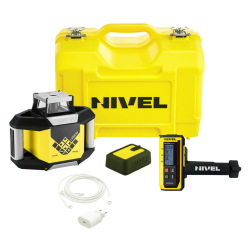
- Levels and Measurements
- Soil Compactors
- Tamping Rammers - Jumping Jacks
- Single Direction Vibratory Plates
- Reversible Vibratory Plates
- Rollers
- 100 kg Soil Compactors
- 200 kg Soil Compactors
- 300 kg Soil Compactors
- 400 kg Soil Compactors
- 500 kg Soil Compactors
- 600 kg Soil Compactors
- 700 kg Soil Compactors
- 800 kg Soil Compactors
- Wacker Neuson Compactors
- Accessories for Compactors
- Bomag Compactors
- Altrad Belle Compactors
- Paver Compactors
- Swepac Compactors
- Power Generators
- Concreting
- Concrete Vibrators
- Complete 230 V Mechanical Vibrators
- Vibrator Heads
- Vibrator Shafts
- Vibrator Motors
- Concrete Vibrators 42 V | 200 Hz
- Mechanical Vibrators 230 V
- 42 V | 200 Hz Head and Shaft
- 230 V Concrete Vibrators
- Vibrators With Built-In 230 V | 200 Hz Converter
- 42 V | 200 Hz Converters
- Combustion Vibrators
- Pneumatic Vibrators
- External Vibrators
- Vibratory Screeds
- Power Trowels
- Concrete Hand Tools
- Concrete Vibrators
- Pumps and Motor Pumps
- Cutting, Drilling and Grinding
- Heating and Cooling
- Wood Table Saws
- Painting and Plastering
- Combustion Engines
- Washing and Vacuuming
- Cement Mixers
- Paving Tools
- Wheelbarrows and Track Dumpers
- Demolition and Hammers
- Sales
- Levels and Measurements
Brak kategorii pasujących do wyszukiwania.
Tamping Rammers - Jumping Jacks
Altrad Belle RTX 68 11" Rammer
RTX68H2280Szł9,698.00 tax incl. 7 884,55 zł tax excl.View technical data Zobacz szczegóły
- Centrifugal force: 16,5 kN
- Weight: 72 kg
- Working width: 280 mm
- Engine type: Honda GXR 120
- Engine power: 2,8 kW
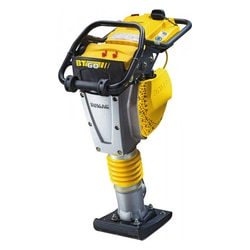
Bomag BT 60 9" Rammer
54100070-003zł11,099.00 tax incl. 9 023,58 zł tax excl.View technical data Zobacz szczegóły
- Centrifugal force: 15 kN
- Weight: 58 kg
- Working width: 230 mm
- Engine type: Honda GX 120
- Engine power: 2,8 kW
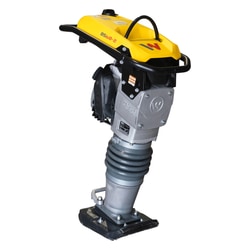
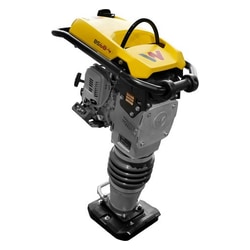
Wacker Neuson BS 68-2b/28 Equiptrack Rammer (280 Mm)
5100061969zł12,177.00 tax incl. 9 900,00 zł tax excl.View technical data Zobacz szczegóły
- Centrifugal force: 19 kN
- Weight: 64 kg
- Working width: 280 mm
- Engine type: WM80C
- Engine power: 1,5 kW / 2 KM
Wacker Neuson BS 68-4ab Equiptrack 280 Mm Rammer
5100061970zł12,177.00 tax incl. 9 900,00 zł tax excl.View technical data Zobacz szczegóły
- Centrifugal force: 19 kN
- Weight: 70 kg
- Working width: 280 mm
- Engine type: Honda GXR 120
- Engine power: 2,7 kW
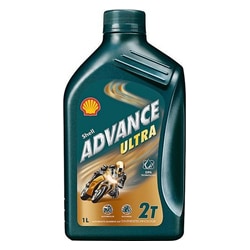
Wacker Neuson BS 50-2, BS 60-2 Rammer Oil
P0000110zł73.80 tax incl. 60,00 zł tax excl.No technical data available Zobacz szczegóły
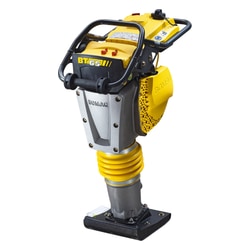
Bomag BT 65 11" Rammer
BT65zł11,193.00 tax incl. 9 100,00 zł tax excl.View technical data Zobacz szczegóły
- Centrifugal force: 17 kN
- Weight: 68 kg
- Working width: 280 mm
- Engine type: Honda GX 120
- Engine power: 2,8 kW
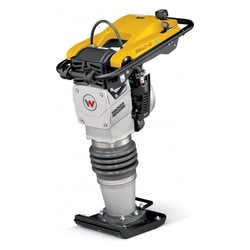
Wacker Neuson BS 60-2 Rammer
5100030600zł12,175.77 tax incl. 9 899,00 zł tax excl.View technical data Zobacz szczegóły
- Centrifugal force: 18 kN
- Weight: 68 kg
- Working width: 280 mm
- Engine type: 2 takt Wm80
- Engine power: 1,9 kW
Wacker Neuson BS 68-4A 280 Mm Rammer
5100068375zł11,931.00 tax incl. 9 700,00 zł tax excl.View technical data Zobacz szczegóły
- Centrifugal force: 19 kN
- Weight: 70 kg
- Working width: 280 mm
- Engine type: Honda GXR 120
- Engine power: 2,7 kW
Ubijak spalinowy Husqvarna LT 6005 (11")
967854505zł10,547.99 tax incl. 8 575,60 zł tax excl.View technical data Zobacz szczegóły
- Weight: 69 kg
- Dimensions: 726 x 345 x 1 084 mm
- Fuel: Petrol
- Output power: 2,7 kW
- Engine model: Honda GXR 120
Wacker Neuson BS 60-2 11" B/l Rammer
5100037561zł12,175.77 tax incl. 9 899,00 zł tax excl.View technical data Zobacz szczegóły
- Centrifugal force: 18 kN
- Weight: 68 kg
- Working width: 280 mm
- Engine type: 2 takt Wm80
- Engine power: 1,9 kW
Bomag BVT 65 11" Rammer
BVT 65zł11,363.97 tax incl. 9 239,00 zł tax excl.View technical data Zobacz szczegóły
- Centrifugal force: 16 kN
- Weight: 65 kg
- Working width: 280 mm
- Engine type: Honda GX 100
- Engine power: 2,3 kW
Wacker Neuson BS 62-4A 280 Mm Rammer
5100068373zł11,439.00 tax incl. 9 300,00 zł tax excl.View technical data Zobacz szczegóły
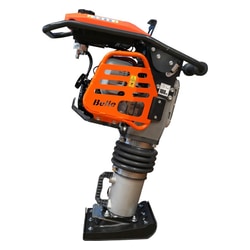
- Centrifugal force: 17 kN
- Weight: 64 kg
- Working width: 280 mm
- Engine type: Honda GXR 120
- Engine power: 2,7 kW
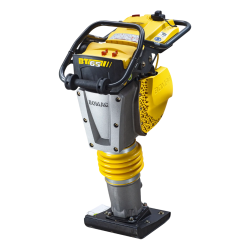
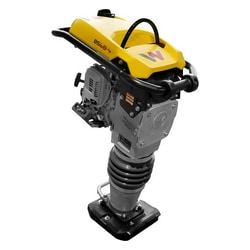
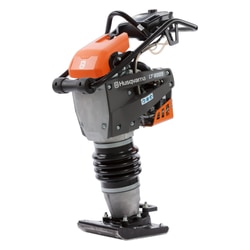
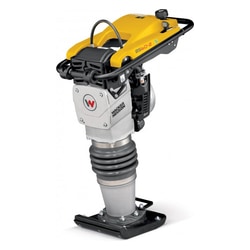
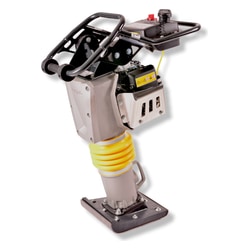
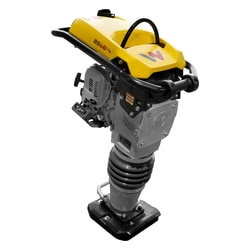
A trench rammer, also known as a tamping rammer, vibratory rammer or jumping jack, is a soil compaction machine that drives a foot vertically into the ground with an impact of about 500–700 blows per minute. A large foot stroke (in the range of 40–85 mm) and an impact force of a dozen or more kilonewtons let it compact thicker layers than a plate compactor — up to 40–60 cm — which is why a trench rammer is the first choice for cohesive soils (clay, silt) and for narrow trenches around pipelines and foundations.
At NORWIT.PL we carry professional trench rammers primarily from Wacker Neuson, Bomag, Husqvarna Construction and Altrad Belle — from lightweight single-operator machines, through classic petrol jumping jacks, to the battery-powered Wacker Neuson AS 50 e for zero-emission work indoors and in unventilated trenches. Rammers belong to the family of soil compactors, next to single-direction plate compactors and plate compactors for paving blocks. We complement Wacker Neuson equipment with oils, service kits and transport wheels. Below we explain how a rammer differs from a plate, which soil to match it to, and when buying pays off.
Trench rammer, jumping jack, tamping rammer — what kind of machine is it
A trench rammer is a soil compaction machine in which a heavy foot strikes the ground vertically, driving impact energy deep into the layer. In the trade the same units go by several names used interchangeably: vibratory rammer, tamping rammer and jumping jack. The engine drives a crank-and-spring mechanism that sets the foot into a reciprocating motion at about 500–700 blows per minute, with a stroke in the range of 40–85 mm.
A rammer is not the same thing as a plate compactor (a machine with a flat base plate set into vibration). A jumping jack works with concentrated vertical impact, so it reaches thicker layers and copes with cohesive soils and narrow trenches where a plate loses effectiveness.
| Feature | Tamping rammer (jumping jack) | Plate compactor |
|---|---|---|
| Working principle | vertical foot impact into the ground | vibration of a flat plate on the surface |
| Compaction depth | layers up to about 40–60 cm | usually 20–30 cm |
| Best soils | cohesive (clay, silt), mixed | granular (sand, gravel), aggregates |
| Work location | narrow trenches, utility connections, around foundations | open, large areas |
| Frequency | about 500–700 blows/min | up to several thousand vibrations/min |
| Operating weight | usually 50–90 kg | from tens to several hundred kg |
Types of trench rammers — drive and weight class
Rammers are chosen against two criteria: type of drive and operating weight (and with it, impact force).
| Drive type | Best for (power source) | Examples |
|---|---|---|
| Petrol rammer | all-round compaction, long runtime without recharging; petrol, 2- or 4-stroke engine | Wacker Neuson BS 50-2, BS 60-2; Bomag BT 60, BT 65; Altrad Belle RTX |
| Battery rammer | interiors, tunnels, unventilated trenches, lower noise; zero-emission work | Wacker Neuson AS 50 e |
The second axis of selection is the weight class (figures below are indicative for the type). Lightweight rammers (about 50–65 kg, roughly 10–13 kN) suit narrow trenches, utility connections and single-operator work. Medium ones (about 65–80 kg, 13–16 kN) are the all-round choice for cohesive soils and base courses. Heavy models (about 80–90 kg, 16–18 kN and more) compact deep layers and hold up to continuous work.
Popular trench rammer models at NORWIT.PL
Below is a cross-section of the range, from light jumping jacks to units for heavier compaction and a battery model. Exact parameters (weight, impact force, engine displacement, foot width) are given on each product page.
| Model | Type | Typical use |
|---|---|---|
| Wacker Neuson BS 50-2 | petrol tamping rammer | narrow trenches, cohesive soils |
| Wacker Neuson BS 60-2 | petrol tamping rammer | base courses and mixed work |
| Wacker Neuson BS 70 | petrol tamping rammer | heavier compaction, deeper layers |
| Wacker Neuson AS 50 e | battery rammer | zero-emission work, interiors and unventilated trenches |
| Bomag BT 60 / BT 65 | petrol tamping rammer | all-round soil compaction |
| Bomag BVT 65 | petrol tamping rammer | cohesive soils, trench backfill |
| Altrad Belle RTX 50 | compact petrol rammer | light work, single-operator handling |
| Husqvarna Construction | petrol tamping rammer | soil compaction on the jobsite |
Rammers are part of our soil compactors range. For large, open areas in granular soils a single-direction plate compactor is often the better fit, and for laying surfaces — plate compactors for paving blocks. We complement Wacker Neuson, Bomag and Altrad Belle machines with matching consumables.
Which soils and jobs to match a rammer to
The choice of rammer comes down to the type of soil and the work location. Cohesive soil (clay, silt, loam — particles bind together) is compacted best with vertical impact, because a vibrating plate "slides" across its surface. Granular soil (sand, gravel, all-in aggregate — loose fill) over large areas is compacted faster by a plate, but in trenches the jumping jack still does the job. Soil is laid in layers of 20–30 cm across 2–3 passes.
In practice: in cohesive soils a tamping rammer drives through layers where a plate loses effectiveness. For narrow trenches, utility connections and the space around foundations you pick a rammer with a narrow foot (about 150–350 mm) that fits between the shoring. Under surfaces and block paving, the rammer compacts the base course in narrow zones, while the finished pavers are set with a plate fitted with a protective mat.
Trench rammer — buy or rent, fuel and servicing
Rental of a rammer is charged per day, so for a one-off backfill it can be cheaper, but with regular work it quickly overtakes the price of the machine — a professional jumping jack pays for itself after several to a dozen or so working days in the season, which is why buying makes sense for earthworks, utility and paving companies. Operation calls for two oils: a 4-stroke engine runs on clean unleaded petrol and is lubricated with oil (usually SAE 10W-30), while the rammer foot uses a dedicated gear oil. Service kits for Wacker Neuson and Bomag make maintenance easier.
Frequently asked questions about trench rammers (jumping jacks)
How does a trench rammer (jumping jack) differ from a plate compactor, and when should you choose the rammer?
A tamping rammer (jumping jack) compacts soil with vertical impact of around 10–18 kN at 500–700 blows per minute, reaching layers of 40–60 cm. A plate compactor vibrates a plate and compacts thinner layers (usually 20–30 cm) over a large area. Choose a rammer for cohesive soils (clay, silt) and narrow trenches; choose a plate for granular soils, large areas and block paving.
Which soils is a vibratory rammer suited to — cohesive (clay, silt) or granular?
A vibratory rammer performs best in cohesive soils — clay and silt — because vertical impact of 10–18 kN drives through layers where a plate slides. It also handles mixed soils and base courses. In granular soils (sand, gravel) over large areas a plate compactor is faster, but in narrow trenches the jumping jack takes over, compacting layers up to about 40–60 cm — thicker than the typical 20–30 cm for a plate.
What impact force and compaction depth does a tamping rammer have (e.g. Wacker Neuson BS 50-2 / BS 60-2)?
Tamping rammers usually develop impact force in the range of 10–18 kN, work at 500–700 blows per minute and compact layers up to about 40–60 cm — models such as the Wacker Neuson BS 50-2 and BS 60-2 belong to this group. The foot stroke is roughly 40–85 mm, and the operating weight is usually 50–80 kg. Exact values for a given model are stated on its product page.
How much does a trench rammer weigh and can one person operate it?
A trench rammer usually weighs 50–90 kg, and models for narrow trenches start at about 50–65 kg. Despite this weight, one person handles it — the operator guides the machine by the handles while the foot impact "carries" it forward. Transport wheels (for example on the Altrad Belle RTX), removed during work, make moving it easier, and anti-vibration gloves plus regular breaks are recommended because of the vibration.
How does a petrol rammer differ from a battery one (e.g. Wacker Neuson AS 50 e)?
A petrol rammer is driven by a petrol engine and gives long runtime without recharging. A battery rammer, such as the Wacker Neuson AS 50 e, works with zero emissions and more quietly — it produces no exhaust fumes, so it suits interiors, tunnels and unventilated trenches where fumes are dangerous. Impact force and the 500–700 blows per minute are close to petrol models in the same class; what differs is the power source.
What oil and fuel should you use in a Wacker Neuson or Bomag rammer?
4-stroke rammers are filled with clean unleaded petrol, and the engine oil (usually SAE 10W-30) is topped up separately in the sump. 2-stroke models run on a mix of petrol and 2-stroke oil in the ratio stated by the maker (typically 1:50). The rammer foot is lubricated separately with a dedicated oil, for example the oil for the Wacker Neuson BS 50-2 and BS 60-2 from our range. Check the oil grades for your model in the manual.
Is a rammer suitable for compacting narrow trenches around pipelines and foundations?
A tamping rammer is the go-to equipment for narrow trenches around pipelines, utility connections and foundations. A narrow foot about 150–350 mm wide fits between the shoring, and vertical impact of 10–18 kN compacts backfill in layers up to about 40–60 cm — something a wide plate compactor cannot do. This limits settlement of the soil above the installations. For such zones you pick a model with a narrower foot and a weight of 50–70 kg.
How much does a trench rammer cost and is it better to buy or rent?
The price of a trench rammer depends on the brand, operating weight (usually 50–90 kg) and drive — professional petrol jumping jacks from Wacker Neuson or Bomag run into several thousand zloty, and battery models can cost more. Rental is charged per day, so for a one-off backfill it can be cheaper; with regular work a purchase pays for itself after several to a dozen or so working days in the season and gives constant access to the machine and consumables.
How do you start and operate a vibratory rammer step by step?
Starting a petrol rammer takes a few steps: set it upright, check the engine oil and foot oil levels, open the fuel valve and set the choke and throttle for starting. Pull the starter cord, once it fires ease the choke off and wait 1–2 minutes for warm-up. Add throttle — the foot strikes 500–700 times per minute; guide the rammer slowly, compacting in layers of 20–30 cm across 2–3 passes. A battery model starts with a button.
Which rammer should you choose for block paving and base courses under surfaces?
For the paving blocks themselves you usually use a plate compactor with a protective mat, which sets the blocks without scratching them. The tamping rammer comes in earlier — to compact the base course and bedding in trenches and narrow zones a plate cannot reach, in layers up to about 40–60 cm. The two tools complement each other: the jumping jack builds the base and edges, the plate finishes the surface. See our plate compactors for paving blocks, and for narrow base courses pick a rammer of 50–70 kg.
Why buy a trench rammer at NORWIT.PL
We focus on professional compaction: our range includes trench rammers primarily from Wacker Neuson, Bomag, Husqvarna Construction and Altrad Belle — from light jumping jacks for narrow trenches to the battery-powered Wacker Neuson AS 50 e for fume-free work. We advise on the weight class and foot width for a specific soil, and provide servicing plus consumables: oils, service kits and transport wheels. The range is rounded out by soil compactors, single-direction plate compactors and plate compactors for paving blocks. Orders are fulfilled online, with shipping across the country.