




-

Concrete
-
- Concreting
- Concrete Vibrators
- Complete 230 V Mechanical Vibrators
- Vibrator Heads
- Vibrator Shafts
- Vibrator Motors
- Concrete Vibrators 42 V | 200 Hz
- Mechanical Vibrators 230 V
- 42 V | 200 Hz Head and Shaft
- 230 V Concrete Vibrators
- Vibrators With Built-In 230 V | 200 Hz Converter
- 42 V | 200 Hz Converters
- Combustion Vibrators
- Pneumatic Vibrators
- External Vibrators
- Power Trowels
- Vibratory Screeds
- Concrete Hand Tools
- Concrete Vibrators
-
-
-
-
-
- Walk-Behind Combustion Power Trowels
-
-
-
Heating and cooling
-
-
-
- Cooling and ventilation
-
-
- cooling
-
-
-
Generators
-
-
-
-
- Inverter Generators
-
-
-
Earthworks
-
-
-
-
-
- Tamping rammers – jumping jacks
-
-
-

Industrial vacuums
-
-
- Cleaning and accessories
-
-
- Industrial vacuum cleaners
-
-
-
Finishing
-
-
-
- Bestseller
-
-
-
Pumps
-
-
-
-
- Bestseller
-
-
-

Measurement
-
-
-
-
-
-
-
- Bestseller
-
-
-

BLOG & Tips
-

Promotions
Tyrolit · Cat. no. 10993961
Vacuum Plate for Tyrolit DRA150 Core Drill Rig

- DRA150
- 152 mm
zł790.00 net
zł971.70 gross
Leasing for businesses
from zł81.70 net / month
Indicative calculation · you set the terms

On order
sourced from the supplier
Ships in about 1 day
from the order date
Arrives a day after dispatch
we will confirm the date with your order
Prefer to talk? +48 732 081 091

- 25 years on the market
- Own warehouse 1200 m²
- Returns up to 14 days
- Free delivery over PLN 3,000
Accessories

Description
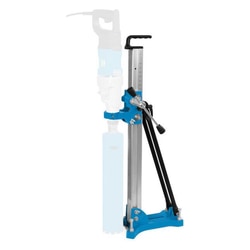
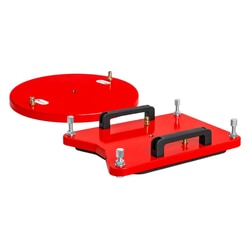
Vacuum plate for the Tyrolit DRA150 drill rig – anchoring without dowels
A vacuum plate is a base that a vacuum pump sucks down onto the surface, with the foot of the drill rig fixed on top of it. This model is an original Tyrolit accessory for the Tyrolit DRA150 drill rig. It lets you core drill holes from 20 to 152 mm in diameter without setting an anchor in the concrete, so there is no extra hole and no mark left on the floor.
How vacuum anchoring works
The pump draws the air out from under the plate through a hose, and the perimeter seal closes the chamber. The pressure difference holds the plate against the surface, and the DRA150 foot is fixed to the plate with a central bolt and nut. The Tyrolit system has four parts: vacuum pump, vacuum hose, seal and plate. The plate holds only while the pump is running and the vacuum is stable.
When to use the plate instead of an anchor
Dowel anchoring means drilling a hole for an M12 anchor, setting it and plugging the hole afterwards. The plate is the better choice where an anchor hole is not allowed or not worth it: finished floors, tiles and stone, slabs with underfloor heating or services. It also saves time on a series of holes, when the rig is moved every few minutes.
Working range with the DRA150
On the vacuum plate the DRA150 keeps its full working range: drilling diameters from 20 to 152 mm, core bits up to 550 mm long and angled drilling from 90° to 45°. At a 45° angle the maximum core bit diameter drops to 122 mm. The rig weighs 9.5 kg and has a Ø 60 mm motor clamping collar, so one person can carry the whole set.
Surface requirements
The plate holds on smooth, flat and non-porous surfaces: trowelled or ground concrete, tiles, stone and steel. On plaster, brick, porous concrete or cracked surfaces air leaks under the seal and the holding force drops. The Tyrolit manual then calls for dowel anchoring. For ceiling drilling use an anchor only, because a power cut or pump failure means losing the hold.
A complete vacuum anchoring system at NORWIT.PL
The plate needs a vacuum pump with a hose. Tyrolit pairs it with the VPE600 230 V pump and a 3 m vacuum hose. See the Toolsa VP 120 vacuum pump and other core drill accessories. For surfaces where the plate cannot hold, choose the Tyrolit anchor kit. If you plan to use a pump other than the one recommended by Tyrolit, confirm the hose connection with us through the contact form before ordering.
Technical data
- Cat. no.
- 10993961
- Max. drilling diameter on the tripod
- 152 mm
- Kompatybilność
- DRA150
Gwarancja
.png)
12-miesięczna Gwarancja Tyrolit
Firma Tyrolit oferuje 12-miesięczną gwarancję na swoje produkty, zapewniając pełną ochronę i wsparcie techniczne przez cały rok. Roczna gwarancja obejmuje wszystkie komponenty, co daje pewność niezawodności i wysokiej jakości.
Questions and answers
What is a vacuum plate for a drill rig used for?
A vacuum plate fixes a core drill rig to the surface without setting an anchor. A vacuum pump draws the air out from under the plate and the perimeter seal closes the chamber, so the plate is pressed against the surface. The foot of the Tyrolit DRA150 rig is bolted to the plate, and on this mounting the rig drills holes from 20 to 152 mm in diameter with core bits up to 550 mm long. It is used where an M12 anchor hole would damage a finished floor, tiles or stone, or could hit services in the slab.
Which drill rigs does this vacuum plate fit?
The plate is an original Tyrolit accessory that the manufacturer assigns to the DRA150 drill rig, a compact rig for holes from 20 to 152 mm. Larger rigs from the brand have their own plates, for example the DRA400 MkII uses a different vacuum plate with its own part number. Check the rig model on the rating plate before ordering. The VPE600 pump and the 3 m vacuum hose are shared across Tyrolit rigs, so one pump is enough for several machines.
Which pump do I need for the Tyrolit vacuum plate?
The plate works only with a vacuum pump connected by a hose. Tyrolit pairs it with the VPE600 230 V pump and a complete 3 m vacuum hose. You can use another core drilling vacuum pump, for example the Toolsa VP 120 with a flow of 120 l/min and a vacuum of up to -0.8 bar, as long as the hose fits the plate connection. The pump must run for the whole drilling job, and its gauge lets you monitor the vacuum and spot a leak straight away.
On what surfaces will the vacuum plate hold the rig?
The plate holds on smooth, flat and non-porous surfaces: trowelled or ground concrete, ceramic tiles, natural stone and steel plate. The surface must be clean and free of cracks, because any gap under the seal lets air in and reduces the holding force. On plaster, brick, aerated concrete and porous or very rough concrete, vacuum anchoring will not hold reliably. For surfaces unsuitable for vacuum anchoring, the DRA150 manual calls for another type of anchoring, which means an M12 anchor.
Can I drill into walls and ceilings using the vacuum plate?
Horizontal drilling into a wall on the vacuum plate is shown in the system diagram of the Tyrolit DRA150 manual, provided the wall has a smooth and airtight surface. For wall holes it is worth securing the rig with a chain or strap as well, because a loss of vacuum releases a 9.5 kg rig together with the motor and core bit. Vacuum anchoring is not used on ceilings, because a pump power cut means an instant loss of hold above the operator's head. For drilling slabs from below, use the anchor kit.
Vacuum plate or anchor: which should I choose for the DRA150?
An M12 anchor gives a hold that does not depend on power or on the surface finish, but it requires drilling an anchor hole, setting the anchor and plugging the hole afterwards. A vacuum plate leaves no marks and makes moving the rig faster on a series of holes, but it needs a pump, power and a smooth, airtight surface. In practice installation crews keep both: the plate for finished floors, tiles and stone, and the anchor kit for plaster, brick, ceilings and raw concrete. The DRA150 diameter range is the same in both cases, from 20 to 152 mm.
What is the largest diameter I can drill with the DRA150 on a vacuum plate?
Mounted on the vacuum plate, the DRA150 drills holes from 20 to 152 mm in diameter, the same as with dowel anchoring. The maximum core bit length is 550 mm. When drilling at a 45° angle, the largest core bit diameter drops to 122 mm, because the tilted column reduces the clearance. The angle is set between 90° and 45° on the rig's scale. For larger diameters Tyrolit offers heavier rigs such as the DRA400 MkII, which has its own vacuum plate.
What should I do if the vacuum plate does not hold the vacuum?
The Tyrolit DRA150 manual lists four causes of missing vacuum: a damaged plate seal, a faulty vacuum valve, a damaged pump or hose, and a surface unsuitable for vacuum anchoring. First check that the surface is clean and free of cracks and that the seal is not torn or covered with slurry. Then inspect the hose, the couplings and the reading on the pump gauge. A damaged seal or valve is replaced with a new one, and if the surface itself leaks, switch to dowel anchoring.
See other similar products
 Toolsa Vacuum Base Plate for Core Drill Stands
zł599.00 netzł736.77 gross