


-
-
Concrete
-
- Concreting
- Concrete Vibrators
- Complete 230 V Mechanical Vibrators
- Vibrator Heads
- Vibrator Shafts
- Vibrator Motors
- Concrete Vibrators 42 V | 200 Hz
- Mechanical Vibrators 230 V
- 42 V | 200 Hz Head and Shaft
- 230 V Concrete Vibrators
- Vibrators With Built-In 230 V | 200 Hz Converter
- 42 V | 200 Hz Converters
- Combustion Vibrators
- Pneumatic Vibrators
- External Vibrators
- Power Trowels
- Vibratory Screeds
- Concrete Hand Tools
- Concrete Vibrators
-
-
-
-
-
- Walk-Behind Combustion Power Trowels
-
-
-
Heating and cooling
-
Generators
-
Earthworks
-
Industrial vacuums
-
Finishing
-
Pumps
-
Measurement
-
BLOG & Tips
-
Promotions
Kategorie 16 kategorii
Kategorie
-
- Levels and Measurements
- Soil Compactors
- Tamping Rammers - Jumping Jacks
- Single Direction Vibratory Plates
- Reversible Vibratory Plates
- Rollers
- 100 kg Soil Compactors
- 200 kg Soil Compactors
- 300 kg Soil Compactors
- 400 kg Soil Compactors
- 500 kg Soil Compactors
- 600 kg Soil Compactors
- 700 kg Soil Compactors
- 800 kg Soil Compactors
- Wacker Neuson Compactors
- Accessories for Compactors
- Bomag Compactors
- Altrad Belle Compactors
- Paver Compactors
- Swepac Compactors
- Power Generators
- Concreting
- Concrete Vibrators
- Complete 230 V Mechanical Vibrators
- Vibrator Heads
- Vibrator Shafts
- Vibrator Motors
- Concrete Vibrators 42 V | 200 Hz
- Mechanical Vibrators 230 V
- 42 V | 200 Hz Head and Shaft
- 230 V Concrete Vibrators
- Vibrators With Built-In 230 V | 200 Hz Converter
- 42 V | 200 Hz Converters
- Combustion Vibrators
- Pneumatic Vibrators
- External Vibrators
- Vibratory Screeds
- Power Trowels
- Concrete Hand Tools
- Concrete Vibrators
- Pumps and Motor Pumps
- Cutting, Drilling and Grinding
- Heating and Cooling
- Wood Table Saws
- Painting and Plastering
- Combustion Engines
- Washing and Vacuuming
- Cement Mixers
- Paving Tools
- Wheelbarrows and Track Dumpers
- Demolition and Hammers
- Sales
- Levels and Measurements
Brak kategorii pasujących do wyszukiwania.
Fresh Concrete Diamond Blades
NOZAR LAM PROFI 350mm Diamond Blade
6525125zł613.77 tax incl. 499,00 zł tax excl.View technical data Zobacz szczegóły
- Disc bore diameter: 25,4 mm
- Segment thickness: 10 mm
- Disc diameter: 350 mm
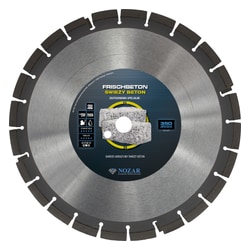
Nozar Frischbeton / Fresh Concrete Diamond Blade 350x25,4 Mm
PL6700653zł1,476.00 tax incl. 1 200,00 zł tax excl.View technical data Zobacz szczegóły
- Producent: Nozar niemcy
- Disc bore diameter: 25,4
- Quality class: Premium Professional
- Application: Świeży beton
- Disc diameter (mm): 350
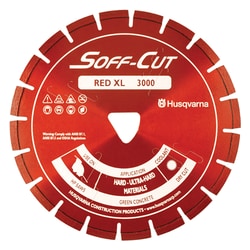
Tarcza diamentowa Husqvarna XL6-3000
542777007zł687.00 tax incl. 558,54 zł tax excl.View technical data Zobacz szczegóły
- Producent: Husqvarna
- Segment thickness: 2,6 mm
- Application: Świeży beton
- Mounting hole: Trójkątny soff-cut
- Disc diameter (mm): 150
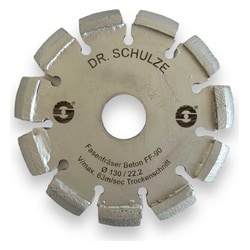
Dr. Schulze Chamfer Cutter FF90 130 | 25.4
Frez25zł1,082.40 tax incl. 880,00 zł tax excl.View technical data Zobacz szczegóły
- Producent: Dr. Schulze
- Segment thickness: 10 mm
- Bore diameter: 25,4 mm
- Angle: 45°
- Beveling mode: Jednostronne fazowanie
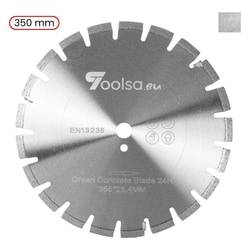
Toolsa Fresh Green Concrete 350 Diamond Blade
TAFCG350zł738.00 tax incl. 600,00 zł tax excl.View technical data Zobacz szczegóły
- Disc bore diameter: 25,4 mm
- Segment height: 10 mm
- Segment thickness: 3,3 mm
- Disc diameter: 350 mm
- Destination: Świeży beton
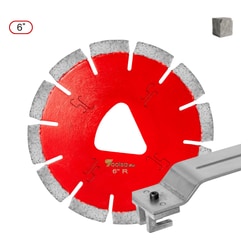
Toolsa Soff-Cut 6" Early Entry Kit for Green Concrete, Medium-Hard Aggregate (Diamond Blade + Skid Plate)
TASC6R-KITzł430.50 tax incl. 350,00 zł tax excl.View technical data Zobacz szczegóły
- Segment height: 9,2 mm
- Segment thickness: 2,4 mm
- Disc diameter: 6"
- Mounting hole: Trójkątny Soff Cut
- Destination: Świeży beton, kruszywo twarde i średniotwarde
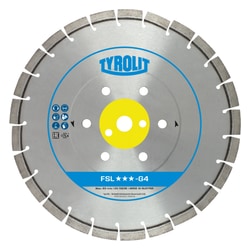
TYROLIT PREMIUM FSL-G3 350 X 2.8 MM Diamond Disc
34015785zł762.60 tax incl. 620,00 zł tax excl.View technical data Zobacz szczegóły
- Producent: Tyrolit
- Disc bore diameter: 25,4 mm
- Segment height: 13 mm
- Geometry: C73sw
- Type of cooling: Dry
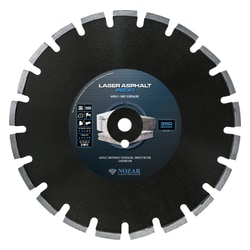
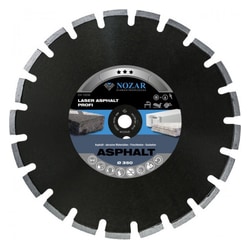
Nozar Laser Asphalt Profi 350x25.4 Mm Diamond Blade
PL6700606zł848.70 tax incl. 690,00 zł tax excl.No technical data available Zobacz szczegóły
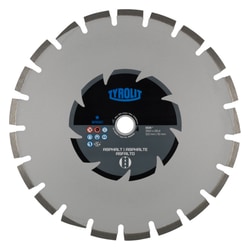
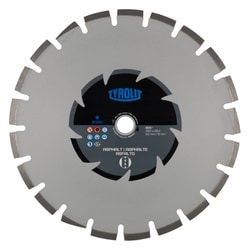
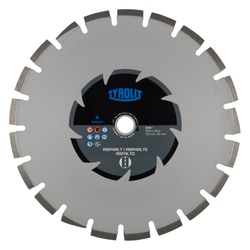
TYROLIT BASIC Diamond Disc DCA 300 X 2.8 MM X 20 MM
465649zł270.60 tax incl. 220,00 zł tax excl.View technical data Zobacz szczegóły
- Producent: Tyrolit
- Disc bore diameter: 20 mm
- Segment height: 10 mm
- Geometry: C1sw
- Type of cooling: Dry
TYROLIT BASIC Diamond Disc DCA 300 X 2.8 MM X 22.23 MM
465656zł290.28 tax incl. 236,00 zł tax excl.View technical data Zobacz szczegóły
- Producent: Tyrolit
- Disc bore diameter: 22,23 mm
- Segment height: 10 mm
- Geometry: C1sw
- Type of cooling: Dry
TYROLIT BASIC Diamond Disc DCA 350 X 3 MM
465652zł392.37 tax incl. 319,00 zł tax excl.View technical data Zobacz szczegóły
- Producent: Tyrolit
- Disc bore diameter: 25,4 mm
- Segment height: 10 mm
- Geometry: C1sw
- Type of cooling: Dry
Diamond Disctyrolit BASIC DCA 350 X 3 MM, 20 MM
465651zł387.45 tax incl. 315,00 zł tax excl.View technical data Zobacz szczegóły
- Producent: Tyrolit
- Disc bore diameter: 20 mm
- Segment height: 10 mm
- Geometry: C1sw
- Type of cooling: Wet and dry
A diamond blade for green concrete (also called fresh or freshly poured concrete) cuts control joints by the early-entry method — sawing as early as 1–2 hours after the pour, before the slab reaches full strength. A control joint (a saw cut that steers where the concrete cracks) made in this window guides shrinkage stress into planned lines and protects the floor from random cracking. Unlike blades for cured concrete, it runs dry, works with a skid plate that protects the top edge of the cut, and has segments matched to the abrasive, damp material. Standard diameters are 300, 350 and 400 mm with a 25.4 mm arbor (some models 20 mm), mounted on walk-behind floor saws and Soff-Cut systems.
At NORWIT.PL we stock blades for fresh concrete and control-joint cutting primarily from Tyrolit, plus Nozar (Frischbeton line) and Husqvarna. The range splits into early-entry blades for green concrete, blades for joints in cured concrete and chamfering bits for edge finishing, complemented by other diamond blades and the floor saws that run these blades. Below we explain when to cut fresh concrete, how deep to cut control joints and how to match blade diameter to the machine.
Blade for fresh concrete and the early-entry technique — when to cut control joints
A diamond blade for green concrete (also called fresh or freshly poured concrete) cuts control joints by the early-entry method — sawing as early as 1–2 hours after the pour, before the slab reaches full strength. A control joint (a saw cut that steers where the concrete cracks) made in this window guides shrinkage stress into planned lines and protects the floor from random, uncontrolled cracks. Classic cutting with a blade for cured concrete is done only after 6–24 hours — by then the concrete is already shrinking and the first cracks can appear on their own before you manage to saw the joint.
Fresh concrete is abrasive and damp, so an early-entry blade runs dry, has segments resistant to fast wear and works with a skid plate (a shoe) that protects the top edge of the cut from spalling. Typical diameters are 300, 350 and 400 mm with a 25.4 mm mounting bore (some models 20 mm). At NORWIT.PL we stock blades for fresh concrete primarily from Tyrolit, plus Nozar (Frischbeton line) and Husqvarna — for specifications and matching to a specific saw, see the section below.
Blade for fresh vs cured concrete — the differences
The moment of cutting decides which blade to use. A blade for fresh (green) concrete is built for contact with young, uncured material and enters the slab as early as 1–2 hours in. A blade for cured concrete has a harder segment bond and cuts a hardened slab after several to a dozen or more hours. Mixing up the two types ends either in random cracks (cutting too late) or in edge spalling (cutting too early with a blade not meant for early-entry).
| Feature | Blade for fresh (green) concrete | Blade for cured concrete |
|---|---|---|
| Cutting window | 1–2 h after pouring (early-entry) | after 6–24 h, once the concrete has set |
| Cooling | dry, with a skid plate protecting the edge | usually wet (water) or dry with extraction |
| Segment | softer bond for abrasive, damp concrete | harder bond for mature concrete |
| Typical diameters / bore | 300, 350, 400 mm / 25.4 mm (some 20 mm) | 300–450 mm / 25.4 mm |
| Application | cutting shrinkage control joints in floors | cutting hardened slabs, joints, demolition |
| Risk of wrong timing | too late = random shrinkage cracks | too early = spalled cut edges |
All these blades belong to the family of diamond blades — they differ in the hardness of the segment bond and in the cooling method. For cutting bituminous surfaces, separate asphalt blades are used, with a segment resistant to clogging with binder.
Popular fresh-concrete blades at NORWIT.PL
Below is a cross-section of the range — from a blade dedicated to green concrete, through all-round concrete blades, to a finishing bit. Exact segment specifications and the maximum cutting depth are given on each product page.
| Model | Diameter / bore | Typical use |
|---|---|---|
| Nozar Frischbeton / Fresh Concrete | 350 × 25.4 mm | dedicated to control joints in fresh concrete (early-entry) |
| Nozar LAM PROFI | 350 mm | laser-welded, concrete and mineral materials |
| Tyrolit BASIC DCA | 300 × 20 mm | concrete cutting and control joints, a popular size |
| Husqvarna XL6-3000 | — | premium for concrete cutting on floor saws |
| Dr. Schulze FF90 | 130 × 25.4 mm | chamfering bit for edge finishing after cutting |
Nozar blades include a dedicated Frischbeton line for green concrete and laser-welded profi segments, while Husqvarna and Tyrolit add blades for cutting hardened concrete on heavier floor saws. Mounting bores differ between models — before buying, compare them with your saw's spindle.
Depth and spacing of control-joint cuts
Shrinkage control joints are cut to a depth of 1/4–1/3 of the slab thickness. For a 15 cm floor that means a cut of 4–5 cm, for a 20 cm slab about 5–7 cm. Field spacing is set roughly every 24–36 times the slab thickness, so for a 15 cm floor that is panels about 4–5 m per side, kept as square as possible. With the early-entry technique the first cut is often shallower, around 25–30 mm, because it is made very early, when the early shrinkage alone is enough to guide the crack.
Cutting depth depends on blade diameter: 300 mm gives about 90–100 mm of reach, 350 mm — 110–125 mm, and 400 mm and larger blades cut thick industrial slabs. For control-joint cutting alone the full blade depth is rarely used — what matters is a precise, shallow and early cut that leads the crack into the planned line.
Choosing the saw and cutting wet or dry
Blades for fresh concrete mount on floor saws — petrol or electric walk-behind saws guided across the slab. Early-entry work uses dedicated Soff-Cut systems (a saw with a skid plate, cutting as early as 1–2 hours after the pour and protecting the top edge from spalling). When matching, check two things: the blade's mounting bore (25.4 mm or 20 mm) must fit the spindle, and the maximum allowable blade diameter must fall within the range stated by the machine maker (usually 300–450 mm).
Fresh concrete is cut dry — water would wash out the young, uncured surface and weaken the edge of the cut. Wet cutting is reserved for blades for cured concrete and for deep cutting, where the water stream cools the segment and limits dust. When working dry, use dust extraction and respiratory protection — a 300–350 mm blade generates a lot of fine silica dust that is harmful to the operator.
Frequently asked questions about fresh-concrete blades
When do you cut fresh concrete with a diamond blade — how many hours after pouring?
Fresh concrete is sawn by the early-entry method as early as 1–2 hours after the pour, and at the latest before shrinkage starts — usually within a window of about 6 hours, depending on temperature and mix design. Classic cutting with a blade for cured concrete comes later, after 6–24 hours. The goal is the same: to cut the control joints before shrinkage stress forms its own random cracks. The warmer the weather and the faster the concrete sets, the earlier you must cut — at 25–30°C the window can be shorter than 2 hours.
What is the difference between a blade for fresh (green) concrete and one for cured concrete?
A blade for fresh concrete runs dry, has segments matched to abrasive, damp material and works with a skid plate protecting the edge of the cut — which lets it cut as early as 1–2 hours after pouring. A blade for cured concrete is harder, often water-cooled, and enters the slab only after several to a dozen or more hours, once the concrete has set. Both come in standard diameters of 300–400 mm with a 25.4 mm bore (some 20 mm), but they differ in segment bond: softer for fresh, harder for mature concrete.
Which diamond blade should I choose for cutting control joints?
For control joints in fresh concrete choose an early-entry blade, for example the Nozar Frischbeton 350 × 25.4 mm, or a Tyrolit concrete blade — with laser-welded segments and a 300–350 mm diameter matched to the saw. The choice depends on slab thickness and saw power: for industrial floors 15–25 cm thick, a 350 mm diameter giving a cutting depth around 110–125 mm works well. For contraction joints, where you cut only 1/4–1/3 of the slab thickness, a 300 mm blade is enough.
How deep should control joints in fresh concrete be cut?
Shrinkage control joints are cut to a depth of 1/4–1/3 of the slab thickness. For a 15 cm floor that means a cut of 4–5 cm, for a 20 cm slab about 5–7 cm. With the early-entry technique the first cut is often shallower, around 25–30 mm, because it is made very early, when the early shrinkage alone is enough to control the crack. Joint spacing is set roughly every 24–36 times the slab thickness, so for a 15 cm floor that is panels about 4–5 m per side.
Is fresh concrete cut wet or dry?
Fresh concrete in the early-entry technique is cut dry — water would wash out and weaken the young, uncured surface. Blades for green concrete are built for this, and the skid plate carries dust away and protects the edge of the cut as early as 1–2 hours after pouring. Wet cutting, with water cooling, is used with blades for cured concrete and for deep cutting on floor saws — the water lowers the segment temperature and eliminates dust. When working dry with a 300–350 mm blade, use dust extraction, because a great deal of dust is produced.
What blade diameter for fresh concrete — 300, 350 or 400 mm?
Diameter is matched to the required cutting depth and to the type of saw. A 300 mm blade gives about 90–100 mm of depth and fits lighter floor saws — enough for contraction joints in thin floors. A 350 mm blade is the most popular size for industrial floors, with a depth around 110–125 mm. Blades of 400 mm and larger mount on powerful floor saws for thick slabs and deep cutting. The mounting bore is most often 25.4 mm, on some models 20 mm — check it in your saw's specification.
Will a blade for fresh concrete cut through reinforced concrete?
A blade for fresh concrete will manage concrete lightly reinforced with mesh or small-diameter bars, but the steel speeds up segment wear and dulls the diamond. For regular cutting of reinforced concrete it is better to choose a blade with segments made for rebar — a harder bond and higher diamond concentration cope better with steel contact. In practice, control joints in fresh concrete are cut shallow, 25–50 mm, so the blade rarely reaches the main reinforcement, which usually sits 3–5 cm below the surface. For deep cutting through Ø 8–12 mm bars, choose a blade marked for reinforced concrete.
Which saw fits a blade for fresh concrete (walk-behind floor saw, Soff-Cut)?
Blades for fresh concrete mount on walk-behind floor saws — petrol or electric saws guided across the slab. Early-entry work also uses dedicated Soff-Cut systems (a saw with an edge-protecting skid plate that allows cutting as early as 1–2 hours after pouring). The key is matching the blade bore (25.4 mm or 20 mm) to the saw spindle and the maximum blade diameter allowed by the machine maker — usually 300–450 mm. You will find saws and floor cutters in the floor saws category.
How much does a diamond blade for fresh concrete cost?
The price of a diamond blade for fresh concrete depends on diameter, segment height and class (basic or profi). Laser-welded 300–350 mm blades cost roughly from about EUR 40–60 net for basic models up to more than EUR 200–250 net for high-durability profi blades. Blades of 400 mm and larger for floor saws are priced higher. We list current prices on each product page — compare the purchase cost with the linear metres of cut, because a profi blade cuts more before it wears out.
How long does a diamond blade last and how do I tell it is worn out?
Diamond blade life is given in linear metres of cut — a profi 350 mm blade can make from several hundred to several thousand metres of cutting, depending on concrete hardness, reinforcement and cooling. You can spot wear by the lowered diamond segment (when it protrudes less than 1–2 mm above the core), by a drop in cutting speed and by rising noise and vibration. A polished, shiny segment means the diamond has glazed over — a short cut in abrasive material then helps. Replace the blade before the core touches the concrete.
Why buy fresh-concrete blades at NORWIT.PL
We specialise in concrete cutting tools: we stock diamond blades for fresh concrete and control-joint cutting primarily from Tyrolit, plus Nozar (Frischbeton line for green concrete) and Husqvarna. We advise on choosing diameter, bore and segment hardness to match a specific saw and slab thickness. Blades for fresh concrete are complemented by other diamond blades and the floor saws that run them. We ship orders online across the country.