


-
-
Concrete
-
- Concreting
- Concrete Vibrators
- Complete 230 V Mechanical Vibrators
- Vibrator Heads
- Vibrator Shafts
- Vibrator Motors
- Concrete Vibrators 42 V | 200 Hz
- Mechanical Vibrators 230 V
- 42 V | 200 Hz Head and Shaft
- 230 V Concrete Vibrators
- Vibrators With Built-In 230 V | 200 Hz Converter
- 42 V | 200 Hz Converters
- Combustion Vibrators
- Pneumatic Vibrators
- External Vibrators
- Power Trowels
- Vibratory Screeds
- Concrete Hand Tools
- Concrete Vibrators
-
-
-
-
-
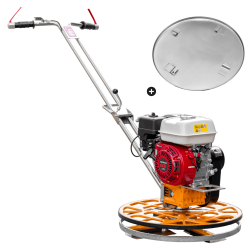
- Walk-Behind Combustion Power Trowels
-
-
-
Heating and cooling
-
Generators
-
Earthworks
-
Industrial vacuums
-
Finishing
-
Pumps
-
Measurement
-
BLOG & Tips
-
Promotions
Kategorie 16 kategorii
Kategorie
-
- Levels and Measurements
- Soil Compactors
- Tamping Rammers - Jumping Jacks
- Single Direction Vibratory Plates
- Reversible Vibratory Plates
- Rollers
- 100 kg Soil Compactors
- 200 kg Soil Compactors
- 300 kg Soil Compactors
- 400 kg Soil Compactors
- 500 kg Soil Compactors
- 600 kg Soil Compactors
- 700 kg Soil Compactors
- 800 kg Soil Compactors
- Wacker Neuson Compactors
- Accessories for Compactors
- Bomag Compactors
- Altrad Belle Compactors
- Paver Compactors
- Swepac Compactors
- Power Generators
- Concreting
- Concrete Vibrators
- Complete 230 V Mechanical Vibrators
- Vibrator Heads
- Vibrator Shafts
- Vibrator Motors
- Concrete Vibrators 42 V | 200 Hz
- Mechanical Vibrators 230 V
- 42 V | 200 Hz Head and Shaft
- 230 V Concrete Vibrators
- Vibrators With Built-In 230 V | 200 Hz Converter
- 42 V | 200 Hz Converters
- Combustion Vibrators
- Pneumatic Vibrators
- External Vibrators
- Vibratory Screeds
- Power Trowels
- Concrete Hand Tools
- Concrete Vibrators
- Pumps and Motor Pumps
- Cutting, Drilling and Grinding
- Heating and Cooling
- Wood Table Saws
- Painting and Plastering
- Combustion Engines
- Washing and Vacuuming
- Cement Mixers
- Paving Tools
- Wheelbarrows and Track Dumpers
- Demolition and Hammers
- Sales
- Levels and Measurements
Brak kategorii pasujących do wyszukiwania.
Oil-Fired Air Heaters
Nagrzewnica olejowa Master B 100 CED
4010.813zł2,798.99 tax incl. 2 275,60 zł tax excl.View technical data Zobacz szczegóły
- Weight: 25 kg
- Dimensions: 1075 × 600 × 480 mm
- Frequency: 50–60 Hz
- Fuel: Olej napędowy | nafta | HVO 100
- Fuel consumption: 2,7 l/h
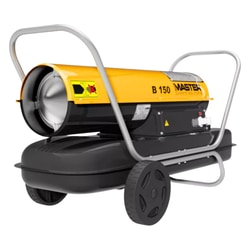
Nagrzewnica olejowa Master B 150 CED
4010.814zł3,299.99 tax incl. 2 682,92 zł tax excl.View technical data Zobacz szczegóły
- Weight: 25 kg
- Dimensions: 1075 × 600 × 480 mm
- Frequency: 50 Hz
- Fuel: Olej napędowy | nafta | HVO 100
- Fuel consumption: 4,2 l/h
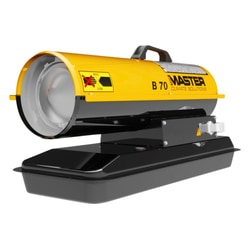
Nagrzewnica olejowa Master B 70 CED
4010.819zł2,045.99 tax incl. 1 663,41 zł tax excl.View technical data Zobacz szczegóły
- Weight: 15 kg
- Dimensions: 745 × 300 × 405 mm
- Frequency: 50–60 Hz
- Fuel: Olej napędowy | nafta | HVO 100
- Fuel consumption: 1.9 l/h
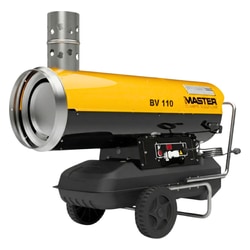
Nagrzewnica olejowa z odprowadzaniem spalin Master BV 110
4013.217zł7,588.01 tax incl. 6 169,11 zł tax excl.View technical data Zobacz szczegóły
- Weight: 61 kg
- Dimensions: 1235 × 575 × 1000 mm
- Frequency: 50 Hz
- Fuel: Olej napędowy | nafta | HVO 100
- Fuel consumption: 3,2 l/h
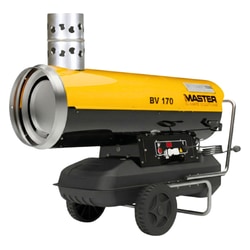
Nagrzewnica olejowa z odprowadzaniem spalin Master BV 170
4013.216zł8,651.99 tax incl. 7 034,14 zł tax excl.View technical data Zobacz szczegóły
- Weight: 67 kg
- Dimensions: 1350 × 575 × 1000 mm
- Frequency: 50 Hz
- Fuel: Olej napędowy | nafta | HVO 100
- Fuel consumption: 4,7 l/h
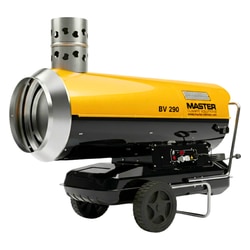
Nagrzewnica olejowa z odprowadzaniem spalin Master BV 290
4013.215zł10,499.99 tax incl. 8 536,58 zł tax excl.View technical data Zobacz szczegóły
- Weight: 101 kg
- Dimensions: 1600 × 700 × 1150 mm
- Frequency: 50–60 Hz
- Fuel: Olej napędowy | nafta | HVO 100
- Fuel consumption: 8,1 l/h
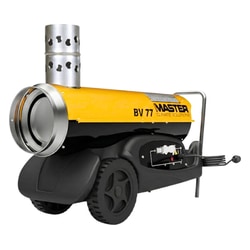
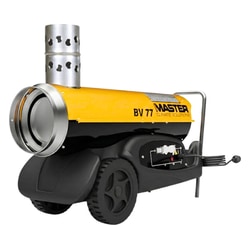
Master BV 77 Indirect Oil Heater
4013.319zł5,401.00 tax incl. 4 391,06 zł tax excl.View technical data Zobacz szczegóły
- Weight: 33 kg
- Dimensions: 1130 × 380 × 660 mm
- Frequency: 50 Hz
- Fuel: Olej napędowy | nafta | HVO 100
- Fuel consumption: 2,0 l/h
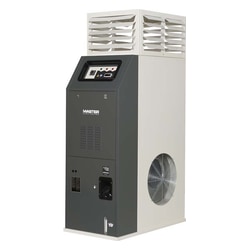
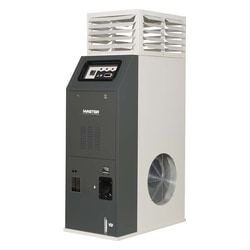
MASTER F 30 Stationary Oil-Fired Heater
F 30zł16,922.00 tax incl. 13 757,72 zł tax excl.View technical data Zobacz szczegóły
- Fuel consumption: 2.18 kg/h
- Tank capacity: 80 l
- Moc grzewcza: 27.55 kW
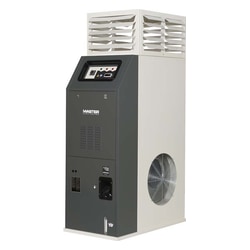
MASTER F 60 Stationary Oil-Fired Heater
F 60zł20,634.00 tax incl. 16 775,61 zł tax excl.View technical data Zobacz szczegóły
- Fuel: Olej napędowy
- Airflow [ m³/h ]: 6000
- Tank capacity: 110 l
- Power supply [ v / hz ].: 230/1 faz./50
- Dimensions of the device (l x w x h) [ mm ].: 1920 x 1040 x 600
MASTER F 80 Stationary Oil-Fired Heater
F 80zł26,007.12 tax incl. 21 144,00 zł tax excl.View technical data Zobacz szczegóły
- Fuel: Olej napędowy
- Airflow [ m³/h ]: 7800
- Tank capacity: 110 l
- Power supply [ v / hz ].: 230/1 faz./50
- Dimensions of the device (l x w x h) [ mm ].: 1400 x 640 x 2090
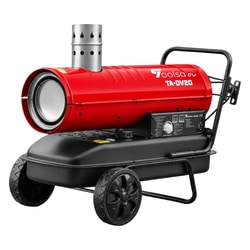
Toolsa TA-DV20 Indirect Diesel Heater (20 kW)
TA-DV20zł2,212.77 tax incl. 1 799,00 zł tax excl.View technical data Zobacz szczegóły
- Weight: 24 kg
- Dimensions: 950 x 500 x 600 mm
- Frequency: 50 Hz
- Power: 20 kW
- Fuel tank: 38 l
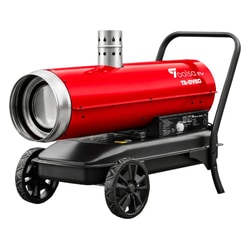
Toolsa TA-DV50 Indirect Diesel Heater (50 kW)
TA-DV50zł3,690.00 tax incl. 3 000,00 zł tax excl.View technical data Zobacz szczegóły
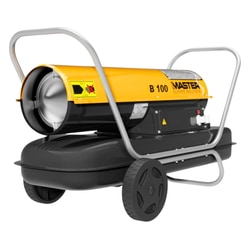
- Weight: 38,2 kg
- Dimensions: 1230 x 600 x 710 mm
- Frequency: 50 Hz
- Power: 50 kW
- Fuel tank: 50 l
An oil heater is a portable or stationary heating unit powered by diesel (or kerosene) that uses forced air to blow hot air across a hall, garage, workshop or construction site. The burner combusts the fuel and a fan pushes the heat inside — available models range from a few kilowatts up to about 110 kW, with an approximate consumption of 0.1 litre of oil per hour for every 1 kW of output. Warm air appears within a few minutes of start-up, without having to heat up a central-heating system.
At NORWIT.PL we stock oil heaters primarily from the Master and Sovelor brands — from portable Master B-series models, through indirect Master BV units with flue exhaust, to stationary Master F-series heaters for permanent mounting. We split the range into oil heaters with flue (for workshops and garages, where clean air matters) and oil heaters without flue (for well-ventilated halls and yards). You will find the full Master range on the Master brand page. Below we explain how to size the output to the floor area, how much an hour of operation costs and which technology to choose.
Oil heater — how it works and what fuel it runs on
An oil heater (also called a diesel heater or oil-fired space heater) is a heating unit in which a burner combusts liquid fuel while a fan pushes the resulting heat into the room as a stream of hot air. It runs primarily on diesel (heating oil), and some models also accept kerosene or light fuel oil. Available units range from a few kilowatts up to about 110 kW, so a single machine will heat both a small garage and a tall hall, and warm air appears within a few minutes.
We stock forced-air (blown-air) oil heaters that warm the air — unlike infrared radiant heaters, which heat people and objects directly within the radiation range. Our range covers primarily the Master and Sovelor brands — from portable B-series models, through indirect BV-series units with flue exhaust, to stationary F-series heaters.
Types of oil heater — with flue and without
The basic split comes down to what happens to the exhaust gases. In an oil heater without flue (direct) the exhaust enters the room together with the heated air — almost 100% of the fuel's energy is delivered, but constant ventilation is required. In an oil heater with flue (indirect) the fuel burns in a chamber with a heat exchanger and the exhaust leaves through a chimney, so clean, dry, odour-free air enters the interior at an efficiency of about 80–85%. The first group suits ventilated halls and yards, the second — workshops, garages and livestock buildings.
| Feature | Without flue (direct) | With flue (indirect) |
|---|---|---|
| Exhaust gases | into the room with the warm air | led outside through a chimney |
| Thermal efficiency | almost 100% | usually about 80–85% |
| Ventilation | constant, intensive | limited, air stays clean |
| Application | ventilated halls, yards, agriculture | workshops, garages, livestock, spaces with people |
| Example models | Master B series, Toolsa | Master BV series, Heylo |
How to choose the chimney, the duct cross-section and the placement is described in our post on flue exhaust from an oil heater. The rule is simple: whenever people or animals are present in the room and heavy ventilation is not possible, choose the indirect version with a chimney.
Sizing an oil heater to the floor area
Output is matched to the volume, insulation and temperature. For a height of about 3 m and average insulation, plan on roughly 1 kW per 3–5 m², and for poor insulation or a tall hall about 1 kW per 2–3 m². The table below translates floor area into output — in frost and with thin walls, choose from the upper limit.
| Floor area (approx. 3 m high) | Good insulation | Poor insulation / high ceiling |
|---|---|---|
| up to 30 m² (garage) | about 8–12 kW | about 12–20 kW |
| 30–60 m² | about 12–20 kW | about 20–30 kW |
| 60–100 m² | about 20–30 kW | about 30–45 kW |
| 100–150 m² | about 30–40 kW | about 45–60 kW |
| 150–250 m² | about 40–60 kW | about 60–90 kW |
| 250–400 m² (hall) | about 60–90 kW | about 90–110 kW |
Popular searches map onto these brackets: 12–15 kW for a garage, 20–30 kW for a small workshop, 40–50 kW for a medium-sized hall. The most powerful indirect model in our range, from the Master BV series, works at around 110 kW — for large halls and continuous operation. Oil consumption is roughly 0.1 l/h per 1 kW, so 20 kW burns about 1.6–2.1 l/h, while with a thermostat the average daily use tends to be 30–50% lower.
Master B, BV and F series and Sovelor heaters
Within the Master brand the series designation tells you the type of unit directly — exact parameters (output in kW, tank capacity, air flow) are given on the individual product pages.
| Series / model | Type | Typical use |
|---|---|---|
| Master B series (B 95 CEL, B 130, B 180) | direct, without flue | ventilated halls, construction sites, agriculture |
| Master BV series (BV 400) | indirect, with flue | workshops, garages, livestock — clean air |
| Master F series (F 60, F 80) | stationary, permanent mounting | halls and workshops with a fixed installation |
| Sovelor | portable and stationary heat generators | halls, construction sites, agriculture |
The Sovelor brand rounds out the range with blown-air generators in similar output classes, and you will find the whole heating line-up in the heating and cooling section.
Oil heater in a garage and workshop — safety
An oil heater is safe provided you match the right type to the room. In an enclosed garage or workshop where people are present, use a model with flue (indirect) — the exhaust, including carbon monoxide, is then led outside through a chimney. A direct model is suitable there only with intensive, constant ventilation. Whatever the type, it is worth having a carbon monoxide detector and keeping at least 2 m clearance from flammable materials.
Master models come with safeguards: an overheat sensor, flame control (a photocell) and automatic fuel cut-off if the flame goes out. The rules of safe operation, ventilation and fuel storage are described in our guide on oil heater safety.
Frequently asked questions about oil heaters
How does an oil heater with flue differ from an oil heater without flue?
An oil heater with flue (indirect, e.g. the Master BV series) has a heat exchanger and a chimney — the exhaust goes outside and only clean, dry, odour-free air enters the room, at an efficiency of about 80–85%. An oil heater without flue (direct, e.g. the Master B series) sends the exhaust into the room together with the heat, reaching almost 100% efficiency but requiring constant ventilation. The indirect type is chosen for garages and workshops with people present, the direct type for well-ventilated halls and yards; both cover outputs up to about 110 kW.
What oil or fuel do you use in an oil heater?
The primary fuel is diesel, and some models also allow kerosene and light fuel oil. Petrol and waste oil must never be used — they risk damaging the burner and starting a fire. In winter use winter-grade diesel, because below about -10°C ordinary diesel thickens and clogs the fuel filter. The tank of portable units typically holds from around a dozen to several dozen litres, which at 20–30 kW is enough for several hours of operation without refuelling.
How much does an hour of running an oil heater cost and how much fuel does it use?
Diesel consumption is roughly 0.1 litre per hour for every 1 kW of output, so a 20 kW unit burns about 2 l/h and a 50 kW unit about 4–5 l/h. At a diesel price of around PLN 6.5/l this works out to roughly PLN 10–14/h for a 20 kW model and PLN 26–33/h for a 50 kW one. With a thermostat the burner switches off once the room is warm, so the average daily cost is often 30–50% lower than these peak figures.
How do I size an oil heater to the floor area of a garage or hall?
For a room about 3 m high with average insulation, plan on roughly 1 kW per 3–5 m², and for a poorly insulated or tall hall about 1 kW per 2–3 m². A garage up to 30 m² is heated by an 8–12 kW unit, a 60–100 m² workshop needs 20–30 kW, and a 250–400 m² hall calls for 60 up to 110 kW. In frost and with thin walls, pick the output from the upper end of the range.
Is an oil heater safe for heating a garage and workshop?
Safe heating of an enclosed garage or workshop with people present is provided by an oil heater with flue (indirect) — the exhaust, including carbon monoxide, is led outside through a chimney. A direct model is suitable there only with constant, intensive ventilation. Keep at least 2 m clearance from flammable materials and fit a carbon monoxide detector. Master models have an overheat sensor and flame control that cut off the fuel in the event of a fault — a standard feature in units rated above 100 kW.
Why does an oil heater cut out and smoke — what are the most common causes?
An oil heater most often cuts out and smokes because of a clogged fuel filter or burner nozzle, poor-quality or waxed diesel, and incorrect pump pressure. Black smoke usually means too much fuel or too little air (a dirty intake or fan wheel), while shutting down shortly after starting points to a dirty flame-sensing photocell. First replace the filter, check the fuel, and clean the nozzle and photocell; the fuel filter is worth changing about every 150–200 operating hours. If the symptoms return, adjust the pump pressure — a correction of 0.1–0.2 bar can clear the smoking — or send the unit for service.
How do the Master B, BV and F (stationary) heaters differ?
The Master B series consists of portable direct heaters (without flue) that return almost 100% of the heat to the room — for well-ventilated halls and yards. The Master BV series are indirect units with a heat exchanger and chimney: the exhaust goes outside and the air stays clean, at the cost of about 80–85% efficiency. The Master F series are stationary designs, permanently mounted as part of a hall's or workshop's fixed heating installation.
Does an oil heater have a thermostat and can it be left unattended?
Most Master oil heaters have a built-in thermostat or a socket for a room thermostat that maintains a set temperature (typically in the range of about 5–35°C) and switches off the burner once it is reached, cutting fuel use by as much as 30–50%. Even so, a liquid-fuel appliance should not be left completely unattended for many hours, especially a direct model in an enclosed room. For night-time operation choose an indirect model with safety features together with a carbon monoxide detector.
Is it better to buy or rent an oil heater?
Buying pays off for users who heat regularly throughout the season — the cost of the unit is spread over many months of work, and the equipment is always on hand and covered by warranty. A 20–30 kW Master heater for a garage or workshop usually pays for itself within 1–2 heating seasons compared with repeated rental. Renting can make sense for a one-off drying job lasting a few days. NORWIT.PL sells the units together with service and parts, which for regular use is more cost-effective than hiring one repeatedly.
How many kW of oil heater are needed to heat a 100 m² hall?
Heating a hall of 100 m² and about 3 m high with average insulation calls for an oil heater of roughly 20–30 kW. If the hall is poorly insulated, has a high ceiling or large doors, the requirement rises to about 30–45 kW. A 30 kW model then burns roughly 2.4–3.2 litres of diesel per hour, and less with a thermostat, because the burner runs in cycles.
Why buy an oil heater from NORWIT.PL
We focus on proven forced-air heating: our range includes oil heaters primarily from the Master and Sovelor brands — from portable models for halls and yards to stationary units for permanent mounting. We help you pick the type and output for your floor area and insulation, and we provide service and wear parts (burner nozzles, filters, photocells). We split the range into oil heaters with flue for workshops and garages and oil heaters without flue for well-ventilated halls, and you will find the whole heating line-up in the heating and cooling section. We fulfil orders online, with shipping across the country.