


-
-
Concrete
-
- Concreting
- Concrete Vibrators
- Complete 230 V Mechanical Vibrators
- Vibrator Heads
- Vibrator Shafts
- Vibrator Motors
- Concrete Vibrators 42 V | 200 Hz
- Mechanical Vibrators 230 V
- 42 V | 200 Hz Head and Shaft
- 230 V Concrete Vibrators
- Vibrators With Built-In 230 V | 200 Hz Converter
- 42 V | 200 Hz Converters
- Combustion Vibrators
- Pneumatic Vibrators
- External Vibrators
- Power Trowels
- Vibratory Screeds
- Concrete Hand Tools
- Concrete Vibrators
-
-
-
-
-
- Walk-Behind Combustion Power Trowels
-
-
-

Heating and cooling
-
Generators
-
Earthworks
-
Industrial vacuums
-
Finishing
-
Pumps
-
Measurement
-
BLOG & Tips
-
Promotions
Kategorie 16 kategorii
Kategorie
-
- Levels and Measurements
- Soil Compactors
- Tamping Rammers - Jumping Jacks
- Single Direction Vibratory Plates
- Reversible Vibratory Plates
- Rollers
- 100 kg Soil Compactors
- 200 kg Soil Compactors
- 300 kg Soil Compactors
- 400 kg Soil Compactors
- 500 kg Soil Compactors
- 600 kg Soil Compactors
- 700 kg Soil Compactors
- 800 kg Soil Compactors
- Wacker Neuson Compactors
- Accessories for Compactors
- Bomag Compactors
- Altrad Belle Compactors
- Paver Compactors
- Swepac Compactors
- Power Generators
- Concreting
- Concrete Vibrators
- Complete 230 V Mechanical Vibrators
- Vibrator Heads
- Vibrator Shafts
- Vibrator Motors
- Concrete Vibrators 42 V | 200 Hz
- Mechanical Vibrators 230 V
- 42 V | 200 Hz Head and Shaft
- 230 V Concrete Vibrators
- Vibrators With Built-In 230 V | 200 Hz Converter
- 42 V | 200 Hz Converters
- Combustion Vibrators
- Pneumatic Vibrators
- External Vibrators
- Vibratory Screeds
- Power Trowels
- Concrete Hand Tools
- Concrete Vibrators
- Pumps and Motor Pumps
- Cutting, Drilling and Grinding
- Heating and Cooling
- Wood Table Saws
- Painting and Plastering
- Combustion Engines
- Washing and Vacuuming
- Cement Mixers
- Paving Tools
- Wheelbarrows and Track Dumpers
- Demolition and Hammers
- Sales
- Levels and Measurements
Brak kategorii pasujących do wyszukiwania.
Optical Levels
Nivel System N32x Optical Level
N32xzł968.99 tax incl. 787,80 zł tax excl.View technical data Zobacz szczegóły
- Weight: 1,75 kg
- Dimensions: 130 x 215 x 140 mm
- Brand: Nivel System
- Operating temperature range: -20 °C do +50 °C
- Leveling accuracy: 1,5 mm / 1km
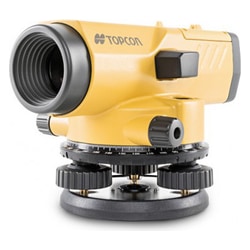
Topcon AT-B4A Optical Level
AT-B4Azł1,148.00 tax incl. 933,33 zł tax excl.View technical data Zobacz szczegóły
- Weight: 1.5 kg
- Dimensions: 122 x 214x 140 mm
- Resistance class: IPX 6
- Minimum focal length: 0,2 m
- Field of view: 1°25'
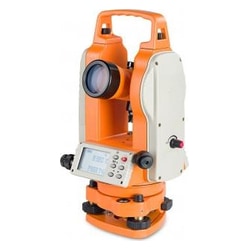
Electronic Theodolite Geo-Fennel FET 402K-L
11-303-20zł9,661.65 tax incl. 7 855,00 zł tax excl.View technical data Zobacz szczegóły
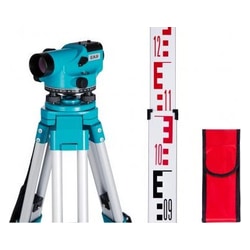
- Weight: 4,5 kg
- Brand: Geo-Fennel
- Operating temperature range: -20 °C do +45 °C
- Scope magnification: 30 x
- Lens diameter: 45 mm
Optical Level ELN 24 Set N12-Easy
11-249-21zł982.77 tax incl. 799,00 zł tax excl.View technical data Zobacz szczegóły
- Weight: 1,31 kg
- Scope magnification: 24x
- Lens diameter: 36 mm
- Compensator operating range: ±15’
- Accuracy of the compensator: ±0,5”
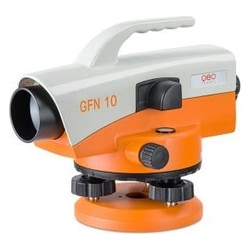
Geo-Fennel GFN 10 Self-Levelling Precision Optical Level
11-262-23zł1,364.07 tax incl. 1 109,00 zł tax excl.View technical data Zobacz szczegóły
- Weight: 3,4 kg
- Brand: Geo-Fennel
- Scope magnification: 32x
- Lens diameter: 45 mm
- Compensator operating range: ±15’
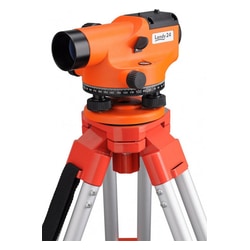
Geo-Fennel Landy 24 Self-Levelling Optical Level
11-255-20zł548.58 tax incl. 446,00 zł tax excl.View technical data Zobacz szczegóły
- Weight: 1.5 kg
- Brand: Geo-Fennel
- Scope magnification: 24x
- Lens diameter: 36 mm
- Compensator operating range: ±15’
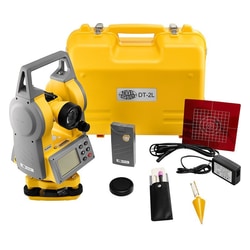
Electronic Theodolite Nivel System DT-2L
DT-2Lzł4,455.00 tax incl. 3 621,95 zł tax excl.View technical data Zobacz szczegóły
- Weight: 4,8 kg
- Dimensions: 160 x 190 x 324 mm
- Brand: Nivel System
- Power supply: Akumulator (3,7 V)
- Operating temperature range: -20 °C do +50 °C
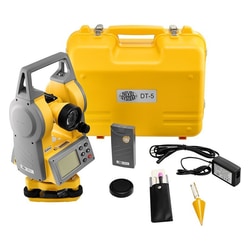
Electronic Theodolite Nivel System DT-5
DT-5zł4,029.00 tax incl. 3 275,61 zł tax excl.View technical data Zobacz szczegóły
- Weight: 5 kg
- Dimensions: 345 x 190 x 155 mm
- Brand: Nivel System
- Power supply: Akumulator (3,7 V)
- Operating temperature range: -20 °C do +50 °C
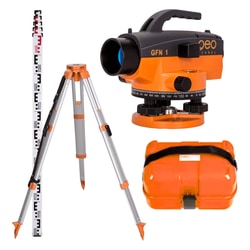
KIT Geo Fennel GFN 1 (x32) N15-Easy Optical Level
11-262-21zł1,121.76 tax incl. 912,00 zł tax excl.View technical data Zobacz szczegóły
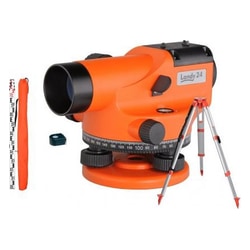
- Weight: 1,2 kg
- Resistance class: Ip54
- Lens diameter: 36 mm
- Compensator operating range: ±15’
- Accuracy of the compensator: ±0,3”
Landy Optical Level 24 Set N06-Easy
11-255-21zł1,111.92 tax incl. 904,00 zł tax excl.View technical data Zobacz szczegóły
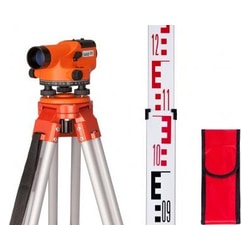
- Weight: 1.5 kg
- Scope magnification: 24x
- Lens diameter: 36 mm
- Compensator operating range: ±15’
- Accuracy of the compensator: ±0,5”
Landy 32 Set N32-Easy Optical Level
11-255-23zł1,105.77 tax incl. 899,00 zł tax excl.View technical data Zobacz szczegóły
- Weight: 1.5 kg
- Scope magnification: 32x
- Lens diameter: 36 mm
- Compensator operating range: ±15’
- Accuracy of the compensator: ±0,5”
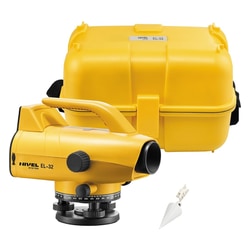
Nivel System EL-32 Optical Level
EL-32zł3,061.00 tax incl. 2 488,62 zł tax excl.View technical data Zobacz szczegóły
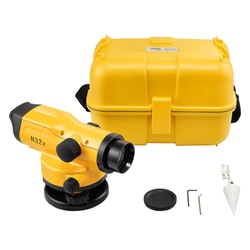
- Weight: 1,9 kg
- Dimensions: 240 x 130 x 205 mm
- Brand: Nivel System
- Connector: Micro-usb
- Power supply: Li-ion, 2200 mAh
An optical level (surveying level) is a measuring instrument with a telescope mounted on a tripod, built around an automatic compensator — a mechanism that self-levels the line of sight regardless of small deviations in the base. The operator aims the telescope at a levelling staff (a telescopic rod with a graduated scale) held at another point on site and reads the height difference with an accuracy of around ±1.5–2.0 mm per 1 km of double levelling. A telescope with 20–32x magnification and power-free operation make the instrument equally suited to checking levels on a construction site and to precise surveying work.
At NORWIT.PL we carry optical levels primarily from Geo Fennel, Nivel System and Topcon — in construction and precision surveying classes, sold standalone or in complete sets with a tripod and staff. The full range belongs to the levels and measurement department, where you'll also find laser levels and tripods and staffs. Below we explain the difference between an optical and a laser level, what a complete set includes, and how to match the accuracy class to the task.
Optical level by Geo Fennel, Nivel System and Topcon — what it is and how it works
An optical level is an instrument with a telescope mounted on a tripod and an automatic compensator — a mechanism that self-levels the line of sight. The operator aims the telescope at a levelling staff (a telescopic rod with a graduated scale) held at another point on site and reads the height, carrying one reference level across the job. Professional models reach an accuracy of around ±1.5–2.0 mm per 1 km of double levelling (measured both ways to check for error), and a telescope with 20–32x magnification lets you read the staff up to about 100–150 m away.
The optical system needs no power, so it works non-stop and keeps its accuracy in bright sunlight. At NORWIT.PL we carry optical levels primarily from Geo Fennel, Nivel System and Topcon. The category belongs to the levels and measurement department.
Types of optical levels — construction and precision class
The choice of level depends mainly on the required accuracy and telescope magnification.
| Class | Accuracy | Application |
|---|---|---|
| Construction (technical) | about 2.5–3 mm per 1 km, 20–24x magnification | foundations, screeds, floor slabs, earthworks |
| Precision (surveying) | about 1.5–2.0 mm per 1 km, 28–32x magnification | surveying, route setting-out, settlement monitoring |
| Set with tripod and staff | accuracy matches the base instrument | ready to use out of the box, no separate matching |
The range belongs to the levels and measurement department, where you'll also find laser levels and compatible tripods and staffs.
Optical or laser level — when to choose a telescope, and when a beam of light
Both establish level, but by a different method and in different conditions.
| Feature | Optical level | Laser level |
|---|---|---|
| Operating principle | telescope with compensator | beam or plane of light |
| Reading | operator and staff, usually 2 people | self-read, with an external detector |
| Accuracy | about 1.5–2.0 mm/km | about 0.2–0.3 mm/m (line laser), 1.0–1.5 mm/10 m (rotary) |
| Range | up to about 100–150 m | 15–40 m, up to about 250 m with a detector |
| Power | no power supply needed | battery or rechargeable pack |
| Best for | surveying, large sites | finishing work, working alone |
An optical level wins where repeatable measurement over long distances and power-free work matter, a laser level wins for fast, solo levelling of finishing work.
Optical level brands at NORWIT.PL — Geo Fennel, Nivel System and Topcon
All three brands offer similar accuracy and compensator mechanics, differing mainly in finish and price.
| Brand | Characteristics | Best for |
|---|---|---|
| Geo Fennel | German brand, wide range across construction and precision classes | construction companies, survey crews |
| Nivel System | complete sets (level + tripod + staff) | contractors wanting a ready set |
| Topcon | Japanese brand, for demanding surveying work | surveyors, survey companies |
Find the gear on the brand pages: Geo Fennel, Nivel System and Topcon.
Optical level set — tripod, staff and calibration
An optical level in the field needs a tripod with a 5/8" thread, usually extending to about 1.0–1.7 m, plus a levelling staff — a telescopic rod with a graduated scale in lengths of 3, 4 or 5 m. A set is often cheaper than buying the parts separately.
The instrument also needs periodic calibration of the line of sight, because transport or a knock can throw the compensator off by a fraction of a millimetre per metre — a noticeable error over kilometre-long distances. Manufacturers recommend a check every 6–12 months or after a knock, using the two-peg test. Compatible tripods and staffs are sold separately.
Frequently asked questions about optical levels
What's the difference between an optical level and a laser level?
An optical level determines height using a telescope, compensator and levelling staff, at an accuracy of around ±1.5–2.0 mm per 1 km of double levelling, and needs no power. A laser level projects a visible beam accurate to about ±0.2–0.3 mm/m, read alone at 15–40 m, or up to about 250 m with a detector. The optical instrument suits precise surveying work, the laser suits fast indoor levelling.
How accurate is an optical level and what work is it suited for?
A professional optical level reaches an accuracy of around ±1.5–2.0 mm per 1 km of double levelling, and a telescope with 20–32x magnification lets you read the staff up to about 100–150 m away. That precision suits checking the level of foundations and screeds, plus route setting-out and monitoring structure settlement. The instrument works without power, so it stays reliable all day on site.
What does an optical level set include?
A basic optical level set includes the instrument (a telescope with a compensator), a surveying tripod with a 5/8" thread extending to about 1.0–1.7 m, and a levelling staff — a telescopic rod graduated in lengths of 3, 4 or 5 m. The set is ready to use out of the box and often cheaper than buying the parts separately.
How much does an optical level for construction work cost?
Prices for optical levels start at around PLN 400–700 for construction-grade models with an accuracy of about 2.5–3 mm per 1 km, while precision levels (1.5–2.0 mm per 1 km, 28–32x magnification) usually cost PLN 1,500–4,000. A complete set with tripod and staff adds a few hundred zloty, though it is often cheaper than buying the parts separately. Current prices for each model are on the product pages.
What's the difference between an optical level and a rotary laser level?
An optical level reads height with a telescope and staff, at an accuracy of around ±1.5–2.0 mm per 1 km of double levelling, with no power and full sunlight visibility. A rotary laser level spins its beam hundreds of times per minute, building a plane up to 150–250 m in radius, at an accuracy of about ±1.0–1.5 mm per 10 m. The rotary laser is faster over large surfaces, the optical level more precise at a single point.
What is an optical level used for on site and in surveying?
An optical level carries a height reference between points on site, so it's used to check foundations, screeds and roads, and in surveying — for route setting-out and monitoring building settlement. Mounted on a tripod and aimed at a staff up to about 100–150 m away, it reads height differences at an accuracy of around ±1.5–2.0 mm per 1 km. Working without power suits full-day fieldwork.
Does an optical level need calibration and how often should it be done?
An optical level needs periodic calibration of the line of sight, because transport or strong vibration can throw the compensator off by a fraction of a millimetre per metre — a noticeable error over kilometre-long distances. Manufacturers recommend a check every 6–12 months, or after a knock, using the two-peg test. Regular calibration keeps accuracy around ±1.5–2.0 mm per 1 km for years.
Which optical level should I choose — Geo Fennel, Nivel System or Topcon?
Geo Fennel, Nivel System and Topcon all offer similar accuracy of around ±1.5–2.0 mm per 1 km and telescopes with 20–32x magnification, so the choice comes down mainly to scope of work and budget. Geo Fennel and Nivel System suit everyday construction use, Topcon is more often picked by surveyors for demanding measurements. We supply all three brands with matching tripods and staffs.
Why buy an optical level at NORWIT.PL
We specialise in professional measurement: we carry optical levels primarily from Geo Fennel, Nivel System and Topcon. We advise on accuracy class and complete sets with a tripod and staff. For fast levelling, check out our laser levels — all the measuring gear sits in the levels and measurement department. Orders ship online nationwide.