


-
-
Concrete
-
- Concreting
- Concrete Vibrators
- Complete 230 V Mechanical Vibrators
- Vibrator Heads
- Vibrator Shafts
- Vibrator Motors
- Concrete Vibrators 42 V | 200 Hz
- Mechanical Vibrators 230 V
- 42 V | 200 Hz Head and Shaft
- 230 V Concrete Vibrators
- Vibrators With Built-In 230 V | 200 Hz Converter
- 42 V | 200 Hz Converters
- Combustion Vibrators
- Pneumatic Vibrators
- External Vibrators
- Power Trowels
- Vibratory Screeds
- Concrete Hand Tools
- Concrete Vibrators
-
-
-
-
-
- Walk-Behind Combustion Power Trowels
-
-
-

Heating and cooling
-
Generators
-
Earthworks
-
Industrial vacuums
-
Finishing
-
Pumps
-
Measurement
-
BLOG & Tips
-
Promotions
Kategorie 16 kategorii
Kategorie
-
- Levels and Measurements
- Soil Compactors
- Tamping Rammers - Jumping Jacks
- Single Direction Vibratory Plates
- Reversible Vibratory Plates
- Rollers
- 100 kg Soil Compactors
- 200 kg Soil Compactors
- 300 kg Soil Compactors
- 400 kg Soil Compactors
- 500 kg Soil Compactors
- 600 kg Soil Compactors
- 700 kg Soil Compactors
- 800 kg Soil Compactors
- Wacker Neuson Compactors
- Accessories for Compactors
- Bomag Compactors
- Altrad Belle Compactors
- Paver Compactors
- Swepac Compactors
- Power Generators
- Concreting
- Concrete Vibrators
- Complete 230 V Mechanical Vibrators
- Vibrator Heads
- Vibrator Shafts
- Vibrator Motors
- Concrete Vibrators 42 V | 200 Hz
- Mechanical Vibrators 230 V
- 42 V | 200 Hz Head and Shaft
- 230 V Concrete Vibrators
- Vibrators With Built-In 230 V | 200 Hz Converter
- 42 V | 200 Hz Converters
- Combustion Vibrators
- Pneumatic Vibrators
- External Vibrators
- Vibratory Screeds
- Power Trowels
- Concrete Hand Tools
- Concrete Vibrators
- Pumps and Motor Pumps
- Cutting, Drilling and Grinding
- Heating and Cooling
- Wood Table Saws
- Painting and Plastering
- Combustion Engines
- Washing and Vacuuming
- Cement Mixers
- Paving Tools
- Wheelbarrows and Track Dumpers
- Demolition and Hammers
- Sales
- Levels and Measurements
Brak kategorii pasujących do wyszukiwania.
Grinding and Polishing
Redilock Toolsa PCD Diamond Segment For Adhesives
PCD-RLzł183.27 tax incl. 149,00 zł tax excl.View technical data Zobacz szczegóły
- Destination: Kleje
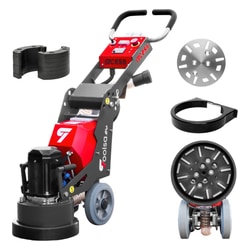
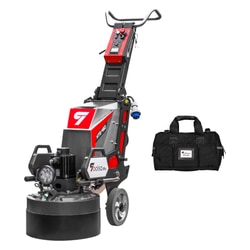
Toolsa GX 250 PLUS Concrete Polishing Grinder With Adjustable Speed And Tool
GX250TAzł8,597.70 tax incl. 6 990,00 zł tax excl.View technical data Zobacz szczegóły
- Weight: 60 kg (+13 kg)
- Working width: 250 mm
- Dimensions: 833 × 355 × 1161 mm
- Engine power: 1,1 kW | 1,5 KM
- Frequency: 50 Hz
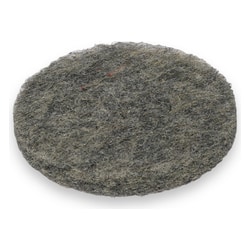
DISCOLUX 8" Polishing Pad Barikell
BKG-30086zł172.20 tax incl. 140,00 zł tax excl.No technical data available Zobacz szczegóły
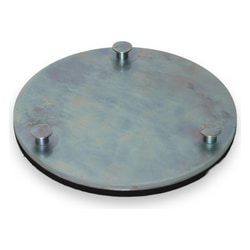
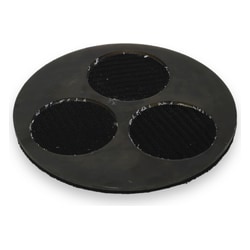
Barikell hook-and-loop attachment plate (Quick Lock)
BKG-HG1009601zł553.50 tax incl. 450,00 zł tax excl.No technical data available Zobacz szczegóły
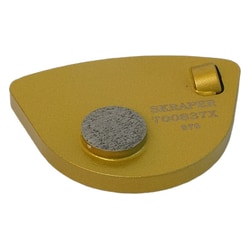
Barikell PCD SCRAPER Quick Lock Diamond Segment
PCDSCRAPER/BKG-700837zł306.27 tax incl. 249,00 zł tax excl.View technical data Zobacz szczegóły
- Mounting: Quick-lock2
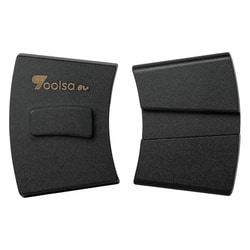
Toolsa KL/RL Adapter For Diamond Segments (Klindex To Redilock)
RL/KLzł135.30 tax incl. 110,00 zł tax excl.No technical data available Zobacz szczegóły
Barikell segment hook-and-loop (replacement)
BKG-200275zł270.60 tax incl. 220,00 zł tax excl.No technical data available Zobacz szczegóły
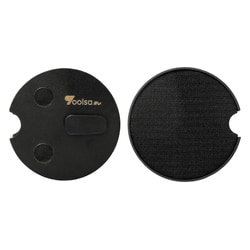
Toolsa RLV Adapter For Hook And Loop Diamond Pads (Redilock To Velcro)
RLVzł152.52 tax incl. 124,00 zł tax excl.No technical data available Zobacz szczegóły
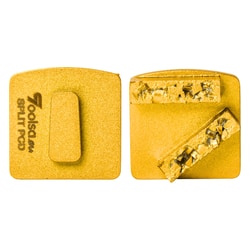
Redilock Toolsa SPLIT-PCD Diamond Segment For Resin Removal (1-3 Mm)
SPCD-RLzł183.27 tax incl. 149,00 zł tax excl.View technical data Zobacz szczegóły
- Segment height: ok. 10 mm
- Mounting: RediLock
- Destination: Zdzieranie żywic epoksydowych z betonu
- Range of coating to be removed: 1-3 mm
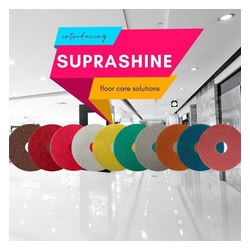
Suprashine Heavy Duty PAD 24" (610MM) With Microdiamond 220grit
SHD-0220-24zł300.12 tax incl. 244,00 zł tax excl.No technical data available Zobacz szczegóły
Toolsa HTG-460 Planetary Concrete Floor Grinder (460 Mm Working Width)
TAHTG450zł20,295.00 tax incl. 16 500,00 zł tax excl.View technical data Zobacz szczegóły
- Weight: 194 kg
- Working width: 460 mm
- Dimensions: 1539 x 462 x 927 mm
- Engine power: 2,3 kW | 3,1 KM
- Frequency: 50 Hz
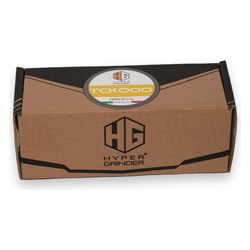
Diamond Segment (abrasivo) Barikell TCK00
TCKABRASIVO/BKG-700638zł295.20 tax incl. 240,00 zł tax excl.View technical data Zobacz szczegóły
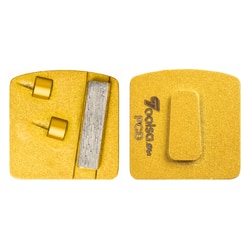
- Typ: TCK000
- Mounting: Quick-lock2
- Gradation (grain size): 20
A concrete grinder is a machine with a rotating head and diamond segments (tools with diamond grit set in a metal bond) that levels, smooths and prepares concrete floors for polishing, resin coatings or paint. Depending on head construction, grinders split into planetary machines (a main disc with satellite plates — for large, level surfaces) and single-disc machines (one working head — for renovation, edges and repair work). A low-grit segment strips material and exposes the aggregate, while a high-grit segment polishes the concrete to a smooth finish. The work always runs alongside a vacuum, because silica dust is harmful to the lungs.
At NORWIT.PL our range covers primarily concrete grinders and accessories from Lavina and Husqvarna Construction, alongside Dr. Schulze, Toolsa and Norton Clipper. We split the offer into planetary concrete grinders and single-disc concrete grinders, rounded out by diamond segments, pads and polishing chemicals. The category sits within the concrete processing department. Below we explain the difference between a planetary and a single-disc grinder, how to match segment grit to concrete hardness, and the difference between grinding and polishing a floor.
Concrete grinder — what grinding and polishing a floor involves
A concrete grinder is a machine whose rotating head presses diamond segments against the floor — tools with diamond grit set in a metal bond. The diamond wears down a layer of concrete, levels out unevenness, exposes the aggregate and prepares the floor for polishing, resin coatings, paint or adhesive. Unlike a hand-held angle grinder, the machine is walked across the whole floor, with a working width usually of 250–800 mm, and it runs alongside an industrial vacuum.
The result depends on two things: head construction and segment grit. Concrete grinders split into planetary and single-disc machines, and segments into coarse (low grit) and finishing (high grit, for polishing). At NORWIT.PL our range covers primarily machines and accessories from Lavina and Husqvarna Construction, as well as Dr. Schulze, Toolsa and Norton Clipper. The category sits within the concrete processing department.
Types of concrete grinders — planetary, single-disc and accessories
We split the grinding and polishing range into three groups: planetary machines for large floors, single-disc machines for repairs and edges, and consumable accessories (segments, pads, chemicals). The choice starts with the scale of the job and the stage of work.
| Group | Used for | Brands and examples |
|---|---|---|
| Planetary concrete grinders | large, level floors, preparing for polishing and resin coatings, continuous operation | Husqvarna Construction, Toolsa |
| Single-disc concrete grinders | renovation, smaller rooms, edges, removing coatings and adhesives | Dr. Schulze, Husqvarna Construction |
| Segments, pads and chemicals | consumable materials — grits from coarse to polishing grade, hardeners | Lavina, Tyrolit |
A diamond segment is a consumable part — you can source a full grit set for the whole cycle (Lavina, Tyrolit) together with the machine in one place.
Planetary or single-disc concrete grinder
The basic difference lies in the head: a planetary grinder has a main disc with counter-rotating satellites (smaller plates carrying the segments), while a single-disc grinder has one working head. The table below compares the two designs.
| Feature | Planetary grinder | Single-disc grinder |
|---|---|---|
| Head construction | main disc with 3 counter-rotating satellites | one working head |
| Floor flatness | very high, no visible marks | good, requires skill |
| Floor area | usually above 100–200 m² | small and medium, up to around 100 m² |
| Weight and price | higher | lower, easier to transport |
| Application | industrial floors, polishing, resin coatings | renovation, restoration, coating removal, edges |
| Brands in range | Husqvarna Construction, Toolsa | Dr. Schulze, Husqvarna Construction |
Diamond segments and grit — matching to concrete hardness
Grit describes the grain size of the diamond: the lower the number, the coarser the grain and the faster it removes material, but the deeper the scratches left for the next step to clear. The process runs in stages, roughly doubling the grit each time — every following pass removes the scratches left by the one before. Segments in our range are available in, among others, grit 30, 50, 70 and 120.
| Stage | Grit | Effect |
|---|---|---|
| Coarse | 16–30 | removing adhesives, coatings and laitance, coarse levelling |
| Levelling | 40–70 | preparing for resin coatings and floor systems, exposing aggregate |
| Smoothing | 100–200 | smoothing before polishing, matte finish |
| Polishing | 400–3000 | gloss, closing the pores, polished concrete |
Just as important as grit is matching bond hardness to concrete hardness — and it works the opposite way to what intuition suggests. Soft, abrasive concrete exposes the diamonds on its own, so it calls for a segment with a hard bond, which wears down slower, while hard concrete needs a soft bond that wears away faster and keeps exposing fresh grain. Full sets of grits and bonds are available in grinding and polishing accessories.
Grinding vs polishing concrete — what's the difference
Grinding and polishing are two stages of the same process with different results. Grinding with segments of grit 16–70 exposes the aggregate and removes unevenness — the floor comes out matte, ready for resin coatings, adhesives or paint. Polishing is further work with segments and pads of grit 400–3000 combined with a lithium hardener (a silicate impregnator that penetrates the concrete), which closes the pores and gives the surface a shine. A full cycle on a planetary machine is usually 6–8 passes — the result is a smooth, abrasion-resistant floor without a resin coating layer.
Dust extraction — concrete grinder and industrial vacuum
Dry grinding releases fine silica dust that is harmful to the lungs — the occupational exposure limit for the respirable fraction is 0.1 mg/m³ — so a concrete grinder runs together with a class M or H industrial vacuum rated at least 200–400 m³/h, connected to the head shroud. Matching models are available in the vacuums for grinders category. The alternative is wet grinding, used mainly for polishing.
Frequently asked questions about concrete grinders
What is the best tool for grinding concrete?
Concrete is ground with a concrete grinder fitted with diamond segments — tools with diamond grit set in a metal bond. Coarse stripping of coatings and adhesive uses grit 16–30, levelling uses 40–70, and smoothing and polishing use 100–200 and 400–3000. A hand-held angle grinder only works for patches of a few square metres and edges. Larger floors need a machine paired with a class M or H industrial vacuum, because silica dust is harmful to the lungs.
How do you choose a concrete grinder for a specific job?
Choosing a concrete grinder starts with three factors: floor area, substrate hardness and the stage of work. Renovation and rooms up to around 100 m² call for a light single-disc machine; floors above 100–200 m² and polishing call for a planetary machine with 3 counter-rotating satellites. Concrete hardness sets the segment bond — hard for soft concrete, soft for hard concrete — and the stage of work sets the grit, from 16–30 for coarse grinding up to 400–3000 for polishing.
What is the difference between a single-disc and a planetary concrete grinder?
A planetary grinder has a main disc with 3 counter-rotating satellites (smaller plates carrying the segments), giving a flatter floor and the highest output above 100–200 m² and during polishing. A single-disc grinder has one working head — lighter, cheaper and more manoeuvrable, so it suits renovation, rooms up to around 100 m² and edge work. In our range, planetary machines are Husqvarna Construction and Toolsa; single-disc machines are Dr. Schulze and Husqvarna Construction.
How much does a concrete grinder cost, and is it better to buy or rent one?
Renting a concrete grinder usually costs 100–300 PLN a day plus a deposit and the diamond segments used; buying a professional machine runs from a few thousand to over a dozen thousand złoty, depending on type and power. Renting pays off for a one-off job up to a few hundred square metres, while buying suits companies that finish floors regularly, since the cost pays back after several to a dozen jobs. Consumable segments add to the running cost; current prices are listed on the product pages.
What removes 2 cm of concrete in a single pass?
Taking off 2 cm (20 mm) of concrete in a single pass is not possible with a diamond grinder — one pass with a coarse segment of grit 16–30 typically removes 1–3 mm of material. A layer of a dozen or so millimetres up to 20 mm is removed with a concrete milling machine fitted with spinning knives or flails, in several passes of a few millimetres each. A segment grinder is used only at the finishing stage — levelling and smoothing after coarse milling — not for stripping thick allowances in one go.
Which diamond segment grit should you choose for grinding concrete?
Grit describes the grain size of the diamond — the lower the number, the coarser the grain and the faster it removes material. Coarse grinding and removing adhesives use grit 16–30, levelling uses 40–70, and smoothing and polishing use 100, 200, 400 and up to 3000. Each following stage roughly doubles the grit, to remove the scratches left by the previous pass. Our range includes segments in grit 30, 50, 70 and 120, among others.
Can a concrete grinder also be used for polishing floors?
A planetary concrete grinder, fitted with segments and pads of increasing grit from around 100 to 3000, carries out the whole floor-polishing process — from smoothing to a high gloss. A full cycle is usually 6–8 passes with increasing grit, combined with a lithium hardener (an impregnator that penetrates the concrete) that closes the pores and raises abrasion resistance. A single-disc grinder suits mainly the coarse and levelling stages (grit 16–70) — a planetary machine is needed for the final shine.
What accessories are essential for working with a concrete grinder?
Working with a concrete grinder requires a full set of diamond segments in increasing grit — from coarse 16–30 up to finishing 100–200 — plus polishing pads of grit 400–3000 for polishing work. A class M or H industrial vacuum rated at least 200–400 m³/h is also essential, because silica dust is harmful to the lungs. Polishing adds a lithium hardener to the list. The full set is available in grinding and polishing accessories.
How much power do you need to grind hard industrial concrete?
Grinding hard industrial concrete over large areas needs a planetary grinder rated at 5–11 kW, usually three-phase 400 V, with a working width of 500–800 mm. Hard concrete also needs a segment with a soft bond, which exposes fresh diamond grain faster — otherwise the tool would glaze over and stop cutting. In halls above 1000–2000 m², work runs continuously, paired with an industrial vacuum rated at least 200–400 m³/h.
Which concrete grinder suits small rooms, and which suits large halls?
In small rooms — bathrooms, corridors, garages up to around 100 m² — a light single-disc grinder works well: it reaches edges and corners easily, and fits through a standard door. Large halls above a few hundred square metres need a planetary grinder with a working width of 500–800 mm and 5–11 kW of power, covering a wide strip of floor in one pass. In practice, the two types are combined — the planetary machine handles the main floor area, the single-disc machine finishes off along the walls.
Why buy a concrete grinder at NORWIT.PL
We focus on professional floor processing: our range includes machines from Husqvarna Construction, Dr. Schulze and Toolsa, plus accessories from Lavina and Norton Clipper — no marketplace substitutes. We advise on the head type, segment grit and bond for a specific concrete's hardness. The range splits into planetary concrete grinders for large floors and single-disc concrete grinders for renovation, and you can source segments, pads and chemicals plus a vacuum for grinders in one place. We ship orders online, nationwide.