


-
-
Concrete
-
- Concreting
- Concrete Vibrators
- Complete 230 V Mechanical Vibrators
- Vibrator Heads
- Vibrator Shafts
- Vibrator Motors
- Concrete Vibrators 42 V | 200 Hz
- Mechanical Vibrators 230 V
- 42 V | 200 Hz Head and Shaft
- 230 V Concrete Vibrators
- Vibrators With Built-In 230 V | 200 Hz Converter
- 42 V | 200 Hz Converters
- Combustion Vibrators
- Pneumatic Vibrators
- External Vibrators
- Power Trowels
- Vibratory Screeds
- Concrete Hand Tools
- Concrete Vibrators
-
-
-
-
-
- Walk-Behind Combustion Power Trowels
-
-
-

Heating and cooling
-
Generators
-
Earthworks
-
Industrial vacuums
-
Finishing
-
Pumps
-
Measurement
-
BLOG & Tips
-
Promotions
Kategorie 16 kategorii
Kategorie
-
- Levels and Measurements
- Soil Compactors
- Tamping Rammers - Jumping Jacks
- Single Direction Vibratory Plates
- Reversible Vibratory Plates
- Rollers
- 100 kg Soil Compactors
- 200 kg Soil Compactors
- 300 kg Soil Compactors
- 400 kg Soil Compactors
- 500 kg Soil Compactors
- 600 kg Soil Compactors
- 700 kg Soil Compactors
- 800 kg Soil Compactors
- Wacker Neuson Compactors
- Accessories for Compactors
- Bomag Compactors
- Altrad Belle Compactors
- Paver Compactors
- Swepac Compactors
- Power Generators
- Concreting
- Concrete Vibrators
- Complete 230 V Mechanical Vibrators
- Vibrator Heads
- Vibrator Shafts
- Vibrator Motors
- Concrete Vibrators 42 V | 200 Hz
- Mechanical Vibrators 230 V
- 42 V | 200 Hz Head and Shaft
- 230 V Concrete Vibrators
- Vibrators With Built-In 230 V | 200 Hz Converter
- 42 V | 200 Hz Converters
- Combustion Vibrators
- Pneumatic Vibrators
- External Vibrators
- Vibratory Screeds
- Power Trowels
- Concrete Hand Tools
- Concrete Vibrators
- Pumps and Motor Pumps
- Cutting, Drilling and Grinding
- Heating and Cooling
- Wood Table Saws
- Painting and Plastering
- Combustion Engines
- Washing and Vacuuming
- Cement Mixers
- Paving Tools
- Wheelbarrows and Track Dumpers
- Demolition and Hammers
- Sales
- Levels and Measurements
Brak kategorii pasujących do wyszukiwania.
Diamond Segments and Pads
Redilock Toolsa PCD Diamond Segment For Adhesives
PCD-RLzł183.27 tax incl. 149,00 zł tax excl.View technical data Zobacz szczegóły
- Destination: Kleje
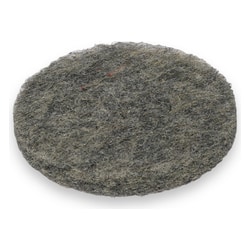
DISCOLUX 8" Polishing Pad Barikell
BKG-30086zł172.20 tax incl. 140,00 zł tax excl.No technical data available Zobacz szczegóły
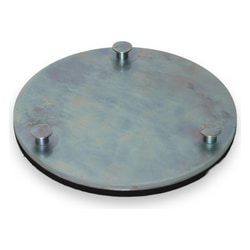
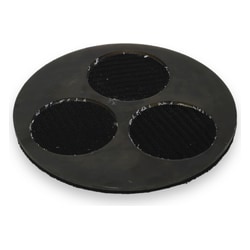
Barikell hook-and-loop attachment plate (Quick Lock)
BKG-HG1009601zł553.50 tax incl. 450,00 zł tax excl.No technical data available Zobacz szczegóły
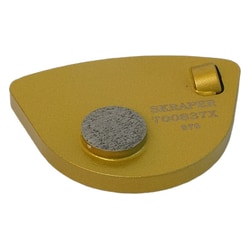
Barikell PCD SCRAPER Quick Lock Diamond Segment
PCDSCRAPER/BKG-700837zł306.27 tax incl. 249,00 zł tax excl.View technical data Zobacz szczegóły
- Mounting: Quick-lock2
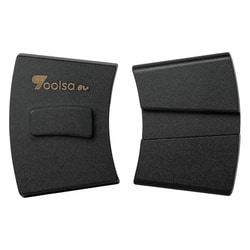
Toolsa KL/RL Adapter For Diamond Segments (Klindex To Redilock)
RL/KLzł135.30 tax incl. 110,00 zł tax excl.No technical data available Zobacz szczegóły
Barikell segment hook-and-loop (replacement)
BKG-200275zł270.60 tax incl. 220,00 zł tax excl.No technical data available Zobacz szczegóły
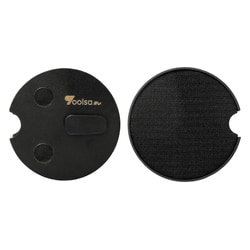
Toolsa RLV Adapter For Hook And Loop Diamond Pads (Redilock To Velcro)
RLVzł152.52 tax incl. 124,00 zł tax excl.No technical data available Zobacz szczegóły
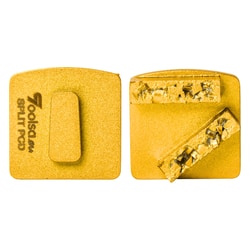
Redilock Toolsa SPLIT-PCD Diamond Segment For Resin Removal (1-3 Mm)
SPCD-RLzł183.27 tax incl. 149,00 zł tax excl.View technical data Zobacz szczegóły
- Segment height: ok. 10 mm
- Mounting: RediLock
- Destination: Zdzieranie żywic epoksydowych z betonu
- Range of coating to be removed: 1-3 mm
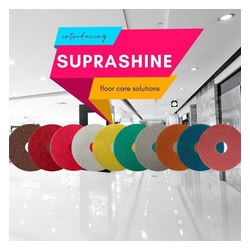
Suprashine Heavy Duty PAD 24" (610MM) With Microdiamond 220grit
SHD-0220-24zł300.12 tax incl. 244,00 zł tax excl.No technical data available Zobacz szczegóły
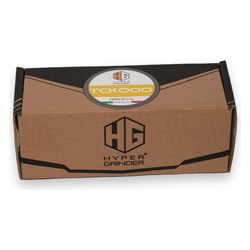
Diamond Segment (abrasivo) Barikell TCK00
TCKABRASIVO/BKG-700638zł295.20 tax incl. 240,00 zł tax excl.View technical data Zobacz szczegóły
- Typ: TCK000
- Mounting: Quick-lock2
- Gradation (grain size): 20
Barikell HGX diamond segments (extra-hard concrete)
Blue20/X00/BKG-701239zł244.77 tax incl. 199,00 zł tax excl.No technical data available Zobacz szczegóły
Barikell HGS diamond segments (soft concrete)
Blue20/S00/BKG-700539zł244.77 tax incl. 199,00 zł tax excl.No technical data available Zobacz szczegóły
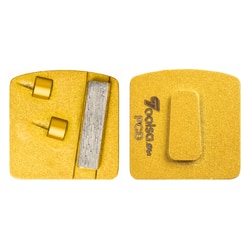
Diamond segments and polishing pads are consumable tooling for floor grinding and polishing machines. A diamond segment (a hard abrasive element on a metal bond, so-called metal-bond, with diamond grains embedded in it) handles coarse grinding — removing old coatings, adhesives and cement laitance, and levelling concrete. A diamond pad (a flexible disc on a resin bond, resin-bond, usually attached with hook-and-loop backing) is used for polishing and bringing a surface to a shine. A full processing cycle spans grit sizes from around 16 grit for stripping down to 3000 grit for the final polish, so a single machine can take a floor from raw concrete to a mirror finish.
At NORWIT.PL we stock segments, pads, heads and backing plates primarily from Lavina, Tyrolit and Barikell, plus Norton Clipper grinding heads — for concrete, terrazzo, marble, granite and porcelain stoneware. The full range of tooling from these manufacturers is on the Lavina brand page. Segments and pads are consumable tooling for single-disc and planetary concrete grinders, so they are chosen to match the machine model, surface hardness and processing stage — not picked at random. Below we explain the difference between a segment and a pad, how to choose grit and bond hardness, hook-and-loop versus threaded mounting, and tool regeneration.
Diamond segment or pad — what grinds, what polishes
Processing a concrete or stone floor splits into two stages, each served by a different type of tooling. A diamond segment (a hard abrasive element on a metal bond, metal-bond) strips and cuts: it removes paint, adhesives and cement laitance, levels concrete, and — welded around the rim of a blade — cuts concrete and stone. A diamond pad (a flexible disc on a resin bond, resin-bond, usually attached with hook-and-loop backing) polishes a surface to a satin or mirror shine. A full refinement cycle runs from segments around 16 grit for stripping up to 3000 grit for the final polish.
Both are consumable tooling, chosen to match the machine, material hardness and the processing stage. At NORWIT.PL we stock segments, pads, heads and backing plates primarily from Lavina, Tyrolit and Barikell, plus Norton Clipper grinding heads. Below: how to choose the type of tooling, grit and bond hardness, and hook-and-loop versus threaded mounting.
Types of diamond segments and pads
| Tool type | Bond | Function |
|---|---|---|
| Metal segments | metal (metal-bond) | stripping, cutting, levelling concrete |
| PCD segments | metal, sintered grain | removing hard adhesives and epoxy coatings |
| Resin pads | resin (resin-bond) | polishing concrete, terrazzo and stone |
| Micro-diamond cleaning pads | resin, fine grain | refreshing floor shine |
| Mounting heads and backing plates | – | connecting tooling to the machine (hook-and-loop, thread, snap-lock) |
Tooling is matched to the machine: single-disc concrete grinders handle edges and lighter jobs, while planetary concrete grinders cover large surfaces. Because grinding generates silica dust, the machine should be connected to a vacuum for grinders. The full range of abrasive tooling sits under the parent category grinding and polishing accessories.
Grit — from stripping to a high-gloss finish
Grit describes the density of the diamond grain — the lower the number, the coarser the grain and the more aggressive the cut. A full cycle usually runs 5–7 passes, and on badly damaged surfaces as many as 8–9. Metal segments work up to around 120 grit, after which resin pads take over — the switch from metal to resin typically happens at 100–200 grit, following a silicate hardener that seals the pores of the concrete.
| Processing stage | Grit | Effect on the surface |
|---|---|---|
| Coarse stripping (metal segment) | 16–40 | removing coatings, levelling concrete |
| Intermediate grinding | 50–120 | removing scratches left by metal segments |
| Finishing grinding | 200–400 | matte surface ready for polishing |
| Polishing (resin pad) | 800–1500 | satin, silky shine |
| High polishing | 1800–3000 | mirror finish (polished concrete) |
Bond hardness (metal-bond / resin-bond) for the material
The bond (the matrix holding the diamond grains) is chosen inversely to the hardness of the material: harder, more fully cured concrete or granite calls for a softer bond, because it exposes sharp grain faster. Soft, fresh concrete and abrasive screeds call for a hard bond — a soft one would wear away on such material within minutes. Marble and limestone are worked with finer grain, usually wet. Getting it wrong either glazes the segment over (too hard) or wears it down within minutes (too soft). On Norton Clipper heads, bond hardness is colour-coded.
| Bond hardness | Colour (Norton Clipper) | Suited to material |
|---|---|---|
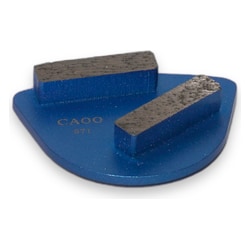
| Soft | blue | hard, well-cured concrete, granite |
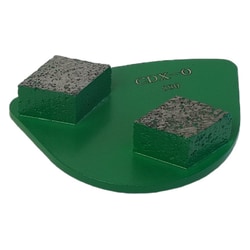
| Medium | green | standard, medium-hardness concrete |
| Hard | – | soft, fresh concrete, abrasive screeds |
Pad sizes and mounting — hook-and-loop, thread, snap-lock
Planetary grinders work with intermediate backing plates in several sizes: 3–4" (about 75–100 mm) for edges and corners, 7" (about 180 mm) on lighter single-head machines, and 14" (356 mm) on heavier machines for large surfaces — it is in this diameter that we offer the RH hook-and-loop head. Hook-and-loop (velcro) mounting takes a few seconds and makes changing grit easy, but wears out after a few dozen fittings. Threaded mounting, usually M14 or 5/8", gives a stiffer connection under heavy pressure, at the cost of a slower wrench-and-swap change. Pads that change often are mounted on hook-and-loop backing, while segments under load are mounted on a thread or snap-lock.
Frequently asked questions about diamond segments and pads
What is the difference between diamond segments and diamond pads?
A diamond segment is a hard abrasive element on a metal bond (metal-bond), welded or brazed onto a saw blade or a grinding head — it works aggressively for stripping, cutting and initial grinding of concrete or stone. A diamond pad is a flexible disc on a resin bond (resin-bond), usually attached with hook-and-loop backing — it polishes and brings a surface to a shine. A full cycle runs from segments at around 16–50 grit through to polishing pads at 800–3000 grit that produce a satin or mirror finish. A segment strips and cuts; a pad polishes.
How do I match a diamond segment to the material being cut (concrete, granite, marble)?
Choosing a segment follows the inverse-hardness rule: the harder the material (mature concrete, granite), the softer the bond should be, because it exposes sharp grain faster. Soft, fresh concrete and abrasive screeds need a segment with a hard bond — a soft one would wear away within minutes. Marble and limestone, being more brittle rock, are worked with finer grain, usually above 40 grit and most often wet. If you are unsure about the substrate, a medium-hardness bond segment is a safe starting point.
How many diamond segments does a typical concrete or stone cutting blade carry?
The number of segments around a blade's rim grows with the diameter. Small blades for angle grinders, 115–230 mm, usually carry 6–10 segments, construction blades at 300–400 mm carry 12–18 segments, and large industrial blades above 500 mm can carry as many as 20–30. Segments sit evenly spaced, with cooling gaps (gullets) between them — harder material means more, narrower segments. The segments and pads in this category are mainly for floor-grinding machines — ready-made cutting blades are in the diamond blades category.
What is diamond segment regeneration (dressing), and when is it used?
Regenerating (dressing) a segment restores its cutting ability by exposing fresh, sharp diamond grain — usually through ten to several dozen seconds of running against an abrasive dressing block. It is used when a segment has "glazed over" because a bond too hard was matched to a material too hard — the tool then slides across the surface instead of cutting. Dressing restores the tool's sharpness, but it does not work on segments worn almost down to the core, below roughly 1–2 mm of diamond layer — those need to be replaced with new ones.
What is the difference between a "hard" (metal-bond) and "soft" (resin-bond) pad for polishing floors?
In concrete-processing terminology, "hard" metal-bond tooling means a metal segment or head on a metallic bond — it works aggressively at low grit, 16–120, and is used for stripping and initial grinding rather than polishing. A resin-bond pad, described as "soft," carries diamond in a flexible resin and works at 200–3000 grit, producing a satin or mirror shine. The full process combines both: it starts with metal tools and finishes with resin pads of progressively finer grain — the higher the pad's grit, the higher the shine.
What diamond pad sizes fit planetary grinders (3", 4", 7", 14")?
Planetary grinders work with intermediate backing plates in several sizes — the smallest, 3" and 4" (about 75–100 mm), are used at edges and corners, medium 7" (about 180 mm) on lighter single-head machines, and the largest, 14" (356 mm), on heavier machines for large surfaces — it is in this diameter that we offer the RH hook-and-loop head. The pad size has to match the backing plate's diameter exactly: a smaller pad will not cover the full swept area, and a larger one will rub against the housing. Check the plate diameter in your machine's manual before buying.
What is the difference between hook-and-loop and threaded mounting on grinding heads?
Hook-and-loop (velcro) mounting attaches a pad to a head through a hook-and-loop layer — fitting takes a few seconds, needs no tools, and lets you change grit quickly, though the loop backing wears out after a few dozen fittings. Threaded mounting connects a segment or head directly to the machine's spindle through a tapped hole, most often M14 or 5/8", giving a stiffer connection under heavy pressure at the cost of a slower wrench-and-swap change. Pads that change often are mounted on hook-and-loop backing, while segments under load use a thread or snap-lock.
How many grit stages does a full concrete polishing process need, from stripping to shine?
A full concrete polishing cycle usually runs through 5–7 grit stages, and on badly damaged surfaces there can be 8–9. A typical sequence is coarse stripping with a metal segment at 16–40 grit, intermediate grinding at 50–120 grit, finishing grinding at 200–400 grit, and then polishing with resin pads at 800–1500 grit for a satin shine and 1800–3000 grit for a mirror finish. Skipping a stage leaves scratches from the previous step visible only once the surface is glossed. Between grinding and polishing, a silicate hardener is applied to seal the concrete's pores.
Do Tyrolit diamond segments fit blades and heads from other manufacturers?
Tyrolit segments and heads are fitted using universal mounting standards — hook-and-loop backing in a given diameter, most often 3", 4", 7" or 14" (356 mm), or an M14/5/8" thread — so they fit machines from other brands as long as the mounting plate shares the same diameter and mounting type. Differences between manufacturers mainly concern plate thickness and segment height, and a mismatch changes the pressure on the surface. Before fitting a Tyrolit segment to another machine, check the plate diameter and mounting type in the manual.
How long does one set of polishing pads last with daily use on a job site?
A pad set's lifespan is measured in square metres of surface processed, not in days — a typical resin-bond pad set covers anywhere from a few hundred to a few thousand m², depending on grit and concrete hardness. Low-grit pads, 200–400 grit, wear out faster than high-grit pads, 1500–3000 grit, because they work under heavier pressure on a rougher surface. With a crew covering a few hundred m² daily, one set of pads at a given grit usually lasts several to a dozen working shifts.
Why buy diamond segments and pads at NORWIT.PL
We specialise in professional concrete and stone processing: we stock segments, pads, heads and backing plates primarily from Lavina, Tyrolit and Barikell, plus Norton Clipper grinding heads with colour-coded hardness. We advise on grit, bond hardness and mounting suited to your machine and processing stage. This tooling is complemented by single-disc and planetary concrete grinders, vacuums for grinders and diamond blades for cutting, while the full range of abrasive tooling sits under the parent category grinding and polishing accessories. We fulfil orders online, with shipping across the country.